

Google's AI Paradox: Lawsuit Against Scraper Signals End of the Open Data Era
Google's lawsuit against SerpApi isn't just about scraping. It's a strategic move to control the data fueling the AI revolution and protect its search dominance.
The Lede: More Than a Lawsuit, It's a Declaration of War
Google's lawsuit against data scraper SerpApi is not a routine legal dispute. It's a landmark declaration of war over the most valuable resource of the 21st century: data. For business leaders and tech strategists, this move signals the formal end of the web's 'open buffet' era for AI training. The walls are going up, and access to the data that fuels modern AI is about to become a heavily tolled, legally treacherous affair. This is a strategic power play to redefine the rules of data access in an AI-first world, with profound implications for competition, innovation, and the very architecture of the internet.
Why It Matters: The Great Data Lockdown
The second-order effects of this legal battle will reshape the digital landscape. What was once a gray area of 'aggressive crawling' is now being framed as outright theft, creating a minefield for the tech industry.
- Existential Threat to AI Startups: Many emerging AI companies, including challengers like Perplexity, have built their models on the foundation of scraped web data. By targeting the supply chain (the scrapers), Google and other platforms can starve these nascent competitors of the oxygen they need to survive, potentially stifling innovation before it can even challenge the incumbents.
- The Rise of the Data Cartels: This legal offensive, combined with Reddit's similar actions, marks the formalization of a new business model: licensed data. Platforms are realizing their user-generated content is a goldmine for LLM training. Expect a future dominated by expensive, exclusive API access deals, creating a two-tiered AI world: the data-rich (incumbents) and the data-poor (startups).
- Redefining 'Fair Use': The courts will now be forced to draw a line in the sand. Is scraping search results for analysis a copyright violation? Does it violate the Computer Fraud and Abuse Act (CFAA)? The outcome will set a powerful precedent for how public data can be used, potentially chilling academic research and independent development.
The Analysis: The Poacher Becomes the Gamekeeper

The irony here is immense. Google built its empire on a similar principle: crawling and indexing the entirety of the public web to build its search engine—a form of scraping at planetary scale. Now, as the undisputed king of that domain, it's pulling up the drawbridge to prevent others from using its curated version of the web in a similar fashion. This is a classic 'poacher-turned-gamekeeper' maneuver.
This lawsuit is not motivated by pure principle, but by competitive necessity. Google faces a multi-front war:
- Protecting the Core: AI-powered 'answer engines' like Perplexity threaten Google's core search-and-ad model by providing direct answers, bypassing the list of blue links where Google makes its money. By attacking their data sources, Google engages in a proxy war against these new challengers.
- Controlling the Narrative: Google wants to be the primary interface not just to the web, but to AI-generated information. Allowing third parties to freely scrape and repackage its search results devalues its product and cedes control of the user experience.
This isn't about stopping SerpApi as a standalone entity; it's about making an example of them to deter a generation of AI developers from building on top of Google's data without permission and payment.
PRISM's Take: An Inevitable but Perilous Turning Point
Google's lawsuit is an inevitable and calculated move to protect its trillion-dollar franchise in the face of tectonic technological shifts. The 'wild west' of web scraping that fueled the early AI boom is officially over. We are entering an era of data Balkanization, where access to information will be increasingly controlled and monetized by the giants who hold the keys.
While this move is strategically sound for Google, it poses a significant risk to the broader ecosystem. It threatens to entrench incumbent power, raise the barrier to entry for innovators, and potentially lead to a less open, less competitive internet. The battle ahead will not just be fought in courtrooms, but in the architecture of AI models and the business strategies of every company that relies on data to compete. The lines have been drawn.
Authors
Related Articles
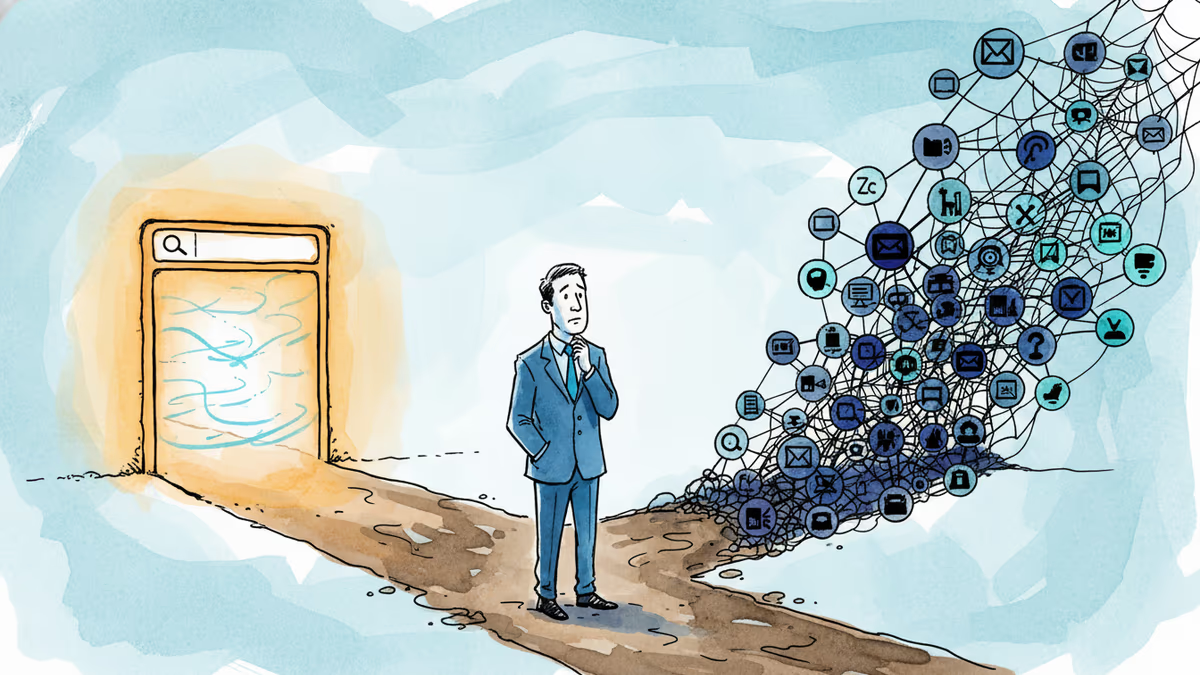
In a post-Google I/O interview, Sundar Pichai acknowledged flawed search results, real AI anxiety, and an AGI timeline that makes the label irrelevant. Here's what he said — and what it means.
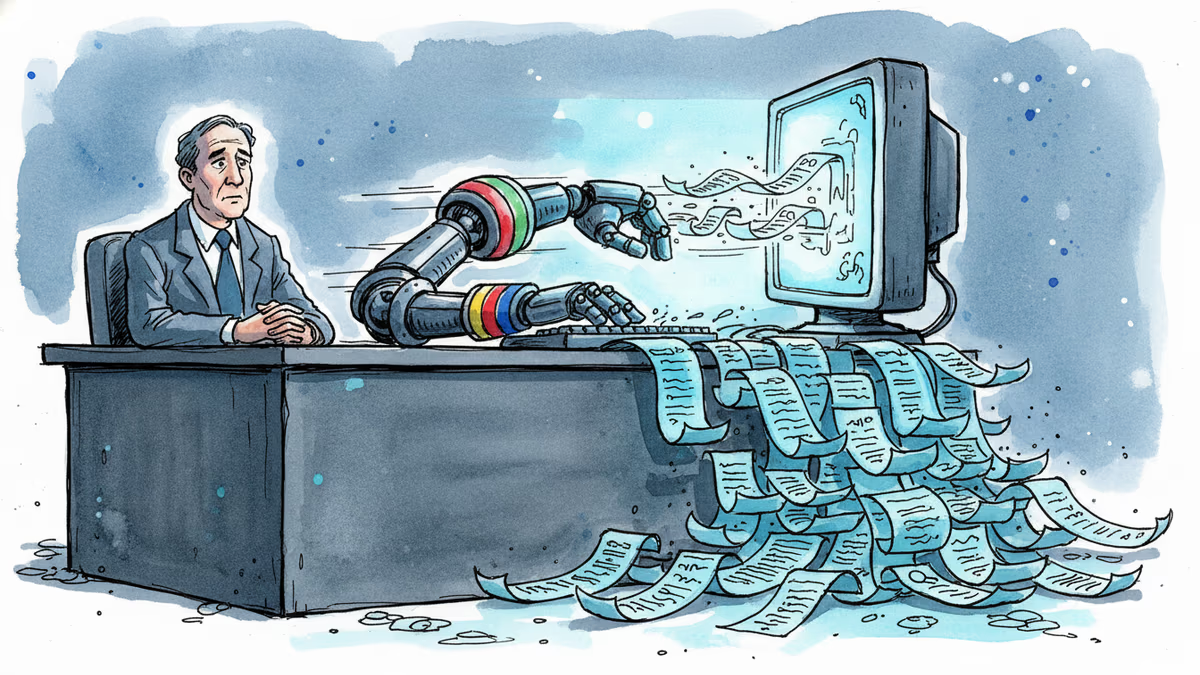
Google is building AI agents that search the web proactively, without user prompting. That's not just a product update — it's a fundamental shift in who controls the information you receive.
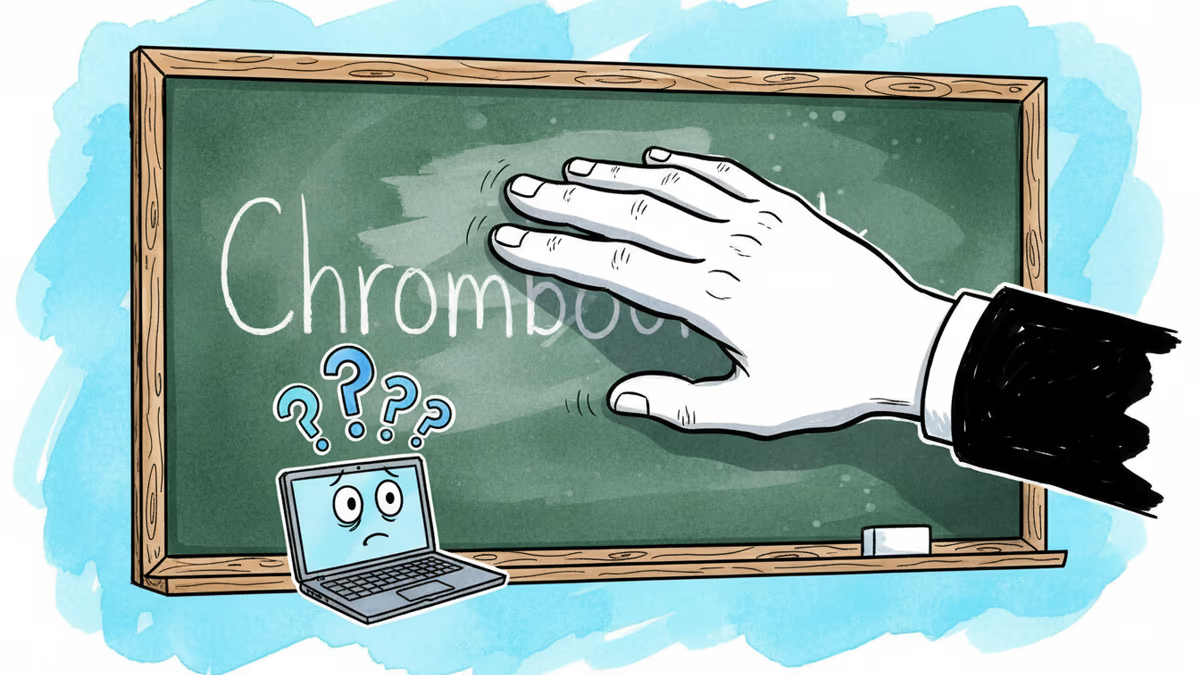
Google unveiled the 'Googlebook' platform to replace Chromebook and ChromeOS—but revealed zero hardware specs. What's the strategy, and what does it mean for users, manufacturers, and the education market?
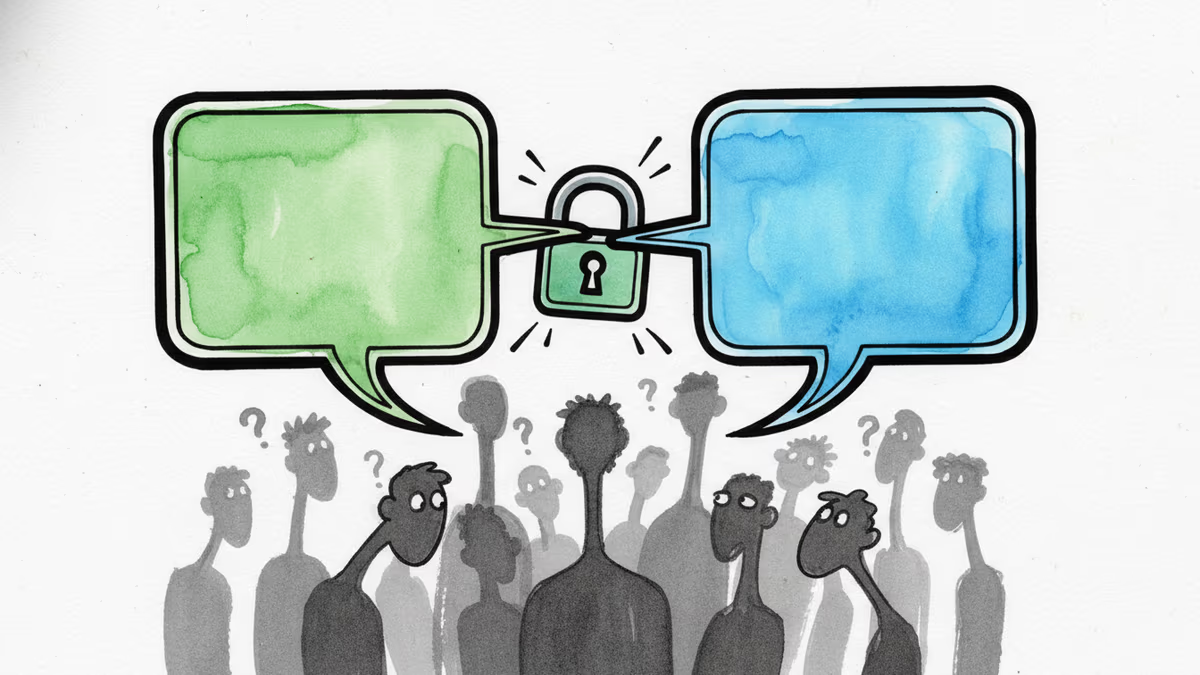
After 15 years of fragmented mobile messaging, Apple and Google are rolling out end-to-end encrypted RCS messaging between iPhones and Android devices. Here's what changed, why it took so long, and what it means for your privacy.
In a post-Google I/O interview, Sundar Pichai acknowledged flawed search results, real AI anxiety, and an AGI timeline that makes the label irrelevant. Here's what he said — and what it means.
Google is building AI agents that search the web proactively, without user prompting. That's not just a product update — it's a fundamental shift in who controls the information you receive.
Google unveiled the 'Googlebook' platform to replace Chromebook and ChromeOS—but revealed zero hardware specs. What's the strategy, and what does it mean for users, manufacturers, and the education market?
After 15 years of fragmented mobile messaging, Apple and Google are rolling out end-to-end encrypted RCS messaging between iPhones and Android devices. Here's what changed, why it took so long, and what it means for your privacy.
Thoughts
Share your thoughts on this article
Sign in to join the conversation