
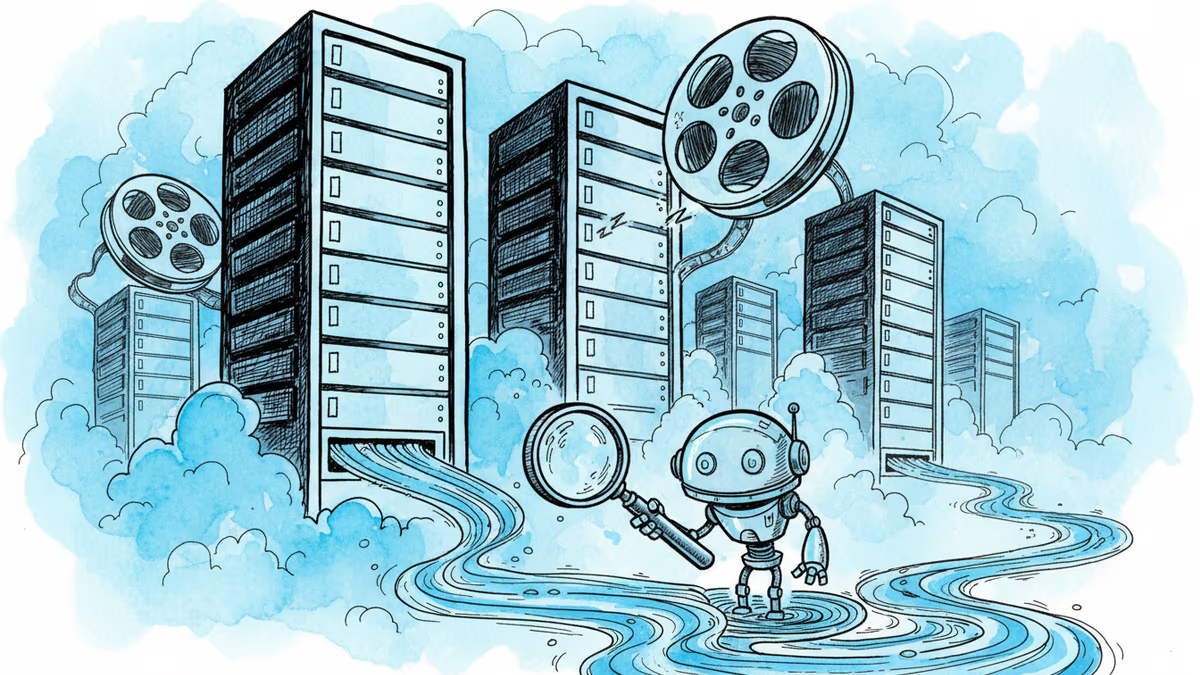
The $6B Bet on Sleeping Video Data
Ex-Google executives raise $5.8M to wake up dormant enterprise video archives. InfiniMind's AI turns petabytes of unwatched footage into queryable business intelligence.
99% of Enterprise Video Never Gets Watched
Your company's servers are drowning in video. Decades of broadcast archives, thousands of hours from security cameras, countless production files gathering digital dust. It's called "dark data"—automatically collected but never meaningfully used.
Two former Google Japan executives think they've found the key to unlocking this sleeping giant. InfiniMind, founded by CEO Aza Kai and COO Hiraku Yanagita after nearly 10 years working together at Google, just raised $5.8 million in seed funding to turn those petabytes of unwatched footage into structured, queryable business intelligence.
The Google Insight That Sparked a Startup
"We saw this inflection point coming while we were still at Google," Kai told TechCrunch. He spent his Google years across cloud, machine learning, ad systems, and video recommendation models before leading data science teams. Yanagita ran brand and data solutions for a decade.
By 2024, they couldn't wait any longer. The technology had matured, market demand was clear, and the window was opening.
The breakthrough wasn't just about faster GPUs or cheaper compute—though 15-20% annual performance gains helped. The real game-changer was the leap in vision-language models between 2021 and 2023. Earlier solutions could tag objects in individual frames but couldn't track narratives, understand causality, or answer complex questions about video content.
"Until recently, models just couldn't do the job," Kai explained.
Japan as Proving Ground, America as Scale

InfiniMind launched its first product, TV Pulse, in Japan last April. The AI platform analyzes television content in real-time, tracking "product exposure, brand presence, customer sentiment, and PR impact." After pilot programs with major broadcasters and agencies, it already has paying customers including wholesalers and media companies.
Japan provided the perfect testbed: strong hardware infrastructure, talented engineers, and a supportive startup ecosystem. Now the company is relocating its headquarters to the U.S. while maintaining operations in Japan.
The flagship product, DeepFrame, launches in beta this March with full release in April. It can process 200 hours of footage to pinpoint specific scenes, speakers, or events—no small feat in the fragmented video analysis space.
The Cost Efficiency Play
Companies like TwelveLabs offer general-purpose video understanding APIs for broad audiences. InfiniMind focuses specifically on enterprise use cases: monitoring, safety, security, and deep content analysis.
"Our solution requires no code," Kai said. "Clients bring their data, our system processes it, providing actionable insights. We integrate audio, sound, and speech understanding, not just visuals. Our system handles unlimited video length, and cost efficiency is a major differentiator."
Most existing solutions prioritize accuracy or specific use cases but don't solve the cost problem that keeps enterprise video locked away.
The AGI Connection
The seed funding, led by UTEC with participation from CX2, Headline Asia, Chiba Dojo, and an AI researcher at a16z Scout, will fuel continued development of the DeepFrame model and expansion across Japan and the U.S.
But Kai sees bigger implications: "This is an exciting space, one of the paths toward AGI. Understanding general video intelligence is about understanding reality. Industrial applications are important, but our ultimate goal is to push the boundaries of technology to better understand reality and help humans make better decisions."
Authors
Related Articles

Samsung and SK unveiled a chip and AI investment package worth thousands of trillions of won on June 29. The headline number swings wildly by outlet, but the real contest isn't capital — it's water and power.

Viral videos show 2026 graduates jeering executives who praise AI at commencement ceremonies. It's not just rudeness — it's a signal about who pays for technological optimism.

Filipino virtual assistants using AI to ghost-manage LinkedIn profiles for executives is now a structured industry. 30 comments a day, fake engagement rings, and a platform struggling to tell real from fabricated.
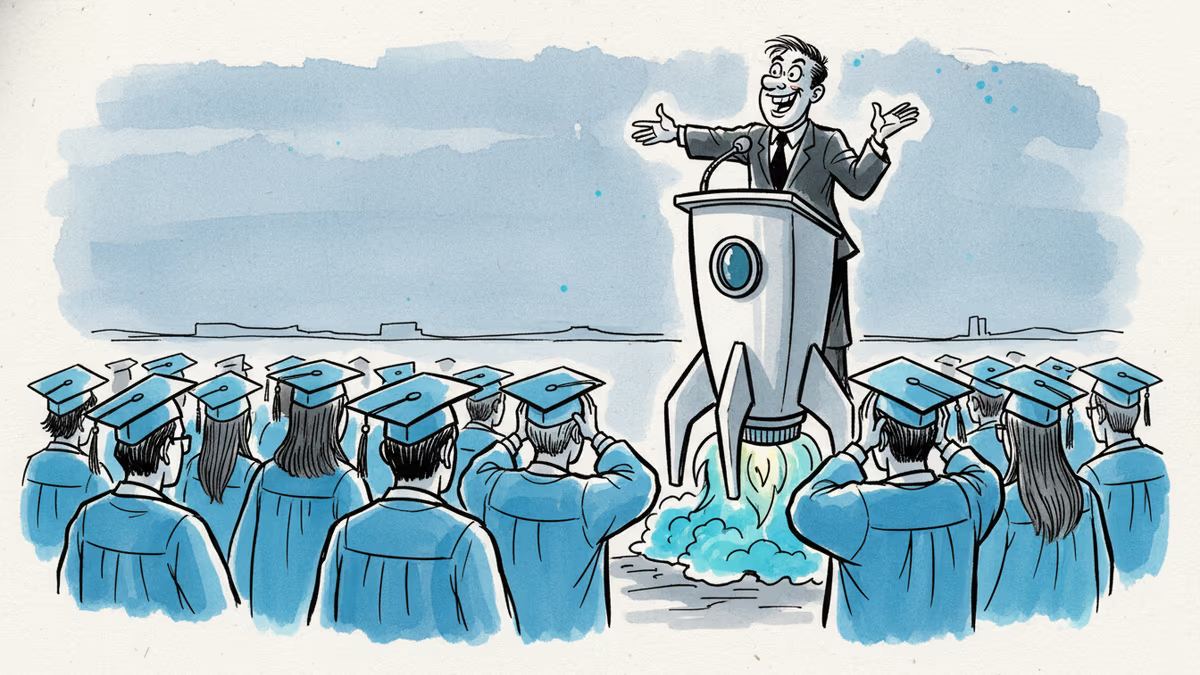
Two commencement speakers learned the hard way that AI enthusiasm doesn't land well with today's graduates. The backlash reveals a widening gap between tech optimism and Gen Z's economic reality.
Samsung and SK unveiled a chip and AI investment package worth thousands of trillions of won on June 29. The headline number swings wildly by outlet, but the real contest isn't capital — it's water and power.
Viral videos show 2026 graduates jeering executives who praise AI at commencement ceremonies. It's not just rudeness — it's a signal about who pays for technological optimism.
Filipino virtual assistants using AI to ghost-manage LinkedIn profiles for executives is now a structured industry. 30 comments a day, fake engagement rings, and a platform struggling to tell real from fabricated.
Two commencement speakers learned the hard way that AI enthusiasm doesn't land well with today's graduates. The backlash reveals a widening gap between tech optimism and Gen Z's economic reality.
Thoughts
Share your thoughts on this article
Sign in to join the conversation