
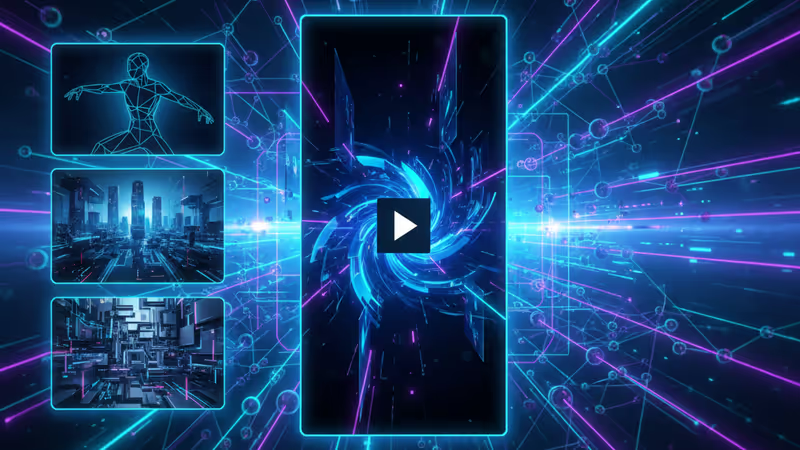
Google Veo 3.1 Video Model Update: Mastering Consistency with Triple-Image Input
Google enhances the Veo 3.1 AI video model with better reference image consistency, triple-image input support, and native vertical video capabilities.
The era of 'rolling the dice' in AI video generation is coming to an end. Google has just released a significant update to its Veo 3.1 video model, giving creators unprecedented control over visual consistency.
Google Veo 3.1 Video Model Update: Precision Over Pixels
According to reports from The Verge, the latest iteration of Veo 3.1 pays much closer attention to reference images. While previous models often strayed from the source material, this update ensures the final clip remains faithful to the user's specific visual intent.
From Ingredients to Narrative: Triple-Image Support

The revamped 'Ingredients to Video' tool, originally debuted in 2025, now allows users to input up to 3 reference images. Creators can designate specific images for the character subject, the background, and the texture, providing a layered approach to video construction. Google claims this will make generated content more expressive and creative.
Native Vertical Content and Resolution Upscaling
To meet the demands of modern social media, Veo 3.1 now natively supports vertical video formats. Additionally, a new resolution upscaling feature has been introduced, allowing users to enhance the clarity of their clips after generation—a crucial tool for professional-grade content on platforms like TikTok and Instagram.
Authors
Related Articles
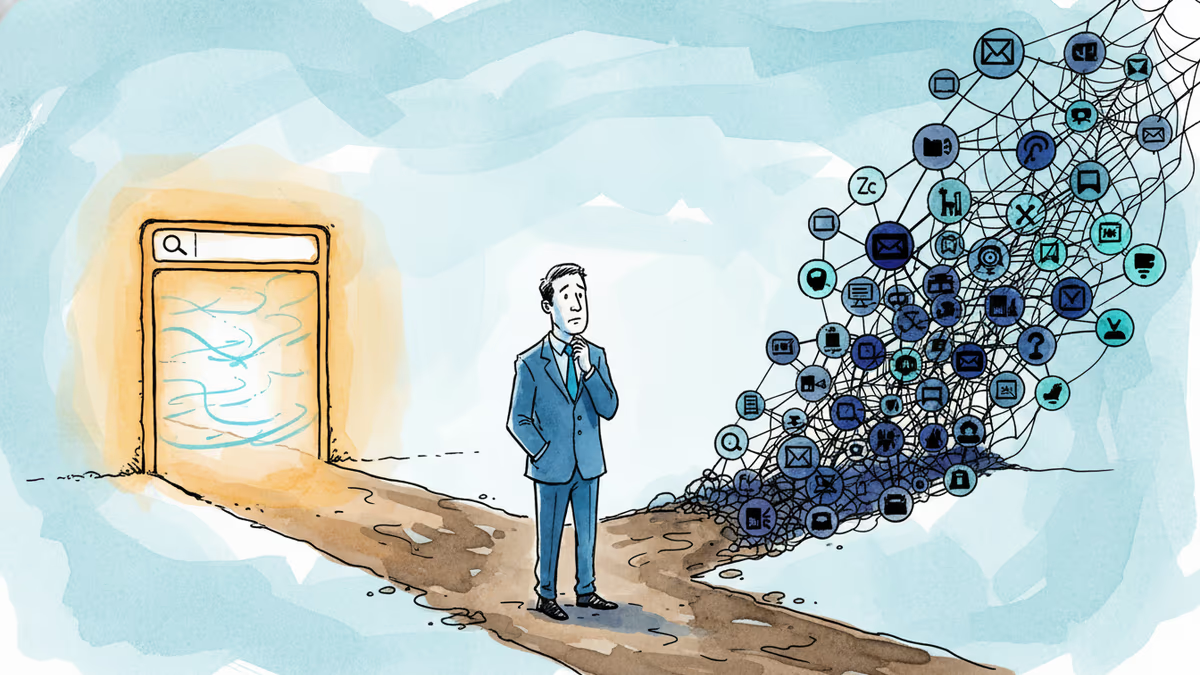
In a post-Google I/O interview, Sundar Pichai acknowledged flawed search results, real AI anxiety, and an AGI timeline that makes the label irrelevant. Here's what he said — and what it means.
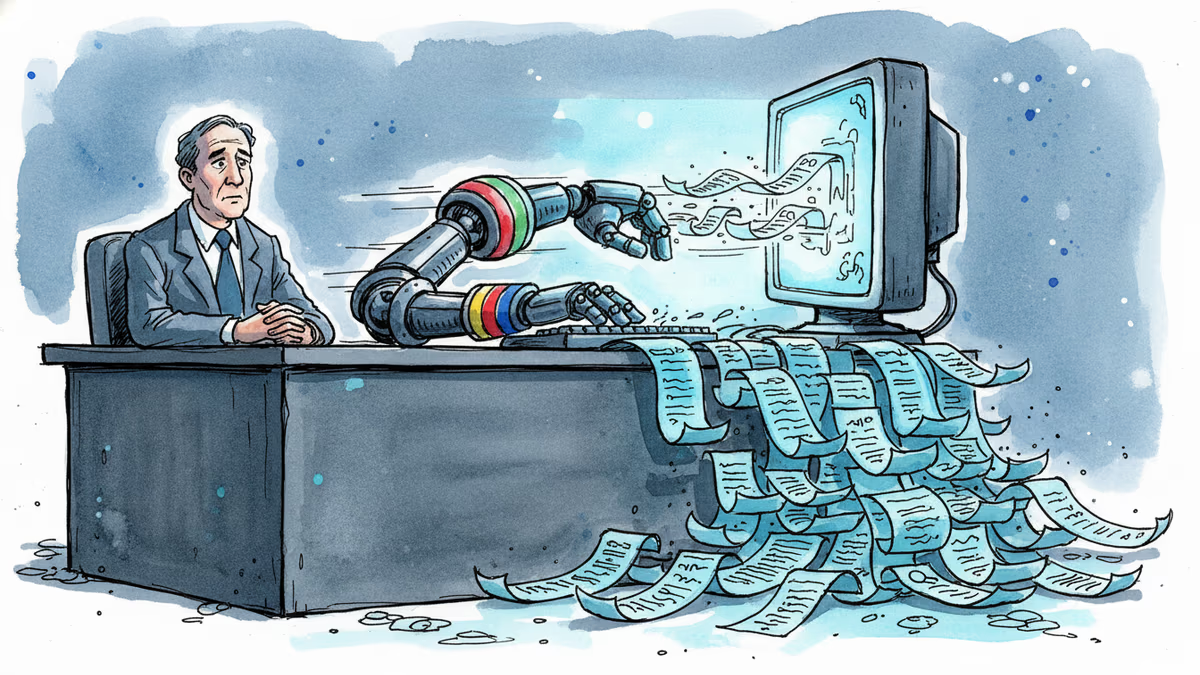
Google is building AI agents that search the web proactively, without user prompting. That's not just a product update — it's a fundamental shift in who controls the information you receive.
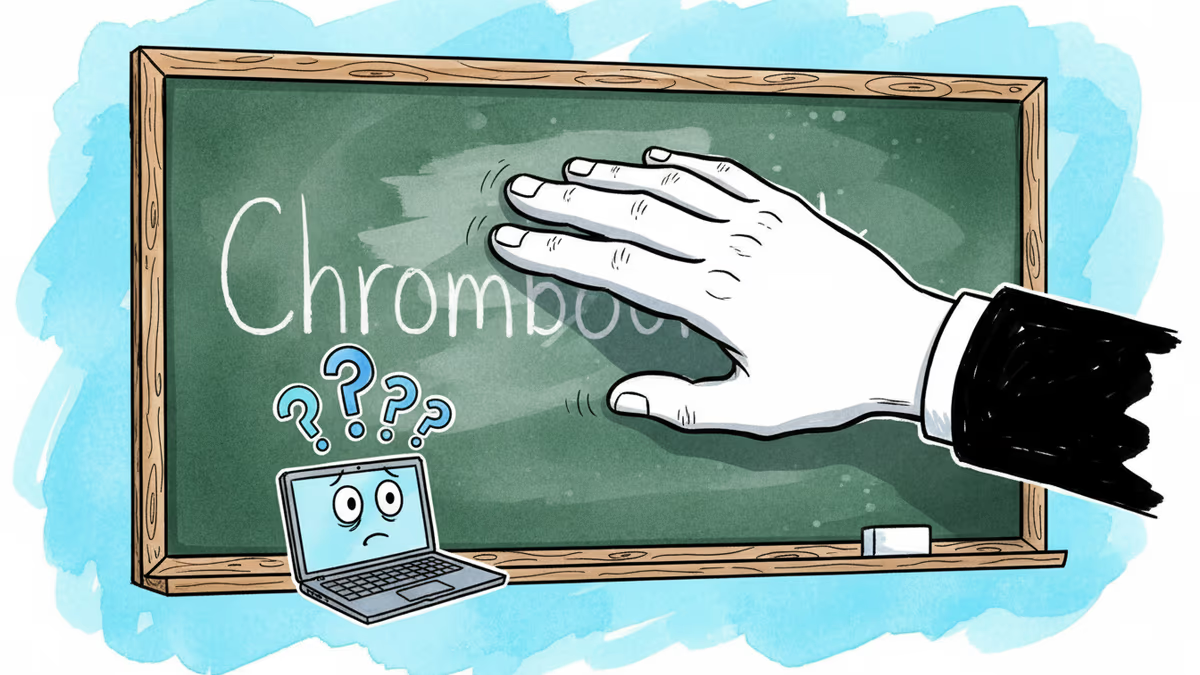
Google unveiled the 'Googlebook' platform to replace Chromebook and ChromeOS—but revealed zero hardware specs. What's the strategy, and what does it mean for users, manufacturers, and the education market?
After 15 years of fragmented mobile messaging, Apple and Google are rolling out end-to-end encrypted RCS messaging between iPhones and Android devices. Here's what changed, why it took so long, and what it means for your privacy.
In a post-Google I/O interview, Sundar Pichai acknowledged flawed search results, real AI anxiety, and an AGI timeline that makes the label irrelevant. Here's what he said — and what it means.
Google is building AI agents that search the web proactively, without user prompting. That's not just a product update — it's a fundamental shift in who controls the information you receive.
Google unveiled the 'Googlebook' platform to replace Chromebook and ChromeOS—but revealed zero hardware specs. What's the strategy, and what does it mean for users, manufacturers, and the education market?
After 15 years of fragmented mobile messaging, Apple and Google are rolling out end-to-end encrypted RCS messaging between iPhones and Android devices. Here's what changed, why it took so long, and what it means for your privacy.
Thoughts
Share your thoughts on this article
Sign in to join the conversation