
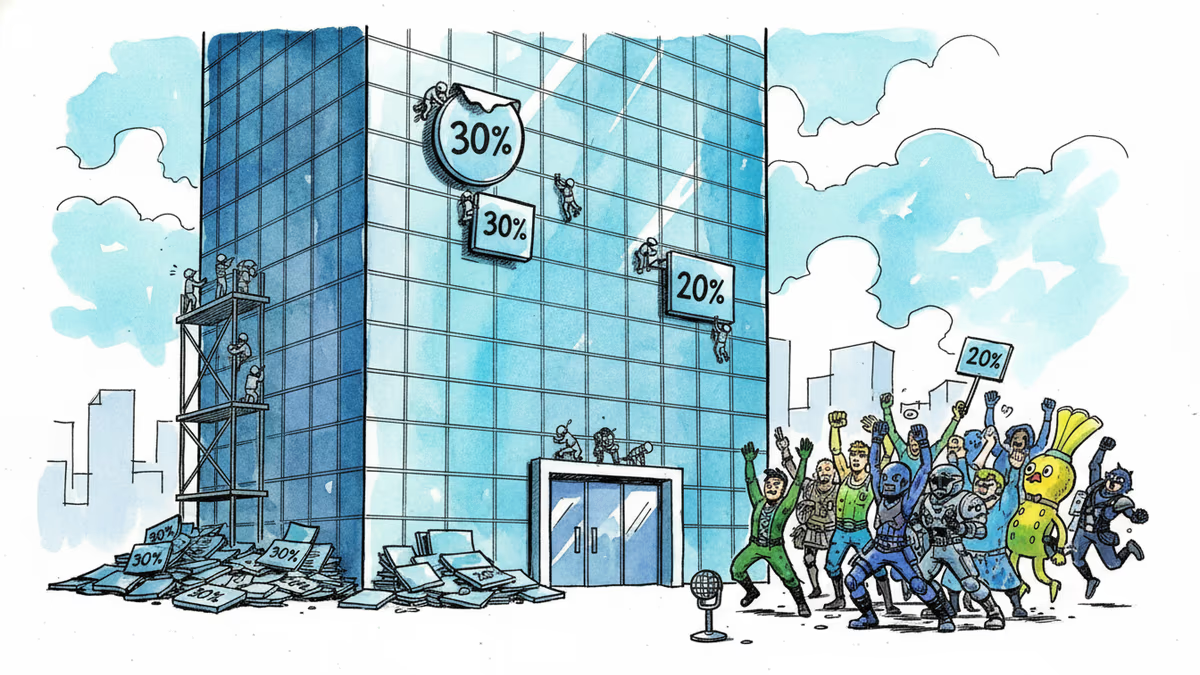
Google Cuts Play Store Fees to 20%, Settles Epic Battle
Google reduces Play Store commissions from 30% to 20% after settling with Epic Games. Alternative app stores get easier installation. What this means for developers, consumers, and competition.
The $10 Billion Question Just Got Answered
Google just blinked first in the app store wars. After years of legal battles with Epic Games, the tech giant announced it's slashing Play Store commissions from 30% to 20% — the biggest shake-up in mobile app economics since the iPhone launched.
The settlement, announced March 4th, doesn't just bring Fortnite back to Android. It fundamentally rewrites the rules that govern how 2.5 billion Android users discover and pay for apps. But here's the twist: this "victory" for developers comes with fine print that might matter more than the headline number.
Developers Celebrate, Then Read the Details
Silicon Valley's reaction split along predictable lines. Indie developers cheered the 10-point commission drop. Epic Games CEO Tim Sweeney tweeted "THANKS GOOGLE!" in all caps. But seasoned app publishers quickly spotted the catch.
The new structure isn't simply 20% across the board:
- In-app purchases: 20% (down from 30%)
- Google's billing system: additional 5%
- Subscriptions: 10% (down from 15%)
Use Google's payment rails, and you're still paying 25%. The real savings only come if you build your own payment system — a technical and compliance nightmare for smaller developers.
The Bigger Game: Alternative App Stores

Buried in the settlement details is a potentially more significant change: the Registered App Stores program. Those scary warning messages that appeared when users tried to install apps outside Google Play? They're getting toned down for approved alternative stores.
Amazon, Samsung, and Epic have all struggled to gain traction with their Android app stores partly because Google's warnings made sideloading feel dangerous. Now, stores that meet Google's quality standards get a smoother installation flow.
This could be the real game-changer. Commission rates matter, but platform choice matters more.
Consumers: Winners or Pawns?
Will lower developer costs translate to cheaper apps? History suggests skepticism. When Apple reduced commissions to 15% for smaller developers in 2020, app prices barely budged. Most of the savings went to developer margins, not consumer wallets.
The security trade-offs are real too. Google Play Protect scans 100 billion apps daily for malware. Alternative app stores, even "approved" ones, won't have the same comprehensive protection. Users will need to become more security-conscious — a tall order in an age of one-click everything.
Apple Watches, Regulators Circle
Google's move puts enormous pressure on Apple, which faces similar antitrust scrutiny worldwide. The EU's Digital Markets Act already forces Apple to allow alternative app stores in Europe. Epic's parallel lawsuit against Apple continues, with mixed court results so far.
But Apple's response might be different. iPhone users have shown higher tolerance for Apple's "walled garden" approach, often citing security and simplicity as priorities over choice and cost savings.
The Global Rollout Reality Check
Google's timeline reveals the complexity of global platform changes. The new fees start in the US, UK, and EU by June 2026, reach Australia by September, hit Korea and Japan by December, then go worldwide by September 2027.
This staggered approach reflects different regulatory pressures across markets. Korea already passed laws requiring alternative payment options. The EU's DMA demands platform openness. The US relies more on antitrust litigation. Each market gets changes tailored to its regulatory reality.
Authors
Related Articles
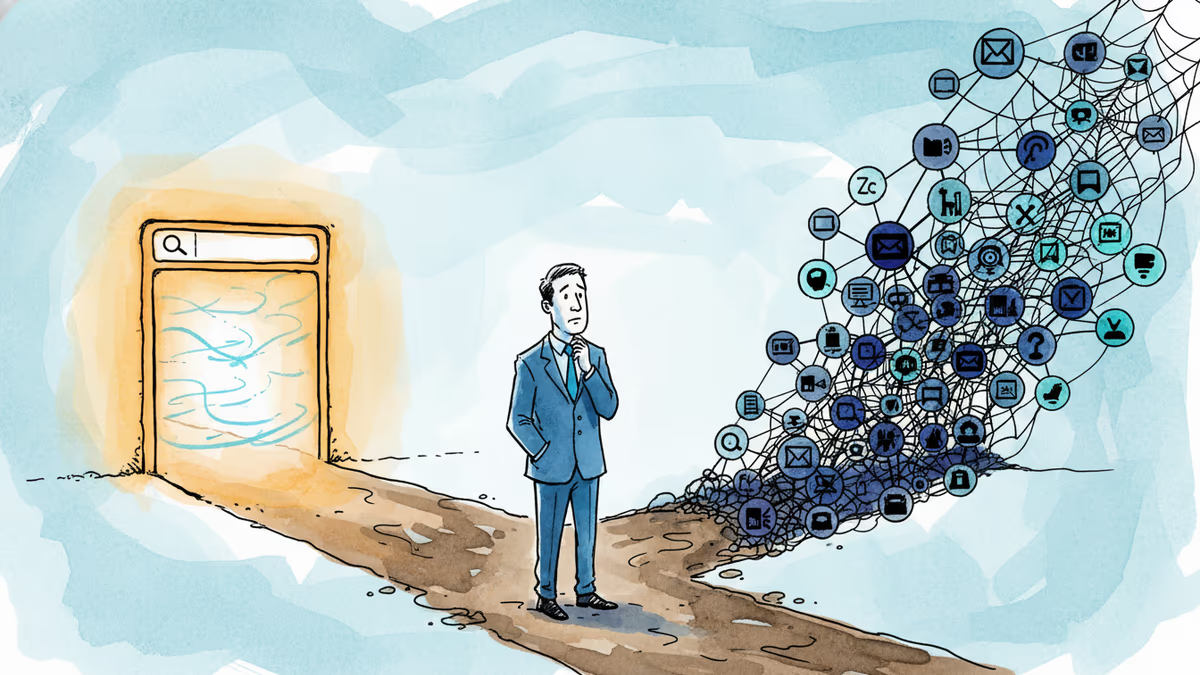
In a post-Google I/O interview, Sundar Pichai acknowledged flawed search results, real AI anxiety, and an AGI timeline that makes the label irrelevant. Here's what he said — and what it means.
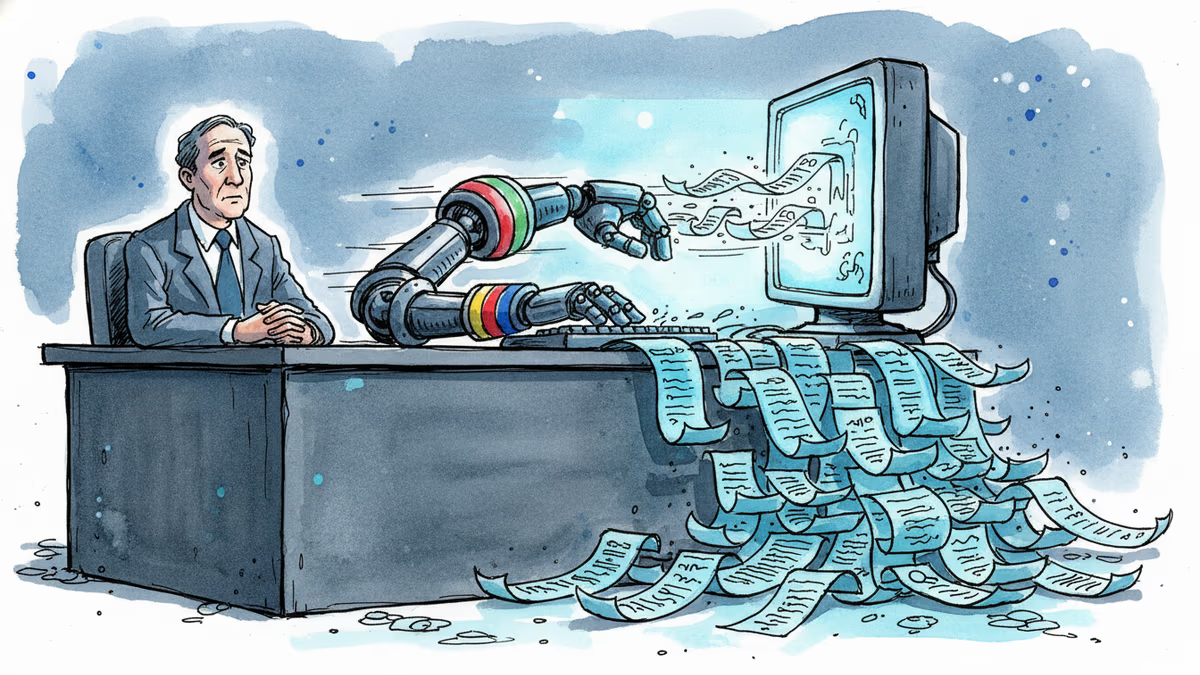
Google is building AI agents that search the web proactively, without user prompting. That's not just a product update — it's a fundamental shift in who controls the information you receive.
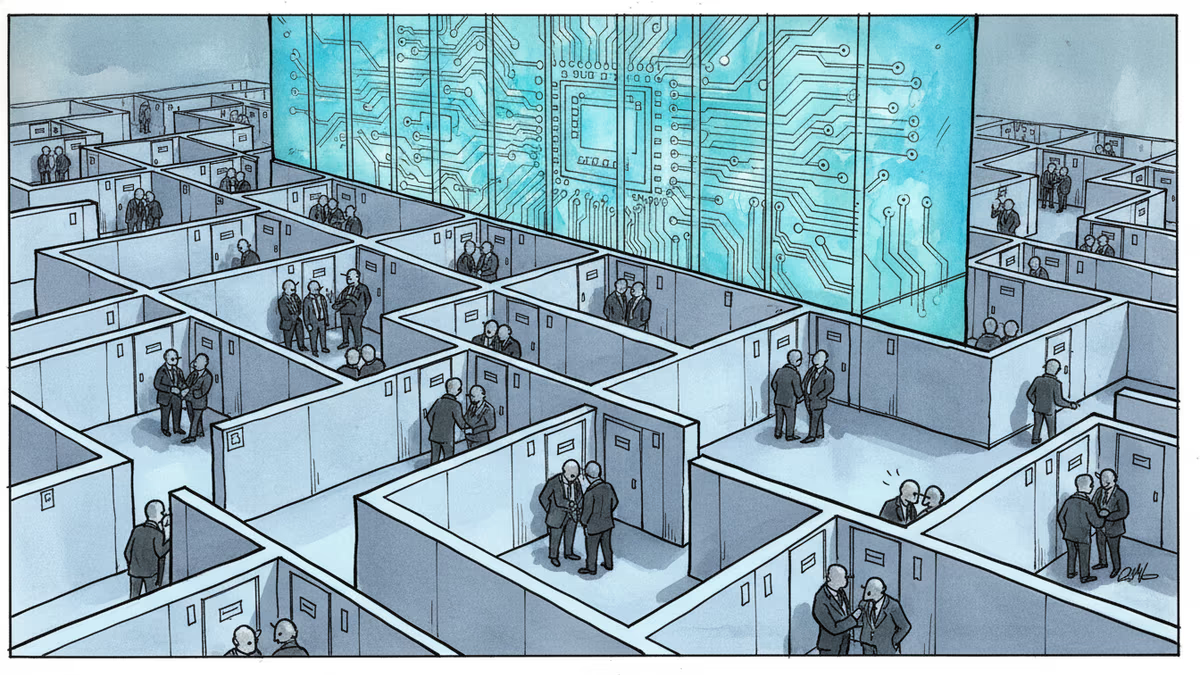
Behind every congressional hearing on Big Tech, there's a quieter room where the real rules get negotiated. As AI regulation, antitrust battles, and privacy law converge on Capitol Hill in 2026, the stakes have never been higher.
Google unveiled the 'Googlebook' platform to replace Chromebook and ChromeOS—but revealed zero hardware specs. What's the strategy, and what does it mean for users, manufacturers, and the education market?
In a post-Google I/O interview, Sundar Pichai acknowledged flawed search results, real AI anxiety, and an AGI timeline that makes the label irrelevant. Here's what he said — and what it means.
Google is building AI agents that search the web proactively, without user prompting. That's not just a product update — it's a fundamental shift in who controls the information you receive.
Behind every congressional hearing on Big Tech, there's a quieter room where the real rules get negotiated. As AI regulation, antitrust battles, and privacy law converge on Capitol Hill in 2026, the stakes have never been higher.
Google unveiled the 'Googlebook' platform to replace Chromebook and ChromeOS—but revealed zero hardware specs. What's the strategy, and what does it mean for users, manufacturers, and the education market?
Thoughts
Share your thoughts on this article
Sign in to join the conversation