

Google Family Link Parental Approval Now Required for 13-Year-Olds
Google is ending unilateral account opt-outs for 13-year-olds. Learn how the new Google Family Link parental approval 13 policy affects your teen's account safety.
The era of automatic digital independence at 13 is over. Google announced a major reversal of its long-standing policy that allowed minors to unilaterally opt-out of parental supervision via Family Link as soon as they hit their teens. Moving forward, if a teen wants to manage their own account, it'll require explicit parental approval.
Why Google Family Link Parental Approval 13 Policy Changed
The shift comes after intense public scrutiny. Melissa McKay, president of the Digital Childhood Institute, recently went viral with a LinkedIn post garnering 375,000 impressions. She called out the previous policy as "predatory," noting that parents weren't given the same clear information as their children about the 13th birthday transition.

According to Google, the global rollout starts this week. "These changes better ensure protections stay in place until both the parent and teen feel ready," stated Kate Charlet, Google's head of global privacy, safety, and security. The update ensures that tools like downtime, app blocking, and Google Wallet monitoring remain under parental control unless both parties agree to end supervision.
The Impact on Digital Parenting
Previously, the transition was framed as a child's choice, often leaving parents in the dark. Now, the power dynamic shifts back to a collaborative decision. This is particularly crucial as teens gain access to more financial tools like Google Pay around this age. Industry experts suggest this move is a direct response to a 2025 complaint filed with the FTC regarding youth safety practices.
Authors
Related Articles
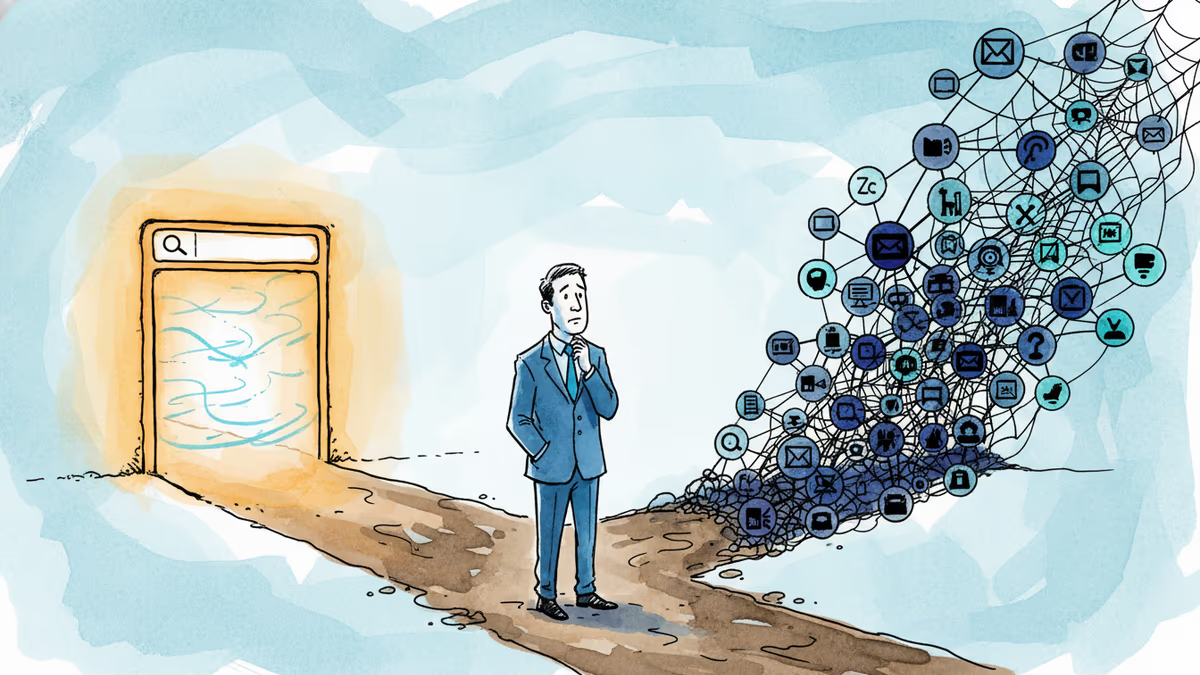
In a post-Google I/O interview, Sundar Pichai acknowledged flawed search results, real AI anxiety, and an AGI timeline that makes the label irrelevant. Here's what he said — and what it means.
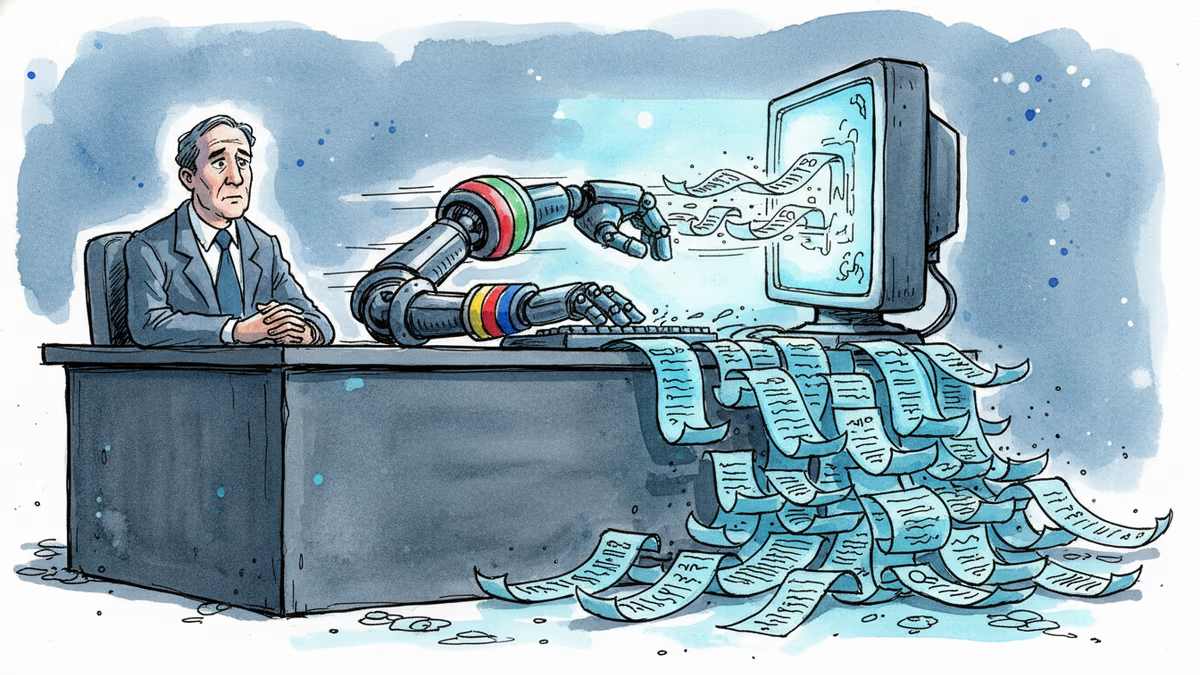
Google is building AI agents that search the web proactively, without user prompting. That's not just a product update — it's a fundamental shift in who controls the information you receive.
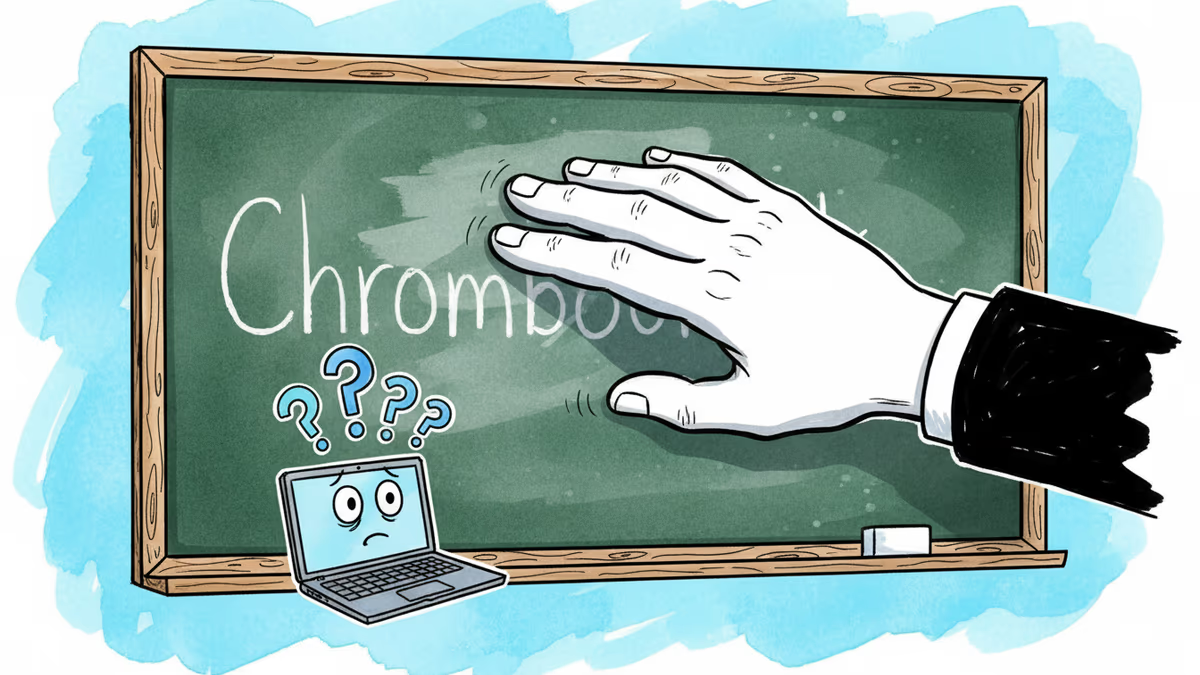
Google unveiled the 'Googlebook' platform to replace Chromebook and ChromeOS—but revealed zero hardware specs. What's the strategy, and what does it mean for users, manufacturers, and the education market?
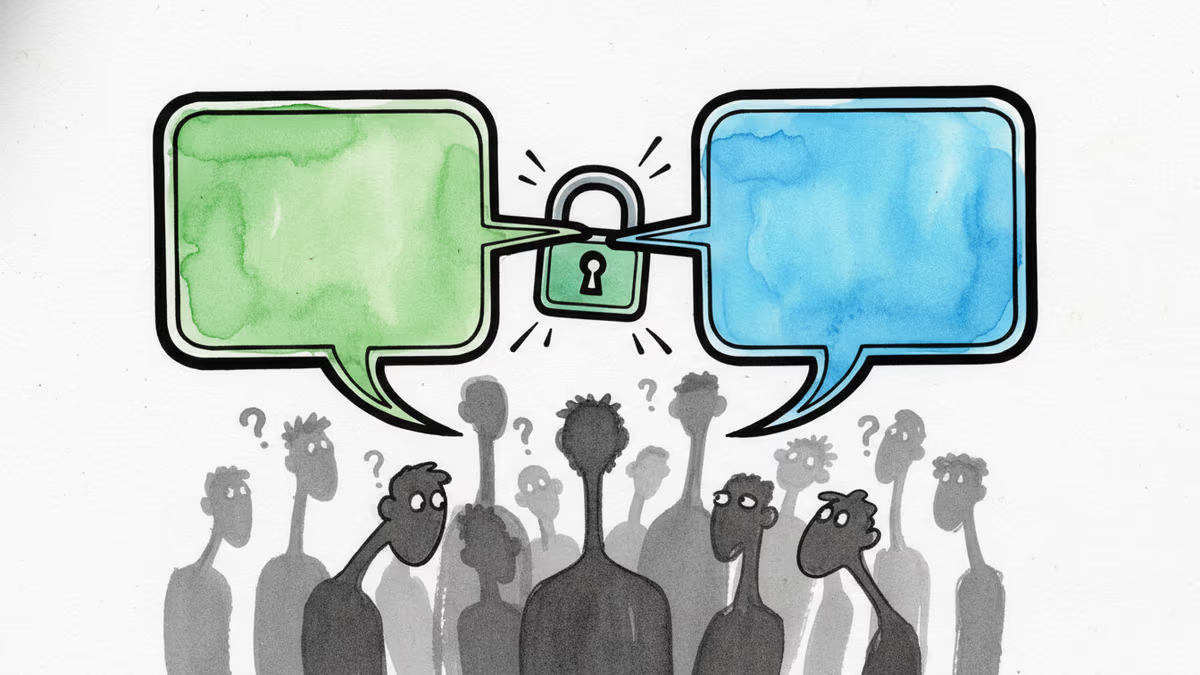
After 15 years of fragmented mobile messaging, Apple and Google are rolling out end-to-end encrypted RCS messaging between iPhones and Android devices. Here's what changed, why it took so long, and what it means for your privacy.
In a post-Google I/O interview, Sundar Pichai acknowledged flawed search results, real AI anxiety, and an AGI timeline that makes the label irrelevant. Here's what he said — and what it means.
Google is building AI agents that search the web proactively, without user prompting. That's not just a product update — it's a fundamental shift in who controls the information you receive.
Google unveiled the 'Googlebook' platform to replace Chromebook and ChromeOS—but revealed zero hardware specs. What's the strategy, and what does it mean for users, manufacturers, and the education market?
After 15 years of fragmented mobile messaging, Apple and Google are rolling out end-to-end encrypted RCS messaging between iPhones and Android devices. Here's what changed, why it took so long, and what it means for your privacy.
Thoughts
Share your thoughts on this article
Sign in to join the conversation