
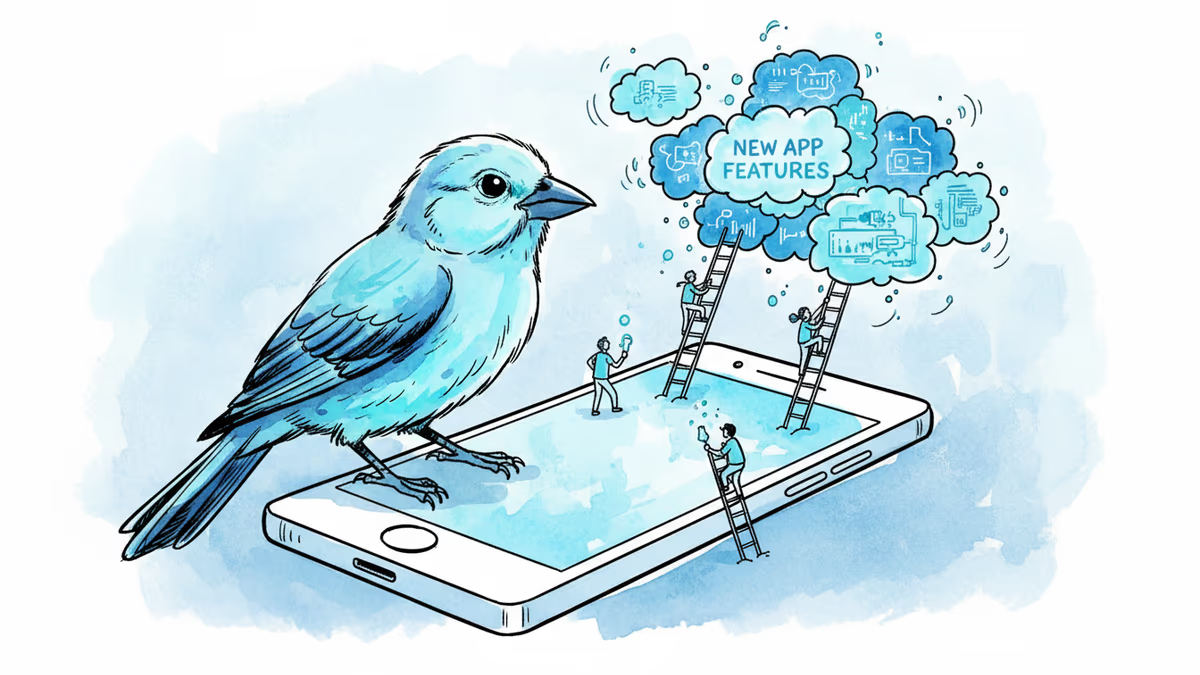
Why Google Just Killed the Android Developer Beta After 12 Years
Android 17's shift to a Canary channel marks a fundamental change in how Google delivers new features to developers, but the real winners and losers might surprise you.
18 months. That's how long it typically takes for a new Android feature to reach actual users' hands. Google just announced it's had enough of waiting.
With Android 17's first beta, the company is killing its traditional developer beta program after 12 years. Instead, it's adopting a continuous "Canary channel" similar to Chrome's development model. But this isn't just about faster updates—it's about fundamentally reshaping who gets to innovate first in the Android ecosystem.
The Fragmentation Problem That Won't Die
Android's biggest headache has always been fragmentation. Even when Google releases a shiny new version, it crawls through the ecosystem like molasses. Device manufacturers add their custom skins, carriers demand their approvals, and users wait. And wait.
Google tried to fix this last year with Android 16's dual-release structure—major SDK updates in the first half, minor ones in the second. The idea was giving manufacturers more predictable timelines to work with.
It wasn't enough. Developers still complained about the 12-month lag between Google announcing a feature and being able to ship apps using it. The Canary channel promises to collapse that timeline to near-zero.
Winners and Losers in the New Order

Silicon Valley startups are celebrating. "Finally, we can experiment with new APIs the moment they're internally approved," says one San Francisco-based developer. The over-the-air updates mean faster iteration cycles and more integrated workflows.
But enterprise developers are nervous. "Canary builds are inherently unstable," warns a mobile architect at a Fortune 500 company. "We can't risk production apps on experimental features."
Here's the twist: Google might be the biggest winner. Its own apps—YouTube, Gmail, Maps—can now leverage new Android capabilities months before competitors. That's a significant competitive advantage disguised as developer-friendly policy.
The Big Screen Mandate
Android 17 also brings a controversial change: developers can no longer force specific orientations or window sizes on large-screen devices. Google is essentially saying, "Your app will work on tablets and foldables whether you like it or not."
This targets a real problem. Many popular apps still look terrible on devices like the Galaxy Z Fold or Pixel Tablet. But forcing compliance through OS restrictions feels heavy-handed, especially for smaller developers who lack resources for extensive redesigns.
The camera improvements and performance enhancements are welcome, but they're overshadowed by these structural changes to Android's development model.
Authors
Related Articles
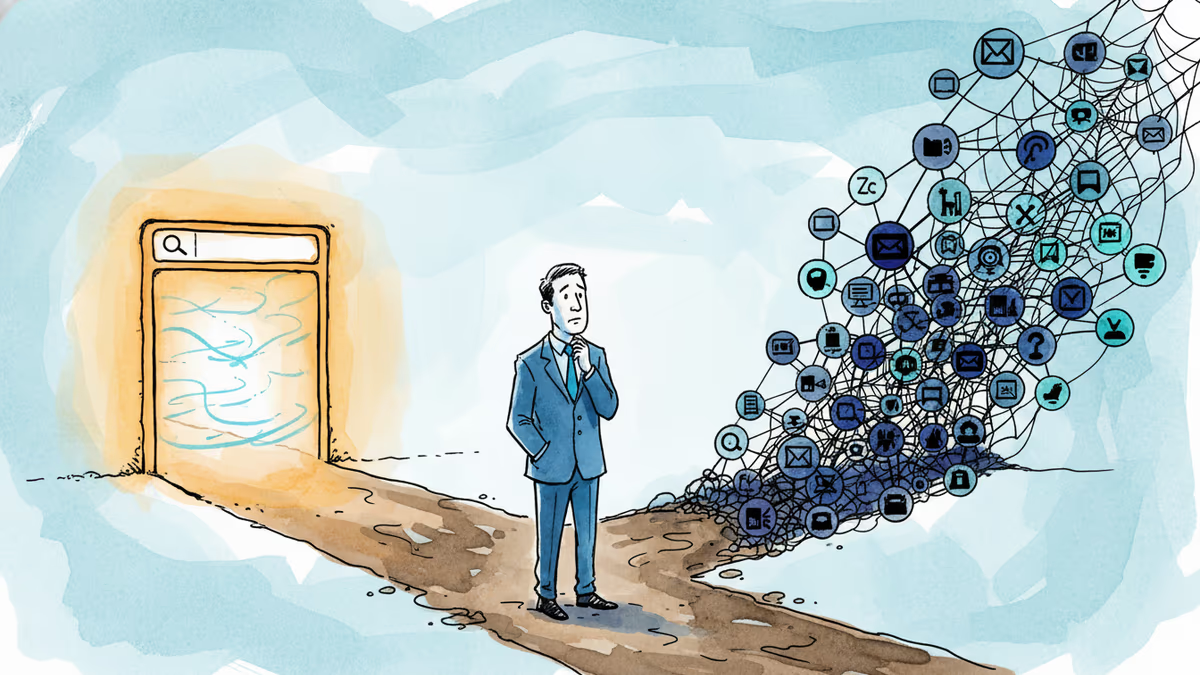
In a post-Google I/O interview, Sundar Pichai acknowledged flawed search results, real AI anxiety, and an AGI timeline that makes the label irrelevant. Here's what he said — and what it means.
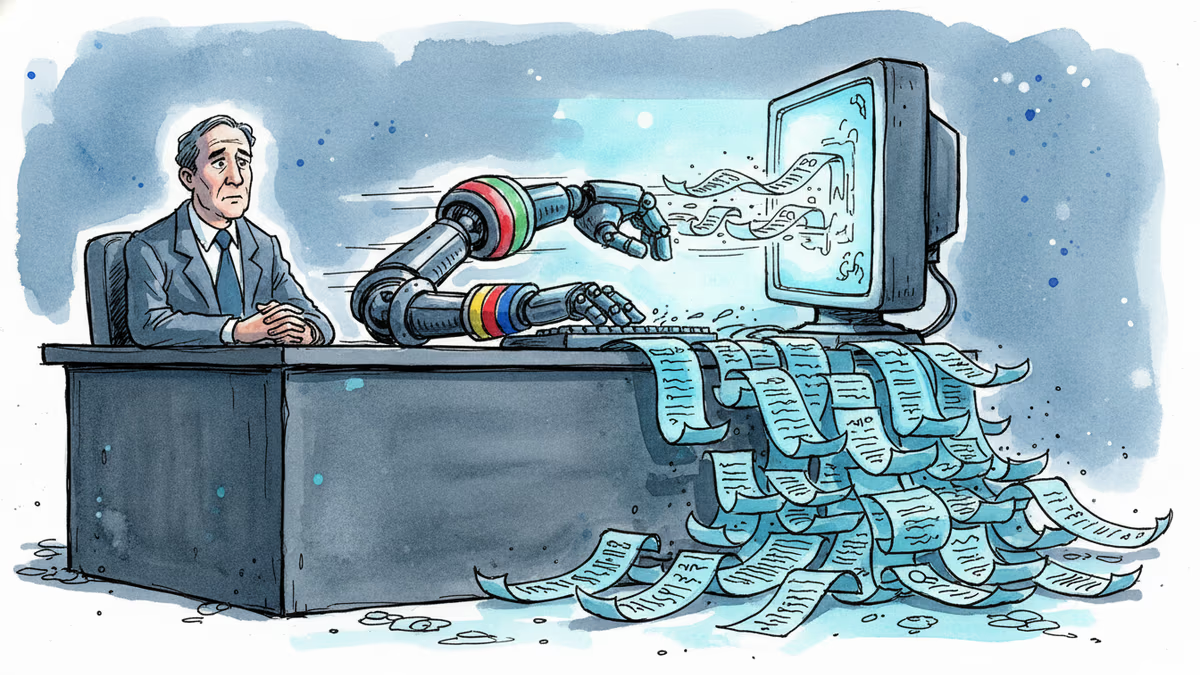
Google is building AI agents that search the web proactively, without user prompting. That's not just a product update — it's a fundamental shift in who controls the information you receive.
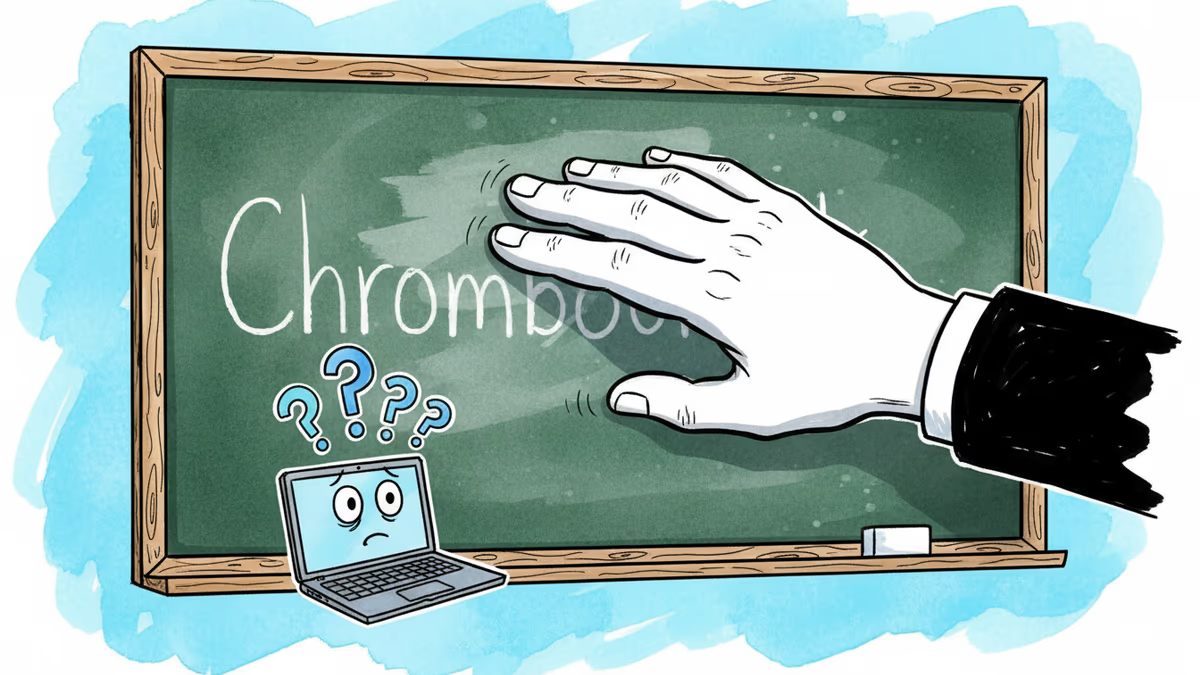
Google unveiled the 'Googlebook' platform to replace Chromebook and ChromeOS—but revealed zero hardware specs. What's the strategy, and what does it mean for users, manufacturers, and the education market?
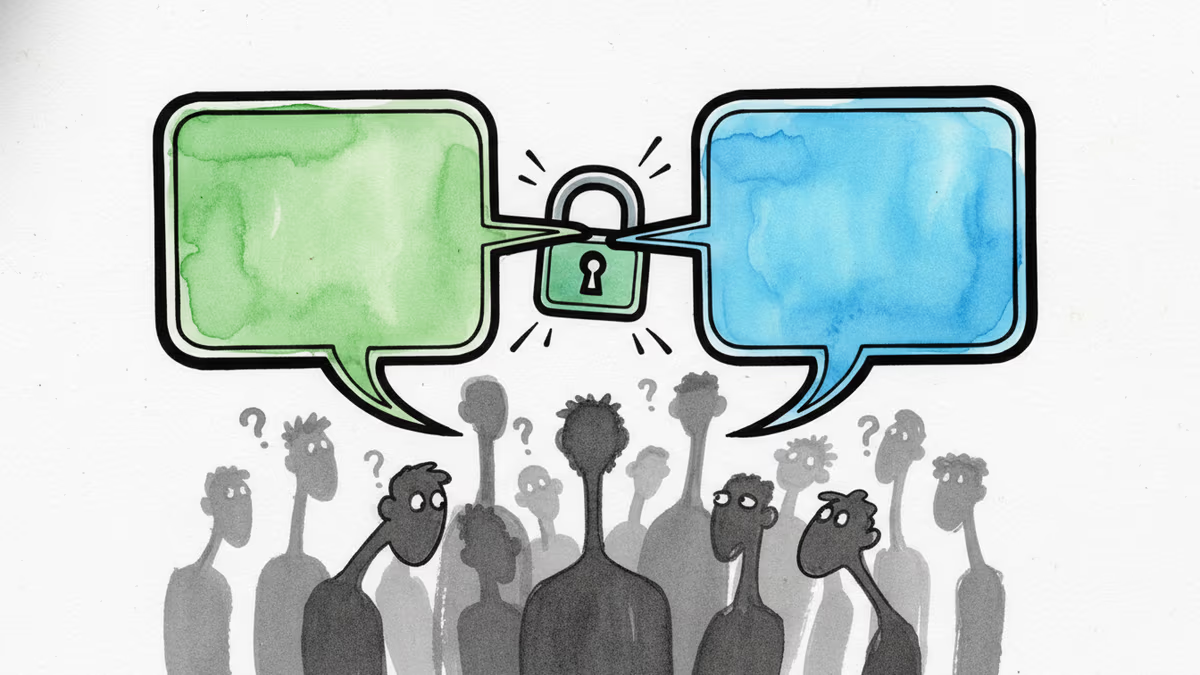
After 15 years of fragmented mobile messaging, Apple and Google are rolling out end-to-end encrypted RCS messaging between iPhones and Android devices. Here's what changed, why it took so long, and what it means for your privacy.
In a post-Google I/O interview, Sundar Pichai acknowledged flawed search results, real AI anxiety, and an AGI timeline that makes the label irrelevant. Here's what he said — and what it means.
Google is building AI agents that search the web proactively, without user prompting. That's not just a product update — it's a fundamental shift in who controls the information you receive.
Google unveiled the 'Googlebook' platform to replace Chromebook and ChromeOS—but revealed zero hardware specs. What's the strategy, and what does it mean for users, manufacturers, and the education market?
After 15 years of fragmented mobile messaging, Apple and Google are rolling out end-to-end encrypted RCS messaging between iPhones and Android devices. Here's what changed, why it took so long, and what it means for your privacy.
Thoughts
Share your thoughts on this article
Sign in to join the conversation