
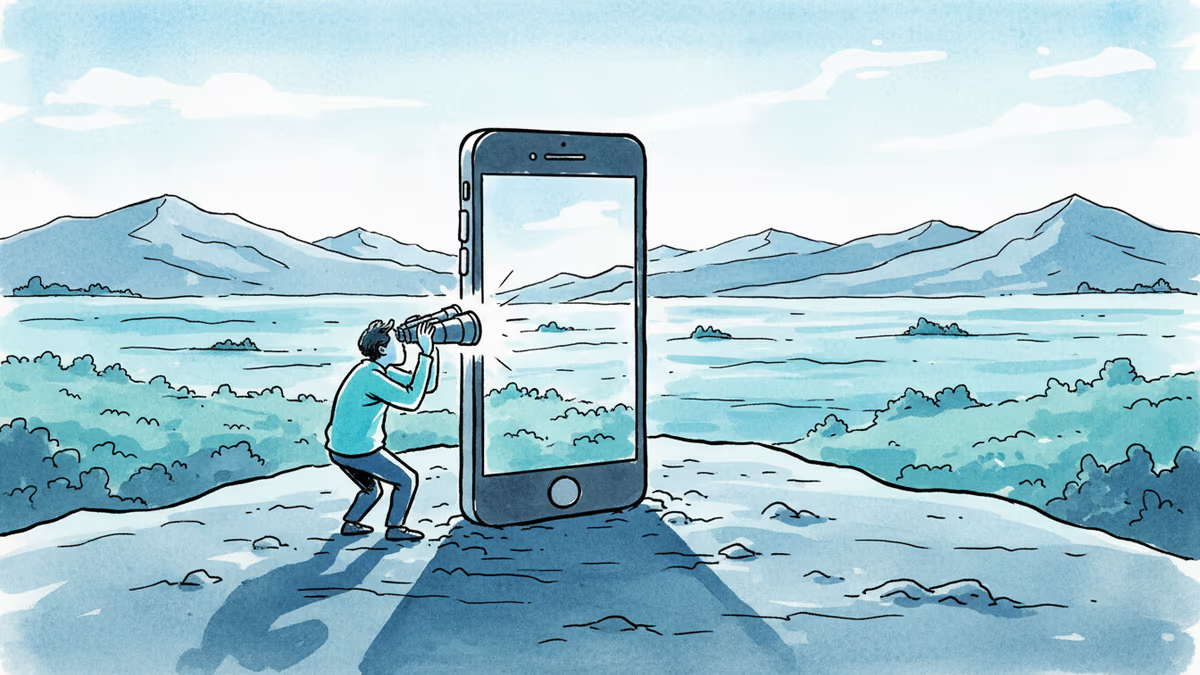
Google's Pixel 10a Reveals the $500 Phone Plateau
Google's Pixel 10a maintains its $500 price but offers minimal upgrades over the 9a, highlighting how the mid-range smartphone market has hit a innovation ceiling.
$500. That's what Google is asking for the Pixel 10a, the same price as its predecessor despite component costs rising across the board in 2026. It's admirable that Google held the line on pricing, but there's a catch: they've also held the line on innovation.
The Pixel 10a isn't so much a successor to the Pixel 9a as it is a refresh with a new sticker. The changes are so minimal that calling it a "10" feels generous.
When Standing Still Feels Like Moving Backward
Google made three changes: a slightly better screen, a flat camera bump, and faster charging. That's it. No camera improvements—the Pixel line's crown jewel remains unchanged. No PixelSnap feature that debuted in the flagship. The same Tensor processor from last year powers the device.
For a company that built its reputation on computational photography breakthroughs, this feels like coasting. While Apple and Samsung push their mid-range phones forward with meaningful upgrades, Google seems content to let the 10a exist in a holding pattern.
The $500 Sweet Spot Dilemma
Here's the paradox: the Pixel 10a is probably still the best Android phone you can buy for $500. Its camera software remains excellent, Android updates are guaranteed, and the build quality is solid. But if you can find a Pixel 9a for even $50 less, there's almost no reason to choose the newer model.

This creates an awkward situation for retailers and consumers alike. Why stock the 10a when the 9a offers nearly identical value? Why buy the latest when last year's model is functionally the same?
The Innovation Plateau Problem
The Pixel 10a reflects a broader challenge facing the smartphone industry: mid-range phones have gotten so good that meaningful annual improvements are increasingly difficult to deliver. Companies face the choice between raising prices to fund innovation or maintaining prices while offering incremental updates.
Google chose the latter, prioritizing affordability over advancement. They kept the SIM card slot that disappeared from the flagship Pixel 10 series, maintained the plastic-and-metal construction, and stuck with proven components. It's a safe strategy that avoids alienating existing users, but it raises questions about long-term differentiation.
When 'Good Enough' Isn't Good Enough
The tech industry has long operated on the assumption that consumers want annual upgrades, even if the improvements are marginal. But the Pixel 10a suggests we might be reaching the limits of that model. When a phone barely changes year-over-year, it forces both manufacturers and consumers to reconsider the upgrade cycle.
Competitors like OnePlus and Nothing are already experimenting with longer development cycles and more dramatic generational leaps. Meanwhile, Samsung's Galaxy A series continues to add features that Google's A-series phones lack.
Authors
Related Articles
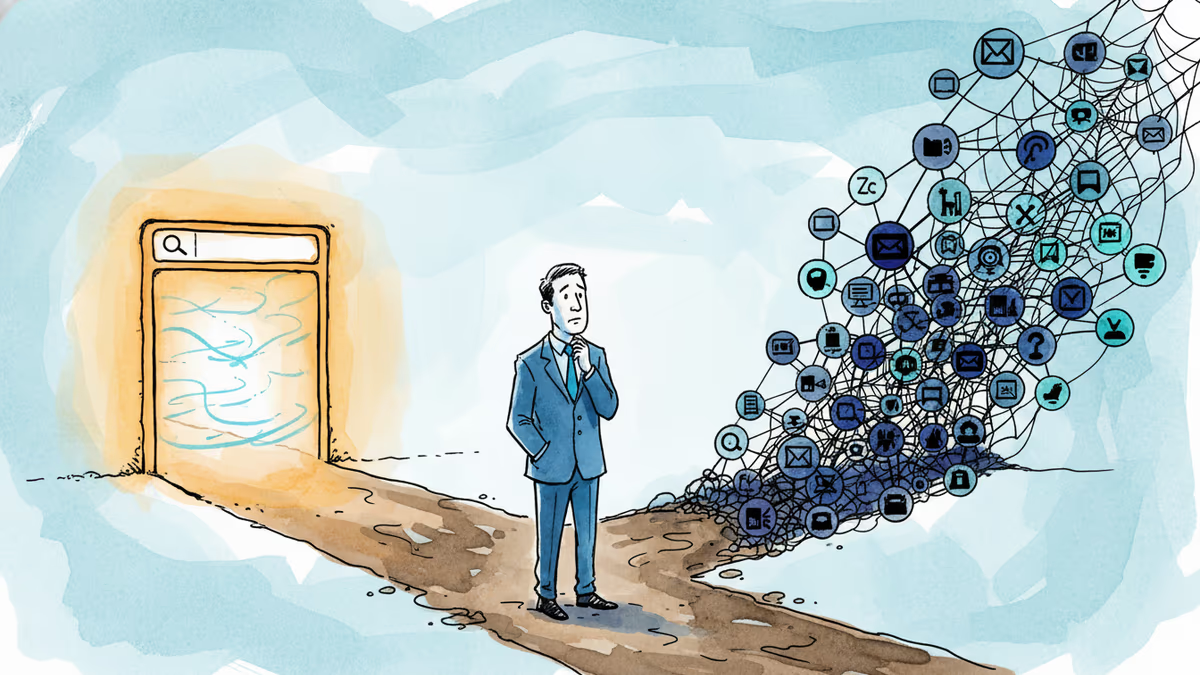
In a post-Google I/O interview, Sundar Pichai acknowledged flawed search results, real AI anxiety, and an AGI timeline that makes the label irrelevant. Here's what he said — and what it means.
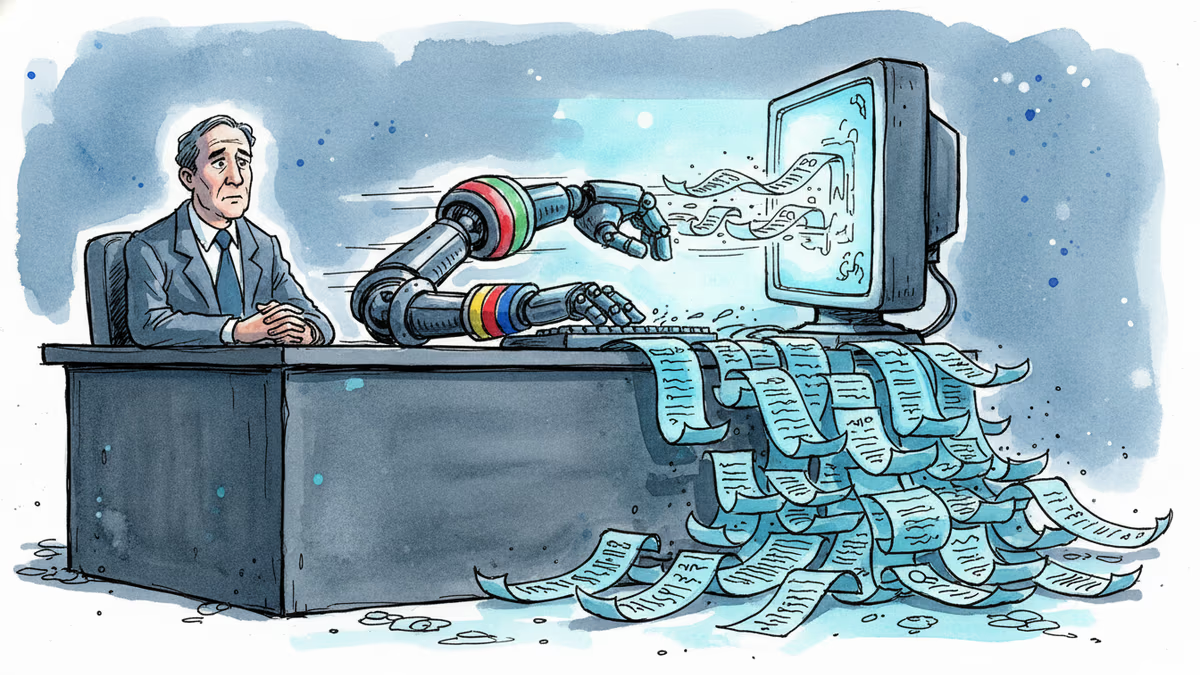
Google is building AI agents that search the web proactively, without user prompting. That's not just a product update — it's a fundamental shift in who controls the information you receive.
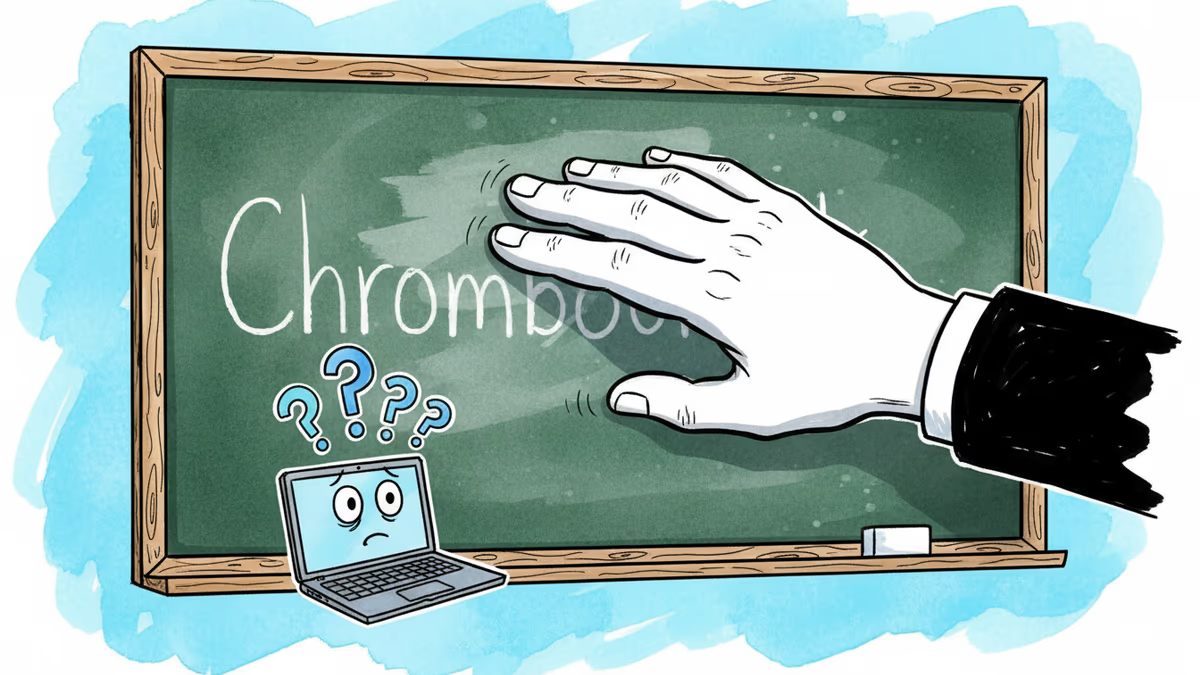
Google unveiled the 'Googlebook' platform to replace Chromebook and ChromeOS—but revealed zero hardware specs. What's the strategy, and what does it mean for users, manufacturers, and the education market?
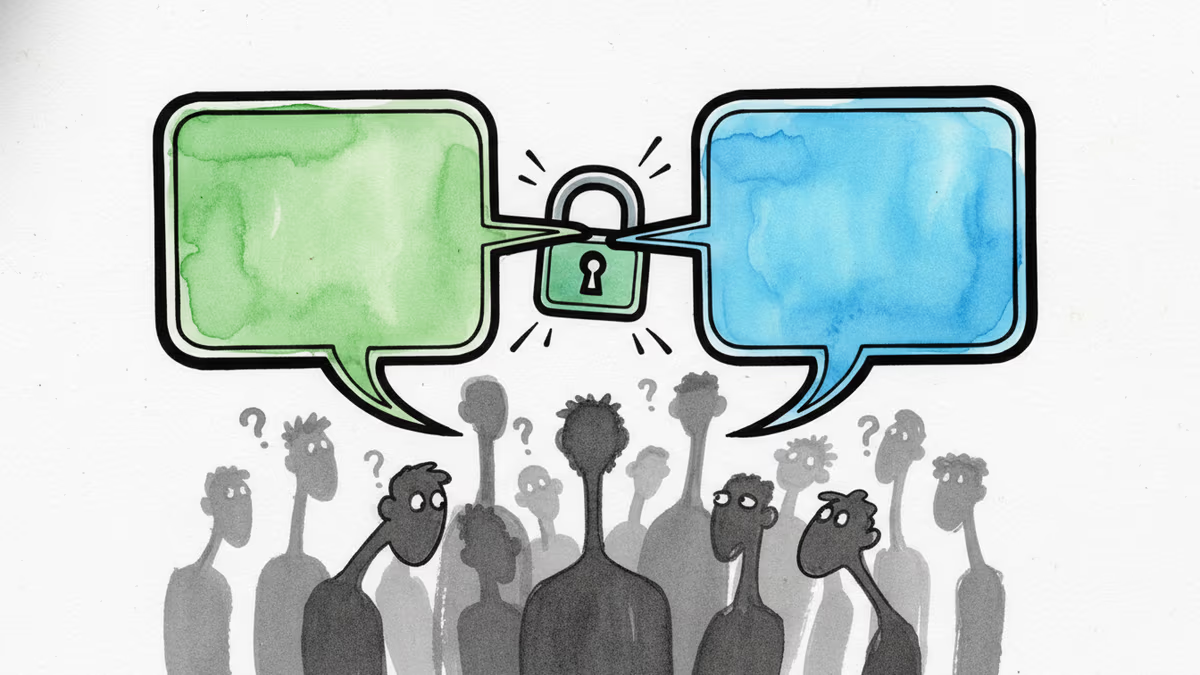
After 15 years of fragmented mobile messaging, Apple and Google are rolling out end-to-end encrypted RCS messaging between iPhones and Android devices. Here's what changed, why it took so long, and what it means for your privacy.
In a post-Google I/O interview, Sundar Pichai acknowledged flawed search results, real AI anxiety, and an AGI timeline that makes the label irrelevant. Here's what he said — and what it means.
Google is building AI agents that search the web proactively, without user prompting. That's not just a product update — it's a fundamental shift in who controls the information you receive.
Google unveiled the 'Googlebook' platform to replace Chromebook and ChromeOS—but revealed zero hardware specs. What's the strategy, and what does it mean for users, manufacturers, and the education market?
After 15 years of fragmented mobile messaging, Apple and Google are rolling out end-to-end encrypted RCS messaging between iPhones and Android devices. Here's what changed, why it took so long, and what it means for your privacy.
Thoughts
Share your thoughts on this article
Sign in to join the conversation