
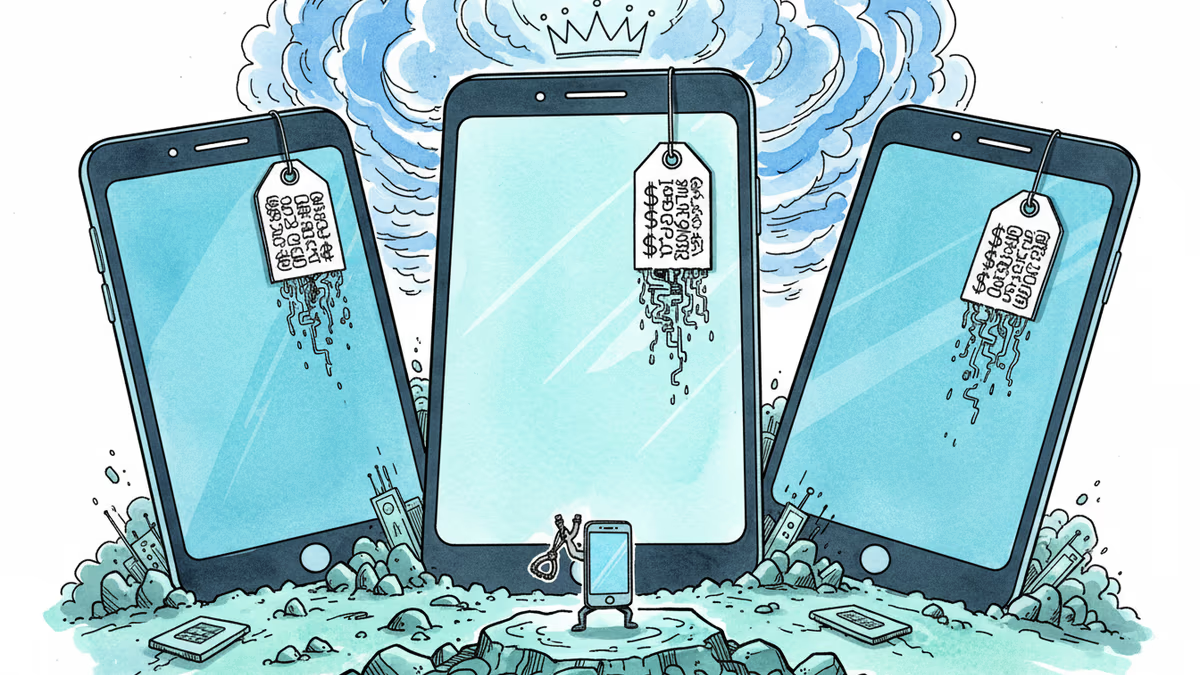
Google's $499 Pixel 10a Challenges the Premium Phone Playbook
Google's Pixel 10a offers flagship-level performance at $499 with 7-year software support, potentially disrupting the premium smartphone market dominated by Apple and Samsung.
What if $499 Could Buy You a Phone That Lasts Longer Than an iPhone?
Google just made that argument. The Pixel 10a launches at $499 with 7 years of guaranteed software updates—longer than most flagship phones and $300 cheaper than the iPhone 15.
For budget-conscious consumers, it's a compelling pitch. But can a mid-range phone really challenge the premium market?
The Mid-Range Paradox: Same Chip, Half the Price
Here's what's interesting: the Pixel 10a runs on the same Tensor G4 chipset as last year's $799 Pixel 9 series. Performance is virtually identical between the two.
The main differences? 8GB of RAM instead of 12GB, and a simpler camera setup. For most users, these distinctions are barely noticeable in daily use.
"The line between mid-range and flagship is blurring," notes tech reviewer Julian Chokkattu.
The Premium Dilemma: When Cheap Phones Get Good

This creates an uncomfortable question for Apple and Samsung: if a $499 phone delivers 90% of the flagship experience, what justifies the premium price?
Consider the math. The Pixel 10a offers 120Hz display, IP68 water resistance, and computational photography that rivals phones twice its price. The missing features—Qi2 magnetic charging, telephoto camera, and extra RAM—matter to enthusiasts but not mainstream users.
Yet premium brands aren't panicking. Apple's iPhone 15 still commands $799 despite similar core functionality. Brand loyalty and ecosystem lock-in remain powerful forces.
The Qi2 Mystery: Strategic Omission or Cost Cutting?
One curious decision: Google excluded Qi2 magnetic charging from the 10a while including it in the $799 Pixel 10. This iPhone MagSafe-compatible feature enables snap-on accessories and faster wireless charging.
Was this intentional product segmentation or cost optimization? Either way, it limits the 10a's accessory ecosystem—a potential growth constraint in a market where cases and chargers drive significant revenue.
The Seven-Year Promise: Marketing Gold or Real Value?
Google's 7-year update commitment sounds impressive, but raises questions. How many users actually keep phones that long? With technology advancing rapidly, will a 2026 phone feel relevant in 2033?
The cynical view: it's marketing theater. The optimistic take: it signals confidence in long-term hardware viability and addresses growing environmental concerns about device longevity.
Authors
Related Articles
In a post-Google I/O interview, Sundar Pichai acknowledged flawed search results, real AI anxiety, and an AGI timeline that makes the label irrelevant. Here's what he said — and what it means.
Google is building AI agents that search the web proactively, without user prompting. That's not just a product update — it's a fundamental shift in who controls the information you receive.
Google unveiled the 'Googlebook' platform to replace Chromebook and ChromeOS—but revealed zero hardware specs. What's the strategy, and what does it mean for users, manufacturers, and the education market?
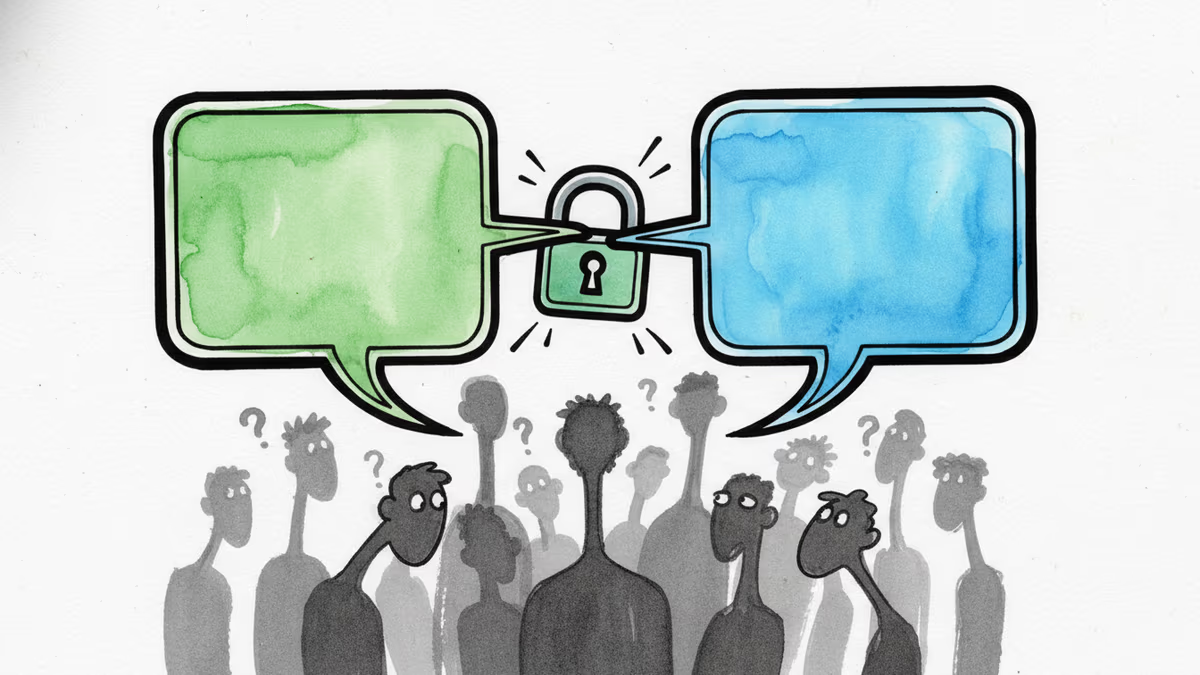
After 15 years of fragmented mobile messaging, Apple and Google are rolling out end-to-end encrypted RCS messaging between iPhones and Android devices. Here's what changed, why it took so long, and what it means for your privacy.
In a post-Google I/O interview, Sundar Pichai acknowledged flawed search results, real AI anxiety, and an AGI timeline that makes the label irrelevant. Here's what he said — and what it means.
Google is building AI agents that search the web proactively, without user prompting. That's not just a product update — it's a fundamental shift in who controls the information you receive.
Google unveiled the 'Googlebook' platform to replace Chromebook and ChromeOS—but revealed zero hardware specs. What's the strategy, and what does it mean for users, manufacturers, and the education market?
After 15 years of fragmented mobile messaging, Apple and Google are rolling out end-to-end encrypted RCS messaging between iPhones and Android devices. Here's what changed, why it took so long, and what it means for your privacy.
Thoughts
Share your thoughts on this article
Sign in to join the conversation