
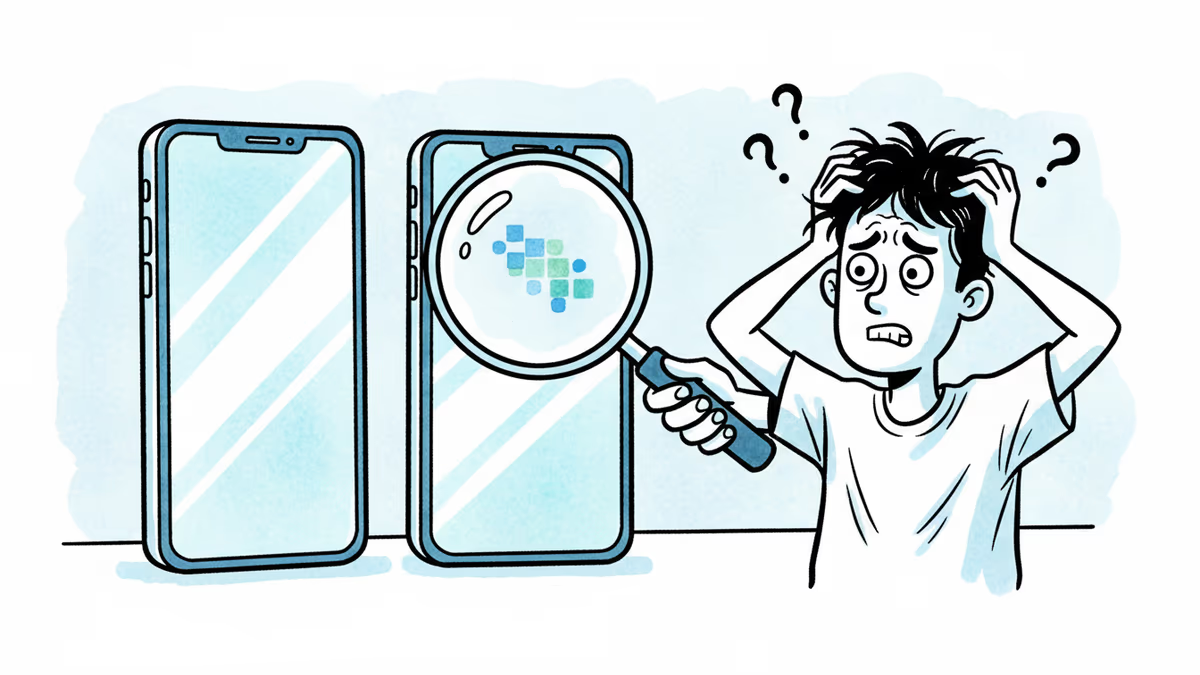
Google's Pixel 10a Looks Identical to 9a—Here's Why
Google's Pixel 10a is nearly identical to last year's 9a. This 'minimal upgrade' strategy reveals something important about the mid-range phone market.
When $500 Phones Stop Trying to Impress
Google just opened pre-orders for the Pixel 10a, launching March 5. But here's the thing—unless you're obsessed with Pixel numbering, you probably won't notice the difference from last year's 9a. The camera now sits completely flush with the back panel. That's about it.
Look at the spec sheet and it gets even more striking. Same Tensor G4 chip, same 8GB RAM, identical camera setup. The screen got slightly brighter (3000 nits vs 2700), and the glass protection jumped from Gorilla Glass 3 to 7i. But functionally? You're getting the same phone.
The 'Good Enough' Philosophy
This isn't laziness—it's strategy. Google discovered something important with the 9a: mid-range buyers don't want bleeding-edge features. They want phones that work reliably, take decent photos, and get seven years of software updates without breaking the bank.
The 9a's 5,100mAh battery and flat camera design were hits precisely because they solved real problems. Why mess with success? Especially when your main selling point isn't hardware—it's the pure Android experience and Pixel-exclusive AI features.

What Samsung and Apple Are Thinking
This creates interesting ripple effects. Samsung's Galaxy A-series competes directly with Pixel a-phones. While Google focuses on software refinement over hardware innovation, Samsung has an opening to differentiate through display technology or camera hardware.
Apple might see validation for their own approach. The iPhone SE line has notoriously long refresh cycles, and Google's strategy suggests consumers are okay with incremental updates—as long as the fundamentals are solid.
For consumers, it's a mixed bag. Pixel 9a owners have virtually zero reason to upgrade. But first-time Pixel buyers get a proven formula at a competitive price.
The Charging Speed Question
One area where Google did make meaningful improvements: charging speeds jumped from 23W to 30W wired, and 7.5W to 10W wireless. It's not revolutionary, but it addresses one of the most common complaints about previous Pixel a-phones.
Authors
Related Articles
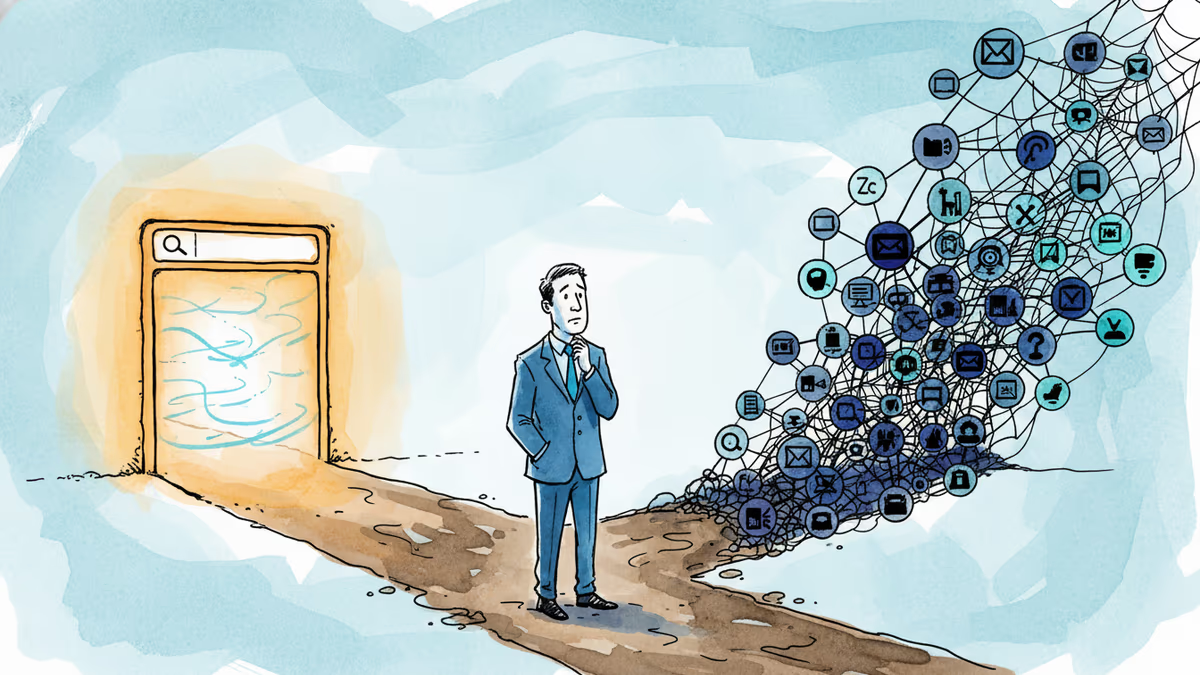
In a post-Google I/O interview, Sundar Pichai acknowledged flawed search results, real AI anxiety, and an AGI timeline that makes the label irrelevant. Here's what he said — and what it means.
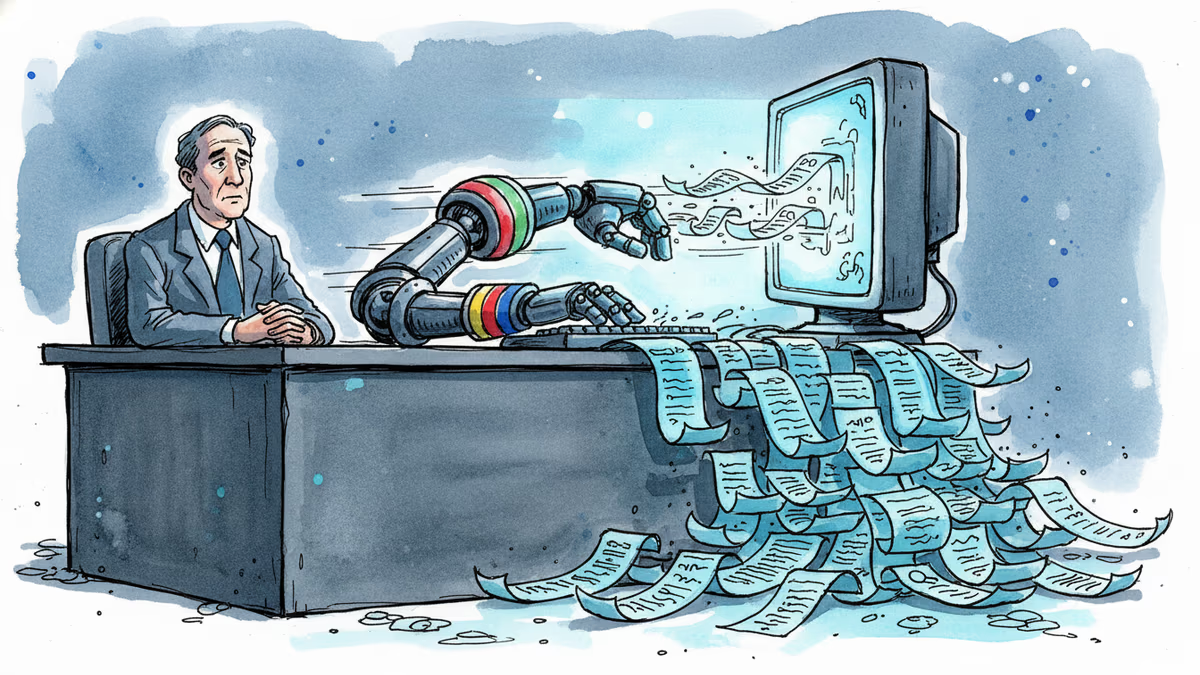
Google is building AI agents that search the web proactively, without user prompting. That's not just a product update — it's a fundamental shift in who controls the information you receive.
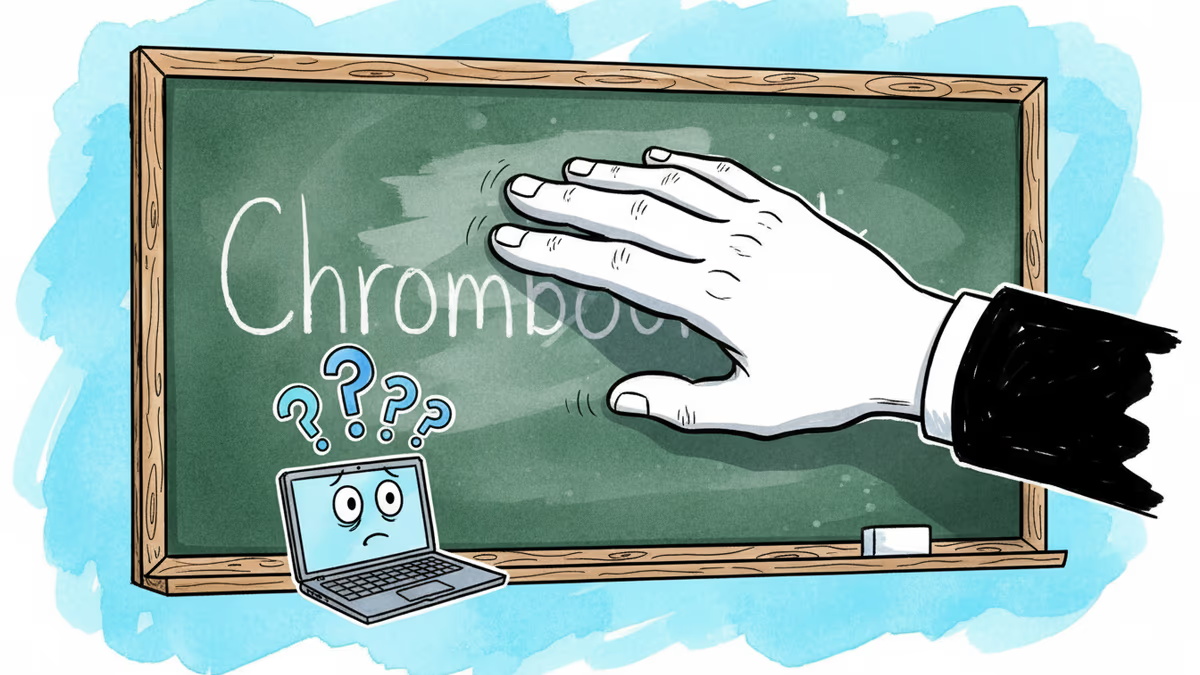
Google unveiled the 'Googlebook' platform to replace Chromebook and ChromeOS—but revealed zero hardware specs. What's the strategy, and what does it mean for users, manufacturers, and the education market?
After 15 years of fragmented mobile messaging, Apple and Google are rolling out end-to-end encrypted RCS messaging between iPhones and Android devices. Here's what changed, why it took so long, and what it means for your privacy.
In a post-Google I/O interview, Sundar Pichai acknowledged flawed search results, real AI anxiety, and an AGI timeline that makes the label irrelevant. Here's what he said — and what it means.
Google is building AI agents that search the web proactively, without user prompting. That's not just a product update — it's a fundamental shift in who controls the information you receive.
Google unveiled the 'Googlebook' platform to replace Chromebook and ChromeOS—but revealed zero hardware specs. What's the strategy, and what does it mean for users, manufacturers, and the education market?
After 15 years of fragmented mobile messaging, Apple and Google are rolling out end-to-end encrypted RCS messaging between iPhones and Android devices. Here's what changed, why it took so long, and what it means for your privacy.
Thoughts
Share your thoughts on this article
Sign in to join the conversation