
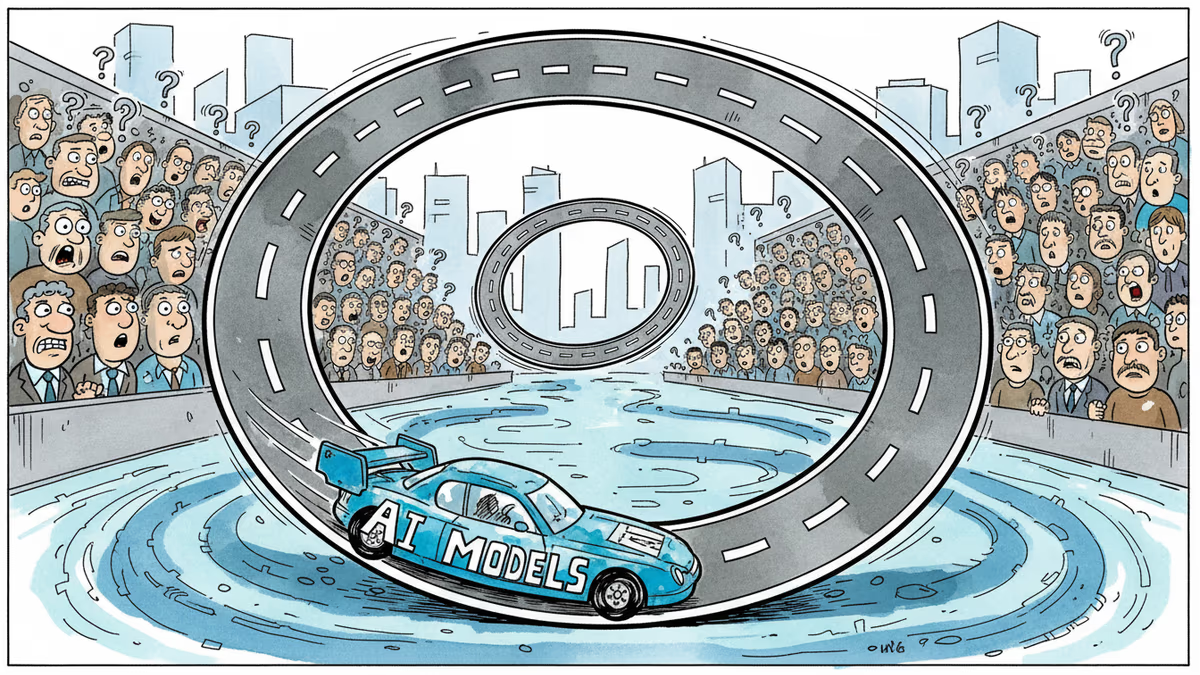
Google's Gemini 3.1 Pro Tops Leaderboards—But Are We Racing Toward a Dead End?
Google's latest Gemini 3.1 Pro model achieves record benchmark scores, leading professional task evaluations. But as AI models advance every few months, what's the real endgame?
The New King of AI Benchmarks Has Arrived
Google'sGemini 3.1 Pro didn't just launch on Thursday—it conquered. Within hours, the model had claimed the top spot on multiple independent benchmarks, including the provocatively named "Humanity's Last Exam" and the professional-focused APEX-Agents leaderboard.
The numbers tell a compelling story. This latest iteration represents what Google calls a "big step up" from Gemini 3, which itself was considered cutting-edge when it debuted just three months ago in November. That's the new reality of AI development: what seemed revolutionary in autumn is now yesterday's news by February.
Brendan Foody, CEO of AI startup Mercor, whose APEX benchmarking system evaluates how well AI models handle real professional tasks, didn't mince words: "Gemini 3.1 Pro is now at the top of the APEX-Agents leaderboard." His assessment highlights something crucial—these aren't just laboratory improvements. We're talking about measurable advances in "real knowledge work."
The Arms Race Nobody Asked For
But here's where things get interesting. Google's triumph comes amid what industry observers are calling the "AI model wars"—a relentless cycle where OpenAI, Anthropic, and Google leapfrog each other every few months with increasingly powerful large language models.

The pace is breathtaking and perhaps unsustainable. Consider this: the gap between Gemini 3 and 3.1 Pro is roughly 90 days. That's half the development cycle we saw just a year ago. Companies are essentially running a technological treadmill, pouring resources into marginal improvements that may become obsolete before most enterprises can even implement them.
For developers and businesses, this creates a peculiar dilemma. Do you integrate the latest model and risk vendor lock-in with rapidly depreciating technology? Or do you build model-agnostic architectures that can adapt to this endless parade of "breakthrough" releases?
The Enterprise Reality Check
While tech enthusiasts celebrate each new benchmark victory, enterprise customers face a different reality. Microsoft's partnership with OpenAI, Amazon's Bedrock platform, and Google's Vertex AI create ecosystem dependencies that extend far beyond model performance.
A CTO at a Fortune 500 company recently told industry analysts: "We're not chasing the latest model anymore. We're choosing the platform we can live with for the next five years." That sentiment reflects a growing enterprise fatigue with the constant upgrade cycle.
Meanwhile, smaller companies and startups find themselves in a different position entirely. They can pivot quickly to leverage the latest capabilities, but they also lack the resources to constantly retrain teams and rebuild infrastructure around new models.
Authors
Related Articles
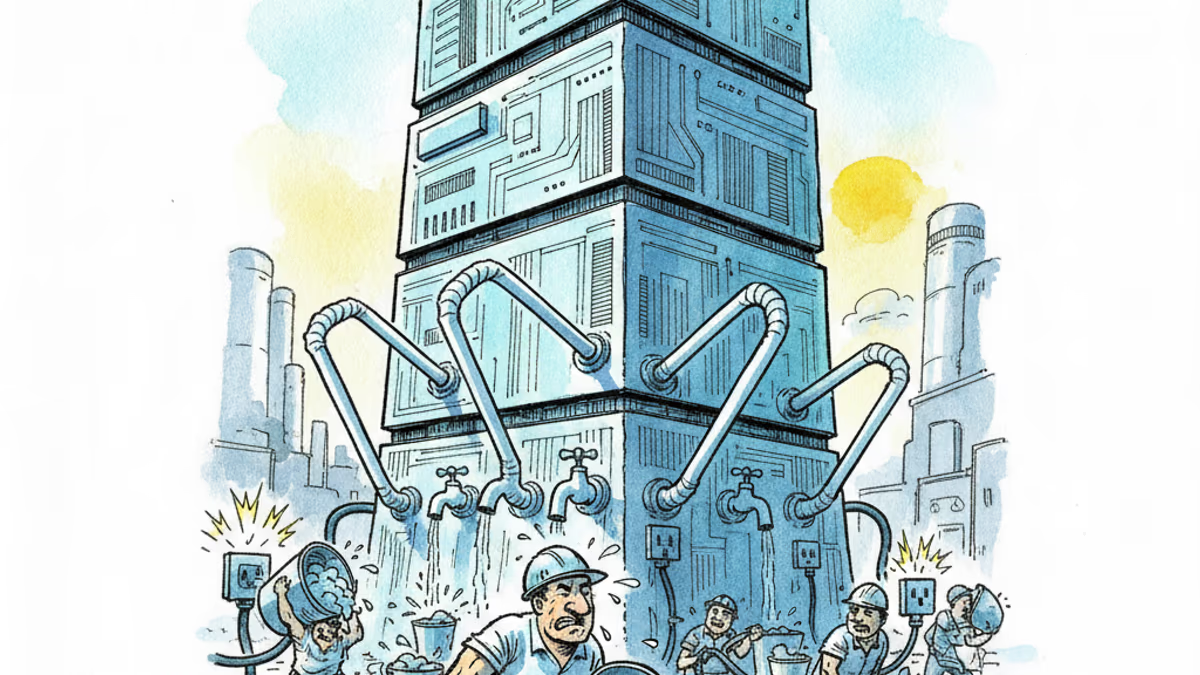
Samsung and SK unveiled a chip and AI investment package worth thousands of trillions of won on June 29. The headline number swings wildly by outlet, but the real contest isn't capital — it's water and power.
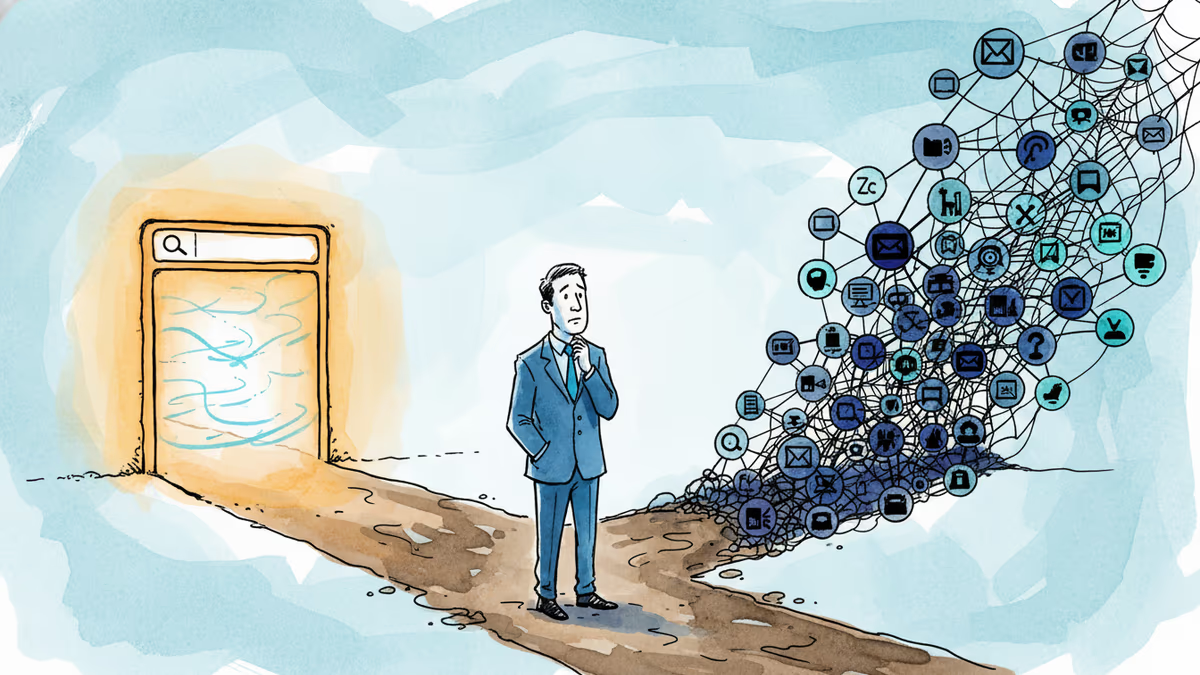
In a post-Google I/O interview, Sundar Pichai acknowledged flawed search results, real AI anxiety, and an AGI timeline that makes the label irrelevant. Here's what he said — and what it means.
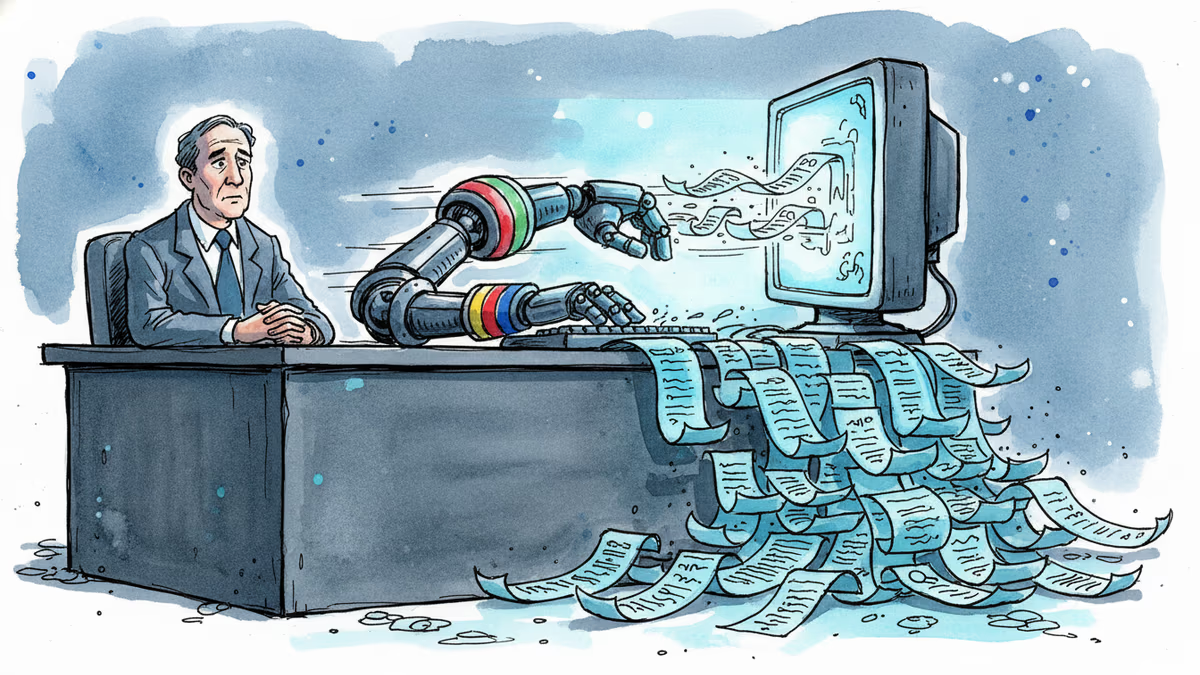
Google is building AI agents that search the web proactively, without user prompting. That's not just a product update — it's a fundamental shift in who controls the information you receive.
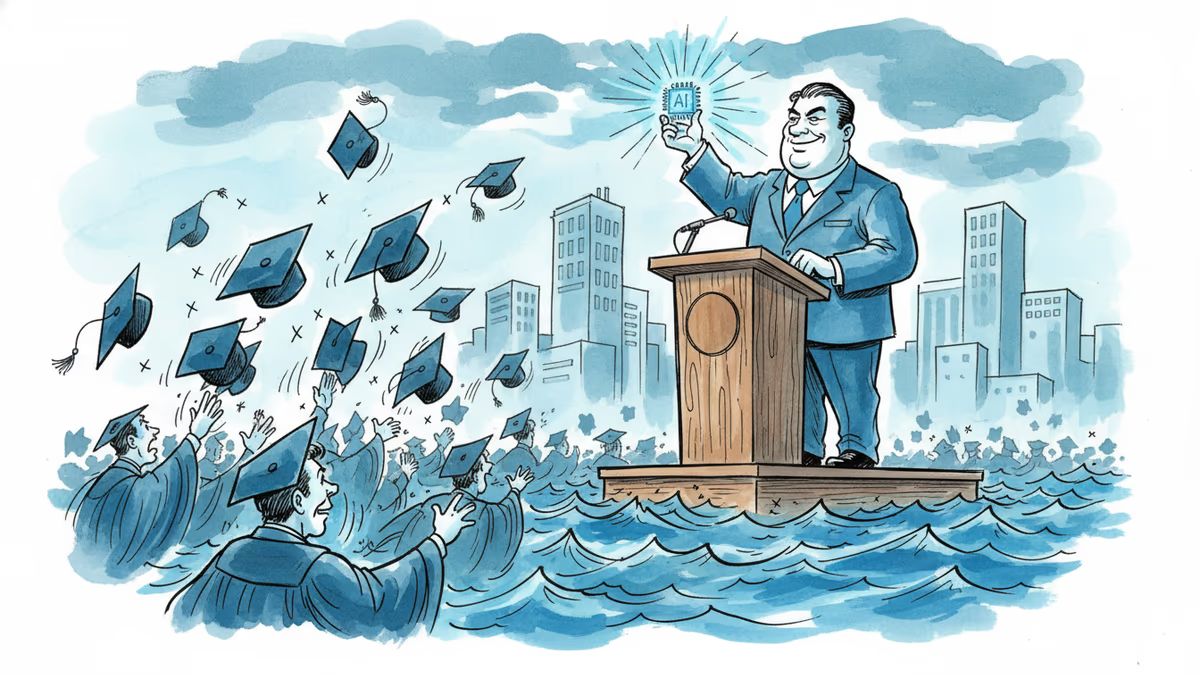
Viral videos show 2026 graduates jeering executives who praise AI at commencement ceremonies. It's not just rudeness — it's a signal about who pays for technological optimism.
Samsung and SK unveiled a chip and AI investment package worth thousands of trillions of won on June 29. The headline number swings wildly by outlet, but the real contest isn't capital — it's water and power.
In a post-Google I/O interview, Sundar Pichai acknowledged flawed search results, real AI anxiety, and an AGI timeline that makes the label irrelevant. Here's what he said — and what it means.
Google is building AI agents that search the web proactively, without user prompting. That's not just a product update — it's a fundamental shift in who controls the information you receive.
Viral videos show 2026 graduates jeering executives who praise AI at commencement ceremonies. It's not just rudeness — it's a signal about who pays for technological optimism.
Thoughts
Share your thoughts on this article
Sign in to join the conversation