
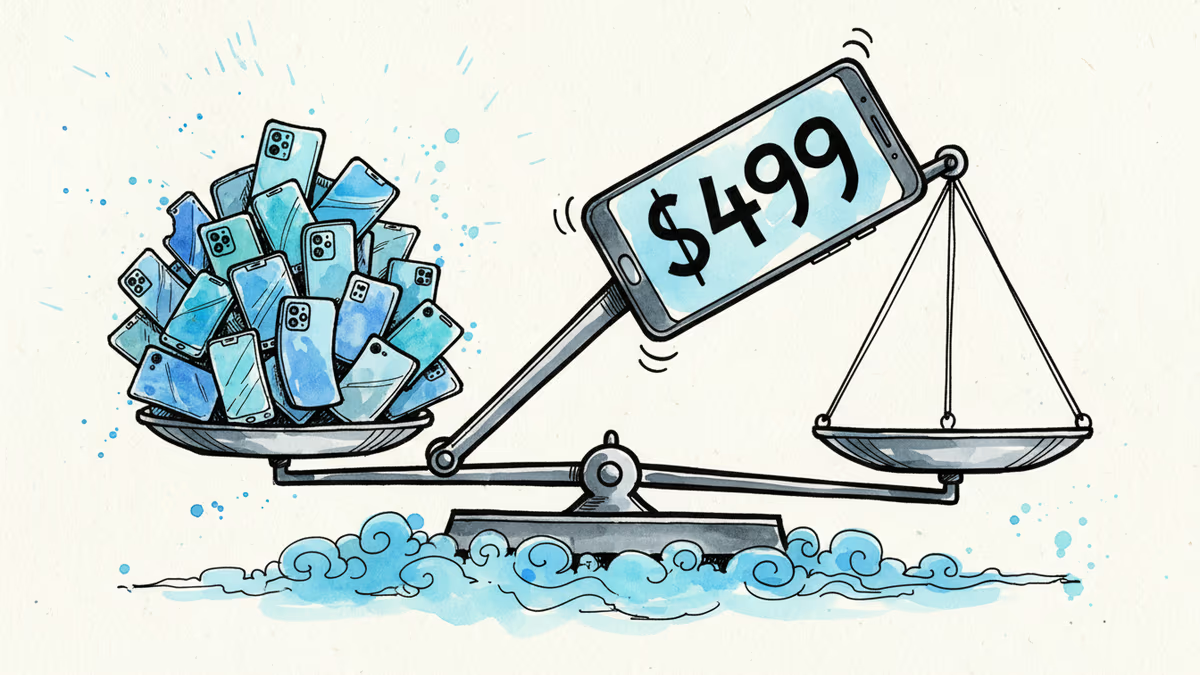
The $499 Phone That's Rewriting Smartphone Economics
Google's Pixel 9a brings flagship AI features to the $499 price point, forcing Samsung and Apple to reconsider their pricing strategies. How one phone is reshaping the mid-range market.
When $499 Becomes the New Premium
Google's Pixel 9a just dropped at $499, and suddenly every other phone maker is scrambling to justify their prices. This isn't just another mid-range release—it's a direct challenge to the smartphone industry's pricing orthodoxy.
For years, $500 was the ceiling for "budget" phones. Anything above meant premium features, flagship cameras, and cutting-edge processors. The Pixel 9a shatters that logic by packing Google's latest AI capabilities and a camera system that rivals phones costing twice as much.
The ripple effects are already visible. Samsung's Galaxy A-series suddenly looks overpriced, Apple's iPhone SE feels dated, and Chinese brands are racing to undercut Google's new benchmark.
Samsung's Dilemma: Compete or Retreat?
Samsung finds itself in an uncomfortable position. The Galaxy A55, priced in the high $400s, now faces direct competition from a phone with superior AI features and longer software support. Samsung's traditional advantage—display quality and build materials—feels less compelling when Google offers 7 years of updates versus Samsung's 4-5 years.
The Korean giant's response has been telling: instead of matching Google's price, Samsung is doubling down on hardware differentiation. The upcoming Galaxy A56 reportedly features a larger battery and faster charging, betting that power users will pay extra for these conveniences.
Meanwhile, Chinese manufacturers like OnePlus and Xiaomi see opportunity in Google's move. They're positioning their $300-400 phones as the "real" value champions, offering flagship-level specs at even lower prices.
The 7-Year Promise Changes Everything

Here's the math that's keeping phone executives awake at night: $499 divided by 7 years equals roughly $71 per year, or about $6 per month. That's cheaper than most streaming subscriptions.
This longevity promise is reshaping consumer psychology. The traditional 2-3 year upgrade cycle suddenly seems wasteful when you can get the latest AI features through software updates instead of hardware replacements.
Apple has taken notice. Industry sources suggest the next iPhone SE will extend its software support timeline, potentially matching Google's 7-year commitment. But Apple faces a different challenge: how do you justify $800+ phones when a $499 device offers comparable smart features?
AI Features Go Mainstream
The Pixel 9a democratizes AI in ways that seemed impossible just two years ago. Real-time call translation, intelligent photo editing, and contextual text summaries—features that once required $1,000+ phones—now work seamlessly on a $499 device.
This isn't just about Google being generous with features. It's strategic: every Pixel user becomes a deeper participant in Google's ecosystem. Data shows Pixel users engage with Google services 30% more than other Android users, generating long-term revenue that justifies the upfront hardware losses.
The Cooling Revolution Nobody Talks About
Buried in the specs is a detail that matters more than most realize: the Pixel 9a includes vapor chamber cooling, typically reserved for gaming phones and flagships. This means sustained performance during intensive AI processing—no more thermal throttling when you're using those fancy AI features.
Competitors are scrambling to match this. Thermal management has become the new battleground, especially as AI workloads push mobile processors harder than ever.
Authors
Related Articles
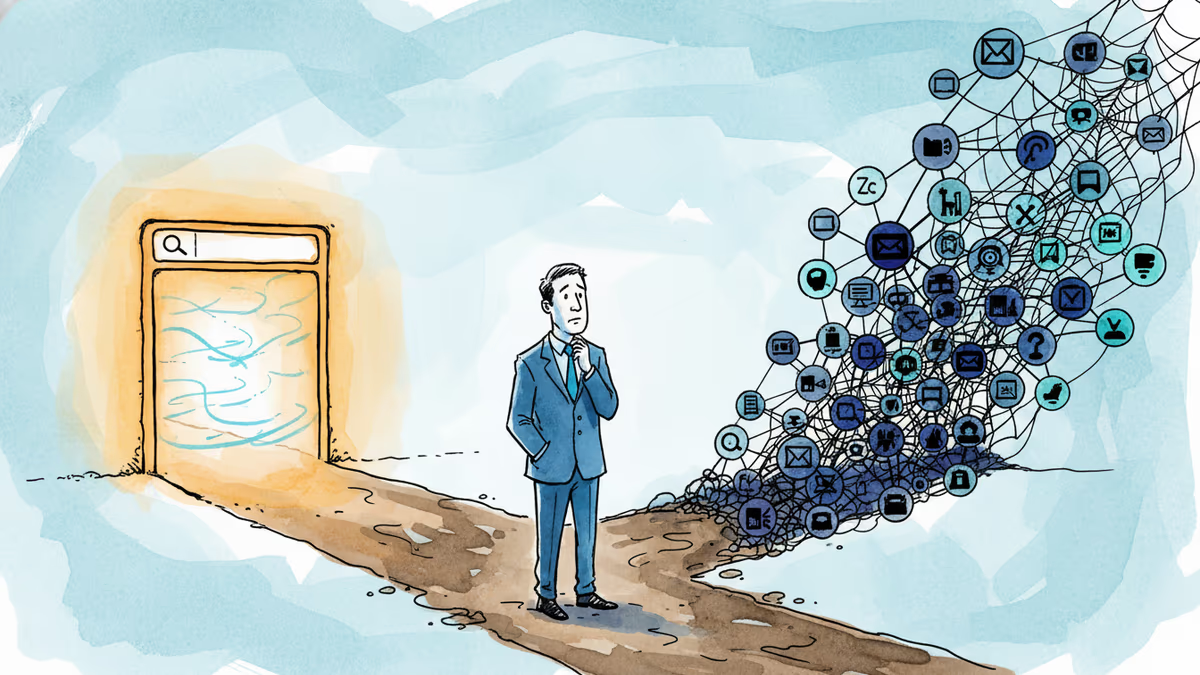
In a post-Google I/O interview, Sundar Pichai acknowledged flawed search results, real AI anxiety, and an AGI timeline that makes the label irrelevant. Here's what he said — and what it means.
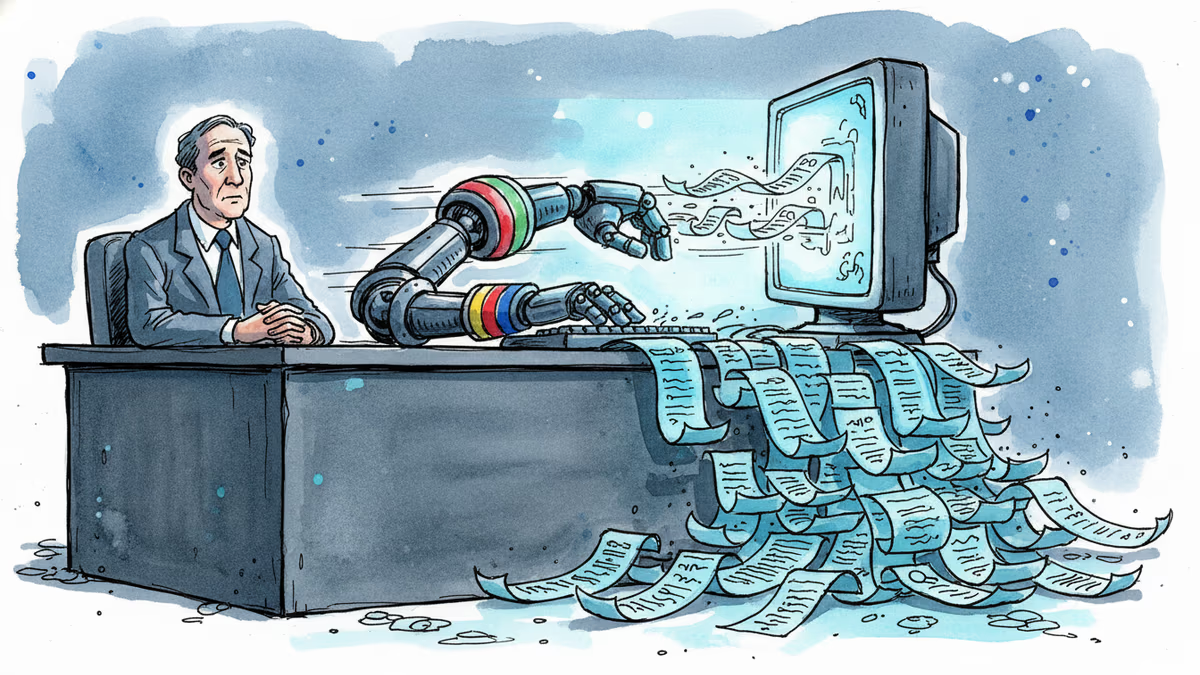
Google is building AI agents that search the web proactively, without user prompting. That's not just a product update — it's a fundamental shift in who controls the information you receive.
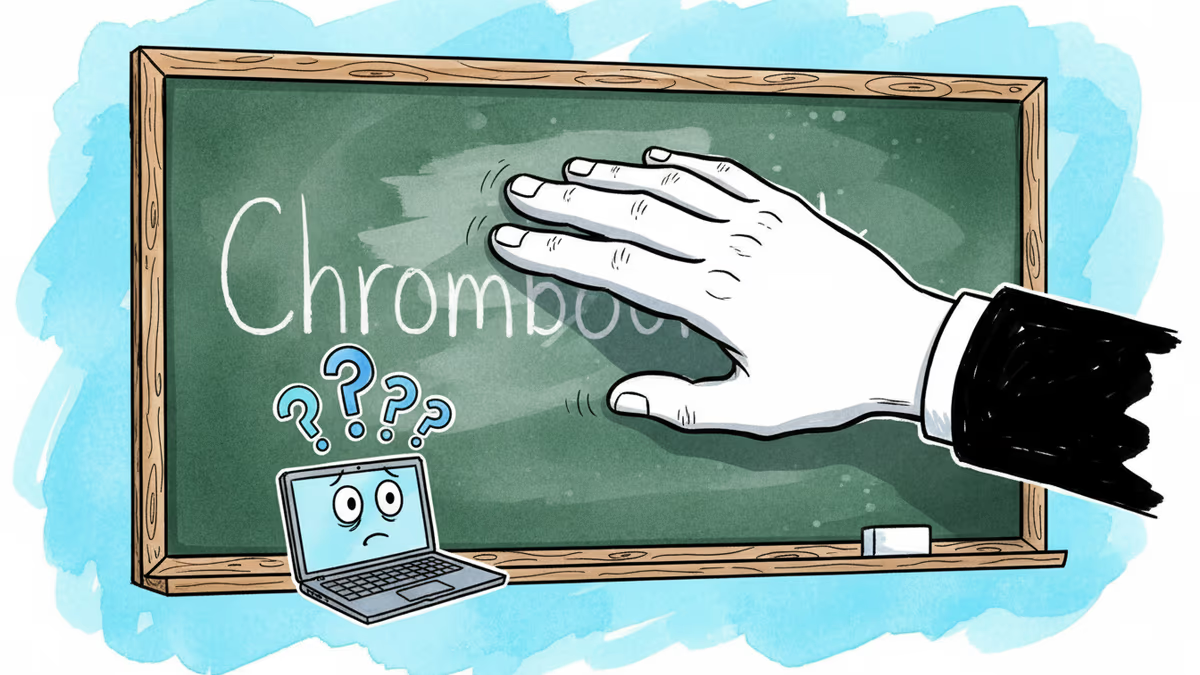
Google unveiled the 'Googlebook' platform to replace Chromebook and ChromeOS—but revealed zero hardware specs. What's the strategy, and what does it mean for users, manufacturers, and the education market?
After 15 years of fragmented mobile messaging, Apple and Google are rolling out end-to-end encrypted RCS messaging between iPhones and Android devices. Here's what changed, why it took so long, and what it means for your privacy.
In a post-Google I/O interview, Sundar Pichai acknowledged flawed search results, real AI anxiety, and an AGI timeline that makes the label irrelevant. Here's what he said — and what it means.
Google is building AI agents that search the web proactively, without user prompting. That's not just a product update — it's a fundamental shift in who controls the information you receive.
Google unveiled the 'Googlebook' platform to replace Chromebook and ChromeOS—but revealed zero hardware specs. What's the strategy, and what does it mean for users, manufacturers, and the education market?
After 15 years of fragmented mobile messaging, Apple and Google are rolling out end-to-end encrypted RCS messaging between iPhones and Android devices. Here's what changed, why it took so long, and what it means for your privacy.
Thoughts
Share your thoughts on this article
Sign in to join the conversation