
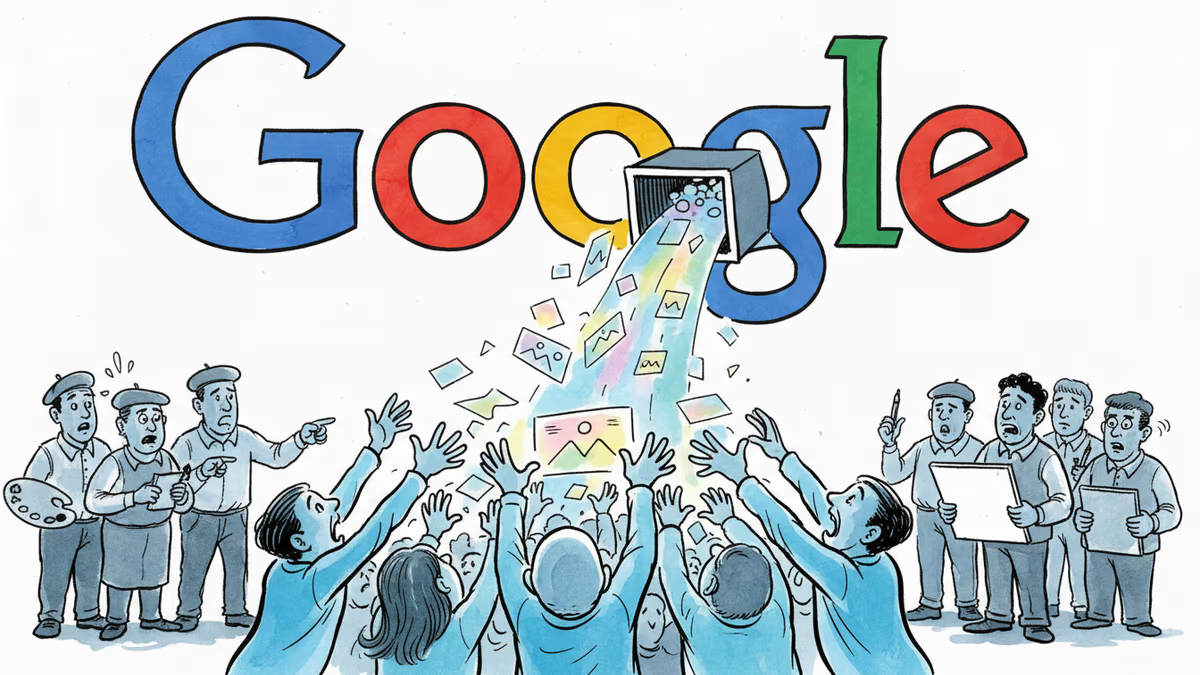
Google's Free AI Image Generator: Who Wins When Premium Goes Public?
Google makes high-end AI image generation free for all users with Nano Banana 2, disrupting the creative industry and competitive landscape
When $10,000 Worth of AI Goes Free Overnight
Google just flipped the script on AI image generation. Starting today, the tech giant is rolling out Nano Banana 2 (also known as Gemini 3.1 Flash Image) to free users across the Gemini app and Google AI platforms. Features that were previously locked behind the premium Nano Banana Pro paywall—real-time information integration, web search image references, and Gemini's vast knowledge base—are now available to anyone with an internet connection.
Google DeepMind says the move brings "high-speed intelligence of Gemini Flash to visual generation," promising to make complex image creation faster, cheaper, and more accessible. But accessibility often comes with consequences.
The Creator Economy's Mixed Reactions
Content creators are split down the middle. Independent YouTubers, bloggers, and small business owners are celebrating—finally, professional-grade image generation without the $20-50 monthly subscription fees. For cash-strapped creators, this could be a game-changer.
Professional designers? Not so much. Sarah Chen, a freelance graphic designer in San Francisco, noticed clients increasingly asking, "Can't we just use AI for this?" Her rates for basic design work have dropped 25% in the past year. "It's not about replacing creativity," she explains, "but clients don't always see the difference between AI-generated and human-crafted work."
The Competitive Shakeup

Google's move puts pressure on competitors like Adobe, Midjourney, and Stability AI. Why pay for Adobe Firefly when Google offers comparable quality for free? The subscription-based model that many AI companies rely on suddenly looks vulnerable.
Midjourney has responded by doubling down on artistic quality and community features. Adobe is betting on seamless integration with existing creative workflows. But for smaller AI startups still seeking product-market fit, Google's free offering could be existential.
The Privacy Trade-off Nobody's Talking About
Here's what the celebration might be missing: Google's business model hasn't changed. Free users become the product. Every image generated, every prompt entered, potentially feeds back into Google's AI training systems. The company's updated terms of service are worth reading—carefully.
Electronic Frontier Foundation privacy advocate Jake Morrison warns: "When AI tools are free, your creative process becomes the commodity. Users should understand what they're trading for that convenience."
Commercial usage rights remain murky too. While Google allows business use of generated images, the legal landscape around AI-created content is still evolving. Copyright lawyers are busy.
The Democratization Dilemma
Google frames this as democratizing AI—making powerful tools available to everyone, not just those who can afford premium subscriptions. There's truth to that. Small businesses in developing markets, students, and independent creators gain access to capabilities that were previously out of reach.
But democratization can also mean commoditization. When everyone has access to the same AI tools, what happens to creative differentiation? Does lowering barriers to entry actually level the playing field, or does it just shift competition to who can prompt-engineer most effectively?
Authors
Related Articles
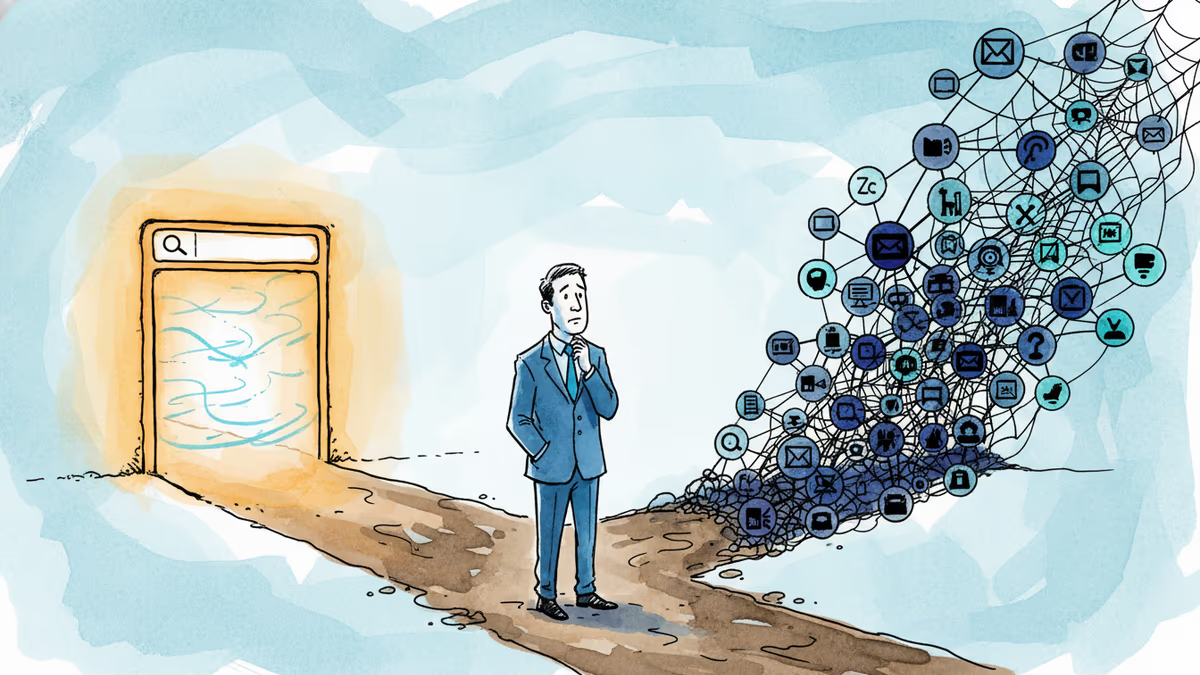
In a post-Google I/O interview, Sundar Pichai acknowledged flawed search results, real AI anxiety, and an AGI timeline that makes the label irrelevant. Here's what he said — and what it means.
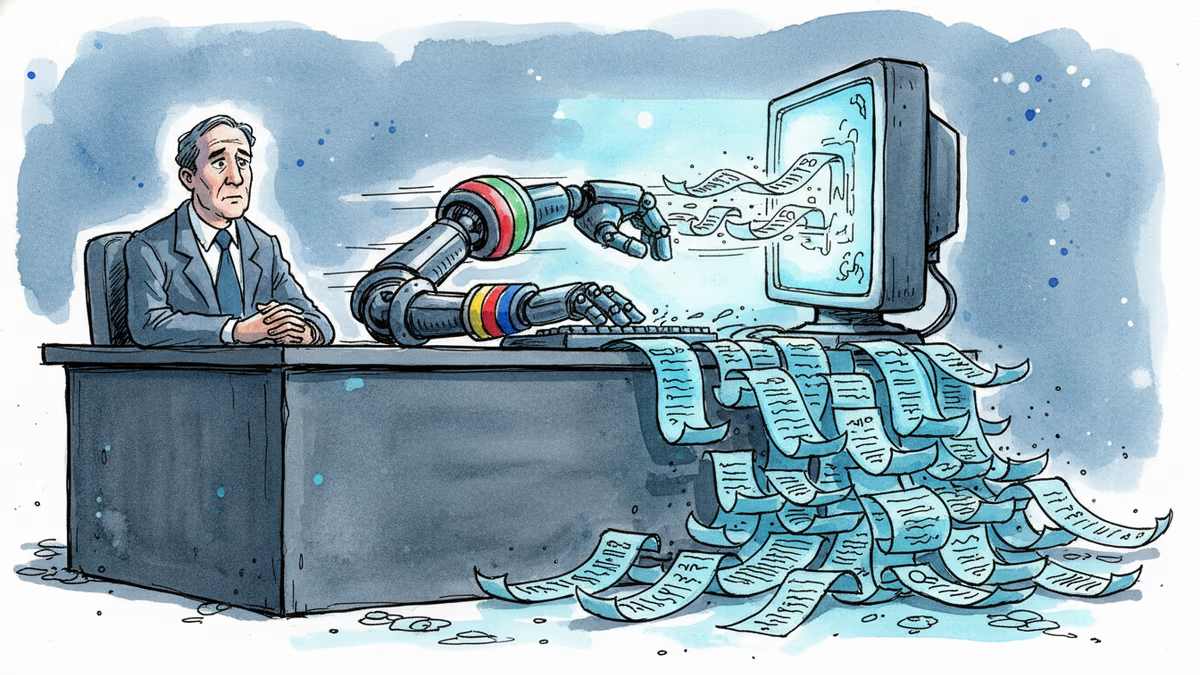
Google is building AI agents that search the web proactively, without user prompting. That's not just a product update — it's a fundamental shift in who controls the information you receive.
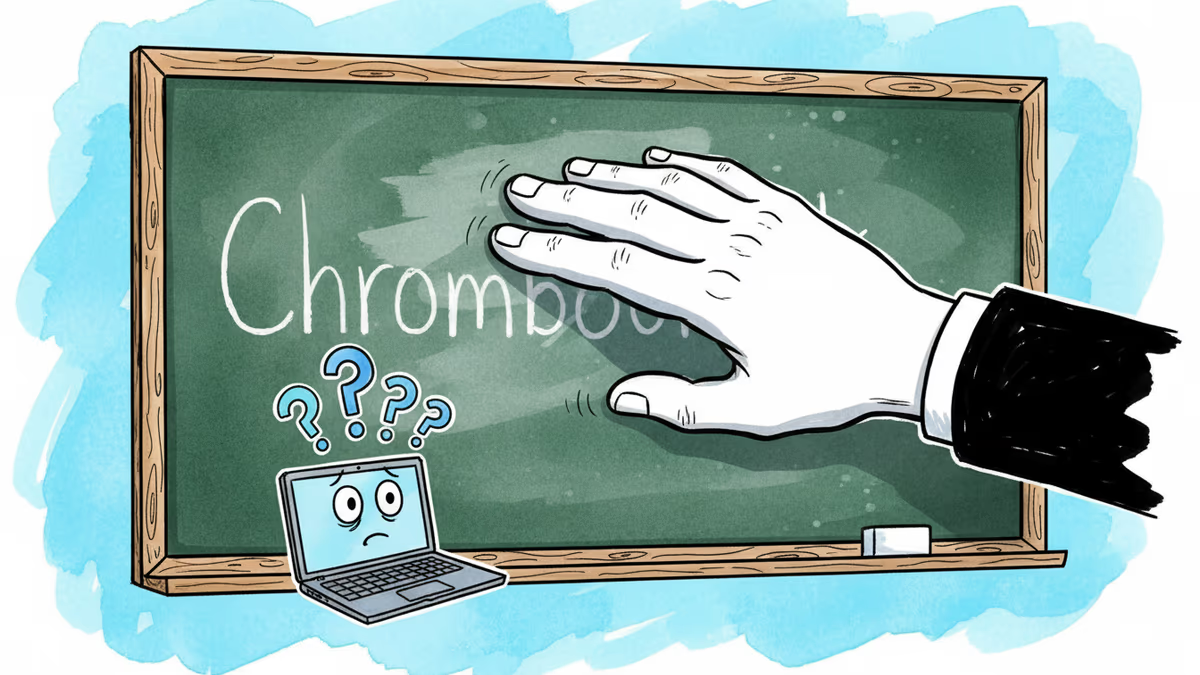
Google unveiled the 'Googlebook' platform to replace Chromebook and ChromeOS—but revealed zero hardware specs. What's the strategy, and what does it mean for users, manufacturers, and the education market?
After 15 years of fragmented mobile messaging, Apple and Google are rolling out end-to-end encrypted RCS messaging between iPhones and Android devices. Here's what changed, why it took so long, and what it means for your privacy.
In a post-Google I/O interview, Sundar Pichai acknowledged flawed search results, real AI anxiety, and an AGI timeline that makes the label irrelevant. Here's what he said — and what it means.
Google is building AI agents that search the web proactively, without user prompting. That's not just a product update — it's a fundamental shift in who controls the information you receive.
Google unveiled the 'Googlebook' platform to replace Chromebook and ChromeOS—but revealed zero hardware specs. What's the strategy, and what does it mean for users, manufacturers, and the education market?
After 15 years of fragmented mobile messaging, Apple and Google are rolling out end-to-end encrypted RCS messaging between iPhones and Android devices. Here's what changed, why it took so long, and what it means for your privacy.
Thoughts
Share your thoughts on this article
Sign in to join the conversation