
Why Google Just Changed Its Default Image AI
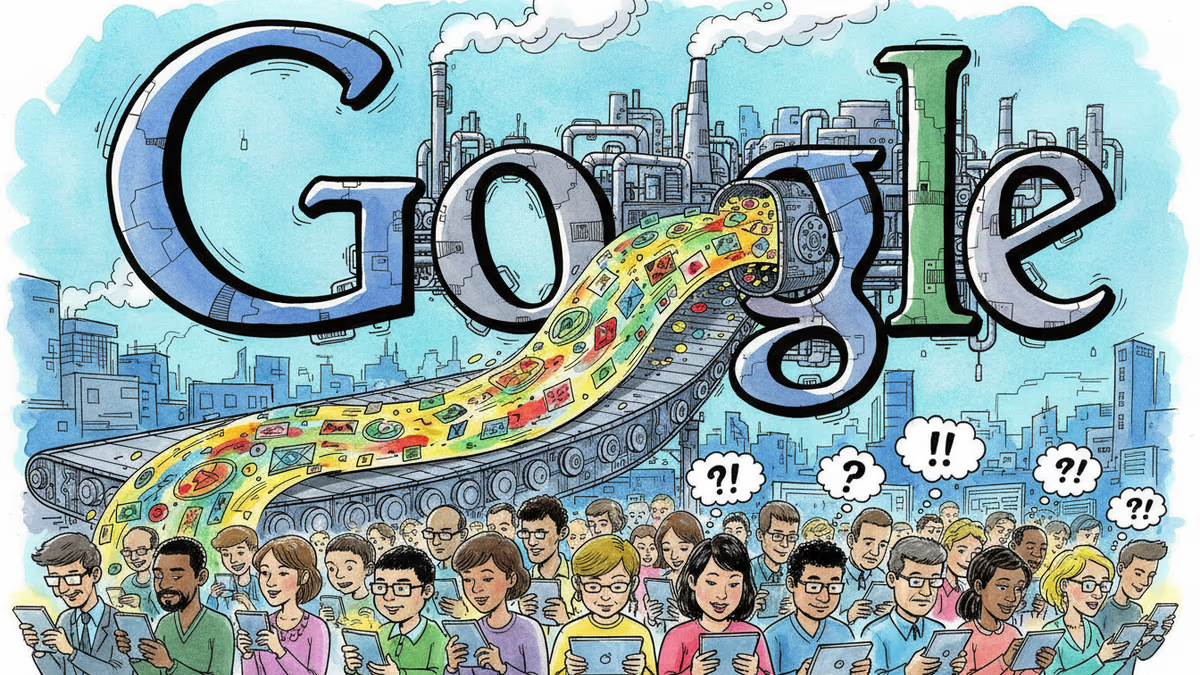
Google makes Nano Banana 2 the default across all services, signaling a strategic shift from premium quality to mass accessibility in AI image generation. What this means for the market.
20 Million Uses Later, Google Makes Its Move
Google today didn't just announce another AI model. It made a strategic declaration. The company's new Nano Banana 2 (technically Gemini 3.1 Flash Image) becomes the default across every Gemini mode, Google Search, and even its video editing tool Flow. This isn't about better images—it's about Google choosing accessibility over perfection.
Since launching the original Nano Banana in August 2025, millions of images flooded the platform, especially in markets like India. November's Nano Banana Pro delivered premium quality, but Google learned something: most users don't need perfection. They need speed.
The Speed vs. Quality Gamble
Nano Banana 2 represents Google's bet on the middle ground. It maintains Pro's high-fidelity characteristics while generating images faster. Users can create anything from 512px to 4K resolution, maintain consistency across up to 5 characters, and handle 14 objects in complex scenes.

But here's what's really happening: Google is democratizing AI image creation. By making this the default across 141 countries, the company is prioritizing reach over premium features. It's a calculated risk that could reshape how we think about AI accessibility.
Developers See the Bigger Picture
The developer community is watching closely. Nano Banana 2 comes with SynthID watermarking and C2PA Content Credentials support—Google's answer to the AI authenticity crisis. Available through Gemini API, Vertex API, and the new Antigravity development tool, it signals Google's commitment to responsible AI deployment.
Yet power users aren't abandoned. Google AI Pro and Ultra subscribers can still access Nano Banana Pro through the three-dot menu. Google is essentially creating a tiered ecosystem: fast and accessible for most, premium for specialists.
The Competitive Implications
This move puts pressure on competitors. While others chase the highest quality metrics, Google is optimizing for user adoption. The 20 million verification uses since November suggest this strategy might work. But it also raises questions about market positioning.
Authors
Related Articles

Samsung and SK unveiled a chip and AI investment package worth thousands of trillions of won on June 29. The headline number swings wildly by outlet, but the real contest isn't capital — it's water and power.
In a post-Google I/O interview, Sundar Pichai acknowledged flawed search results, real AI anxiety, and an AGI timeline that makes the label irrelevant. Here's what he said — and what it means.
Google is building AI agents that search the web proactively, without user prompting. That's not just a product update — it's a fundamental shift in who controls the information you receive.

Viral videos show 2026 graduates jeering executives who praise AI at commencement ceremonies. It's not just rudeness — it's a signal about who pays for technological optimism.
Samsung and SK unveiled a chip and AI investment package worth thousands of trillions of won on June 29. The headline number swings wildly by outlet, but the real contest isn't capital — it's water and power.
In a post-Google I/O interview, Sundar Pichai acknowledged flawed search results, real AI anxiety, and an AGI timeline that makes the label irrelevant. Here's what he said — and what it means.
Google is building AI agents that search the web proactively, without user prompting. That's not just a product update — it's a fundamental shift in who controls the information you receive.
Viral videos show 2026 graduates jeering executives who praise AI at commencement ceremonies. It's not just rudeness — it's a signal about who pays for technological optimism.
Thoughts
Share your thoughts on this article
Sign in to join the conversation