
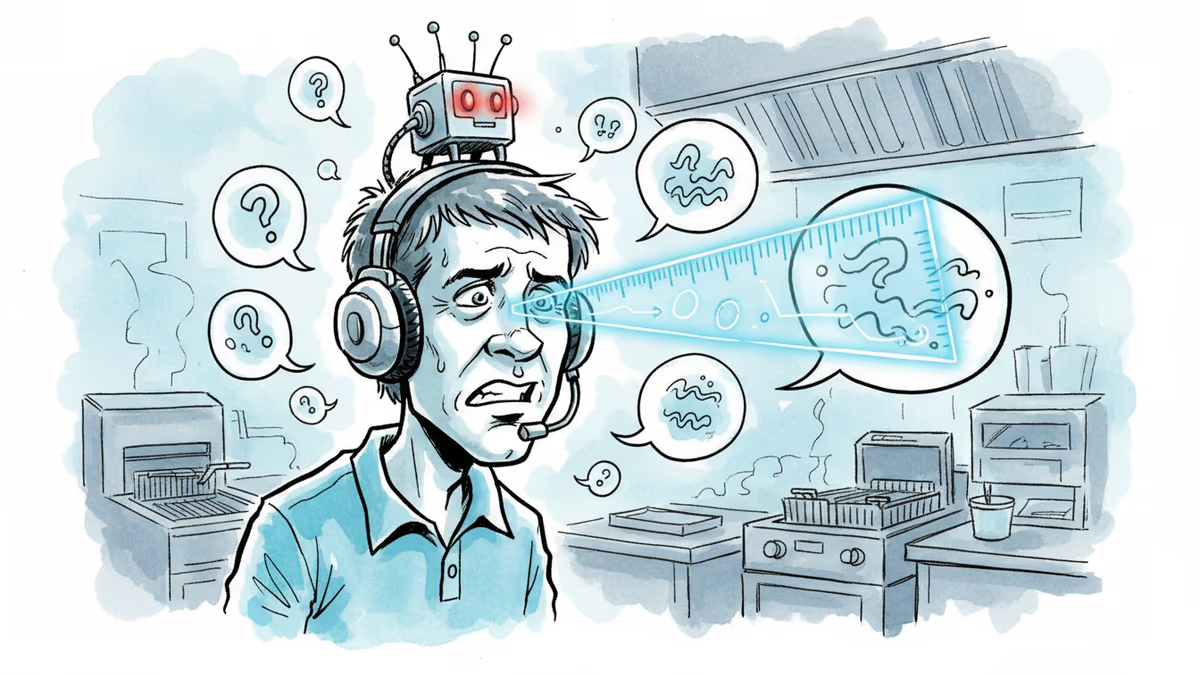
Your Voice at Work is Now Being Graded by AI
Burger King introduces AI chatbot 'Patty' to employee headsets, evaluating customer interactions for 'friendliness.' What happens when algorithms judge human connection?
Every "Please" and "Thank You" Gets a Score
Burger King employees now have a new coworker listening to every customer interaction. Patty, an AI chatbot embedded in employee headsets, doesn't just help with orders—it evaluates how "friendly" workers sound to customers.
The system recognizes specific phrases like "welcome to Burger King," "please," and "thank you," according to Thibault Roux, Burger King's chief digital officer. Managers can then use this data to assess employee performance, turning every customer interaction into a measurable metric.
This isn't just about efficiency. It's about quantifying human connection.
The Promise vs. The Reality
Burger King frames this as employee support. The AI assists with meal preparation, guides workers through complex orders, and theoretically improves service quality. For many fast-food employees juggling multiple tasks under pressure, AI assistance could genuinely help.
But labor advocates see something different: algorithmic surveillance. "We're moving toward a workplace where every word is monitored and scored," says Sarah Chen, a workplace rights researcher. "The question isn't whether this makes restaurants more efficient—it's whether we're comfortable with machines judging human interactions."

The concern runs deeper than privacy. When AI defines "friendliness" through keyword recognition, it reduces complex human communication to a checklist. A worker dealing with a difficult customer might skip the scripted pleasantries to focus on problem-solving—and get dinged for being "unfriendly."
The Bigger Picture: AI at Work
Burger King isn't alone. Major chains across the US are exploring similar systems. McDonald's has tested AI drive-through ordering, while Starbucks uses algorithms to optimize staffing. The difference with Patty is the human evaluation component—AI isn't just automating tasks, it's judging workers.
This shift affects 3.7 million fast-food workers nationwide, but the implications stretch far beyond restaurants. Customer service representatives, retail workers, and even office employees increasingly face AI-powered performance monitoring.
The regulatory landscape remains murky. The Equal Employment Opportunity Commission has issued guidance on AI in hiring, but workplace monitoring falls into a gray area. "We're essentially conducting a massive experiment on American workers," notes employment attorney Michael Rodriguez, "without clear rules about what's acceptable."
Workers vs. Algorithms
Early employee reactions are mixed. Some appreciate the assistance with complex orders and menu changes. Others describe feeling "like I'm being watched by a robot all day," as one anonymous Burger King employee put it.
The generational divide is notable. Younger workers, already accustomed to digital monitoring through apps and social media, seem more accepting. Older employees express greater discomfort with constant AI oversight.
Union organizers see this as part of a broader pattern. "First, they automated the fryers. Then came self-service kiosks. Now they're automating management," says Maria Santos from the Service Employees International Union. "What's left for human workers?"
Authors
Related Articles
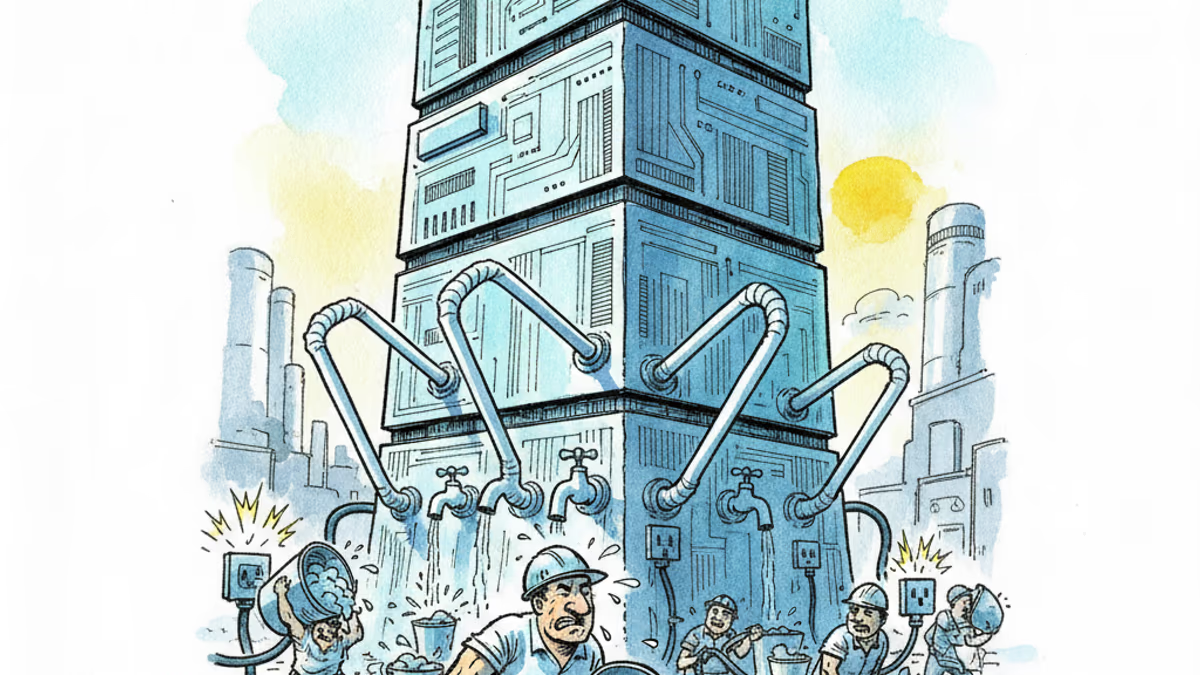
Samsung and SK unveiled a chip and AI investment package worth thousands of trillions of won on June 29. The headline number swings wildly by outlet, but the real contest isn't capital — it's water and power.
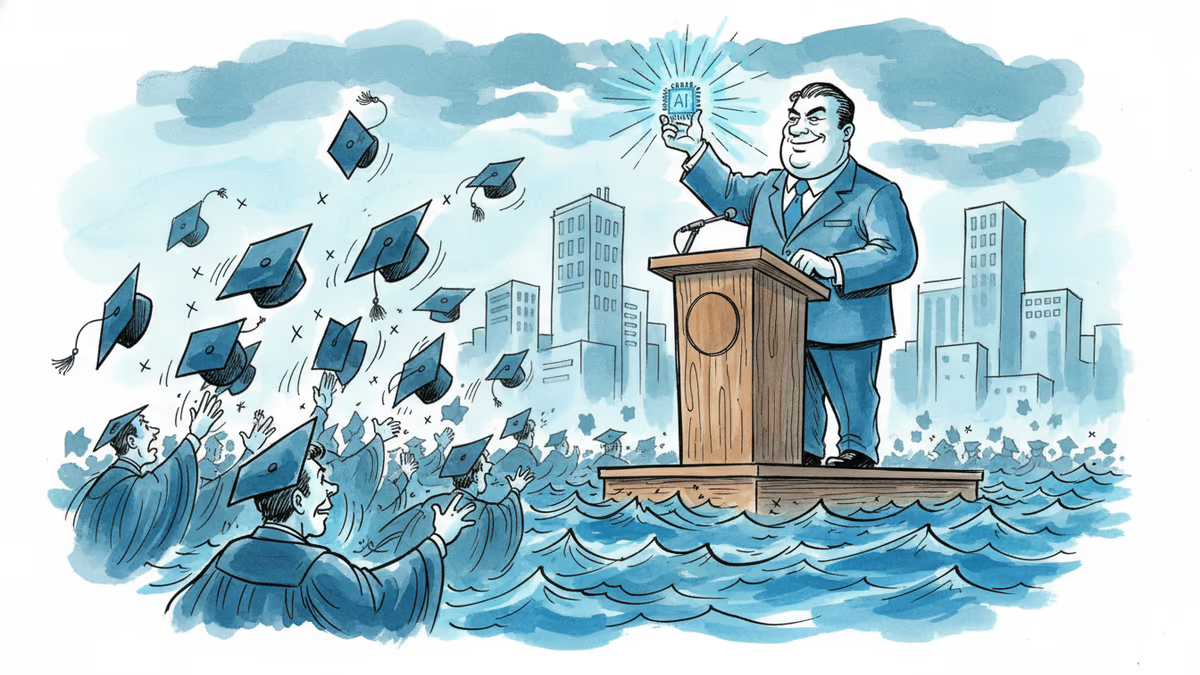
Viral videos show 2026 graduates jeering executives who praise AI at commencement ceremonies. It's not just rudeness — it's a signal about who pays for technological optimism.
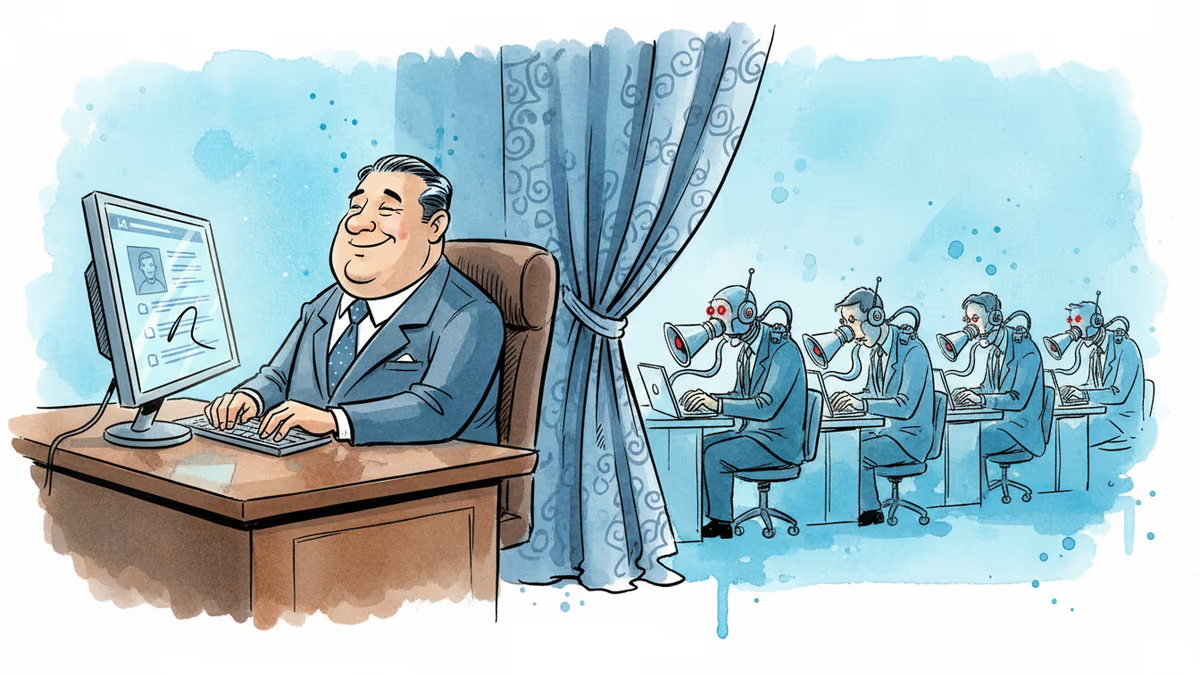
Filipino virtual assistants using AI to ghost-manage LinkedIn profiles for executives is now a structured industry. 30 comments a day, fake engagement rings, and a platform struggling to tell real from fabricated.
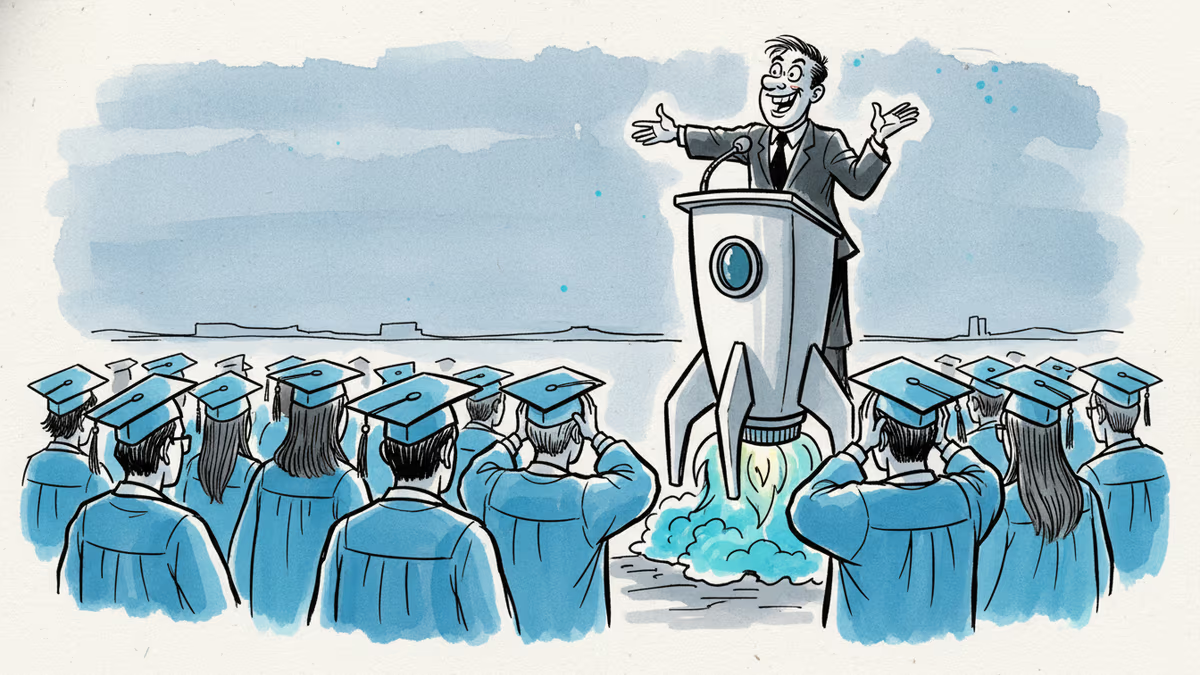
Two commencement speakers learned the hard way that AI enthusiasm doesn't land well with today's graduates. The backlash reveals a widening gap between tech optimism and Gen Z's economic reality.
Samsung and SK unveiled a chip and AI investment package worth thousands of trillions of won on June 29. The headline number swings wildly by outlet, but the real contest isn't capital — it's water and power.
Viral videos show 2026 graduates jeering executives who praise AI at commencement ceremonies. It's not just rudeness — it's a signal about who pays for technological optimism.
Filipino virtual assistants using AI to ghost-manage LinkedIn profiles for executives is now a structured industry. 30 comments a day, fake engagement rings, and a platform struggling to tell real from fabricated.
Two commencement speakers learned the hard way that AI enthusiasm doesn't land well with today's graduates. The backlash reveals a widening gap between tech optimism and Gen Z's economic reality.
Thoughts
Share your thoughts on this article
Sign in to join the conversation