
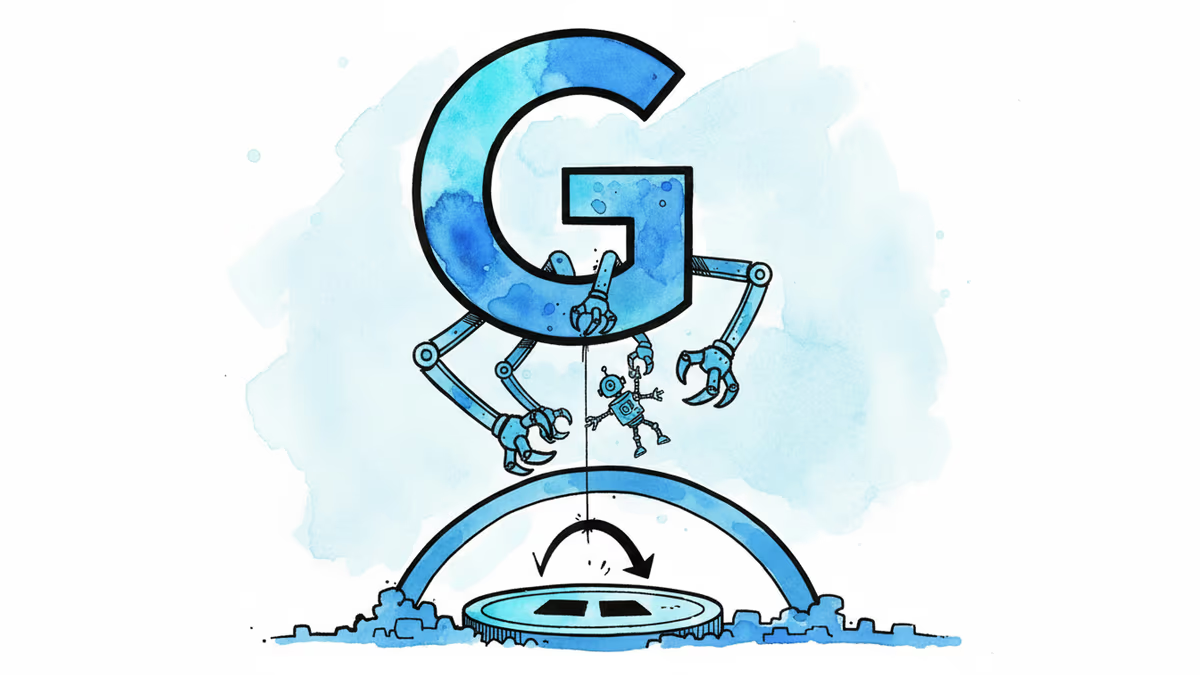
Google Pulls Robotics 'Moonshot' Intrinsic Back Into Main Company
After 5 years as independent unit, Google absorbs AI robotics subsidiary Intrinsic, signaling strategic shift toward physical AI as core business priority
The $1 Billion Question: Why Now?
Google just pulled its AI robotics subsidiary Intrinsic back into the main company after 5 years of independent operation. This isn't just corporate reshuffling—it's Google admitting that physical AI is no longer a side bet.
Intrinsic launched in 2021 under Alphabet's Other Bets division, the notorious graveyard of ambitious projects where Google Glass, Loon balloons, and countless other "moonshots" went to die. The company positioned itself as the "Android of robotics," building software tools to make robot development as accessible as smartphone app creation.
But here's what makes this different: instead of quietly shuttering like most Other Bets projects, Intrinsic is getting promoted to the main stage.
From Experiment to Core Strategy
The timing tells a story. Google has been aggressively pushing into AI hardware—custom Tensor chips, Gemini-powered robot prototypes, and now this strategic pull-in of Intrinsic. The company is clearly betting that the future of AI isn't just conversational chatbots, but physical intelligence that can manipulate the real world.
This move puts Google in direct competition with Tesla's robotics ambitions, Amazon's warehouse automation, and Microsoft's industrial AI partnerships. But Google's approach is distinctly different: instead of building robots, they're building the platform that others use to build robots.

It's the same playbook that made Android dominant in smartphones. Give away the tools, control the ecosystem.
The Developer Dilemma
For robotics developers, this creates a fascinating tension. Intrinsic's tools genuinely make robot programming more accessible—what once required months of custom coding can now be done in weeks. Smaller companies and research labs suddenly have access to Google-grade AI capabilities.
But there's a catch. Every robot built on Intrinsic's platform becomes part of Google's data collection network. Every movement, every task, every failure becomes training data for Google's AI models. It's convenient dependency with a surveillance twist.
Some developers are already expressing concern about "vendor lock-in." Once you build your robot application on Google's platform, switching becomes prohibitively expensive. It's the classic platform strategy: make yourself indispensable, then gradually tighten control.
The Bigger Picture: Physical AI Race
This absorption signals that the next phase of AI competition won't be fought in chat windows or search results, but in factories, warehouses, and homes. Google is positioning itself to be the invisible brain behind millions of robots.
The market opportunity is staggering. Industrial robotics alone is projected to reach $24 billion by 2030, while service robots could hit $17 billion. But the real prize isn't hardware sales—it's platform control and data access.
Google's bet is that whoever controls the robot operating system controls the future of physical AI. It's Android all over again, but this time for machines that can actually touch your world.
Authors
Related Articles
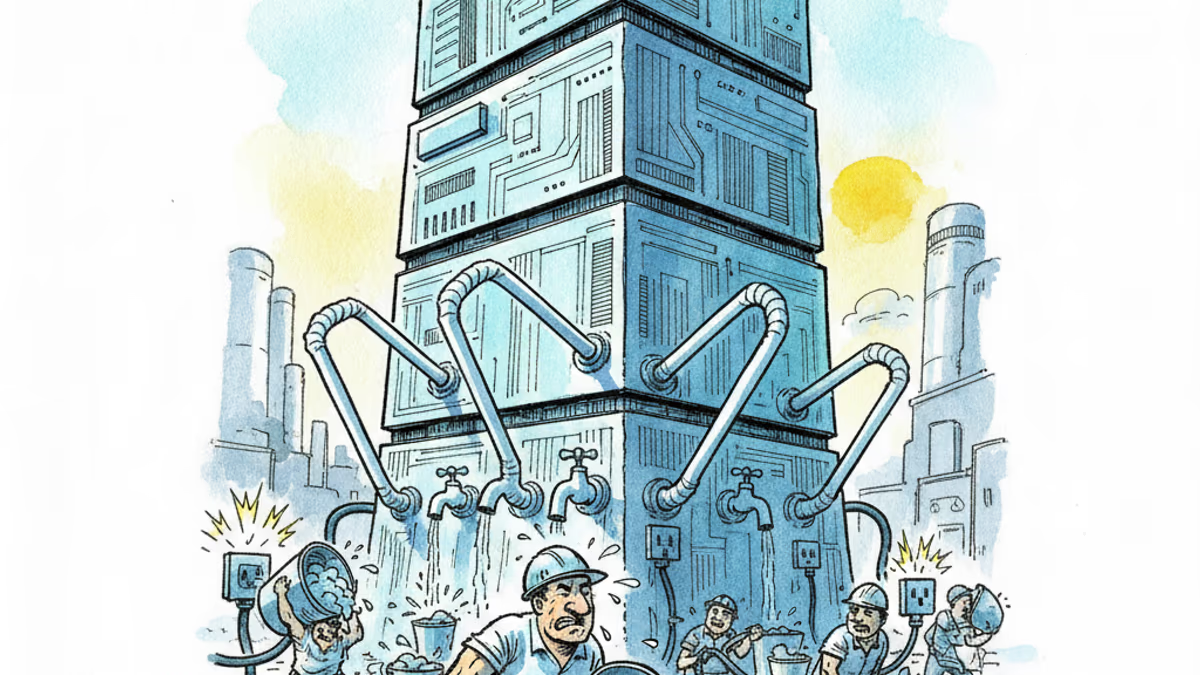
Samsung and SK unveiled a chip and AI investment package worth thousands of trillions of won on June 29. The headline number swings wildly by outlet, but the real contest isn't capital — it's water and power.
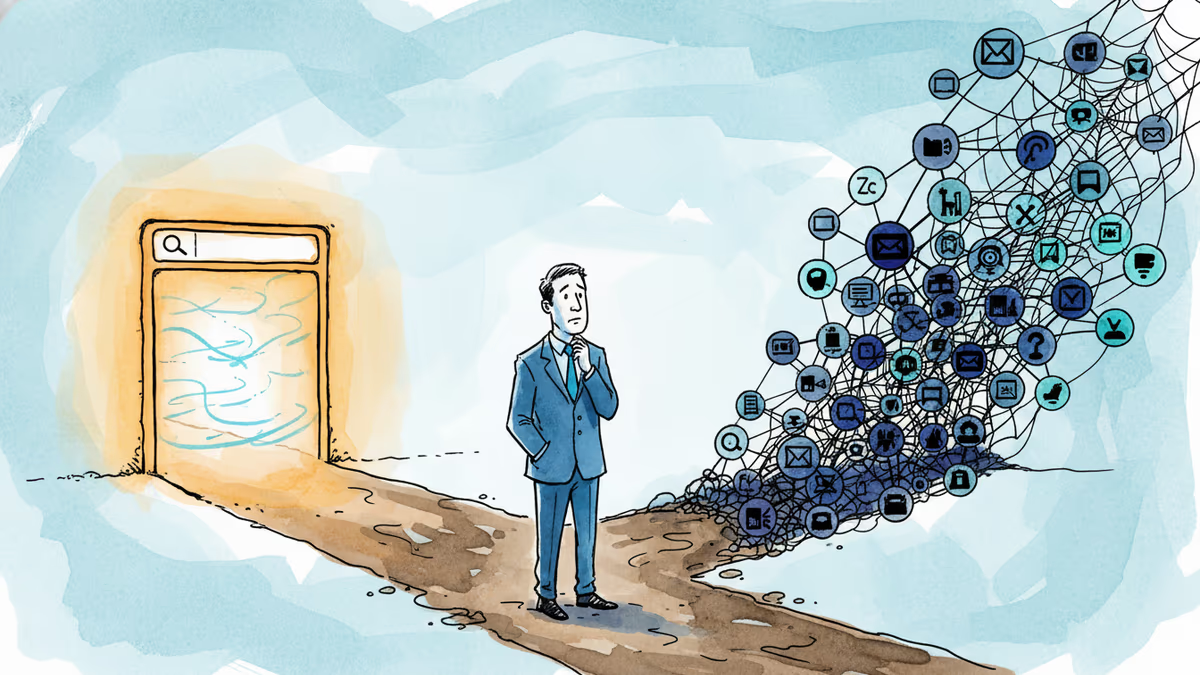
In a post-Google I/O interview, Sundar Pichai acknowledged flawed search results, real AI anxiety, and an AGI timeline that makes the label irrelevant. Here's what he said — and what it means.
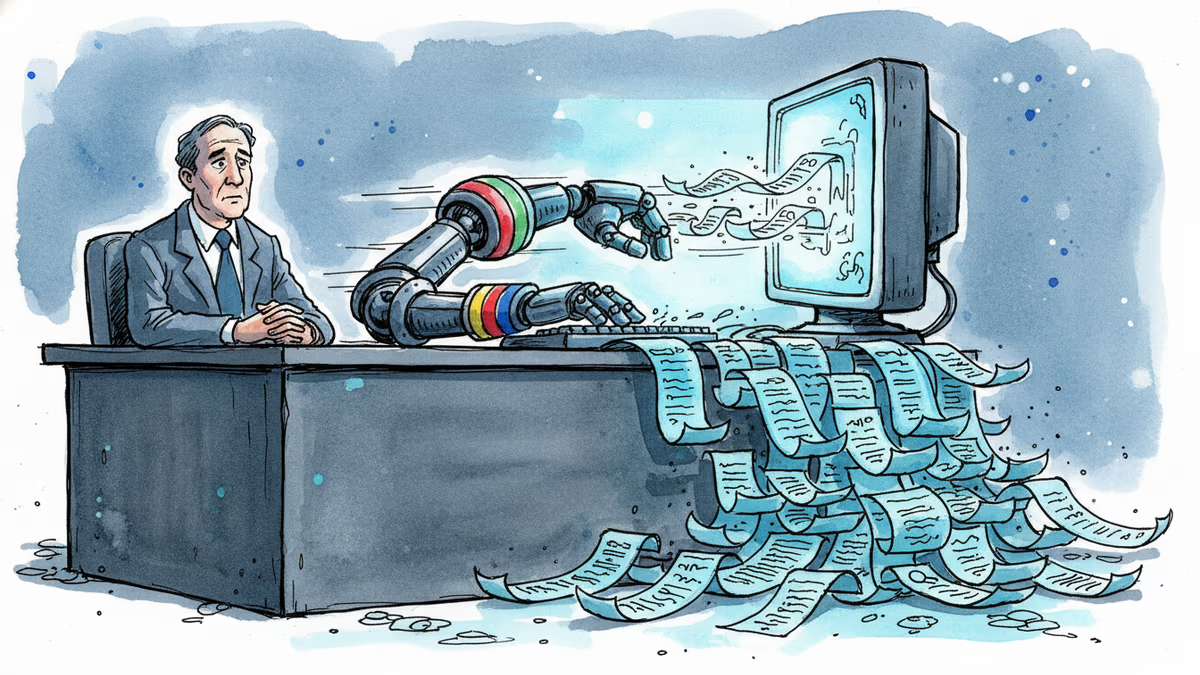
Google is building AI agents that search the web proactively, without user prompting. That's not just a product update — it's a fundamental shift in who controls the information you receive.
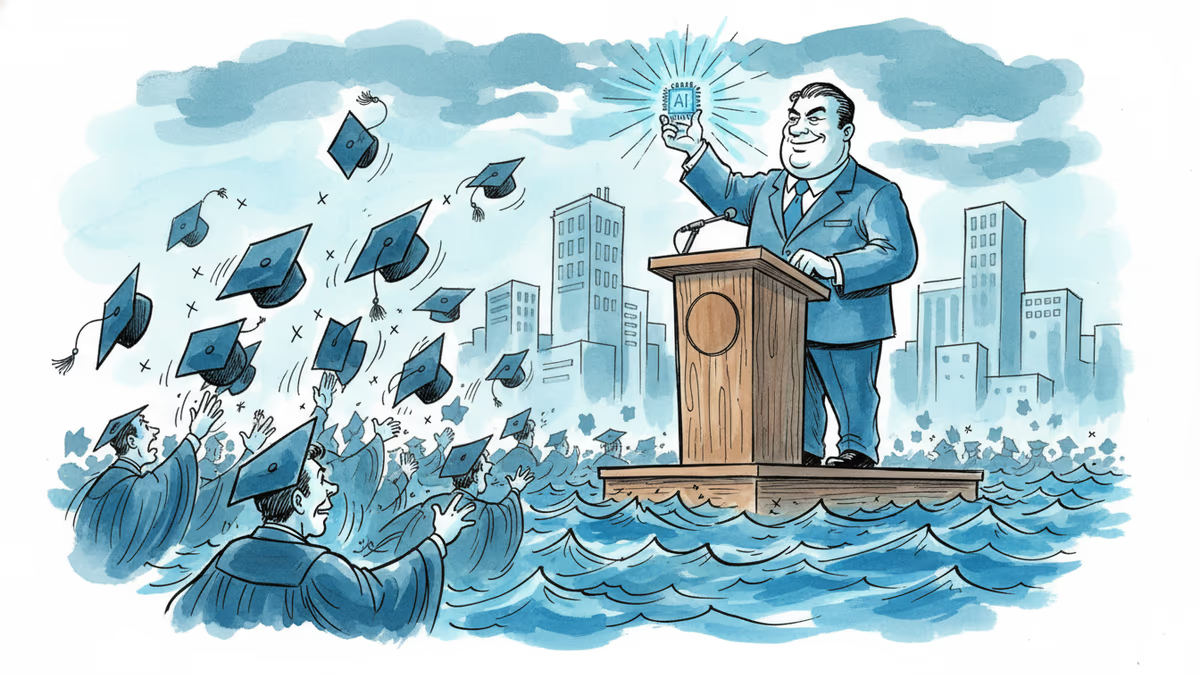
Viral videos show 2026 graduates jeering executives who praise AI at commencement ceremonies. It's not just rudeness — it's a signal about who pays for technological optimism.
Samsung and SK unveiled a chip and AI investment package worth thousands of trillions of won on June 29. The headline number swings wildly by outlet, but the real contest isn't capital — it's water and power.
In a post-Google I/O interview, Sundar Pichai acknowledged flawed search results, real AI anxiety, and an AGI timeline that makes the label irrelevant. Here's what he said — and what it means.
Google is building AI agents that search the web proactively, without user prompting. That's not just a product update — it's a fundamental shift in who controls the information you receive.
Viral videos show 2026 graduates jeering executives who praise AI at commencement ceremonies. It's not just rudeness — it's a signal about who pays for technological optimism.
Thoughts
Share your thoughts on this article
Sign in to join the conversation