
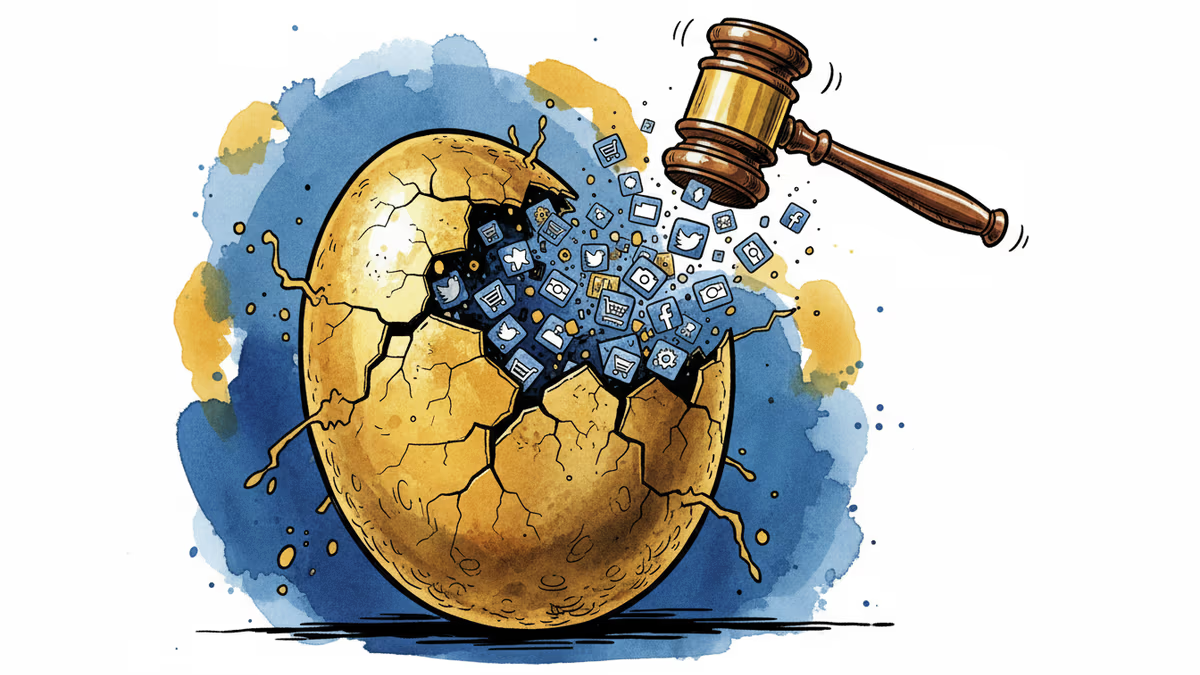
Why Google Just Gave Up Its 30% Golden Goose
Google slashes app store fees to 20% and opens Android to third-party stores. Epic's legal victory triggers the biggest mobile ecosystem shake-up in 15 years.
$50 billion. That's roughly how much Google has collected in Play Store fees since Android launched. Now it's walking away from 10% of that revenue stream, cutting its commission from 30% to 20% starting June 30th.
But the fee reduction is just the opening act. Google is simultaneously launching a "Registered App Stores" program, allowing third-party app stores to operate on Android devices outside the US. It's the biggest structural change to mobile computing since the iPhone launched.
Epic's Pyrrhic Victory
The catalyst was Epic Games' courtroom triumph. Last December, a jury ruled Google's Play Store operations were monopolistic. Google appealed, but in November, both companies proposed a joint settlement.
What's fascinating is Google's decision to implement changes globally before the settlement gets court approval. The company is essentially racing ahead of legal requirements, rolling out reforms through 2027 worldwide.
For Epic, it's a mixed victory. Yes, they've cracked open Android's walled garden. But they've also legitimized a 20% fee structure that's still double what many payment processors charge.
Developers: Celebration or Complication?
Silicon Valley's reaction splits along company size lines. Major publishers like Electronic Arts and Activision are celebrating potential savings of millions annually. Indie developers? They're more cautious.

"We went from managing one storefront to potentially dozens," says a mobile game developer who requested anonymity. "Marketing costs could actually increase if we need to optimize for multiple discovery algorithms."
Samsung and other Android manufacturers see opportunity. They can now meaningfully compete with Google's own app distribution, potentially creating new revenue streams. But Google isn't exactly losing control—it's still the gatekeeper for what constitutes a "registered" app store.
Apple Holds the Line
Google's moves make Apple's unchanged 30% fee structure look increasingly isolated. While Android opens up, iOS remains a closed ecosystem—except in Europe, where regulatory pressure forced limited third-party store access.
This divergence could reshape developer priorities. Android's lower fees and increased distribution options make it more attractive for new apps. But iOS users still spend more money, creating a complex calculation for developers.
The real test comes when major apps start exclusive Android launches to avoid Apple's higher fees. If that happens, consumer pressure might finally force Apple's hand globally.
The Regulatory Domino Effect
Google's preemptive moves aren't just about Epic. Regulators worldwide are scrutinizing app store monopolies. The EU's Digital Markets Act already forces changes. Similar legislation is brewing in the UK, Australia, and South Korea.
By moving first, Google positions itself as the "reasonable" platform company—potentially deflecting harsher regulatory intervention. It's a calculated gamble: sacrifice some revenue to maintain broader operational freedom.
Will developers really benefit from managing multiple storefronts, or are we just trading one monopoly for an oligopoly with extra steps?"
Authors
Related Articles
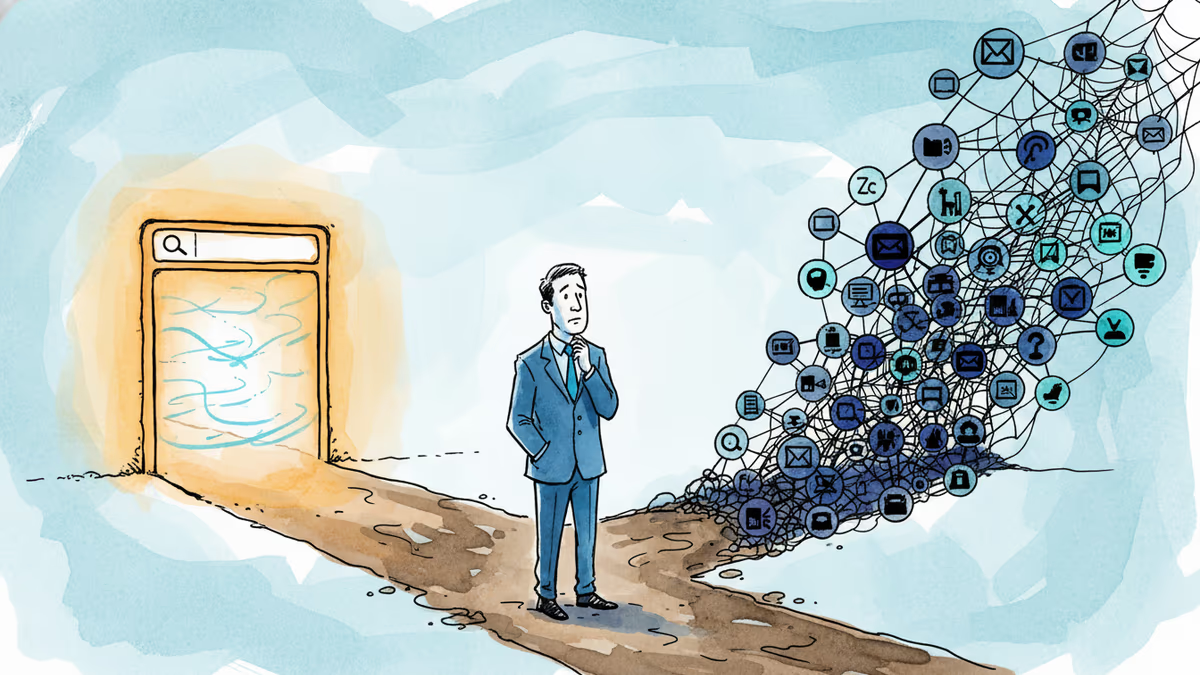
In a post-Google I/O interview, Sundar Pichai acknowledged flawed search results, real AI anxiety, and an AGI timeline that makes the label irrelevant. Here's what he said — and what it means.
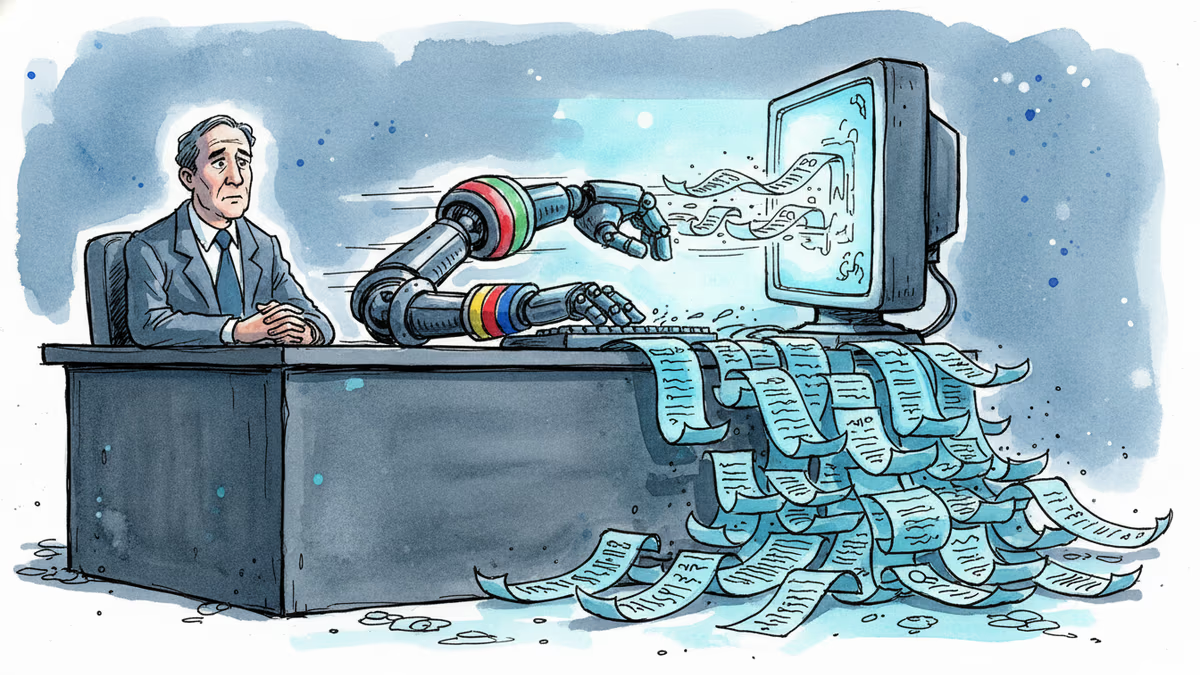
Google is building AI agents that search the web proactively, without user prompting. That's not just a product update — it's a fundamental shift in who controls the information you receive.
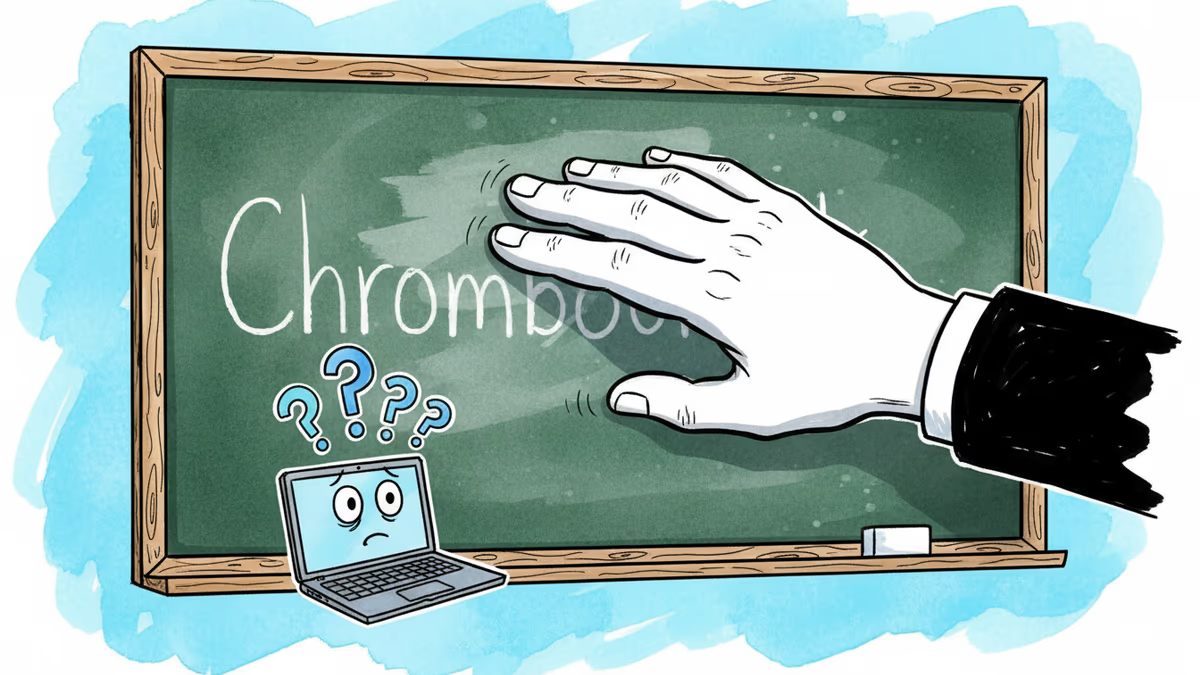
Google unveiled the 'Googlebook' platform to replace Chromebook and ChromeOS—but revealed zero hardware specs. What's the strategy, and what does it mean for users, manufacturers, and the education market?
After 15 years of fragmented mobile messaging, Apple and Google are rolling out end-to-end encrypted RCS messaging between iPhones and Android devices. Here's what changed, why it took so long, and what it means for your privacy.
In a post-Google I/O interview, Sundar Pichai acknowledged flawed search results, real AI anxiety, and an AGI timeline that makes the label irrelevant. Here's what he said — and what it means.
Google is building AI agents that search the web proactively, without user prompting. That's not just a product update — it's a fundamental shift in who controls the information you receive.
Google unveiled the 'Googlebook' platform to replace Chromebook and ChromeOS—but revealed zero hardware specs. What's the strategy, and what does it mean for users, manufacturers, and the education market?
After 15 years of fragmented mobile messaging, Apple and Google are rolling out end-to-end encrypted RCS messaging between iPhones and Android devices. Here's what changed, why it took so long, and what it means for your privacy.
Thoughts
Share your thoughts on this article
Sign in to join the conversation