
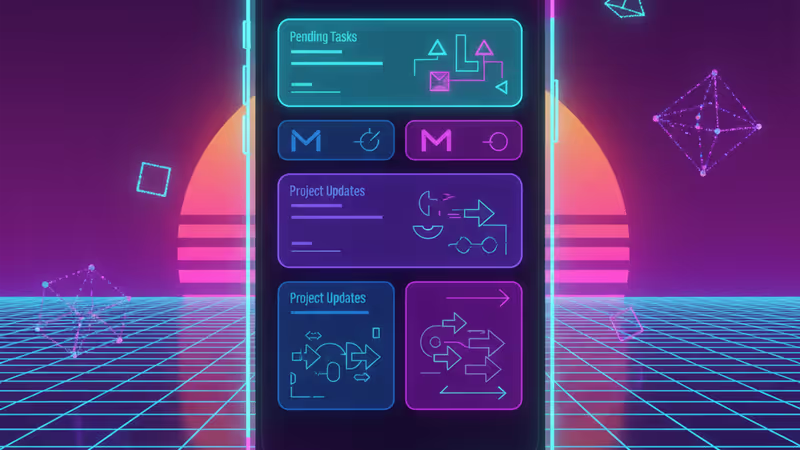
Gmail AI Inbox View 2026: From Message Lists to To-Do Lists
Discover the Gmail AI Inbox view 2026. Google replaces traditional email lists with AI-generated to-do lists and topic tracking for enhanced productivity.
Is your inbox a graveyard of unread messages? Google just unveiled a new AI Inbox view for Gmail that could change how we manage digital communication forever. Instead of the traditional chronological list, the interface now presents an AI-generated dashboard of actionable topics and tasks.
The Evolution of Gmail AI Inbox View 2026
According to reports from The Verge, the AI Inbox leverages generative AI to scan your emails and extract high-priority items. This transforms your inbox into a dynamic to-do list, categorizing messages into specific 'topics to track' rather than forcing you to sift through hundreds of individual threads. It's an ambitious attempt to solve the age-old problem of email overload.

The Verdict from Early Testers
Currently, the feature is limited to a small group of trusted testers. Early feedback suggests that while the system is transformational for productivity, it's not yet ready to replace the classic view for everyone. Some users find the transition jarring, though the potential for a more organized, action-oriented workflow is undeniable.
Authors
Related Articles
In a post-Google I/O interview, Sundar Pichai acknowledged flawed search results, real AI anxiety, and an AGI timeline that makes the label irrelevant. Here's what he said — and what it means.
Google is building AI agents that search the web proactively, without user prompting. That's not just a product update — it's a fundamental shift in who controls the information you receive.
Google unveiled the 'Googlebook' platform to replace Chromebook and ChromeOS—but revealed zero hardware specs. What's the strategy, and what does it mean for users, manufacturers, and the education market?
After 15 years of fragmented mobile messaging, Apple and Google are rolling out end-to-end encrypted RCS messaging between iPhones and Android devices. Here's what changed, why it took so long, and what it means for your privacy.
In a post-Google I/O interview, Sundar Pichai acknowledged flawed search results, real AI anxiety, and an AGI timeline that makes the label irrelevant. Here's what he said — and what it means.
Google is building AI agents that search the web proactively, without user prompting. That's not just a product update — it's a fundamental shift in who controls the information you receive.
Google unveiled the 'Googlebook' platform to replace Chromebook and ChromeOS—but revealed zero hardware specs. What's the strategy, and what does it mean for users, manufacturers, and the education market?
After 15 years of fragmented mobile messaging, Apple and Google are rolling out end-to-end encrypted RCS messaging between iPhones and Android devices. Here's what changed, why it took so long, and what it means for your privacy.
Thoughts
Share your thoughts on this article
Sign in to join the conversation