
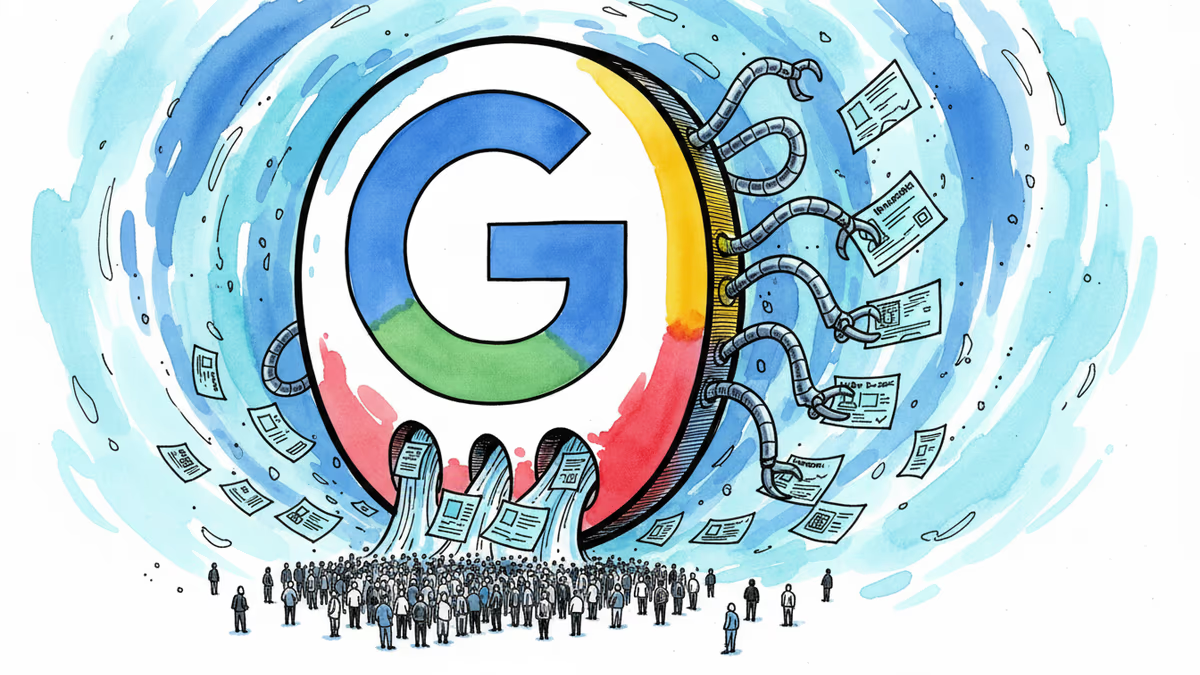
Google Will Now Monitor Your Social Security Number (Should You Trust Them?)
Google expands its personal information removal tools to include driver's licenses and SSNs. But can we trust Big Tech to protect the data they profit from?
8.5 Billion Searches Daily, How Much Personal Data Gets Exposed?
Every day, 8.5 billion Google searches happen worldwide. Hidden within those results? Phone numbers, addresses, Social Security numbers, and driver's licenses of ordinary people who never asked to be there. Google's latest privacy update, announced for Safer Internet Day, tackles this reality head-on.
The "Results about you" tool previously only monitored phone numbers, emails, and home addresses. Now it includes driver's licenses, passports, and Social Security numbers. Access it through the Google app by tapping your profile photo and selecting "Results about you."
Privacy Advocates: Cautious Optimism Mixed with Skepticism
Sarah Chen, a cybersecurity researcher, calls it "a step in the right direction, but hardly revolutionary." She points out that removing information from Search results doesn't erase it from the web entirely—it just makes it harder to find through Google.
The Electronic Frontier Foundation takes a harder stance: "Google's business model depends on data collection. These tools feel more like regulatory compliance theater than genuine privacy protection."
But for victims of doxxing and identity theft, any improvement matters. The tool now automatically monitors for your personal information and sends alerts when it appears in search results—a significant upgrade from manual, one-by-one removal requests.
Non-Consensual Image Removal Gets Streamlined

Google also simplified reporting non-consensual explicit images. Users can now click the three dots on an image, select "remove result," then tap "It shows a sexual image of me." Multiple images can be reported through a single form, and all requests are trackable in one dashboard.
The company promises "proactive filtering" to prevent similar content from appearing in future searches. However, Google hasn't detailed how this filtering works or its accuracy rates.
Danielle Citron, a privacy law expert at University of Virginia, notes: "Streamlined reporting is welcome, but platforms need upstream solutions—preventing uploads, not just responding to them."
The Timing Tells a Story
This announcement comes exactly two years after the EU's Digital Services Act took effect, and as U.S. states roll out comprehensive privacy laws. Meta paid $1.3 billion in privacy fines last year. Apple's "Ask App Not to Track" feature cost Facebook billions in ad revenue.
Big Tech's privacy pivot isn't happening in a vacuum—it's happening under regulatory pressure. The question becomes: Are these genuine improvements or defensive moves?
Tech Policy Makers Face a Dilemma
Policymakers are caught between competing interests. Stronger privacy tools help consumers, but they also consolidate power among platforms that can afford to build them. Smaller search engines and social media platforms lack Google's resources for sophisticated content moderation.
Senator Amy Klobuchar recently noted: "We can't let privacy become a luxury good only Big Tech can provide." The challenge is creating regulations that protect privacy without cementing tech giants' dominance.
Authors
Related Articles
In a post-Google I/O interview, Sundar Pichai acknowledged flawed search results, real AI anxiety, and an AGI timeline that makes the label irrelevant. Here's what he said — and what it means.
The FTC fined Cox Media and two ad firms $930,000 — not for actually eavesdropping on users, but for falsely claiming they could. The case raises uncomfortable questions about surveillance capitalism.
Google is building AI agents that search the web proactively, without user prompting. That's not just a product update — it's a fundamental shift in who controls the information you receive.
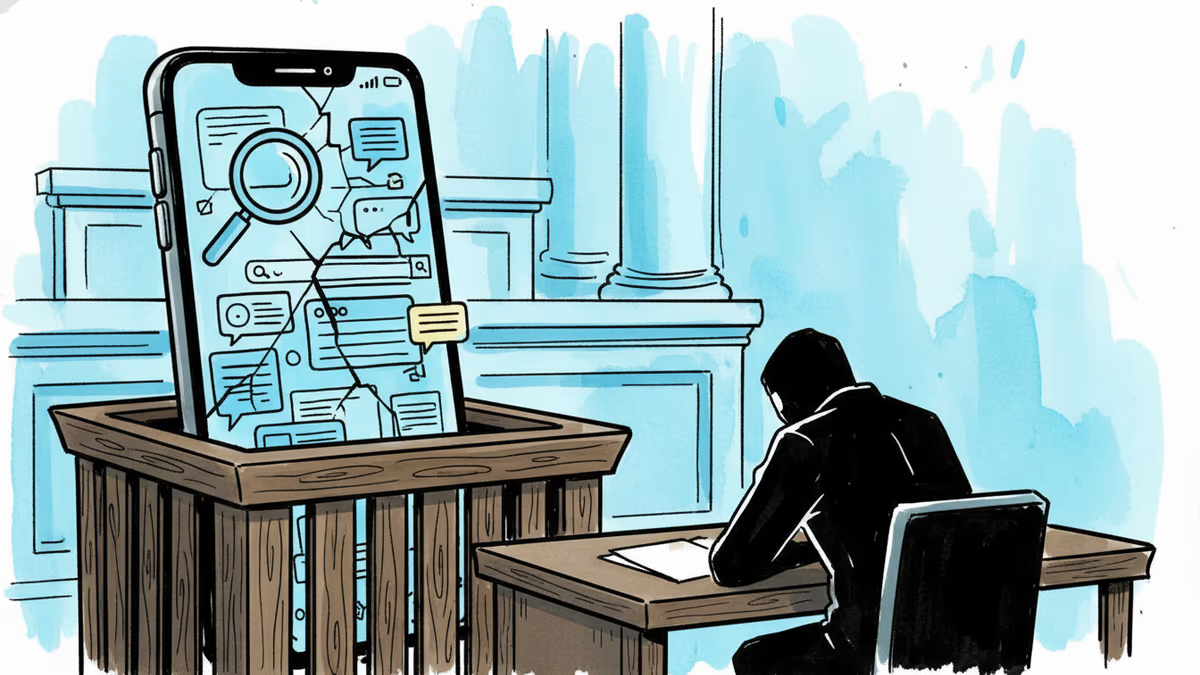
A Utah woman was sentenced to life in prison partly because of her Google searches and deleted texts. The Kouri Richins case reveals how digital footprints have become the courtroom's most reliable witness.
In a post-Google I/O interview, Sundar Pichai acknowledged flawed search results, real AI anxiety, and an AGI timeline that makes the label irrelevant. Here's what he said — and what it means.
The FTC fined Cox Media and two ad firms $930,000 — not for actually eavesdropping on users, but for falsely claiming they could. The case raises uncomfortable questions about surveillance capitalism.
Google is building AI agents that search the web proactively, without user prompting. That's not just a product update — it's a fundamental shift in who controls the information you receive.
A Utah woman was sentenced to life in prison partly because of her Google searches and deleted texts. The Kouri Richins case reveals how digital footprints have become the courtroom's most reliable witness.
Thoughts
Share your thoughts on this article
Sign in to join the conversation