
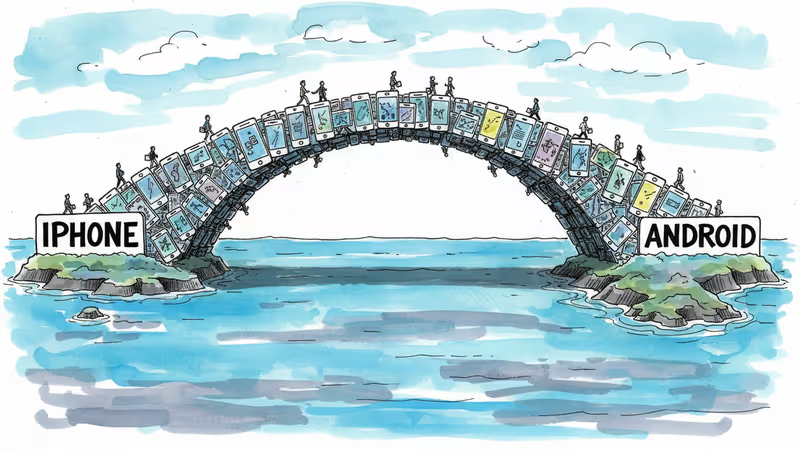
Google Breaks Down the Wall: AirDrop Coming to More Android Phones
Google expands AirDrop compatibility beyond Pixel 10 to other Android partners this year, enabling seamless file sharing between iPhone and Android devices through Quick Share integration
For over a decade, iPhone and Android users have lived in separate digital worlds when it comes to sharing files. That's about to change.
Google announced it's expanding AirDrop compatibility beyond its Pixel 10 series to other Android manufacturers this year. Eric Kay, Google's VP of Engineering for Android, confirmed during a press briefing that "a lot more" Android devices will gain the ability to initiate AirDrop sessions with Apple devices through Quick Share.
From Technical Achievement to Ecosystem Expansion
"We spent a lot of time and energy to make sure that we could build something that was compatible not only with iPhone but iPads and MacBooks," Kay explained. "Now that we've proven it out, we're working with our partners to expand it into the rest of the ecosystem."
This isn't just about technical compatibility—it's about breaking down one of the most frustrating barriers in modern tech. While Apple's AirDrop has seamlessly connected iOS and macOS devices since 2011, Android users have been stuck with clunky workarounds like Bluetooth, email attachments, or cloud uploads just to share a simple photo with an iPhone-wielding friend.
The Regulatory Push Behind the Change
The timing isn't coincidental. European Union regulations like the Digital Markets Act (DMA) have been pressuring Big Tech to tear down their "walled gardens." Apple, long resistant to interoperability, has been forced to open up in selective ways—from allowing third-party app stores to now enabling cross-platform file sharing.

For Google, this represents both an opportunity and a strategic necessity. By positioning Android as the more open, compatible platform, Google can appeal to users frustrated with Apple's historically closed ecosystem while simultaneously complying with regulatory demands.
What This Means for Samsung and Other Players
The expansion raises interesting questions for Samsung, which has its own file-sharing ecosystem with Smart Switch and Quick Share. While Samsung users will benefit from improved iPhone compatibility, the company now faces a choice: embrace Google's standard or risk being left behind in an increasingly interoperable world.
Other Android manufacturers—OnePlus, Xiaomi, Oppo—will likely jump at the chance to offer iPhone-level convenience to their users. This could become a key selling point in markets where iPhone and Android usage is roughly split.
The Broader Implications for Tech Competition
This move signals a fundamental shift in how tech giants compete. Instead of building higher walls around their ecosystems, companies are selectively opening gates while trying to maintain competitive advantages elsewhere. Apple might be allowing file sharing, but it's still keeping features like iMessage reactions and FaceTime largely exclusive.
For consumers, this represents the best of both worlds—the convenience of seamless cross-platform sharing without being locked into a single ecosystem. But it also raises questions about what happens when the major differentiators between platforms start to disappear.
Authors
Related Articles
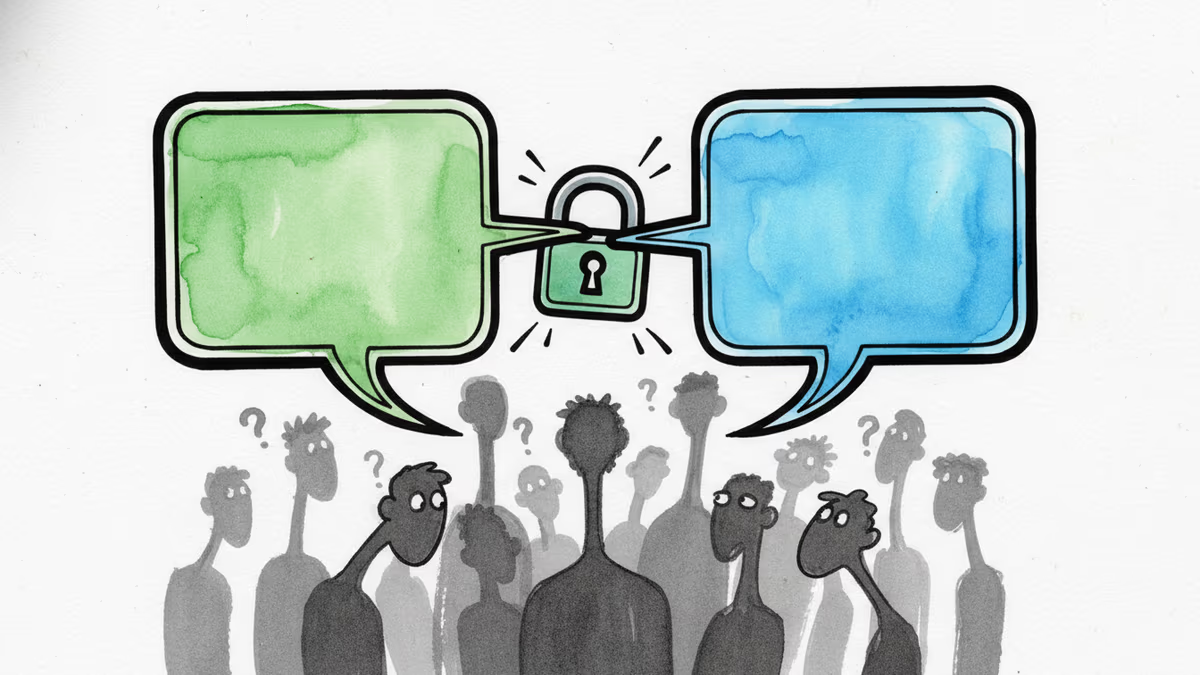
After 15 years of fragmented mobile messaging, Apple and Google are rolling out end-to-end encrypted RCS messaging between iPhones and Android devices. Here's what changed, why it took so long, and what it means for your privacy.
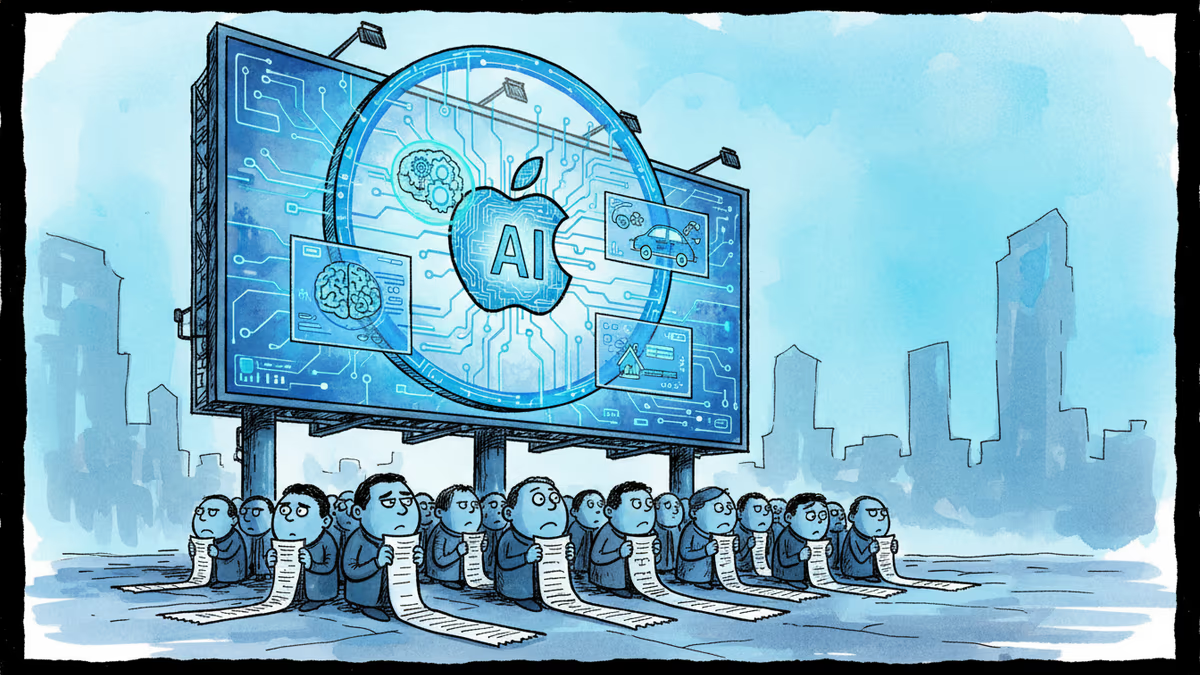
Apple agreed to pay $250 million to settle claims it misled iPhone 16 buyers about Apple Intelligence features. What this means for consumers, Big Tech marketing, and the AI industry.
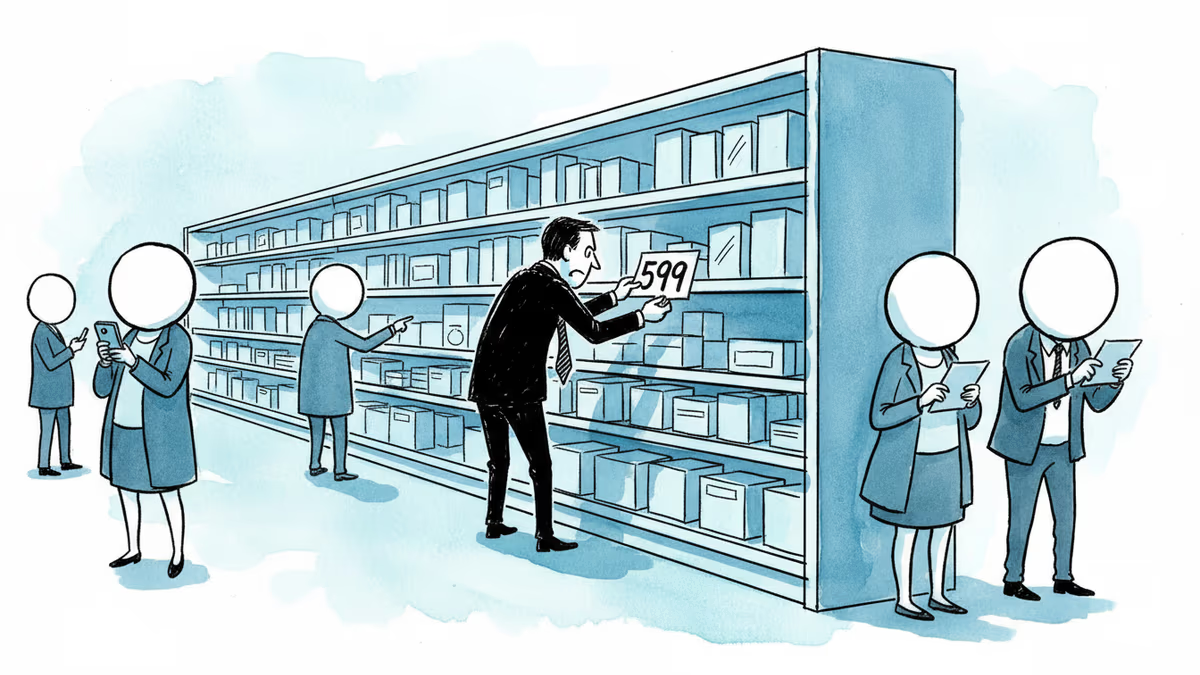
Apple quietly removed the entry-level $599 Mac Mini, raising the starting price to $799 — just one day after Tim Cook warned of chip supply constraints on the earnings call.

Apple names John Ternus, its hardware engineering chief, as the next CEO. The shift from operator to product person signals where Apple thinks its next decade of growth will come from — and raises real questions about what comes next.
After 15 years of fragmented mobile messaging, Apple and Google are rolling out end-to-end encrypted RCS messaging between iPhones and Android devices. Here's what changed, why it took so long, and what it means for your privacy.
Apple agreed to pay $250 million to settle claims it misled iPhone 16 buyers about Apple Intelligence features. What this means for consumers, Big Tech marketing, and the AI industry.
Apple quietly removed the entry-level $599 Mac Mini, raising the starting price to $799 — just one day after Tim Cook warned of chip supply constraints on the earnings call.
Apple names John Ternus, its hardware engineering chief, as the next CEO. The shift from operator to product person signals where Apple thinks its next decade of growth will come from — and raises real questions about what comes next.
Thoughts
Share your thoughts on this article
Sign in to join the conversation