

Demis Hassabis 'Surprised' by OpenAI Ads: Why Google Shuns Early AI Chatbot Monetization
Google DeepMind CEO Demis Hassabis expresses surprise at OpenAI's early ad adoption, emphasizing the need for trust in AI assistants over quick monetization.
Ads funded the consumer internet, but can they coexist with your personal AI assistant? Google DeepMind CEO Demis Hassabis expressed skepticism regarding OpenAI's recent move to introduce advertisements within its AI chatbot.
Hassabis Surprised: Google DeepMind CEO Doubts OpenAI Ad Strategy
Speaking at Davos in an interview with Axios, Hassabis admitted he was "a little bit surprised" that OpenAI pivoted to ads so early. While acknowledging that advertising isn't inherently bad, he questioned how it fits into the "realm of assistants." According to Hassabis, the trust required for a digital assistant to work effectively on an individual's behalf might be compromised by the intrusion of financial incentives.
OpenAI is currently testing ads to monetize its 800 million weekly active users who don't pay for subscriptions. This decision comes amid soaring infrastructure and energy costs. However, Hassabis noted that Google isn't feeling any "knee-jerk" pressure to follow suit, despite ads being the core of its business.

Search vs. Assistants: A Different Monetization Path
The core of the argument lies in user intent. While Google Search identifies intent to show useful links, a chatbot like Gemini or ChatGPT is meant to be a helpful companion. Hassabis explained that pushing ads during a personal conversation feels intrusive, citing past consumer backlash against Amazon's Alexa for similar attempts.
Google is instead focusing on personalization. New features for Gemini allow it to tap into a user's Gmail and Photos for tailored responses. Hassabis emphasized a "scientific and rigorous" approach, monitoring user responses before making any permanent decisions on monetization.
Authors
Related Articles
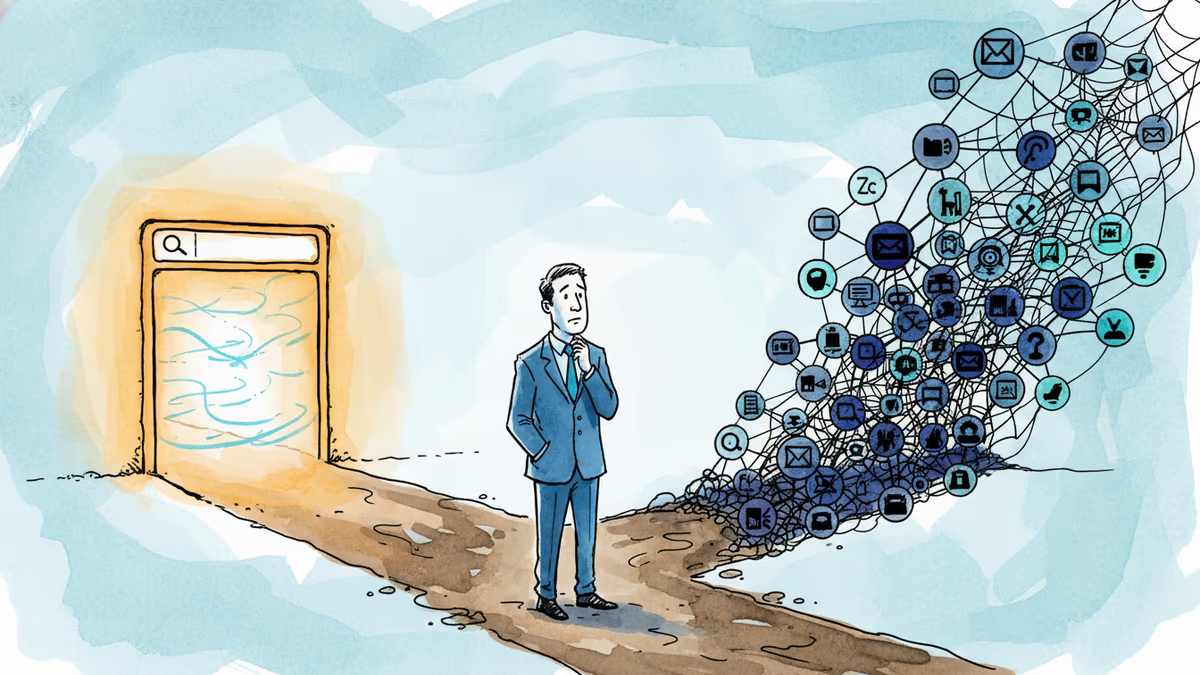
In a post-Google I/O interview, Sundar Pichai acknowledged flawed search results, real AI anxiety, and an AGI timeline that makes the label irrelevant. Here's what he said — and what it means.
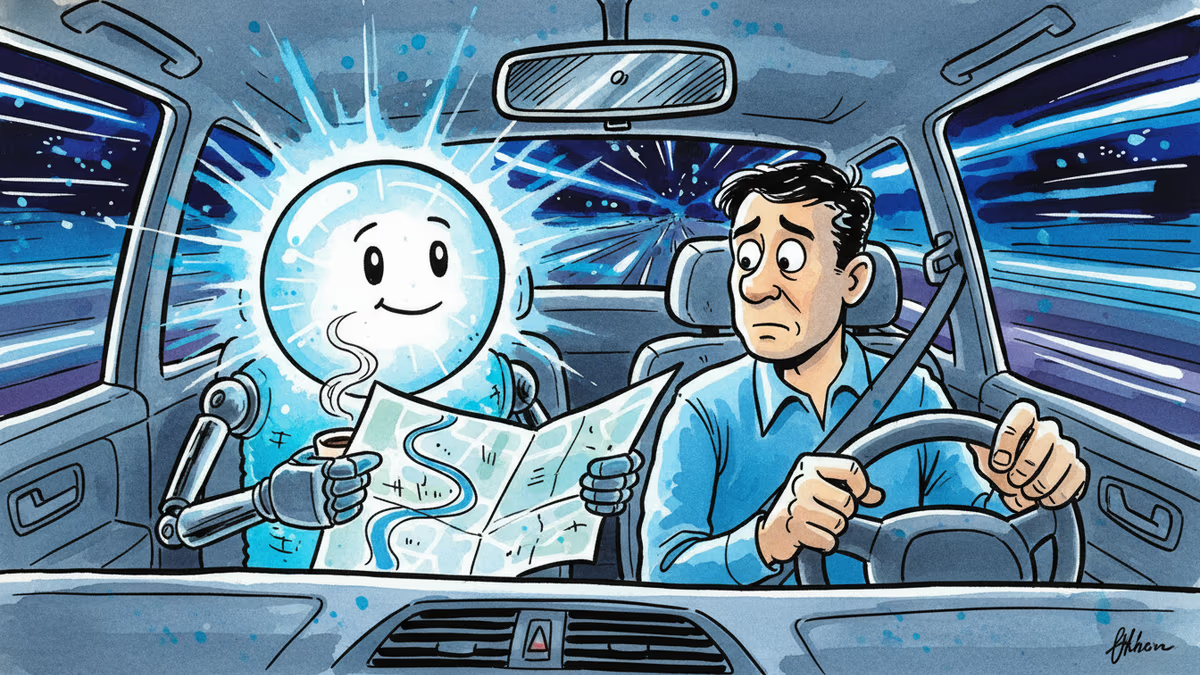
Google is replacing Assistant with Gemini in cars with Google built-in, starting in the U.S. GM's 4 million vehicles are first. But the real story is what happens when your car becomes a Google device.
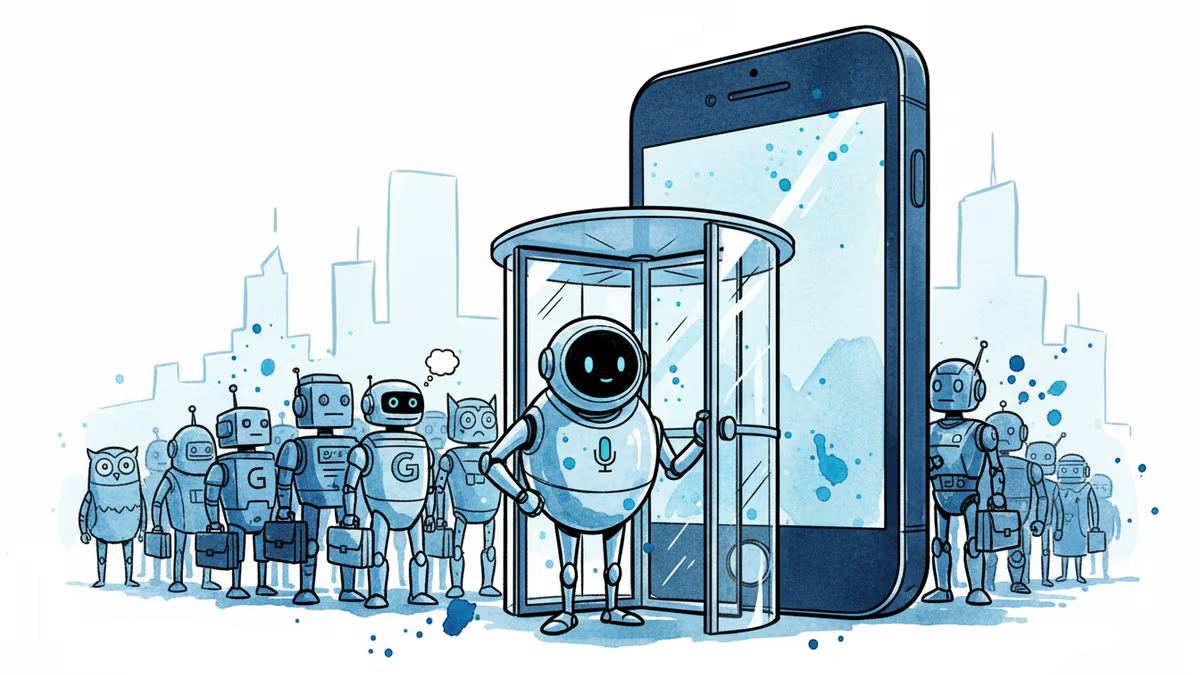
Apple's iOS 27 will let users swap in Google Gemini, Anthropic's Claude, or other AI chatbots to power Siri responses. Here's what that actually means for you, for competitors, and for the AI industry.
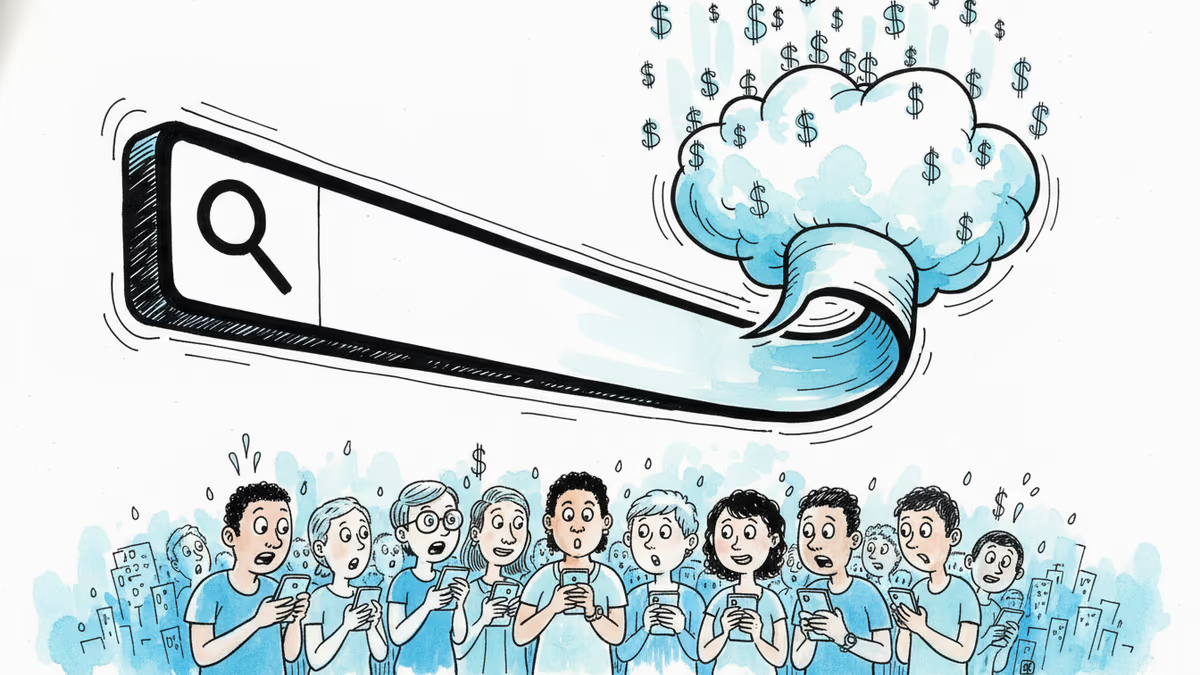
Google SVP Nick Fox confirmed ads in Gemini are "not ruled out," two months after DeepMind's CEO said the opposite. Here's what that shift means for users, advertisers, and the AI industry.
In a post-Google I/O interview, Sundar Pichai acknowledged flawed search results, real AI anxiety, and an AGI timeline that makes the label irrelevant. Here's what he said — and what it means.
Google is replacing Assistant with Gemini in cars with Google built-in, starting in the U.S. GM's 4 million vehicles are first. But the real story is what happens when your car becomes a Google device.
Apple's iOS 27 will let users swap in Google Gemini, Anthropic's Claude, or other AI chatbots to power Siri responses. Here's what that actually means for you, for competitors, and for the AI industry.
Google SVP Nick Fox confirmed ads in Gemini are "not ruled out," two months after DeepMind's CEO said the opposite. Here's what that shift means for users, advertisers, and the AI industry.
Thoughts
Share your thoughts on this article
Sign in to join the conversation