
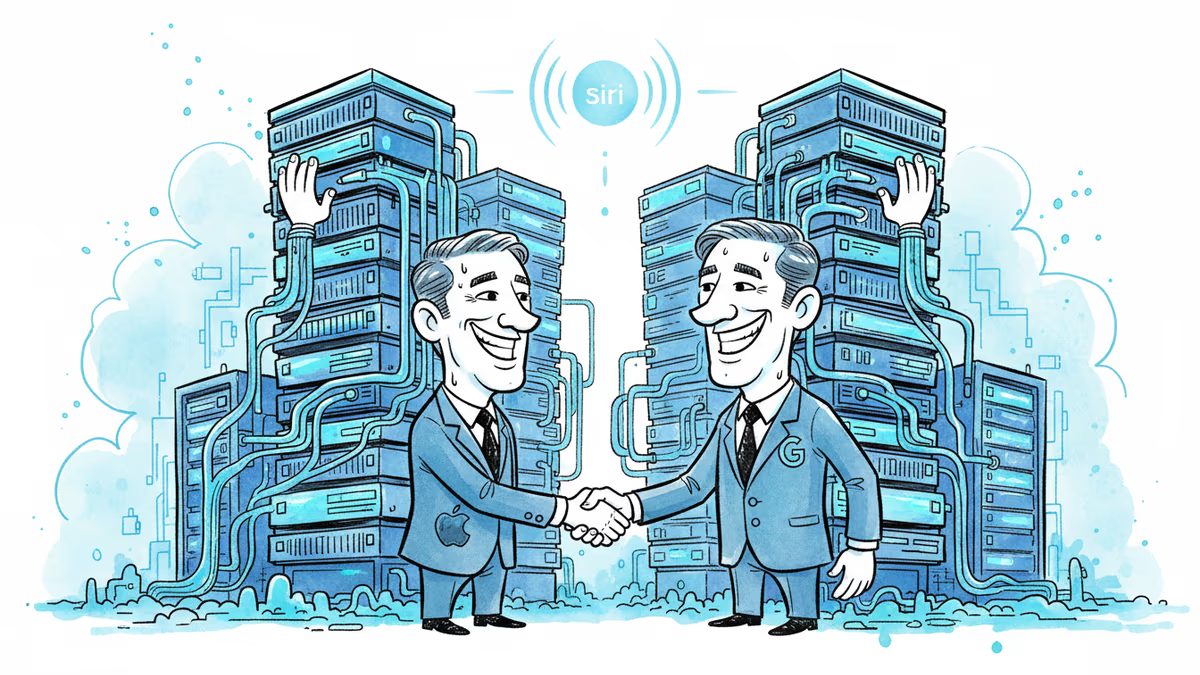
Apple Asks Google to Build Siri's Brain
Apple reportedly asked Google to set up servers for Gemini-powered Siri that meets Apple's privacy standards. A deeper look at what this partnership really means.
When Rivals Become Roommates
Apple just asked Google to "set up servers" for a new Gemini-powered Siri that meets Apple's notoriously strict privacy requirements. This isn't just about using Google's AI models anymore—it's about letting Google build the infrastructure that powers one of Apple's most personal services.
The request goes beyond January's partnership announcement, where Apple said its "next generation Foundation Models will be based on Google's Gemini models." Now we're talking about Google literally setting up shop inside Apple's ecosystem.
Apple's AI Reality Check
Let's be honest: Apple is behind. While ChatGPT and Claude wow users with human-like conversations, Siri still struggles with basic follow-up questions. The delayed Siri upgrade from last year was supposed to fix this, but Apple's internal AI development apparently isn't moving fast enough.
The numbers tell the story. Apple spent $22.6 billion on R&D last year, yet Google's Gemini and OpenAI's models consistently outperform Apple's offerings in benchmarks. Sometimes you need to swallow your pride and partner with the leader.
Google's Strategic Gambit
For Google, this is a masterstroke. Gemini could potentially reach 1.5 billion iOS users—a massive expansion beyond the Android ecosystem. More importantly, building servers that meet Apple's privacy standards would be a powerful credential for Google Cloud's enterprise business.

But there's risk. Google would essentially be subsidizing a competitor's core service. What happens when Apple inevitably develops its own models and kicks Google out? It's happened before—just ask Intel.
The Privacy Paradox
Here's where it gets interesting. Apple has built its brand on privacy, promising that "what happens on your iPhone, stays on your iPhone." But now your Siri queries might be processed on Google's servers. How do you square that circle?
Apple will likely use techniques like differential privacy and federated learning to keep user data encrypted and anonymized. But the fundamental question remains: can you trust Google with your most personal AI interactions, even if Apple promises they can't see the data?
Industry Implications
This partnership could reshape the AI landscape. If successful, it proves that even the most secretive tech companies can collaborate when survival is at stake. We might see more unlikely partnerships: Microsoft and Meta on enterprise AI? Amazon and Tesla on autonomous systems?
For consumers, it's potentially great news. Competition drives innovation, but collaboration can accelerate it. A Gemini-powered Siri that actually understands context and nuance would be a win for everyone—except maybe Amazon's Alexa.
The Developer Dilemma
Developers are watching closely. Apple's ecosystem has always been about tight integration and predictable APIs. If Siri's capabilities suddenly depend on Google's models, how does that affect app development? Will developers need to account for Google's AI quirks in Apple's environment?
The $100 billion app economy could see significant shifts if Siri becomes dramatically more capable. Voice-first apps might finally take off, while traditional interface-heavy apps could lose relevance.
Authors
Related Articles
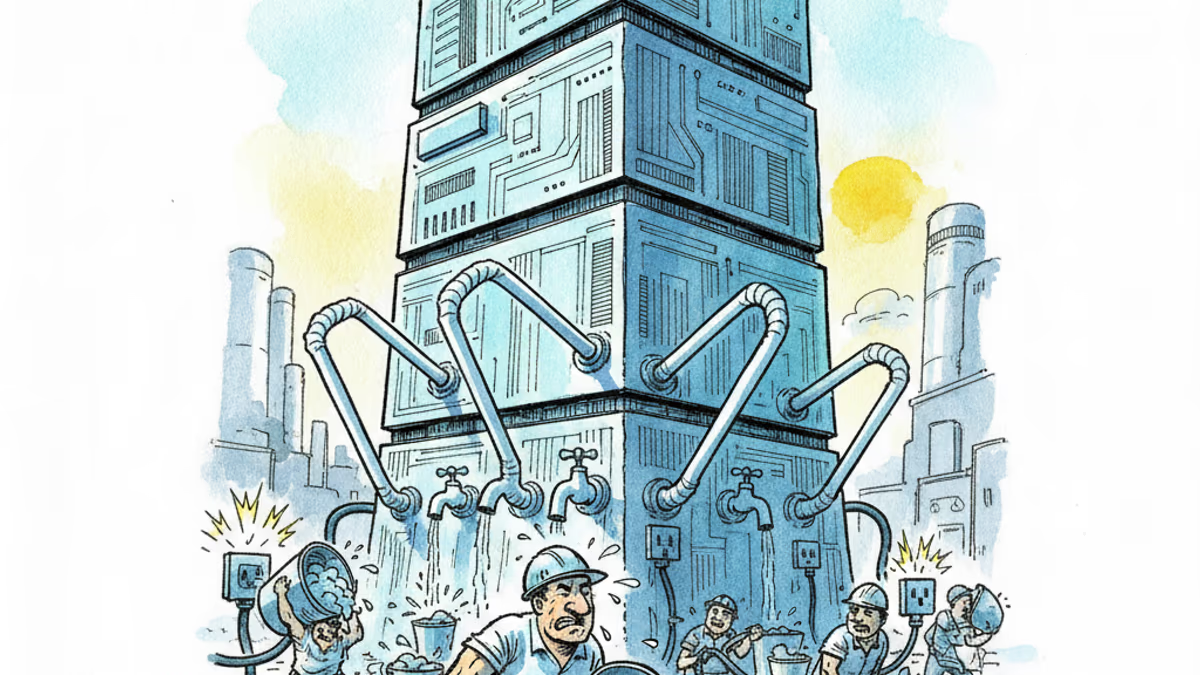
Samsung and SK unveiled a chip and AI investment package worth thousands of trillions of won on June 29. The headline number swings wildly by outlet, but the real contest isn't capital — it's water and power.
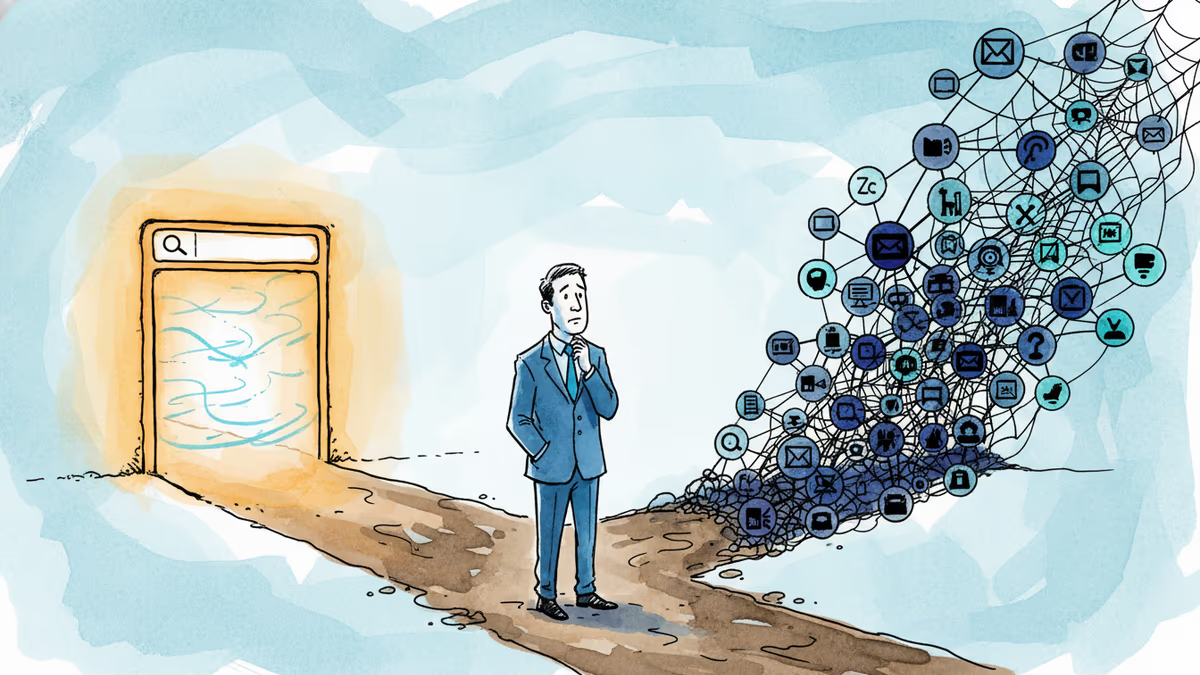
In a post-Google I/O interview, Sundar Pichai acknowledged flawed search results, real AI anxiety, and an AGI timeline that makes the label irrelevant. Here's what he said — and what it means.
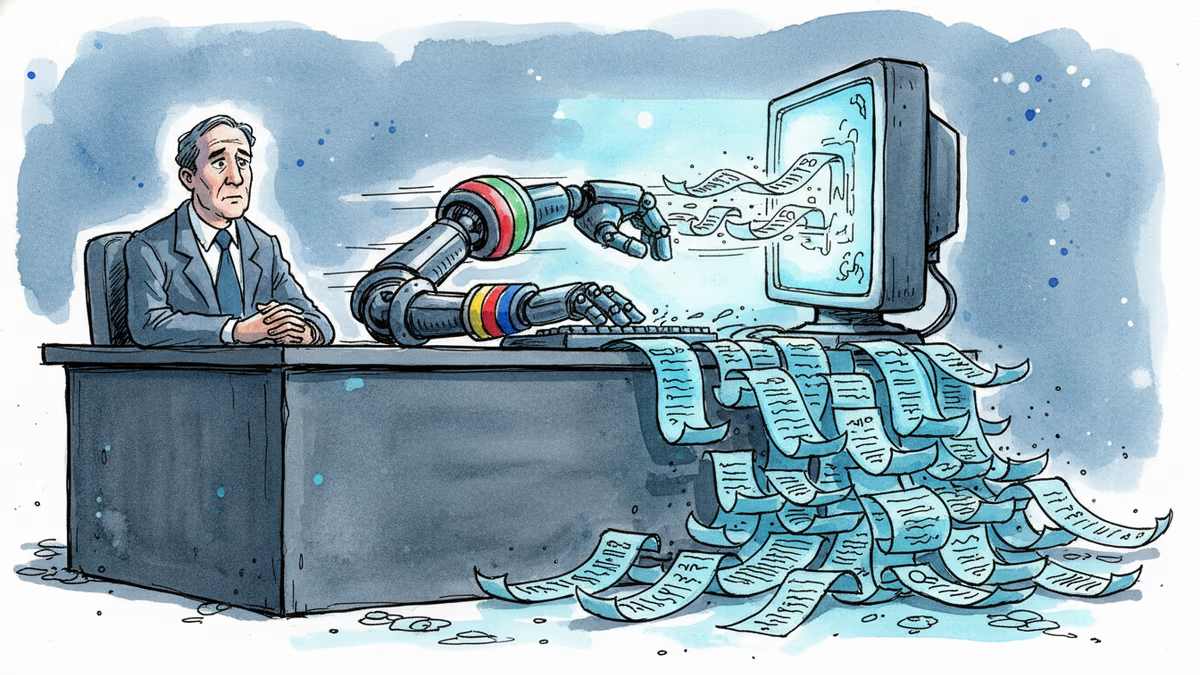
Google is building AI agents that search the web proactively, without user prompting. That's not just a product update — it's a fundamental shift in who controls the information you receive.
Viral videos show 2026 graduates jeering executives who praise AI at commencement ceremonies. It's not just rudeness — it's a signal about who pays for technological optimism.
Samsung and SK unveiled a chip and AI investment package worth thousands of trillions of won on June 29. The headline number swings wildly by outlet, but the real contest isn't capital — it's water and power.
In a post-Google I/O interview, Sundar Pichai acknowledged flawed search results, real AI anxiety, and an AGI timeline that makes the label irrelevant. Here's what he said — and what it means.
Google is building AI agents that search the web proactively, without user prompting. That's not just a product update — it's a fundamental shift in who controls the information you receive.
Viral videos show 2026 graduates jeering executives who praise AI at commencement ceremonies. It's not just rudeness — it's a signal about who pays for technological optimism.
Thoughts
Share your thoughts on this article
Sign in to join the conversation