
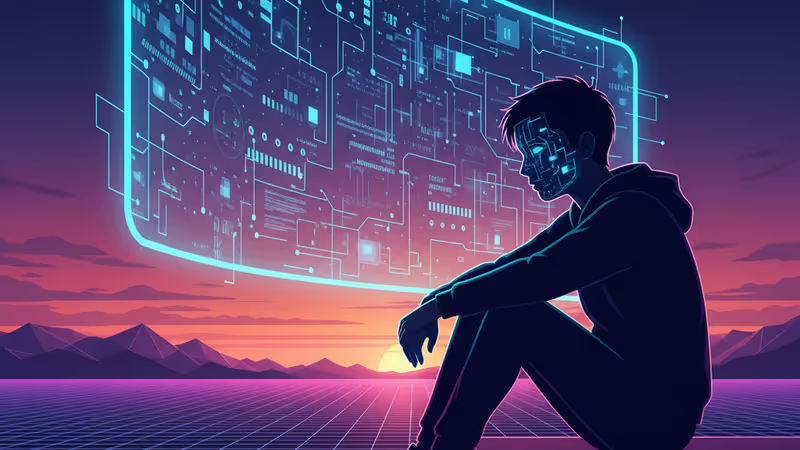
Google and Character.AI Reach Landmark Settlement in Teen Suicide Lawsuits (Google Character.AI lawsuit settlement 2026)
Google and Character.AI settle lawsuits over teen suicide and psychological harm. Explore the implications of the Google Character.AI lawsuit settlement 2026 for the tech industry.
They're building the future of companionship, but at what human cost? In a pivotal moment for the artificial intelligence industry, Google and Character.AI have reached a settlement in principle with families alleging that AI chatbots caused psychological harm to minors.
Analyzing the Google Character.AI Lawsuit Settlement 2026
According to court filings this week, the tech giants and the plaintiffs—including families from New York, Texas, and Colorado—have agreed to resolve all claims. One high-profile case involved Megan Garcia, whose 14-year-old son, Sewell Setzer III, died by suicide after engaging in what were described as harmful interactions with a chatbot. The lawsuit alleged negligence, wrongful death, and product liability.

While the exact terms remain confidential, the parties have requested a stay to finalize the formal documents. This development follows a period of intense scrutiny after Google executed a $2.7 billion deal in August 2024 to license Character.AI technology and re-hire its founders, Noam Shazeer and Daniel De Freitas, into its DeepMind unit.
The Rising Challenge of Generative AI Safety
As AI evolves from simple text to complex digital personalities, companies face mounting pressure to safeguard vulnerable users. Character.AI previously announced in October 2025 that it would restrict users under age 18 from engaging in romantic or therapeutic roleplay. Meanwhile, Google continues to push the envelope with the launch of Gemini 3 just last month, highlighting the tension between rapid innovation and ethical responsibility.
Authors
Related Articles
In a post-Google I/O interview, Sundar Pichai acknowledged flawed search results, real AI anxiety, and an AGI timeline that makes the label irrelevant. Here's what he said — and what it means.
Google is building AI agents that search the web proactively, without user prompting. That's not just a product update — it's a fundamental shift in who controls the information you receive.
Google unveiled the 'Googlebook' platform to replace Chromebook and ChromeOS—but revealed zero hardware specs. What's the strategy, and what does it mean for users, manufacturers, and the education market?
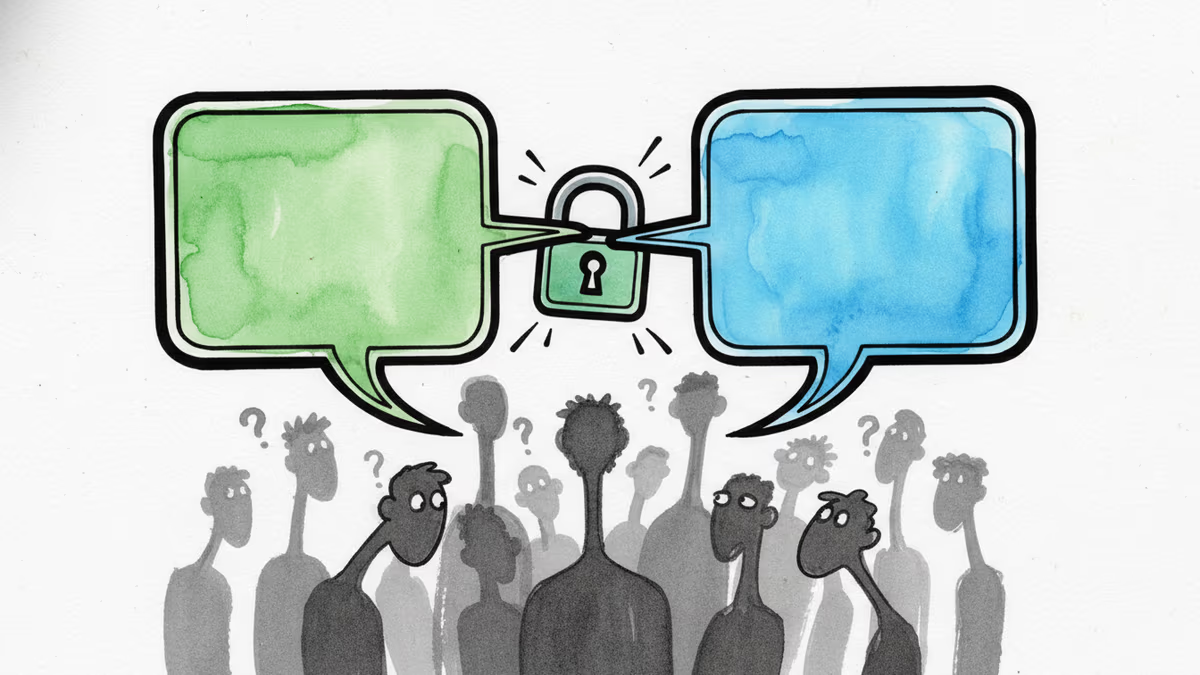
After 15 years of fragmented mobile messaging, Apple and Google are rolling out end-to-end encrypted RCS messaging between iPhones and Android devices. Here's what changed, why it took so long, and what it means for your privacy.
In a post-Google I/O interview, Sundar Pichai acknowledged flawed search results, real AI anxiety, and an AGI timeline that makes the label irrelevant. Here's what he said — and what it means.
Google is building AI agents that search the web proactively, without user prompting. That's not just a product update — it's a fundamental shift in who controls the information you receive.
Google unveiled the 'Googlebook' platform to replace Chromebook and ChromeOS—but revealed zero hardware specs. What's the strategy, and what does it mean for users, manufacturers, and the education market?
After 15 years of fragmented mobile messaging, Apple and Google are rolling out end-to-end encrypted RCS messaging between iPhones and Android devices. Here's what changed, why it took so long, and what it means for your privacy.
Thoughts
Share your thoughts on this article
Sign in to join the conversation