
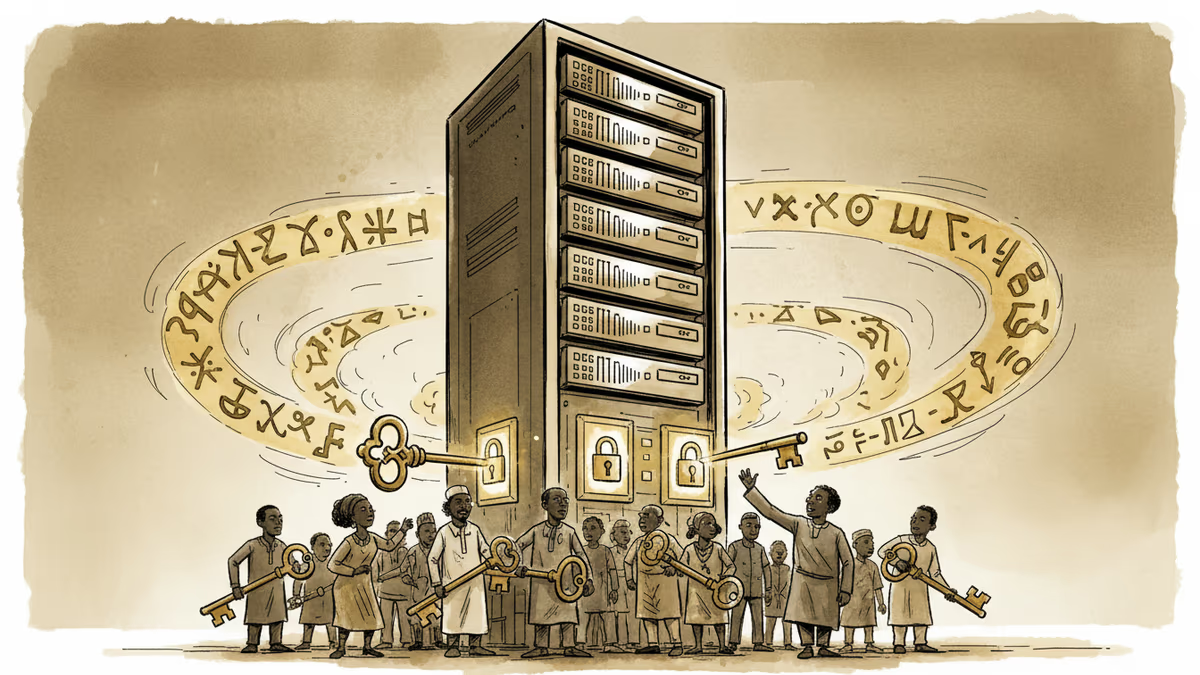
Google's African Language Dataset Flips the Script on Data Ownership
Google's WAXAL dataset covers 21 African languages, but here's the twist - African institutions own the data, not Google. A new model for digital sovereignty in the AI age?
When AI Can't Understand a Billion People
Try speaking to an AI chatbot in Yoruba, Hausa, or Luganda. Chances are, you'll get blank stares—or worse, garbled responses that miss the mark entirely. For Africa's 1.4 billion people speaking over 2,000 languages, this isn't just inconvenient. It's digital exclusion on a massive scale.
Google's February 3rd launch of WAXAL—a dataset covering 21 African languages—tackles this head-on. But here's what makes this different from typical Big Tech announcements: African institutions own the data, not Google.
Named after the Wolof word for "speak," WAXAL represents three years of collaborative work with universities and organizations across the continent. The twist? Google built it, but doesn't own it.
The $2 Trillion Data Ownership Question
"Success lies in the local ownership of this innovation cycle," says Abdoulaye Diack, Google AI's research project manager. It's a radical departure from the usual playbook where Silicon Valley giants harvest global data to train their models—often without clear consent or compensation.
The stakes are enormous. Data-driven businesses generate over $2 trillion annually, making data ownership one of the most contentious issues in AI's global expansion. Countries worldwide are building frameworks to claim sovereignty over their digital resources, demanding that data stay within their borders.
WAXAL contains 11,000+ hours of speech data from nearly 2 million recordings, including 1,250 hours of transcribed speech for automatic recognition and 20+ hours of studio recordings for text-to-speech synthesis. Partners include Makerere University in Uganda, University of Ghana, and Rwanda's Digital Umuganda.
Bypassing Silicon Valley's Gatekeepers

The creators made a strategic choice: releasing WAXAL under a permissive license that allows commercial deployment. By keeping it open-source, African entrepreneurs can innovate without Silicon Valley intermediaries.
Early results are promising. The University of Ghana is using the dataset for maternal healthcare research. "These institutions aren't just collectors—they are now hubs of AI infrastructure," Diack notes.
But challenges remain. Nigerian linguist Kola Tubosun points out that Google's Yoruba data lacks diacritics—crucial elements for proper pronunciation. "The absence will significantly degrade performance for text-to-speech," he warns.
The Technical Mountain They Had to Climb
Building WAXAL wasn't just about collecting voices. African languages are linguistically rich with multiple contextual layers, creating major technical hurdles.
"Transcription was our steepest mountain," Diack explains. "We leaned heavily on university linguistics departments to navigate dialectal nuances and orthographic standards." Partners designed portable recording boxes and used noise-canceling technology to capture studio-quality audio in varied environments.
The vast dialectal variation across the continent remains a challenge. Google has six additional languages in the pipeline, bringing the total to 27, but ensuring no community gets left behind requires sustained partnership.
A New Model for Digital Sovereignty
Microsoft recently joined the race with Paza, a benchmarking tool for 39 African languages, signaling a broader shift toward community-led AI infrastructure.
This movement extends beyond Africa. As AI reshapes global economies, questions about data ownership, cultural representation, and technological sovereignty become critical for every nation.
Authors
Related Articles

Samsung and SK unveiled a chip and AI investment package worth thousands of trillions of won on June 29. The headline number swings wildly by outlet, but the real contest isn't capital — it's water and power.

Viral videos show 2026 graduates jeering executives who praise AI at commencement ceremonies. It's not just rudeness — it's a signal about who pays for technological optimism.
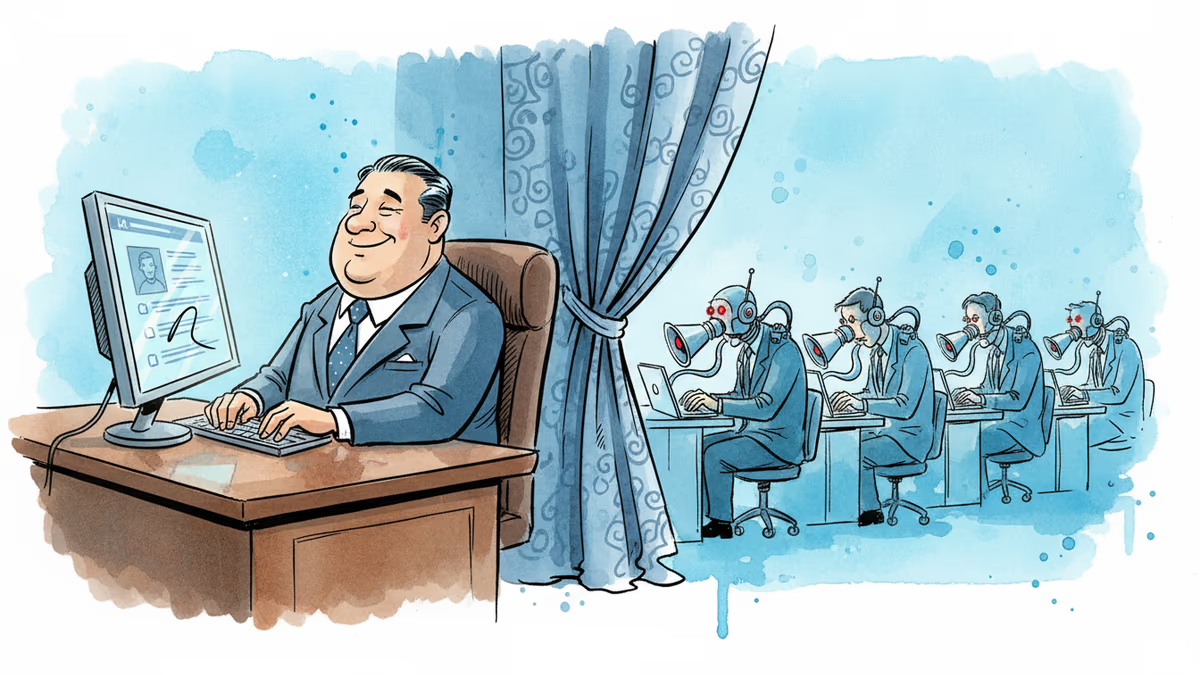
Filipino virtual assistants using AI to ghost-manage LinkedIn profiles for executives is now a structured industry. 30 comments a day, fake engagement rings, and a platform struggling to tell real from fabricated.
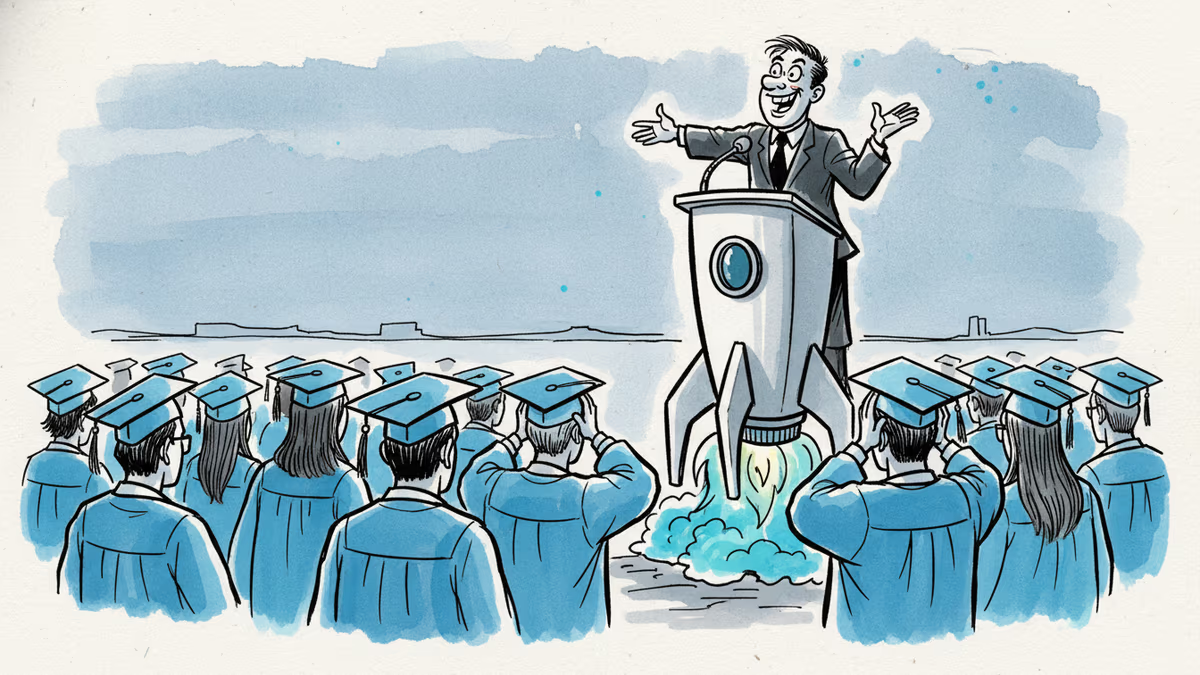
Two commencement speakers learned the hard way that AI enthusiasm doesn't land well with today's graduates. The backlash reveals a widening gap between tech optimism and Gen Z's economic reality.
Samsung and SK unveiled a chip and AI investment package worth thousands of trillions of won on June 29. The headline number swings wildly by outlet, but the real contest isn't capital — it's water and power.
Viral videos show 2026 graduates jeering executives who praise AI at commencement ceremonies. It's not just rudeness — it's a signal about who pays for technological optimism.
Filipino virtual assistants using AI to ghost-manage LinkedIn profiles for executives is now a structured industry. 30 comments a day, fake engagement rings, and a platform struggling to tell real from fabricated.
Two commencement speakers learned the hard way that AI enthusiasm doesn't land well with today's graduates. The backlash reveals a widening gap between tech optimism and Gen Z's economic reality.
Thoughts
Share your thoughts on this article
Sign in to join the conversation