
Your Voice Data Trained Military Spy Planes
Australian company Appen secretly used global gig workers to train US military surveillance systems. Somali refugees unknowingly contributed to operations they might have been targets of.
$17 Million in Secret Military Contracts
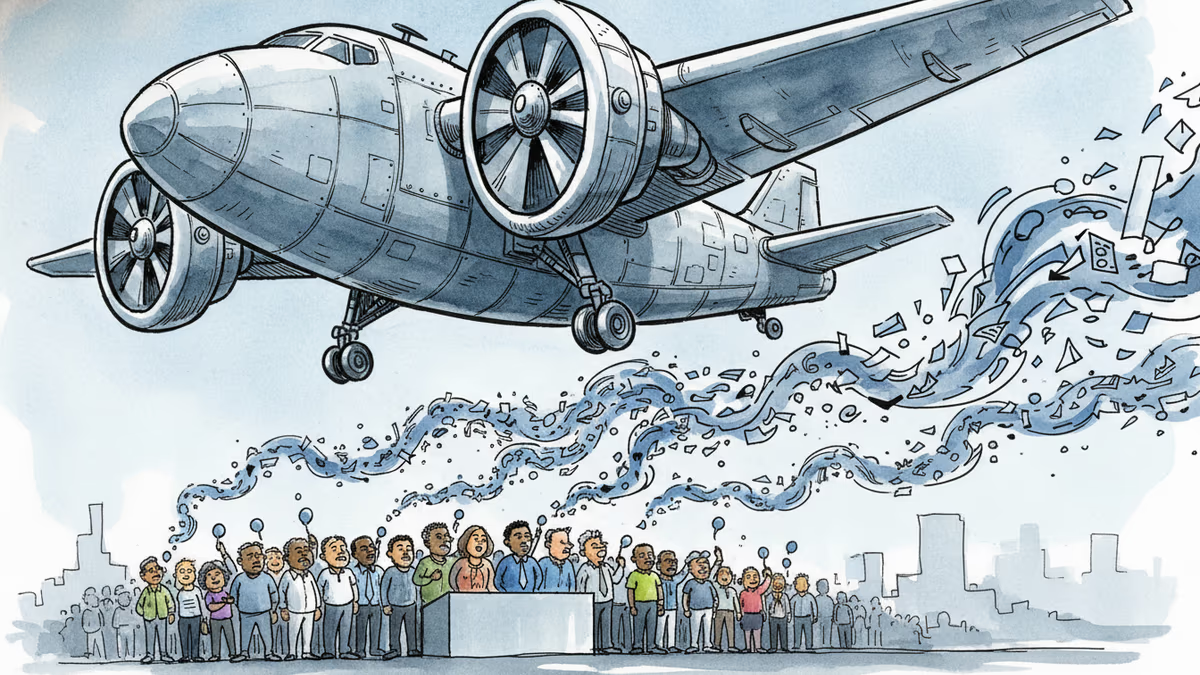
Six weeks before the US attempted to capture Venezuelan president Nicolas Maduro, a spy plane circled the Atlantic gathering intelligence. The Rivet Joint surveillance aircraft can intercept communications from 150 miles away—but it needed help understanding human language.
That help came from an unlikely source: Somali refugees in Kenyan camps, paid pennies to transcribe their native language. They had no idea their work would train the very military systems potentially used against their homeland.
Australian company Appen has quietly operated as the hidden workforce behind AI—recruiting one million gig workers across 500+ languages to train everything from Siri to military surveillance. Now, leaked contracts reveal the company earned $17 million from US defense agencies between 2005-2020, including $145,000 specifically for Rivet Joint systems.
The Gig Workers Who Never Knew
Appen built its empire on linguistic data from the world's margins. When tech companies needed to train AI in "low-resource languages"—those lacking digital datasets—Appen found speakers in refugee camps, conflict zones, and diaspora communities.
"They were secretive about the ultimate goal," said Hassan*, who worked on Somali transcription projects. "They never share like that. They will only give us guidelines... but we didn't know where this data was headed."
The irony is stark: while the US military has been active in Somalia since 2007, killing between 93-170 civilians according to Airwars, Somali refugees were unknowingly helping train the systems used to monitor their homeland.

Ismail worked for Appen* from Kakuma refugee camp—a place so remote its name means "nowhere" in Swahili. He transcribed Somali audio for what seemed like decent pay, never knowing it might train military surveillance systems.
The Surveillance Arms Race
Rivet Joint aircraft represent decades of electromagnetic warfare evolution. First deployed in Vietnam, they've been recently spotted near Russia's border, China's coastline, and Gaza. The UK operates three planes and worked closely with the US on recent operations, including supporting the seizure of a Venezuelan oil tanker.
"It's like a game of chess," explains defense analyst Christoph Bergs. "You make a move and then another actor makes another move." The planes must constantly upgrade to stay ahead, requiring fresh linguistic data to process intercepted communications.
The secretive "Big Safari" unit handles these upgrades, rapidly modifying surveillance capabilities. Budget documents from 2015 show the Air Force wanted to enhance audio data analysis—exactly the kind of work Appen specialized in.
The Ethics of Invisible Labor
This case exposes the moral complexity of AI's supply chain. The same linguistic datasets that power consumer conveniences also enable military operations. Workers creating this data—often from countries affected by those very operations—remain in the dark about their contributions.
Appen's business model exemplifies platform capitalism's contradictions: global reach, local exploitation, and systemic opacity. Former managers describe a culture of secrecy around defense work, with even internal staff kept compartmentalized.
The company maintains 720 pages of entirely redacted documents when asked about military projects—a level of secrecy that raises questions about accountability in an era where AI increasingly shapes geopolitical power.
Authors
Related Articles

Samsung and SK unveiled a chip and AI investment package worth thousands of trillions of won on June 29. The headline number swings wildly by outlet, but the real contest isn't capital — it's water and power.

Viral videos show 2026 graduates jeering executives who praise AI at commencement ceremonies. It's not just rudeness — it's a signal about who pays for technological optimism.

Filipino virtual assistants using AI to ghost-manage LinkedIn profiles for executives is now a structured industry. 30 comments a day, fake engagement rings, and a platform struggling to tell real from fabricated.
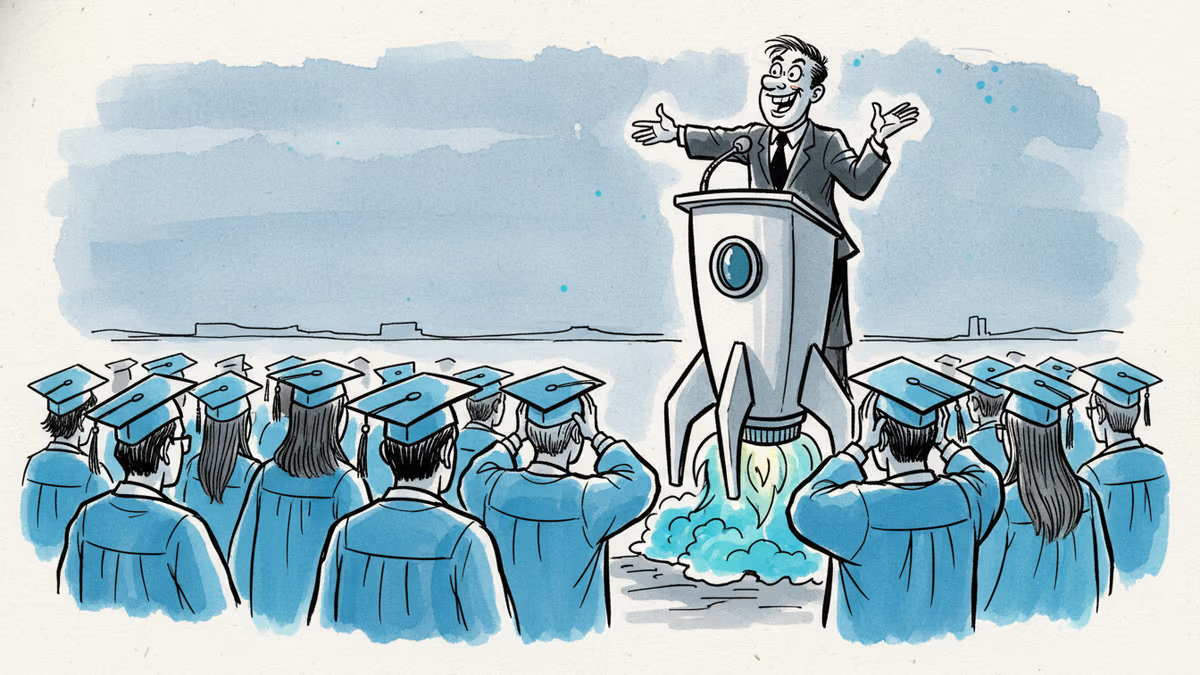
Two commencement speakers learned the hard way that AI enthusiasm doesn't land well with today's graduates. The backlash reveals a widening gap between tech optimism and Gen Z's economic reality.
Samsung and SK unveiled a chip and AI investment package worth thousands of trillions of won on June 29. The headline number swings wildly by outlet, but the real contest isn't capital — it's water and power.
Viral videos show 2026 graduates jeering executives who praise AI at commencement ceremonies. It's not just rudeness — it's a signal about who pays for technological optimism.
Filipino virtual assistants using AI to ghost-manage LinkedIn profiles for executives is now a structured industry. 30 comments a day, fake engagement rings, and a platform struggling to tell real from fabricated.
Two commencement speakers learned the hard way that AI enthusiasm doesn't land well with today's graduates. The backlash reveals a widening gap between tech optimism and Gen Z's economic reality.
Thoughts
Share your thoughts on this article
Sign in to join the conversation