
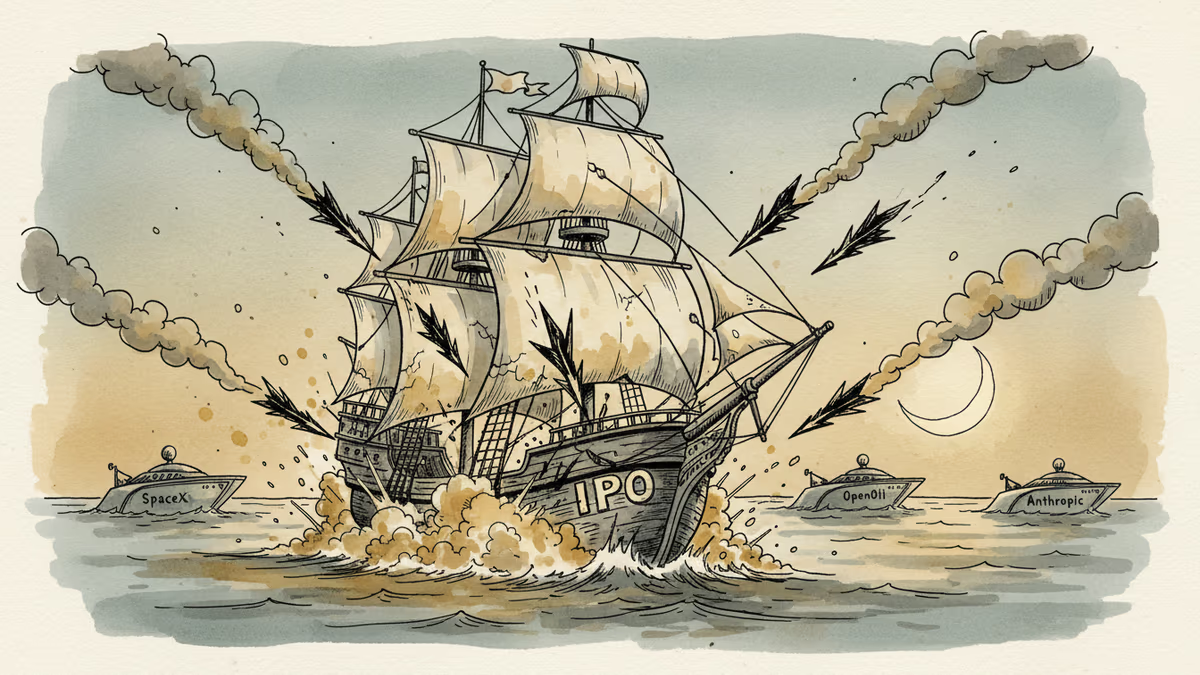
When a $10B IPO Gets Torpedoed in 24 Hours
PayPay's IPO postponement reveals how geopolitical risks now trump market fundamentals. The new reality for tech listings in 2026.
Japan's leading mobile payment app was 24 hours away from revealing its IPO price range. Then everything changed. PayPay, valued at $10 billion, abruptly postponed its U.S. listing as Middle East conflicts sent shockwaves through global markets.
But geopolitical drama is only part of the story.
SoftBank's Awkward Timing
PayPay emerged in 2018 as a joint venture between SoftBank and Yahoo Japan, powered by India's Paytm technology. The company dominated Japan's mobile payments landscape, but its IPO timing couldn't be worse.
The real issue isn't just Middle East tensions. It's the optics. SoftBank bought out Paytm's remaining stake for $279 million in late 2024, gaining complete control just months before the planned listing. Investors are asking: why the rush to go public now?
This timing raises uncomfortable questions about SoftBank's cash needs and whether PayPay is being pushed to market prematurely.
The Great Tech IPO Freeze

2026 was supposed to be tech IPO's comeback year. Instead, it's becoming a graveyard of postponed dreams. PayPay joins Kleiner Perkins-backed Motive Technologies and Clear Street in the growing list of companies pulling back from public markets.
The culprit? AI apocalypse fears. Investors are dumping software stocks on concerns that AI could render traditional software obsolete. Payment apps aren't immune—if AI consolidates financial services, why would consumers need standalone payment apps?
This creates a brutal paradox: companies need to go public to fund AI development, but AI fears are killing their IPO prospects.
Only the Giants Survive
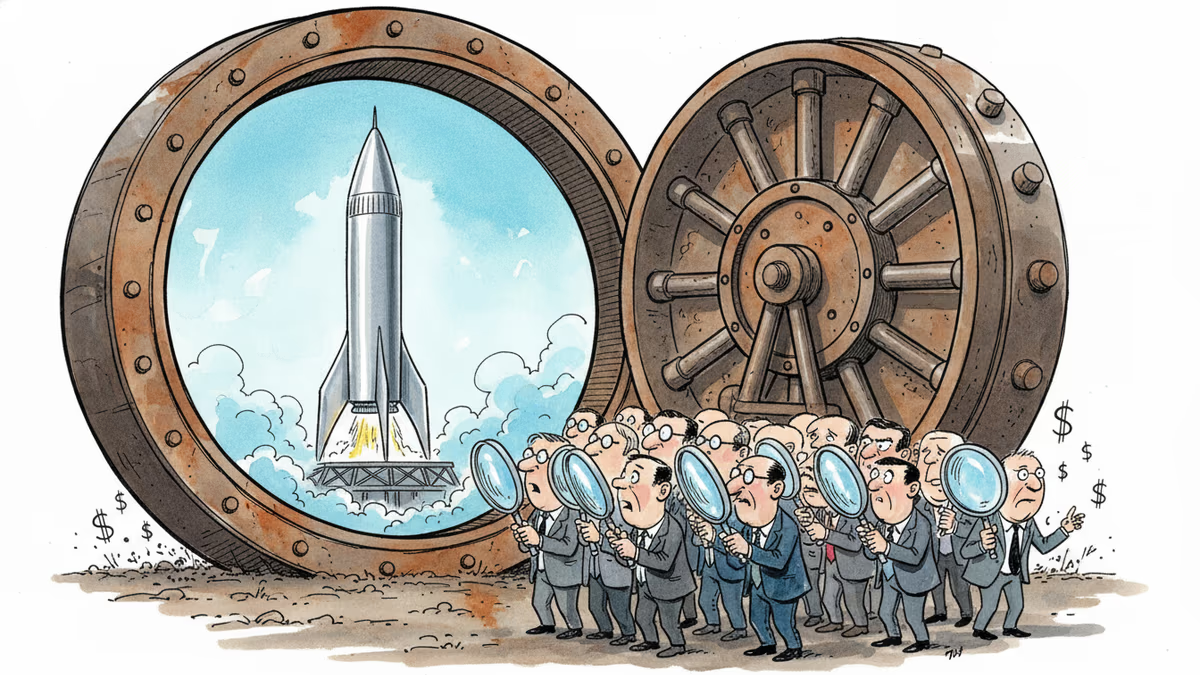
While smaller tech companies retreat, three "mega-IPOs" still command investor attention: SpaceX, OpenAI, and Anthropic. What separates them from the casualties?
Scale and AI positioning. These aren't companies worried about AI disruption—they're the disruptors. SpaceX owns the infrastructure of the future, while OpenAI and Anthropic are building the AI that's scaring everyone else.
For investors, the message is clear: in 2026, you're either an AI winner or an AI casualty. There's no middle ground.
Authors
Related Articles
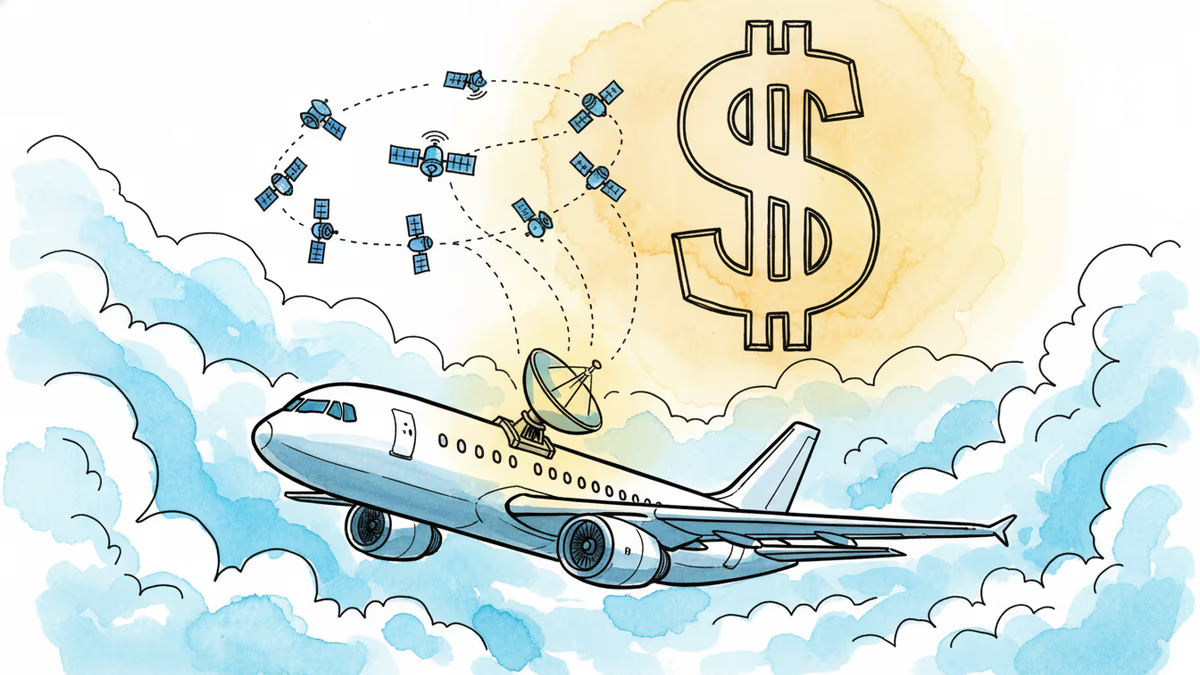
American Airlines just signed Starlink for 500+ aircraft. It's not just about faster inflight internet — it's a calculated move in the run-up to what could be the largest IPO in history.
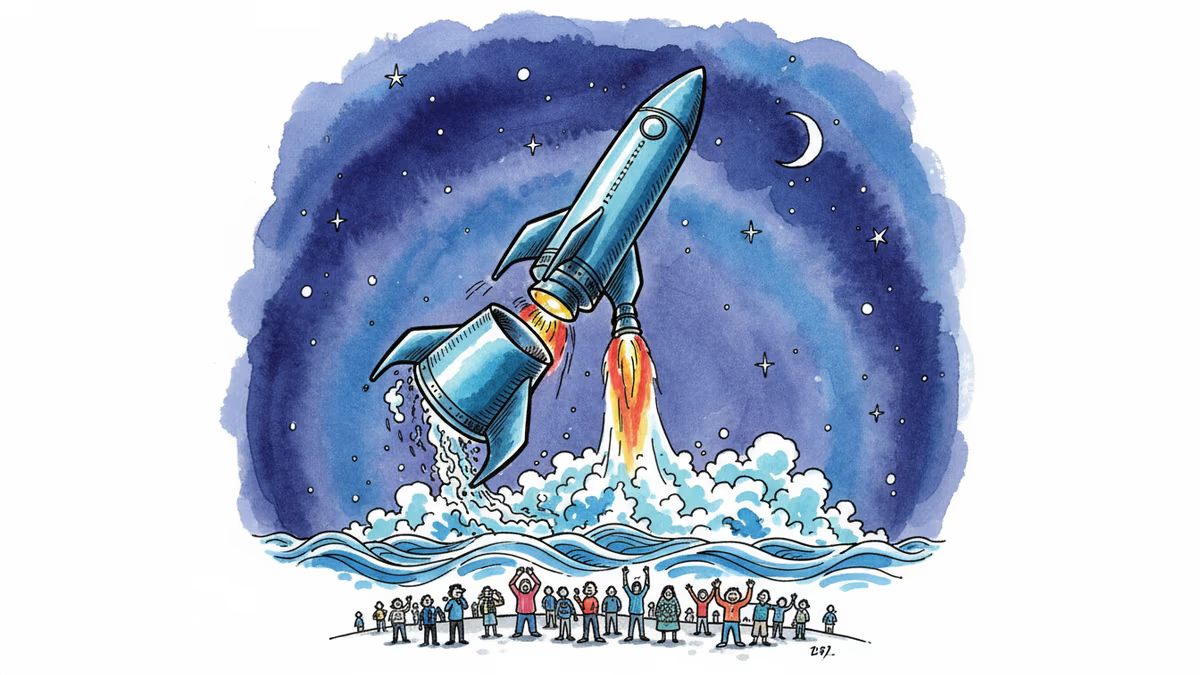
SpaceX's upgraded Starship V3 completed its first test flight, deploying 20 Starlink simulators but losing the Super Heavy booster. With an IPO weeks away, the stakes just got higher.
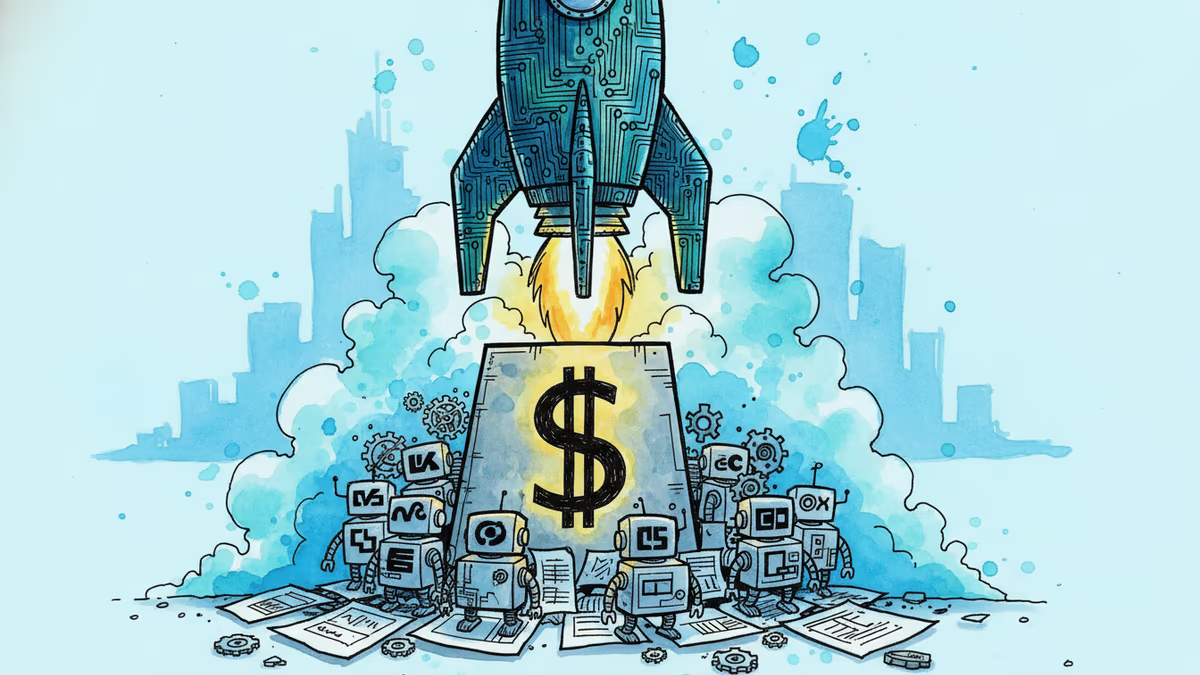
SpaceX's IPO filing puts AI at the center, claiming a $26.5 trillion market opportunity. But can Grok compete with OpenAI and Anthropic for enterprise customers?
SpaceX filed a nearly 400-page S-1 with the SEC, targeting an IPO as early as June 12. Here's what the filing reveals—and what it doesn't.
American Airlines just signed Starlink for 500+ aircraft. It's not just about faster inflight internet — it's a calculated move in the run-up to what could be the largest IPO in history.
SpaceX's upgraded Starship V3 completed its first test flight, deploying 20 Starlink simulators but losing the Super Heavy booster. With an IPO weeks away, the stakes just got higher.
SpaceX's IPO filing puts AI at the center, claiming a $26.5 trillion market opportunity. But can Grok compete with OpenAI and Anthropic for enterprise customers?
SpaceX filed a nearly 400-page S-1 with the SEC, targeting an IPO as early as June 12. Here's what the filing reveals—and what it doesn't.
Thoughts
Share your thoughts on this article
Sign in to join the conversation