
The Gay Network Silicon Valley Wasn't Supposed to Discuss
Wired investigation reveals powerful gay male network in tech through 51 interviews. Mutual support or new power structure?
51 Sources Expose Tech's 'Open Secret'
Silicon Valley has always had its networks. But this one operates far from the golf course. Wired reporter Zoë Bernard spent eight months interviewing 51 people (31 of them gay men) to map out what she calls tech's most powerful subculture: gay male executives quietly building their own empire.
One angel investor cuts straight to the point: "The gays who work in tech are succeeding vastly... they support each other, whether that's to hire someone or angel invest in their companies or lead their funding rounds."
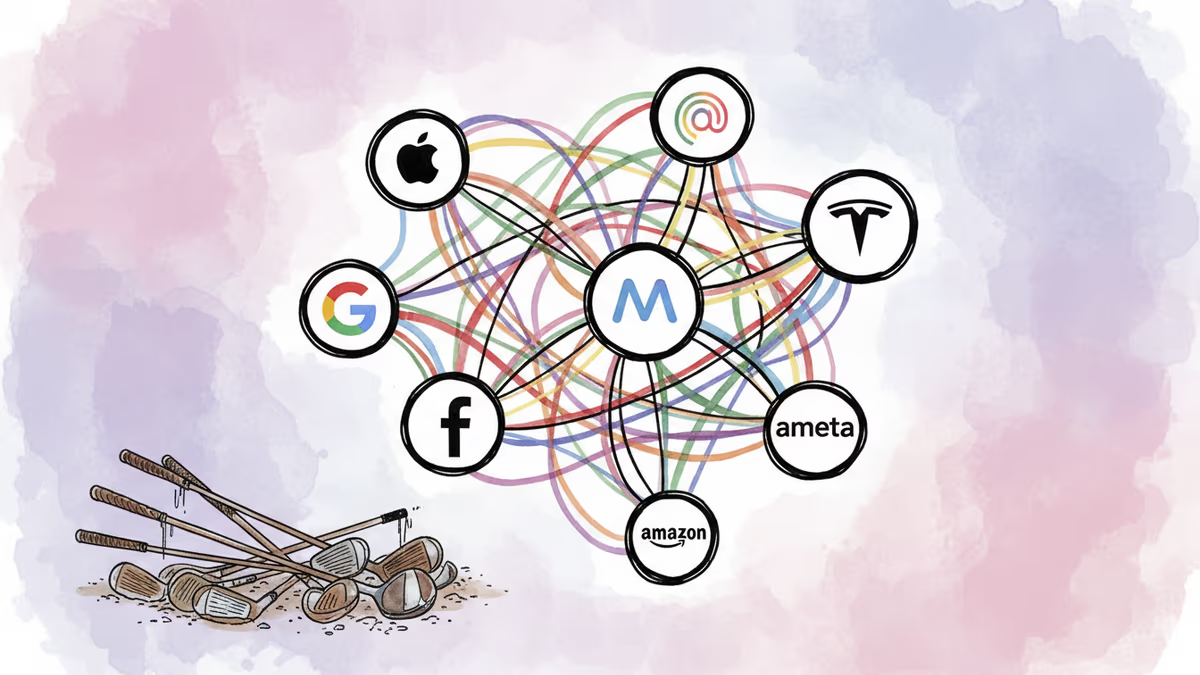
This isn't just casual networking. We're talking about a web that connects heavyweights like Keith Rabois, Sam Altman, and Tim Cook. A shadow power structure that's been hiding in plain sight.
Golf Course vs. Orgy: The New Networking Playbook
"Straight guys have the golf course. Gay guys have the orgy. It doesn't mean it's problematic. It's a way we bond and connect." This quote from Bernard's investigation reveals how dramatically networking has evolved in tech.
Traditionally, Silicon Valley ran on the "old boys' network" – Ivy League grads, predominantly white males, country club handshakes. But now there's a new player in town, and they're rewriting the rules.

Their networking happens in private homes, exclusive parties, and yes, sometimes sexual gatherings. The boundaries between business and pleasure blur deliberately. It's intimate, it's effective, and it's completely changing who gets access to power.
The Dark Side of Intimate Networks
But power without accountability breeds problems. Nine gay men interviewed described experiencing unwanted advances from more senior colleagues. When networking gets this personal, where does opportunity end and coercion begin?
The investigation doesn't shy away from this complexity. As one source warns: "This is a complex subject and I don't think readers can draw the distinction between some bad men being gay and all gay men being bad. It can be a slippery slope into homophobia."
It's the eternal dilemma of insider networks: they create opportunities for the excluded, but they can also create new forms of exclusion.
What This Means for Tech's Future
This revelation comes at a crucial moment. Tech companies are under intense scrutiny for their diversity and inclusion efforts. Investors are demanding more representative leadership. Yet here's evidence of a thriving network that operates entirely outside traditional D&I frameworks.
Is this progress? Gay executives supporting each other challenges the straight white male monopoly on power. But it also raises uncomfortable questions about who gets left out of these new networks. Women? Straight men? Other minority groups?
The tech industry loves to talk about meritocracy, but every network – whether it's based on school ties, golf club memberships, or sexual identity – creates advantages for insiders.
Authors
Related Articles
Former Palantir employee Alex Bores faces unprecedented Big Tech spending after passing AI transparency law. What this means for democracy and regulation.

Riley Walz, creator of viral web stunts, joins OpenAI to reinvent human-AI interaction. What this hiring reveals about the next phase of AI competition.
VC Masha Bucher's ties to Jeffrey Epstein expose the dark side of Silicon Valley networking culture. Her apology raises questions about due diligence and moral responsibility in venture capital.

Keith Rabois's support for ICE shooting sparks unprecedented public rift within Khosla Ventures, exposing deep political divisions in venture capital
Former Palantir employee Alex Bores faces unprecedented Big Tech spending after passing AI transparency law. What this means for democracy and regulation.
Riley Walz, creator of viral web stunts, joins OpenAI to reinvent human-AI interaction. What this hiring reveals about the next phase of AI competition.
VC Masha Bucher's ties to Jeffrey Epstein expose the dark side of Silicon Valley networking culture. Her apology raises questions about due diligence and moral responsibility in venture capital.
Keith Rabois's support for ICE shooting sparks unprecedented public rift within Khosla Ventures, exposing deep political divisions in venture capital
Thoughts
Share your thoughts on this article
Sign in to join the conversation