
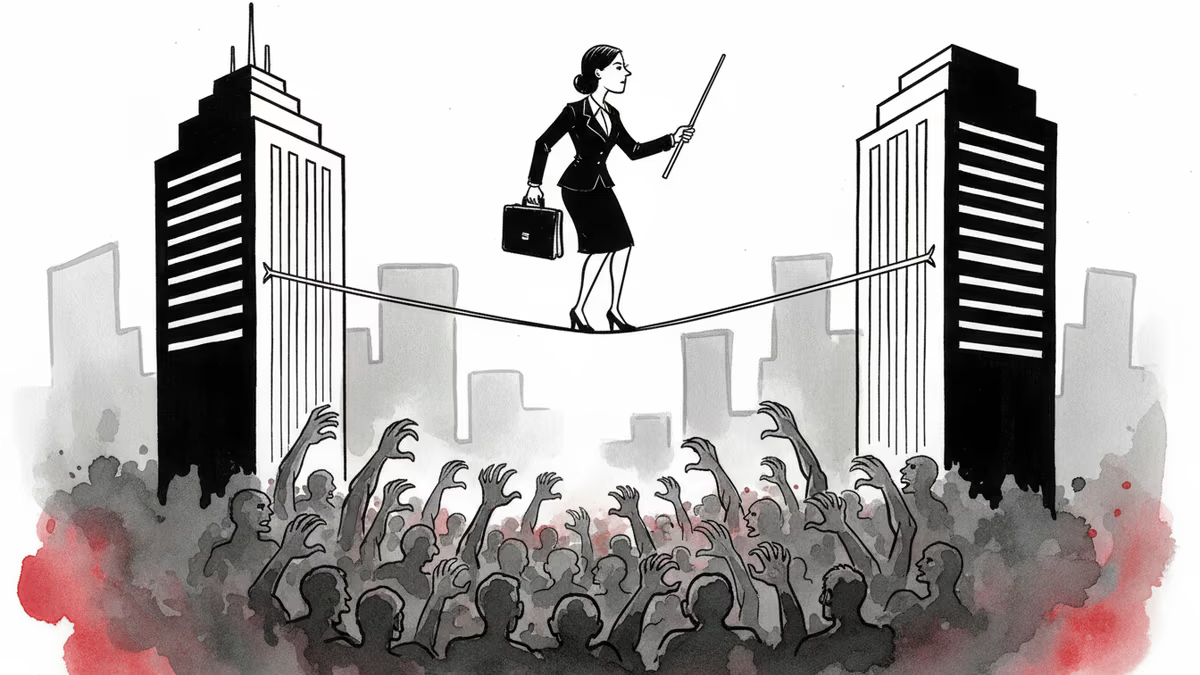
When Silicon Valley's 'Trust Network' Goes Wrong
VC Masha Bucher's ties to Jeffrey Epstein expose the dark side of Silicon Valley networking culture. Her apology raises questions about due diligence and moral responsibility in venture capital.
1,600 times. That's how often Masha Bucher's name appeared in the latest Jeffrey Epstein document dump. The Day One Ventures founder spent seven years in business with a convicted sex offender—and this week, she finally tried to explain why.
"He made me feel I could be safe from the regime," Bucher wrote on X, describing how Epstein positioned himself as someone with "power and connections" who could shield her from threats she associated with Russia. "I was naive; I didn't dig deep enough early on."
The PR Expert's Ultimate PR Crisis
The irony cuts deep. Bucher built her VC brand on being a "PR expert who can help founders with their public image." She's backed breakout companies like Superhuman, Remote, and Worldcoin, growing Day One Ventures to $450 million in assets under management.
But the documents paint a different picture. Starting in 2017, Bucher served as Epstein's publicist, working to rehabilitate his reputation after his 2008 sex-trafficking conviction. She arranged meetings with journalists and helped him navigate media relations. In return, Epstein supported her early venture fund—and according to emails, sent her money, a Prada bag, and on one occasion, requested nude photos.
A Pattern of Powerful Patrons
This isn't Bucher's first controversial connection. In her youth, she was a member of Nashi, a pro-Putin youth group in Russia. She even appeared in a 2012 documentary called "Putin's Kiss"—named for the widely circulated moment when she kissed Putin's cheek.

She's since renounced her Russian passport and publicly denounced Putin. But the pattern remains: a young immigrant seeking protection from powerful, morally questionable figures.
Silicon Valley's Trust Problem
Bucher isn't alone in the Epstein files—his network included numerous tech luminaries. This exposes a fundamental tension in Silicon Valley's culture: the ecosystem runs on trust and personal networks, but how thoroughly can anyone vet their connections?
For immigrant entrepreneurs and investors, the allure of established power brokers offering "protection" can be especially strong. Bucher's reference to feeling "safe from the regime" reveals how vulnerability can cloud judgment.
The Due Diligence Dilemma
The timeline matters. Bucher maintained "friendly correspondence" with Epstein until just 11 days before his July 2019 arrest. She claims she believed his story about "sleeping with a girl who lied about her age" and trusted "validations from multiple investors and scientists."
But in an industry that prides itself on rigorous due diligence for investments, how did basic background checks fail for personal relationships? Epstein's 2008 conviction was public record. His reputation in certain circles was an open secret.
Authors
Related Articles
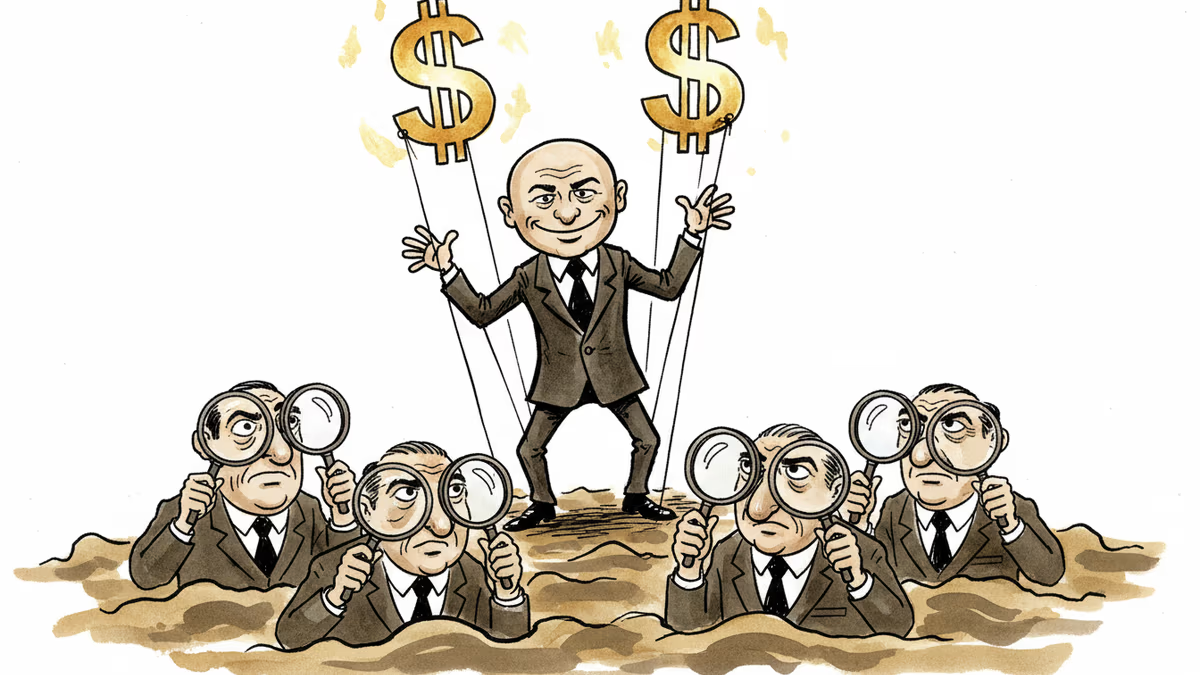
Cluely CEO admits to fabricating $7M revenue figure, exposing how startup "fake it till you make it" culture has gone too far. What this means for the ecosystem.
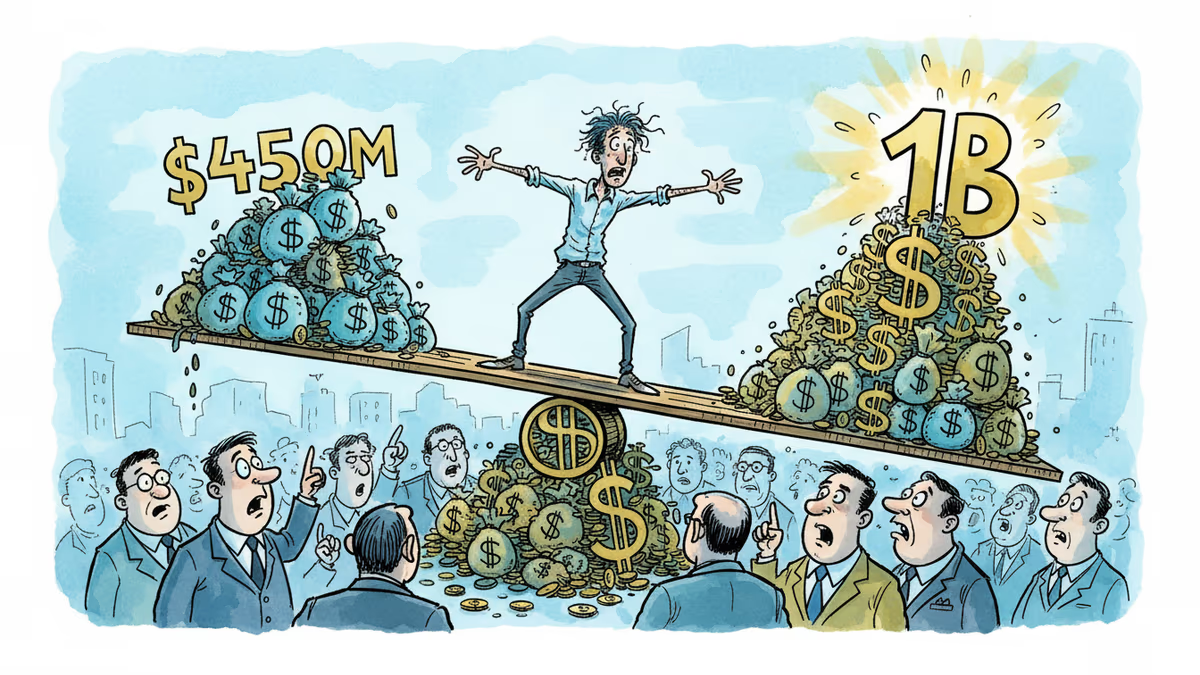
AI startups are using dual-tier valuations to manufacture unicorn status. Why are investors playing along with this new valuation game?
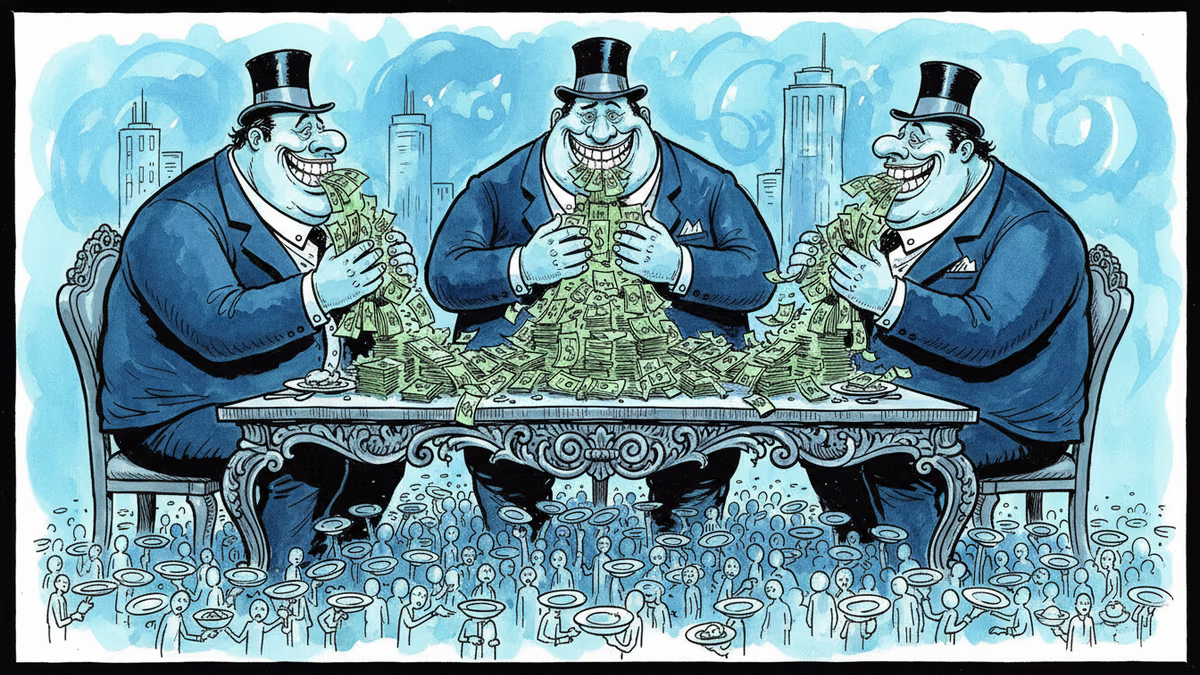
AI startups captured 90% of record $189B February VC funding, with OpenAI, Anthropic, and Waymo dominating 83% of all investments, reshaping venture landscape
Anduril's $60B valuation bid signals a seismic shift in defense tech. As VCs pour billions into weapons, what does this mean for warfare's future?
Cluely CEO admits to fabricating $7M revenue figure, exposing how startup "fake it till you make it" culture has gone too far. What this means for the ecosystem.
AI startups are using dual-tier valuations to manufacture unicorn status. Why are investors playing along with this new valuation game?
AI startups captured 90% of record $189B February VC funding, with OpenAI, Anthropic, and Waymo dominating 83% of all investments, reshaping venture landscape
Anduril's $60B valuation bid signals a seismic shift in defense tech. As VCs pour billions into weapons, what does this mean for warfare's future?
Thoughts
Share your thoughts on this article
Sign in to join the conversation