
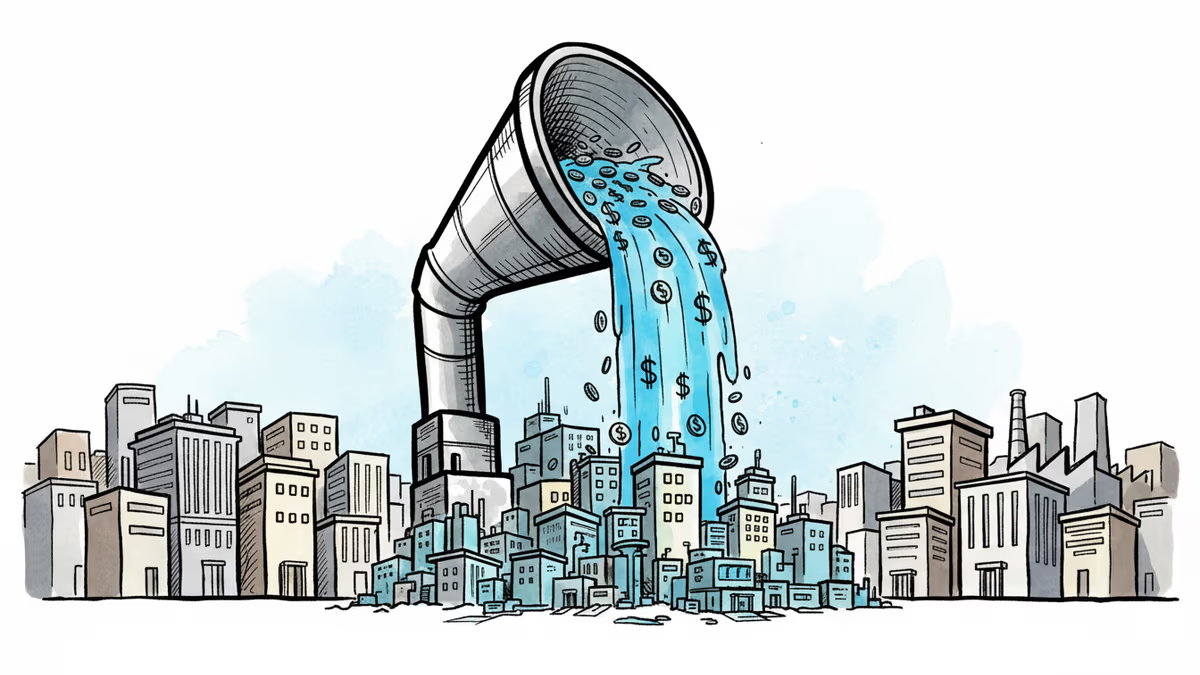
$10B Fund Signals New Era: AI Gold Rush or Bubble Warning?
Thrive Capital raised its largest-ever $10B fund, nearly doubling its previous size. What does this mega-fund tell us about the current state of venture investing?
$10 Billion Just Changed the Game
Thrive Capital just closed its largest fund ever—$10 billion—nearly double the size of its previous fund. But here's the kicker: it was oversubscribed. Investors were literally fighting to get in. This isn't just another fundraise; it's a statement about where smart money thinks the future is heading.
The breakdown reveals the strategy: $1 billion for early-stage bets, $9 billion for growth-stage companies. Translation? They're not interested in spray-and-pray investing. They're hunting for the handful of companies that will define the next decade.
The Portfolio That Built Confidence
Thrive's timing isn't accidental. Their crown jewels—OpenAI, SpaceX, and Stripe—are all hitting escape velocity. OpenAI has become synonymous with the AI revolution, while SpaceX continues to redefine what's possible in space commerce. These aren't just good investments; they're category-defining companies.
Founder Josh Kushner told Bloomberg that AI boom winners will "be bigger than we can ever imagine." Bold words, but Thrive has the track record to back them up. They've incubated 12 companies so far, with at least six reaching unicorn status. That's not luck—that's pattern recognition.
The LP Perspective: Risk vs. Reward

Why would limited partners commit $10 billion to a single fund? The math is compelling. With OpenAI and SpaceX IPO rumors swirling, LPs are positioning for what could be "unprecedented capital flows" back to investors.
But there's another angle. Mega-funds like this often signal market tops. When too much money chases too few deals, asset prices can detach from reality. Some veteran investors are quietly asking: Are we witnessing the next chapter of innovation funding, or the final act of a bubble?
The Concentration Strategy
Thrive's approach is telling: "Commit deeply to a small number of founders." In an era of winner-take-all markets, this makes sense. But it also represents a fundamental shift in VC philosophy. Instead of diversifying risk across many bets, they're concentrating it on a few high-conviction plays.
This strategy works brilliantly—until it doesn't. The companies that don't make it into Thrive's concentrated portfolio might struggle to find funding elsewhere, as other VCs follow similar playbooks.
Market Implications
This fundraise sends ripples across the entire startup ecosystem. For entrepreneurs, it means the bar for "fundable" companies just got higher. Thrive isn't looking for good companies; they're looking for companies that can return their $10 billion fund multiple times over.
For other VCs, it's both inspiration and intimidation. How do you compete with a fund that can write $100 million checks without blinking? The answer might be specialization—finding niches where mega-funds fear to tread.
Authors
Related Articles
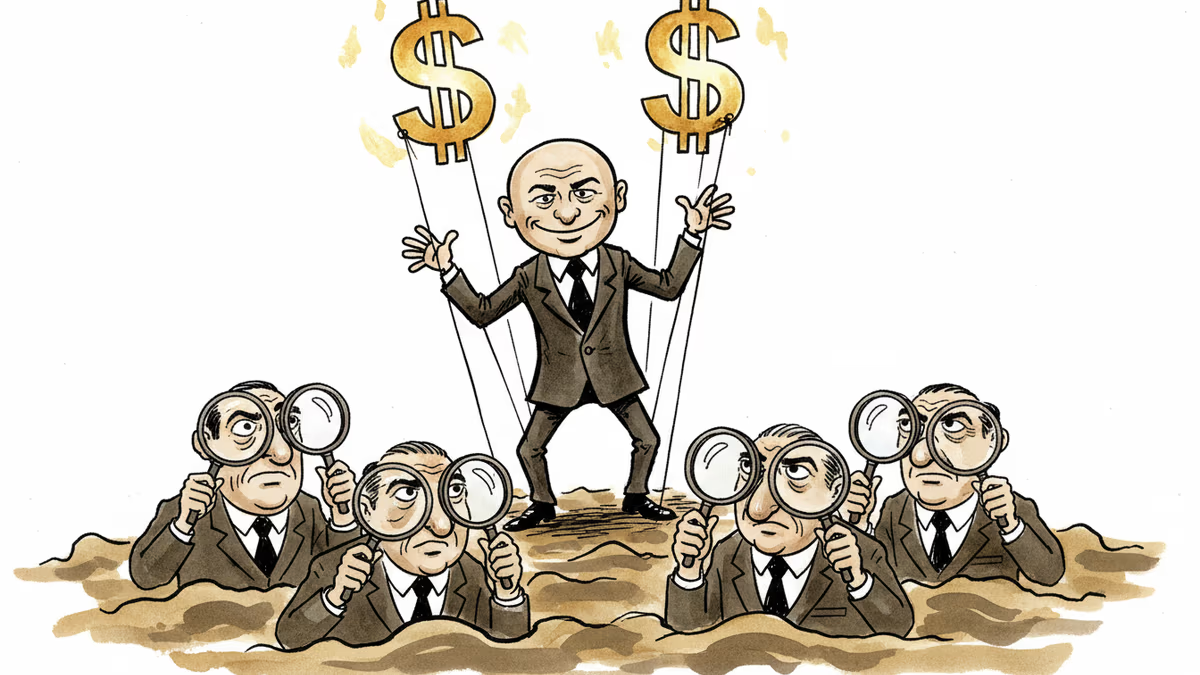
Cluely CEO admits to fabricating $7M revenue figure, exposing how startup "fake it till you make it" culture has gone too far. What this means for the ecosystem.
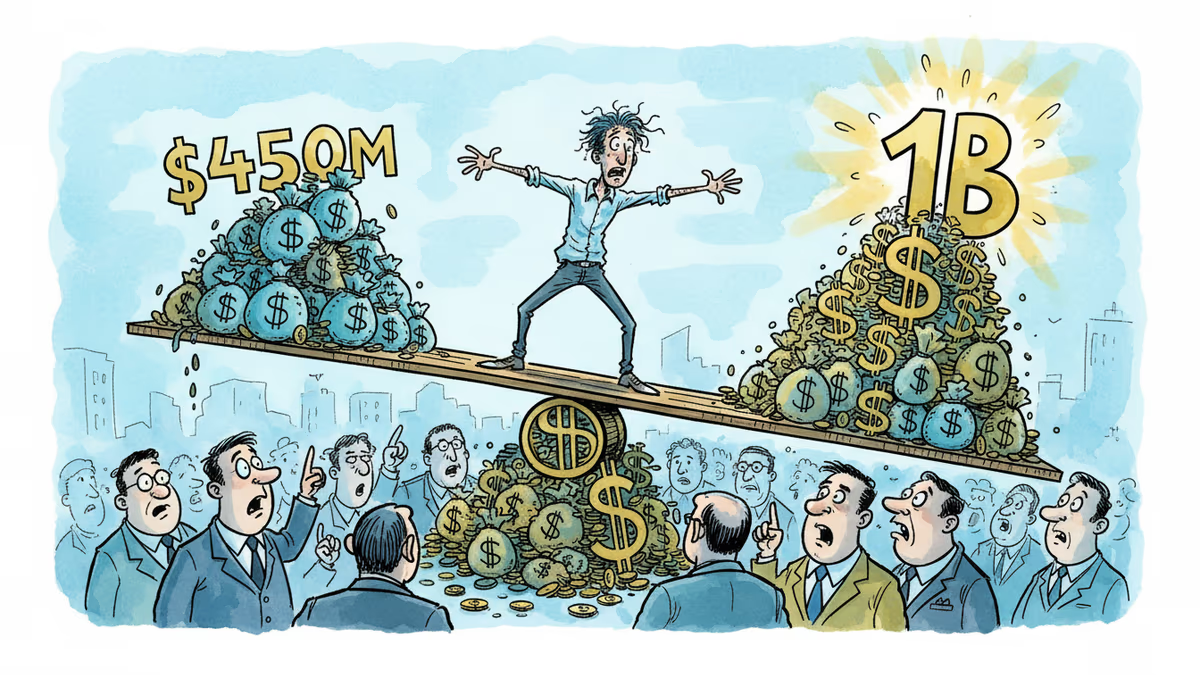
AI startups are using dual-tier valuations to manufacture unicorn status. Why are investors playing along with this new valuation game?
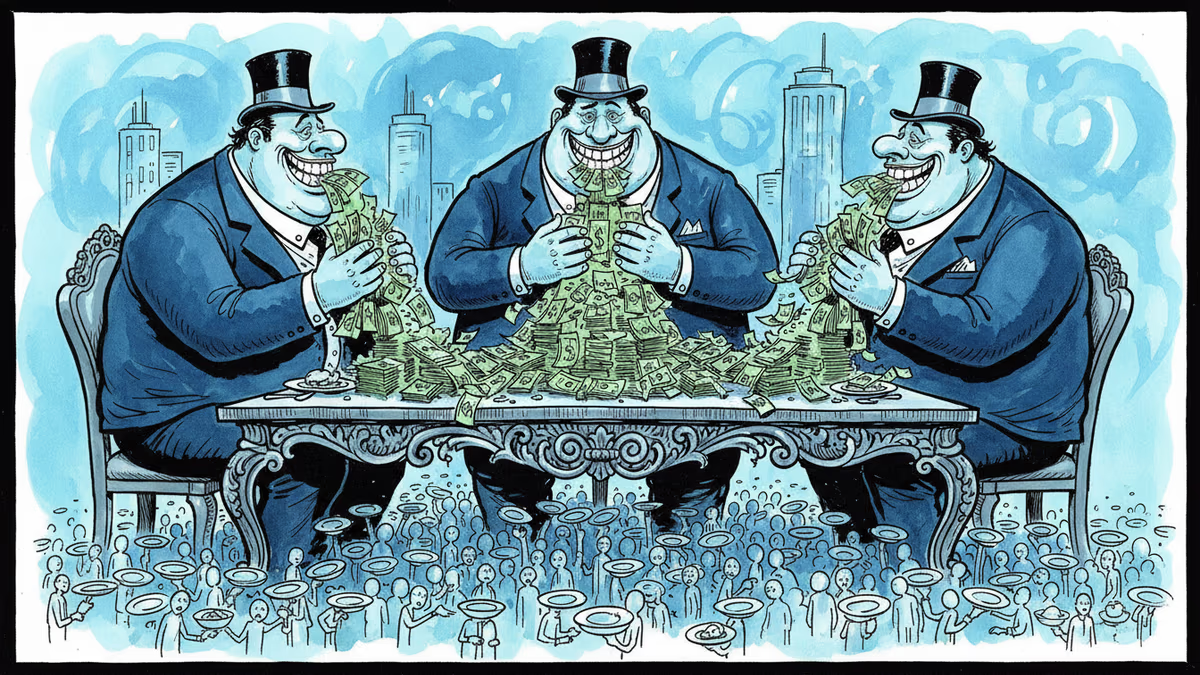
AI startups captured 90% of record $189B February VC funding, with OpenAI, Anthropic, and Waymo dominating 83% of all investments, reshaping venture landscape
Anduril's $60B valuation bid signals a seismic shift in defense tech. As VCs pour billions into weapons, what does this mean for warfare's future?
Cluely CEO admits to fabricating $7M revenue figure, exposing how startup "fake it till you make it" culture has gone too far. What this means for the ecosystem.
AI startups are using dual-tier valuations to manufacture unicorn status. Why are investors playing along with this new valuation game?
AI startups captured 90% of record $189B February VC funding, with OpenAI, Anthropic, and Waymo dominating 83% of all investments, reshaping venture landscape
Anduril's $60B valuation bid signals a seismic shift in defense tech. As VCs pour billions into weapons, what does this mean for warfare's future?
Thoughts
Share your thoughts on this article
Sign in to join the conversation