
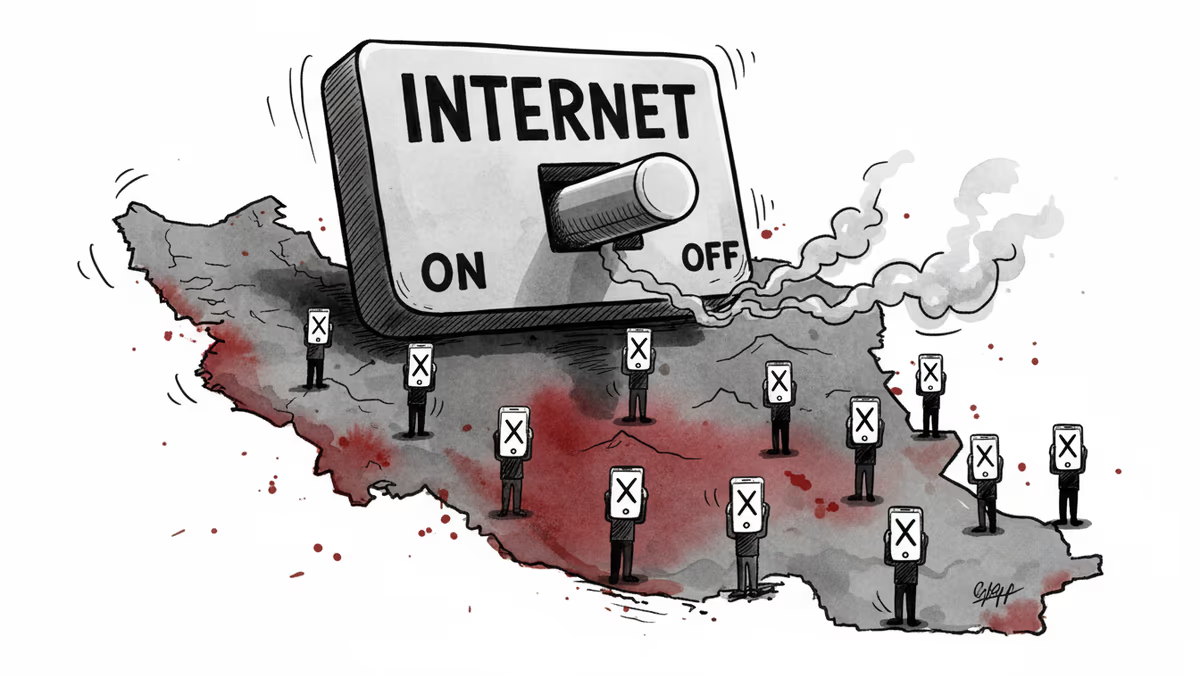
90 Million Iranians Cut Off: When War Meets Digital Authoritarianism
Iran's total internet blackout after US-Israeli strikes reveals how regimes weaponize connectivity. While elites stay online, ordinary citizens face digital isolation amid kinetic warfare.
90 Million People Just Vanished From the Internet
What happens when an entire nation goes dark online during wartime? Iran's 90 million citizens have been living under a total internet blackout for over six days, cut off immediately after US and Israeli missiles killed Supreme Leader Ali Khamenei on February 28. This isn't just another authoritarian crackdown—it's digital warfare in real time.
Doug Madory, director of internet analysis at monitoring firm Kentik, reports "minimal traffic" leaving the country, with all networks seeing 99% drops in connectivity. That remaining 1%? Reserved for government officials, military personnel, and wealthy elites, plus a handful of technical necessities like encryption certificate updates.
The Propaganda Paradox: Silence Citizens, Amplify State
Here's the twisted irony: while ordinary Iranians can't access global internet, regime-linked channels have become more active. Iranian fact-checking organization Factnameh analyzed 50,000 Telegram posts from 50 prominent channels during the war's first 72 hours—many directly connected to the government and Islamic Revolutionary Guard Corps.
"Even after internet restrictions were imposed, no interruption in activity was observed," their report states. "In fact, the channels became more active than before." These channels appeared to exaggerate reports of Iranian retaliatory strikes while notably avoiding rumors about Khamenei's death until official confirmation.
Fereidoon Bashar, executive director of ASL19 (which operates Factnameh), sees a strategic shift: "They've pivoted from trying to control information flows and decided they need to participate in online spaces and actively shape narratives, including in English."
The 1% Solution: How Iranians Stay Connected

Total blackout doesn't mean total silence. Iranian civil society has spent years building circumvention networks, from smuggling Starlink terminals to developing peer-to-peer platforms. The most revealing example? Conduit, a protocol created by software company Psiphon.
Even under complete shutdown, Conduit still serves 60,000 to 100,000 Iranian users daily. "It is at 1% connectivity, but it is never zero," says Ali Tehrani, Psiphon's director of DC operations. In January, before the current blackout, Conduit had 21 million unique users in Iran, with 9 million accessing the open internet on peak days.
"That was kind of mind-boggling, the scale was just super amazing," Tehrani reflects. "People outside the country could let their phone be the bouncing board for Iranians inside."
The Architecture of Digital Authoritarianism
Iran's response isn't improvised—it's the culmination of a decade-long project. The regime has systematically built the National Information Network (NIN), a domestic intranet designed to keep daily life functioning when global connectivity disappears. Multiple shutdowns in 2019, 2022, 2025, and twice this year have refined increasingly sophisticated blocking techniques.
This "authoritarian network design" creates tiered access: global connectivity for elites, tech companies, and universities; domestic intranet for everyone else. During the current shutdown, the government actively promotes domestic search engines while sending text warnings that accessing global internet could result in legal action.
But war adds new complications. Even the limited connectivity faces "additional outages" from air strike damage to critical infrastructure, Madory notes. "Even if the government shutdown were lifted, connectivity problems could persist due to infrastructure damage."
The Funding Fight for Digital Freedom
Conduit's story reveals another layer of complexity. The peer-to-peer circumvention tool, developed with US State Department and Open Tech Fund backing after Iran's 2019 shutdown, nearly died in 2025 when Trump administration funding cuts hit open internet initiatives.
For months, Psiphon bridged the gap independently. Only in February did new funding arrive, supported by Republican senators Lindsey Graham and James Lankford. The timing proved crucial—just as Iran plunged into its deepest digital isolation yet.
Authors
Related Articles
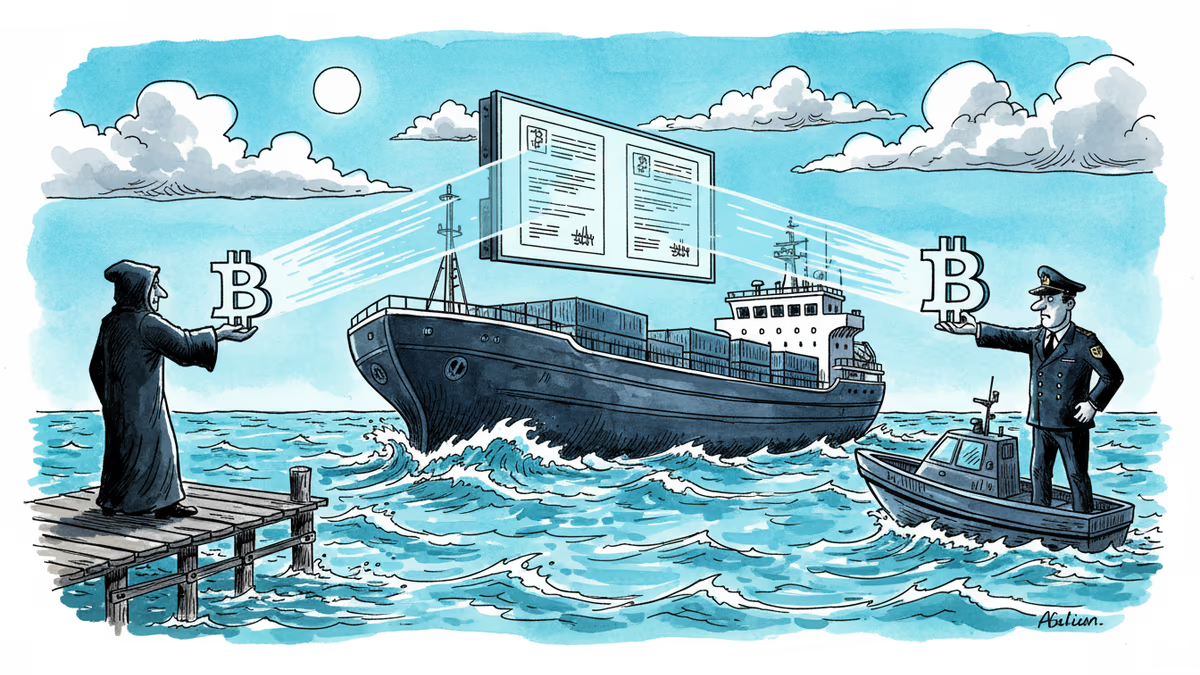
Scammers posing as Iranian authorities are demanding bitcoin and tether from ships near the Strait of Hormuz—exploiting the fact that Iran already does exactly this.

A small pro-Iran team is racking up millions of views with AI-generated Lego videos that mock Trump — and Americans are sharing them. What does that tell us about information warfare?
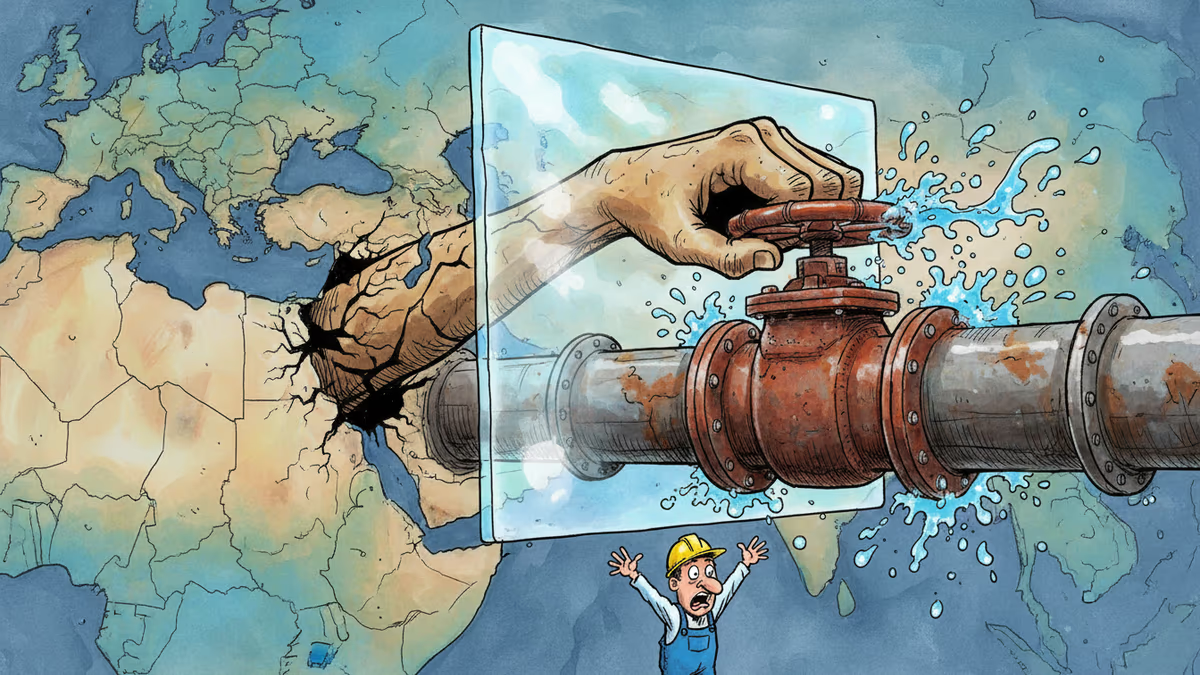
Iranian government-backed hackers have escalated from data theft to physically manipulating U.S. water, power, and local government control systems. A joint FBI-NSA-CISA-DOE advisory confirms operational disruption has already occurred.

For Iranian diaspora families, digital communication isn't convenience—it's survival. What happens when staying connected becomes a political act?
Scammers posing as Iranian authorities are demanding bitcoin and tether from ships near the Strait of Hormuz—exploiting the fact that Iran already does exactly this.
A small pro-Iran team is racking up millions of views with AI-generated Lego videos that mock Trump — and Americans are sharing them. What does that tell us about information warfare?
Iranian government-backed hackers have escalated from data theft to physically manipulating U.S. water, power, and local government control systems. A joint FBI-NSA-CISA-DOE advisory confirms operational disruption has already occurred.
For Iranian diaspora families, digital communication isn't convenience—it's survival. What happens when staying connected becomes a political act?
Thoughts
Share your thoughts on this article
Sign in to join the conversation