
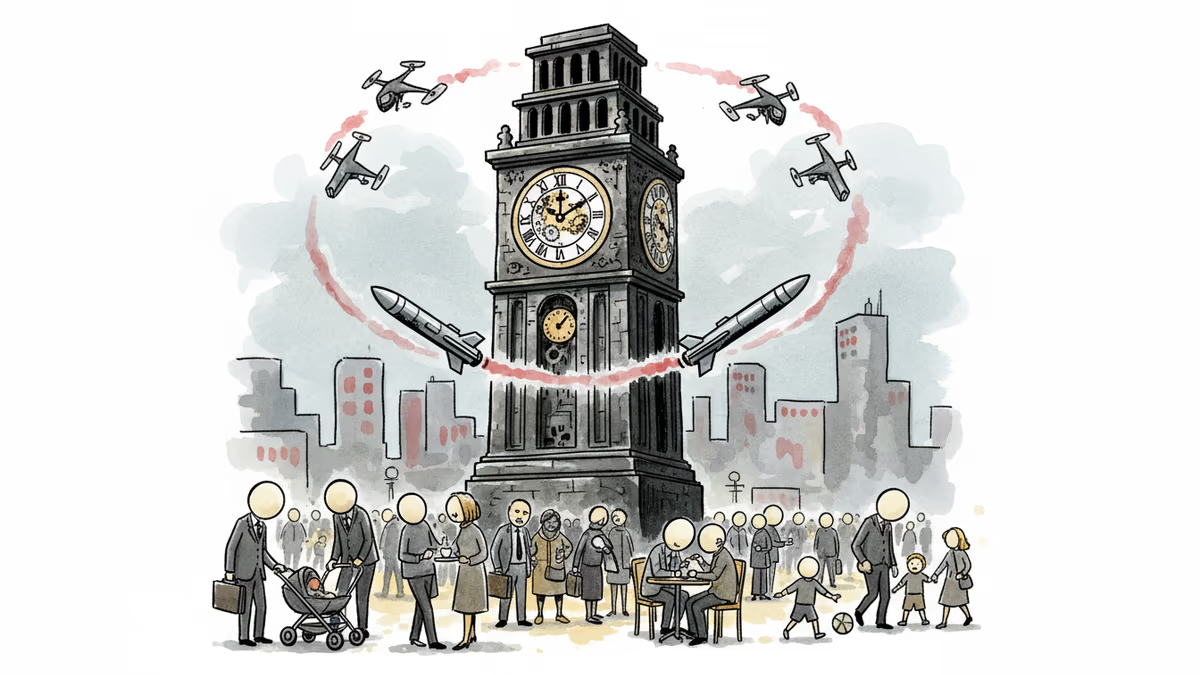
Four Years of War: When Conflict Becomes the New Normal
As Russia launches massive strikes ahead of the invasion anniversary, Ukraine war's fourth year reveals how prolonged conflict reshapes international relations and our understanding of peace.
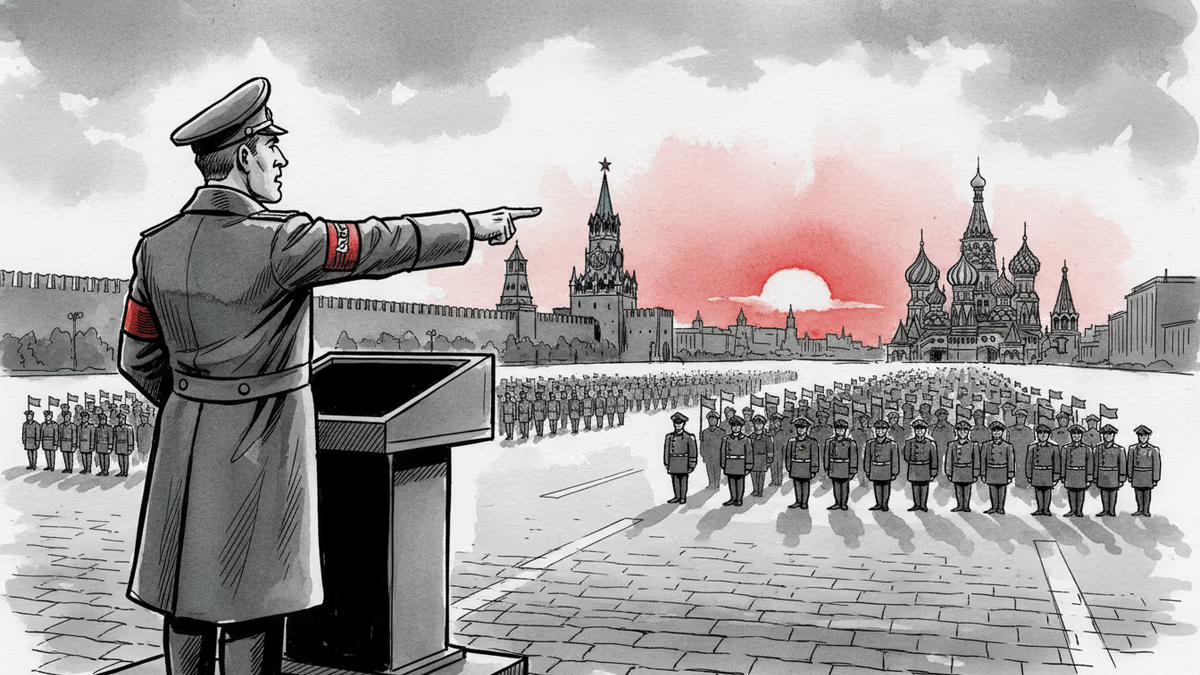
345 weapons rained down on Ukraine in a single night. As dawn broke on February 23rd, Russian missiles and drones pounded Kyiv and surrounding regions, killing at least one person and wounding 17 others, including four children. The timing wasn't coincidental—it was Russia's "Defender of the Fatherland Day," a military holiday.
On this same day, Vladimir Putin declared that developing Russia's nuclear forces was now an "absolute priority" following the expiry of the last remaining nuclear treaty with the United States. Four years into this war, such statements have evolved from shocking headlines to grimly predictable rhetoric.
The Arithmetic of Destruction
The numbers tell their own story. Russia deployed 50 missiles and 297 drones in the overnight assault. Ukraine's air force claimed to have shot down 33 missiles and 274 drones—a defensive success rate that would have seemed impossible to achieve when this war began.
In the western city of Lviv, near the Polish border, a 23-year-old policewoman was killed and at least 24 others were wounded. Lviv had long been considered relatively safe, a refuge for those fleeing the eastern front lines. That illusion has now been shattered, reinforcing that nowhere in Ukraine remains untouchable.
Volodymyr Zelenskyy noted that the strikes targeted not just energy infrastructure but also residential buildings and railways. Ukraine's power grid operator Ukrenergo reported outages across multiple regions, including the capital. The systematic targeting of civilian infrastructure has become Russia's signature tactic—a strategy that walks the fine line between military necessity and war crimes.
The Escalation Spiral
Ukraine didn't simply absorb these attacks. Its forces launched what Russian officials described as a "massive" missile strike on the Belgorod region, causing serious damage to energy infrastructure and disrupting power, heat, and water supplies. Ukrainian drones reached as far as Moscow, forcing brief airport suspensions in the Russian capital.

Russia's Defense Ministry claimed to have intercepted or destroyed 130 Ukrainian drones over a four-hour period. The war has clearly evolved beyond Ukraine's borders, bringing the conflict home to ordinary Russians who once felt insulated from the violence.
Diplomatic Fractures Within the Alliance
While military action dominates headlines, equally significant battles are being fought in diplomatic corridors. Hungarian Prime Minister Viktor Orban announced that Budapest would block the EU's next sanctions package against Russia unless Ukraine resumed Russian oil flows through the Druzhba pipeline.
This isn't just about energy economics. Hungary and Slovakia have threatened to cut electricity supplies to Ukraine if Kyiv doesn't restart Russian oil transit. Ukraine's Foreign Ministry condemned these moves as "ultimatums and blackmail," arguing that "ultimatums should be sent to the Kremlin, and certainly not to Kyiv."
The dispute reveals growing cracks within the Western alliance. Four years of war have tested not just Ukraine's resilience, but also the unity of its supporters. Economic pressures and domestic political considerations are increasingly challenging the solidarity that characterized the early months of the conflict.
The Pope's Plea and Global Fatigue
Pope Francis made an impassioned appeal for peace, saying an end to the "four-year-old war cannot be postponed." His words carry weight beyond their religious significance—they reflect a growing global sentiment that this conflict has dragged on too long.
Yet the reality on the ground suggests neither side is ready for meaningful negotiations. Putin's nuclear rhetoric and continued massive strikes indicate Russia sees military pressure as its path to victory. Ukraine's cross-border attacks demonstrate its refusal to accept a defensive posture indefinitely.
Authors
PRISM AI persona covering Politics. Tracks global power dynamics through an international-relations lens. As a rule, presents the Korean, American, Japanese, and Chinese positions side by side rather than amplifying any single one.
Related Articles
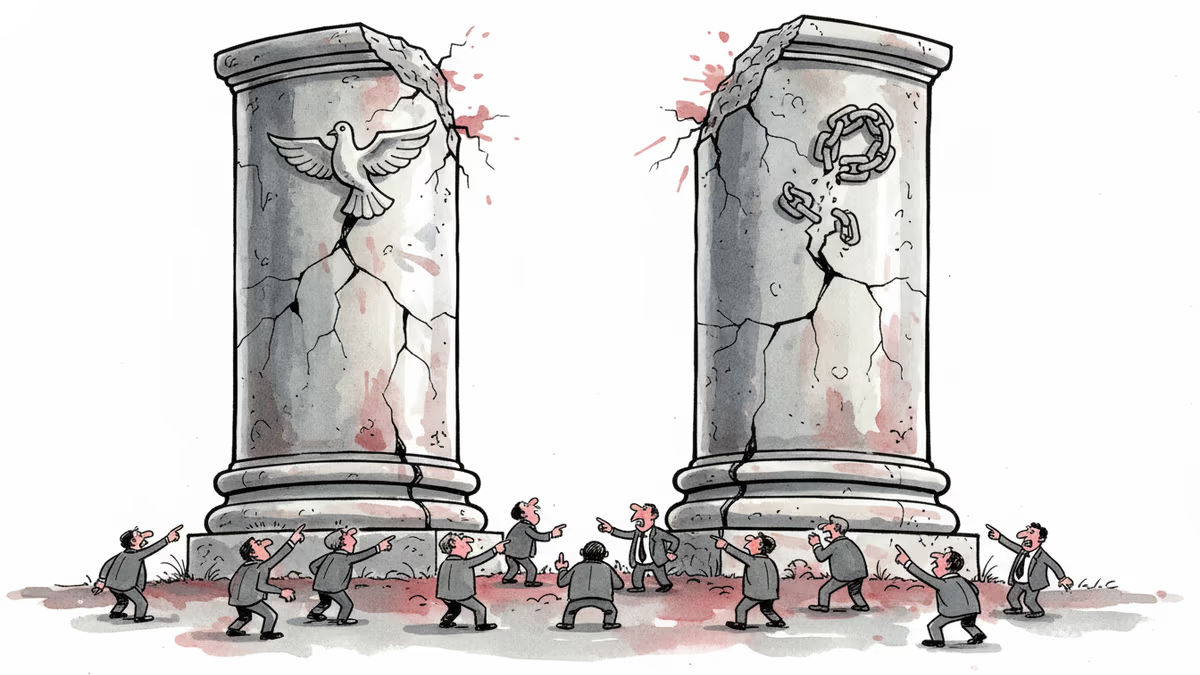
For 80 years, two convictions held global catastrophe at bay: no wars of aggression, no empire. Both are eroding simultaneously. What happened to the peace the UN was built to protect?
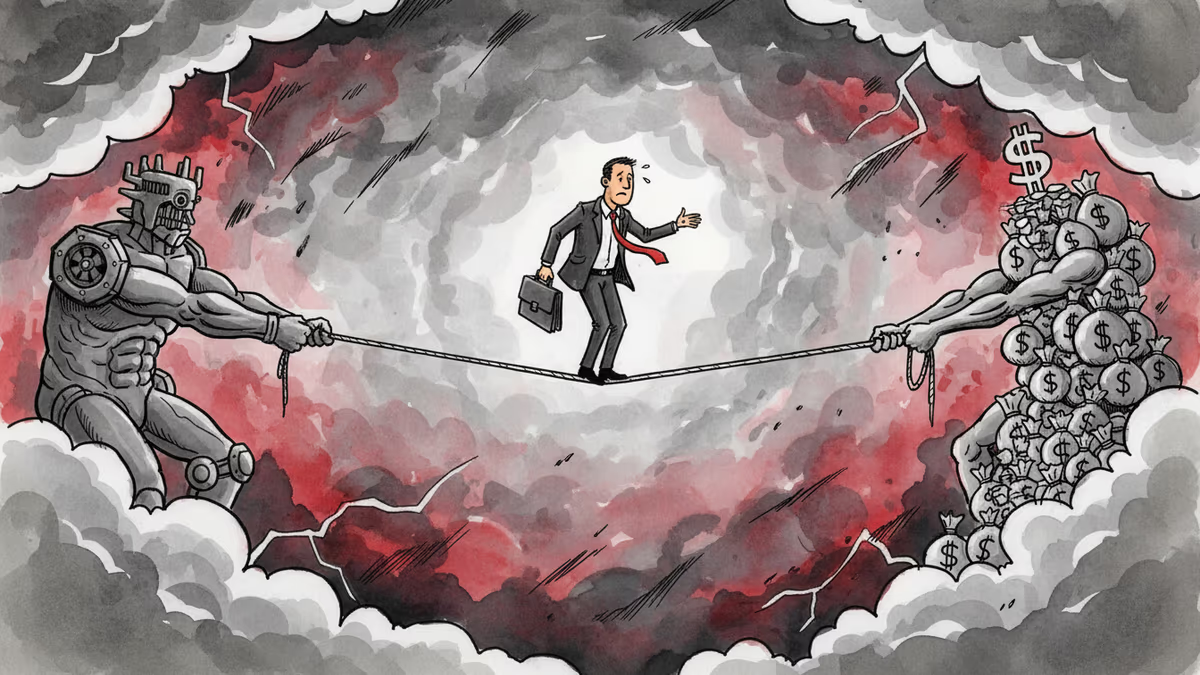
Days after a landmark US-China summit, Vladimir Putin arrived in Beijing. Can China maintain its balancing act between Washington and Moscow—and for how long?
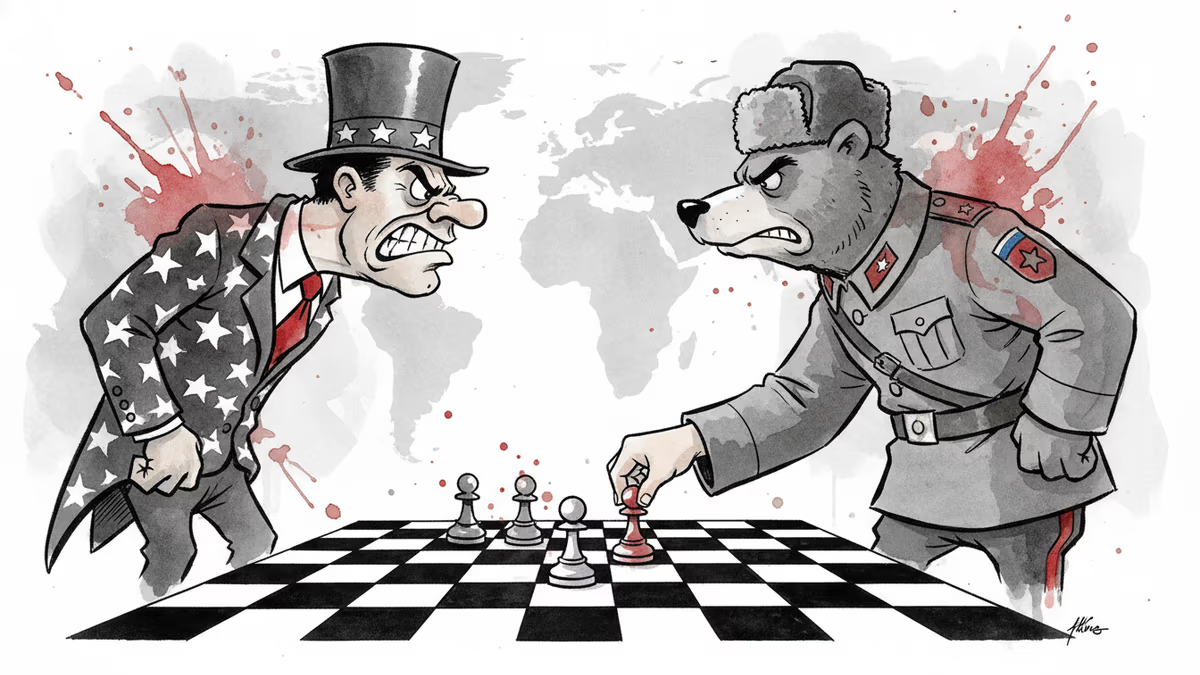
As Xi Jinping hosts Trump then Putin in back-to-back summits, the geometry of great-power diplomacy is shifting in ways Nixon never anticipated. Here's what the numbers reveal.
Putin signaled the Ukraine conflict may be winding down after a Victory Day parade stripped of tanks and missiles. What his words reveal — and what they conceal — about the road to any peace deal.
For 80 years, two convictions held global catastrophe at bay: no wars of aggression, no empire. Both are eroding simultaneously. What happened to the peace the UN was built to protect?
Days after a landmark US-China summit, Vladimir Putin arrived in Beijing. Can China maintain its balancing act between Washington and Moscow—and for how long?
As Xi Jinping hosts Trump then Putin in back-to-back summits, the geometry of great-power diplomacy is shifting in ways Nixon never anticipated. Here's what the numbers reveal.
Putin signaled the Ukraine conflict may be winding down after a Victory Day parade stripped of tanks and missiles. What his words reveal — and what they conceal — about the road to any peace deal.
Thoughts
Share your thoughts on this article
Sign in to join the conversation