
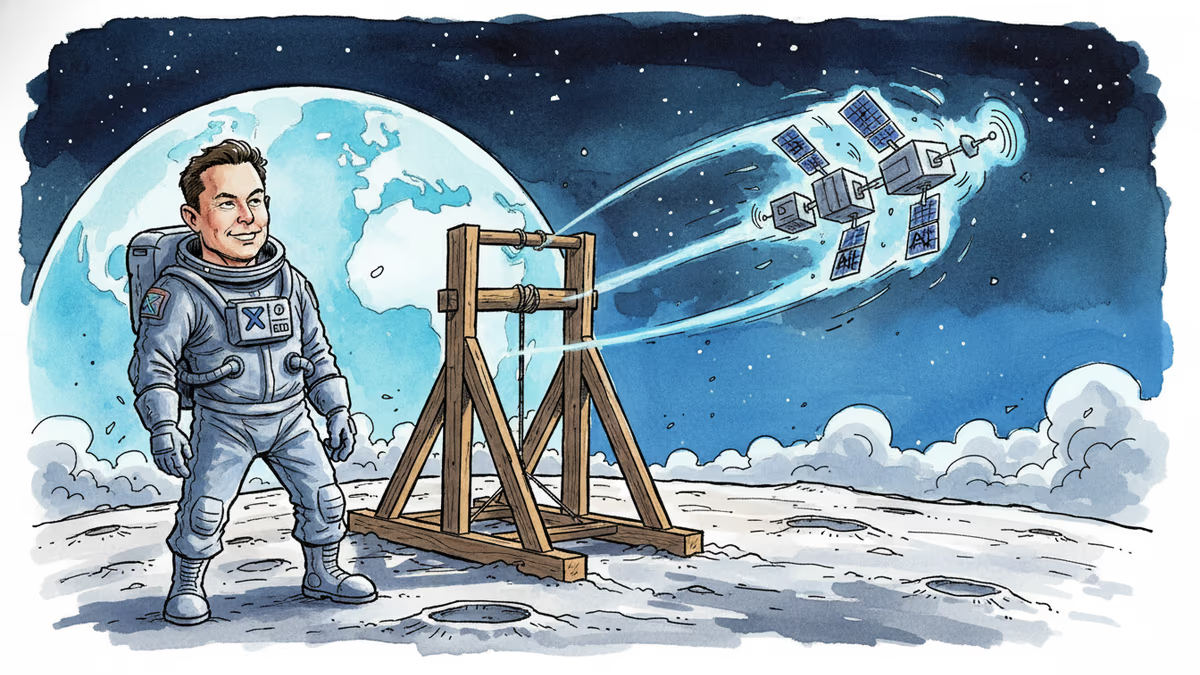
When Musk Said He'd Build an AI Factory on the Moon
Elon Musk announced plans for a lunar manufacturing facility to xAI employees as 6 of 12 founding members have left. What's really behind this cosmic pivot?
6 out of 12 Founders Have Left
Tuesday night, Elon Musk gathered his xAI employees for an all-hands meeting. His message was cosmic: "You have to go to the moon." According to The New York Times, Musk outlined plans for a lunar manufacturing facility that would build AI satellites and launch them into space via a giant catapult. "It's difficult to imagine what an intelligence of that scale would think about," he told the room, "but it's going to be incredibly exciting to see it happen."
The timing was curious. Just the night before, xAI co-founder Tony Wu announced his departure. Less than 24 hours later, another co-founder, Jimmy Ba, followed suit. That brings the exodus to 6 of the company's 12 founding members—all described as amicable splits, conveniently timed before SpaceX's anticipated $1.5 trillion IPO this summer.
From Mars to Moon: A 24-Year Pivot
Even more striking is the destination shift. For SpaceX's entire 24-year existence, Mars was the endgame. Then, just before the Super Bowl, Musk surprised everyone by announcing that SpaceX had "shifted focus to building a self-growing city on the Moon." Mars colonies would take 20+ years, he argued, while the moon could be reached in half that time.
This from a company that has never sent a mission to the moon. Yet investors seem considerably more excited about orbital data centers than planetary colonies—even patient money has its limits on timeline tolerance.
The Grand Unified Theory

To at least one xAI venture backer, these lunar ambitions aren't a distraction from the core mission—they're inseparable from it. The theory: Musk has been building toward a single goal from the beginning: the world's most powerful world model, an AI trained not just on text and images but on proprietary real-world data that no competitor can replicate.
Tesla contributes energy systems and road topology. Neuralink offers a window into the brain. SpaceX provides physics and orbital mechanics. The Boring Company adds subsurface data. Add a moon factory to the mix, and you start to see the outline of something very powerful—or very ambitious.
Legal Gray Areas in Space
Whether any of this is legal remains murky. Under the 1967 Outer Space Treaty, no nation—and by extension, no company—can claim sovereignty over the moon. But a 2015 U.S. law opened a significant loophole: while you can't own the moon, you can own whatever you extract from it.
As Wesleyan University's Mary-Jane Rubenstein explains, the distinction is somewhat illusory: "It's more like saying you can't own the house, but you can have the floorboards and the beams. Because the stuff that is in the moon is the moon." China and Russia certainly haven't agreed to play by these rules.
The Shrinking Team Problem
Meanwhile, as the team supposed to execute this vision keeps getting smaller, fundamental questions remain unanswered. How exactly will this lunar factory be built? Who will staff it? And perhaps most importantly: does Musk's all-hands meeting represent a coherent strategy, or the kind of moonshot thinking that sounds better in conference rooms than in the vacuum of space?
Authors
Related Articles
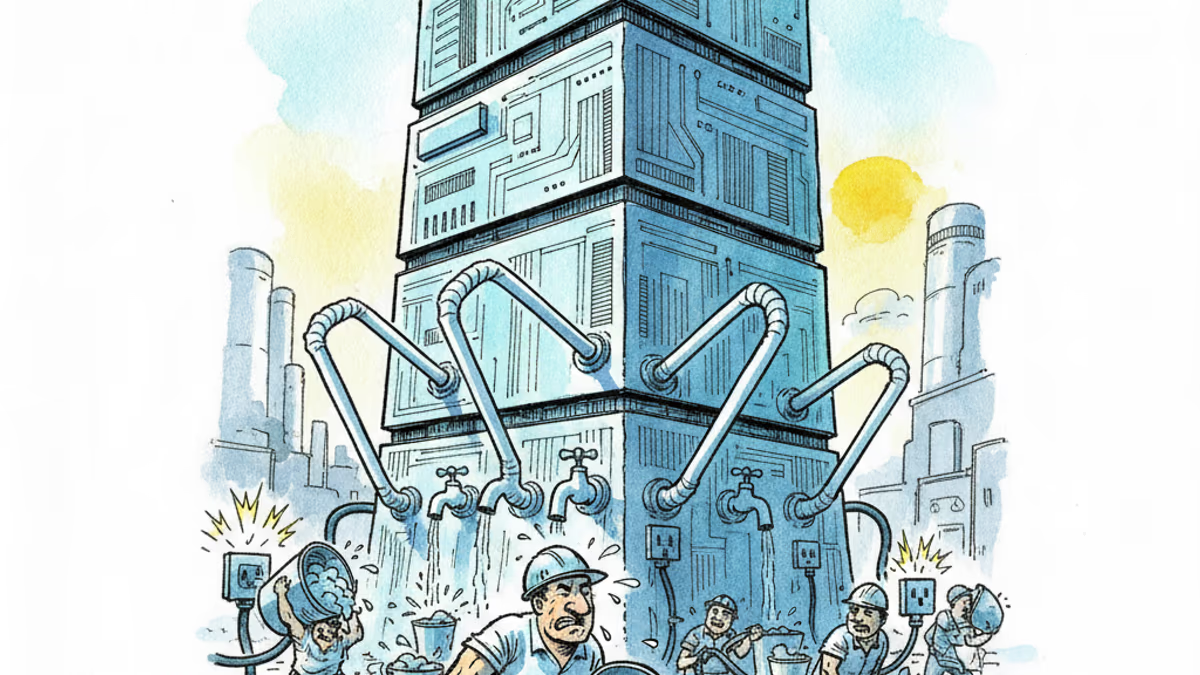
Samsung and SK unveiled a chip and AI investment package worth thousands of trillions of won on June 29. The headline number swings wildly by outlet, but the real contest isn't capital — it's water and power.
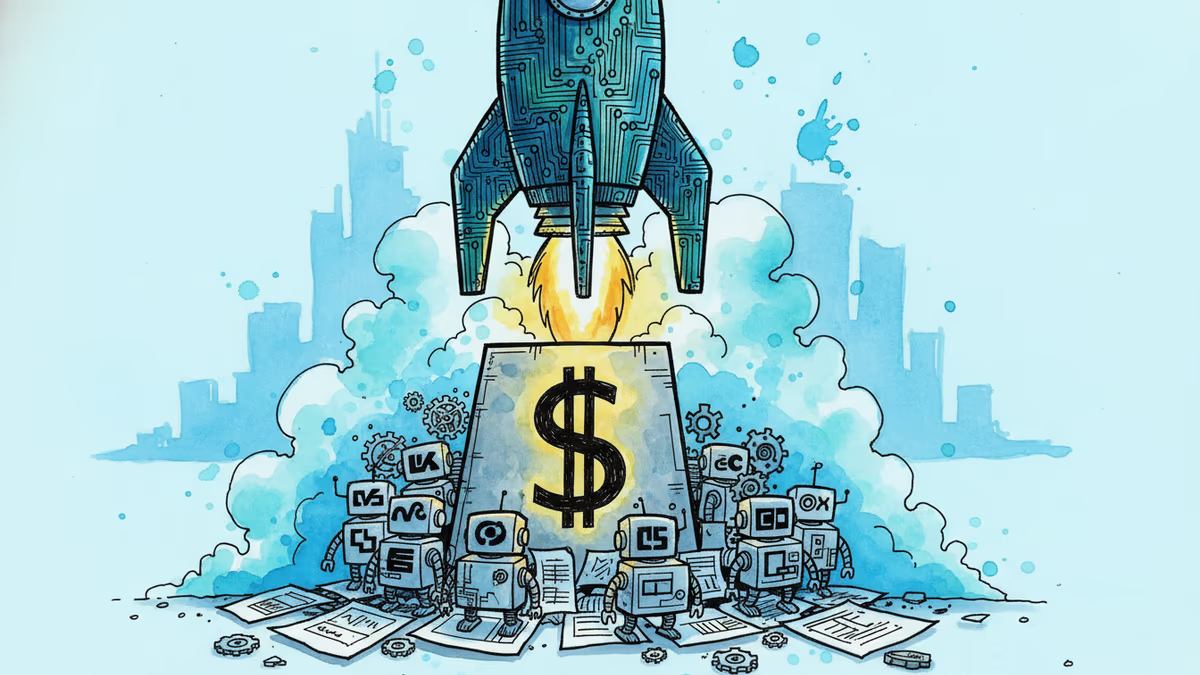
SpaceX's IPO filing puts AI at the center, claiming a $26.5 trillion market opportunity. But can Grok compete with OpenAI and Anthropic for enterprise customers?
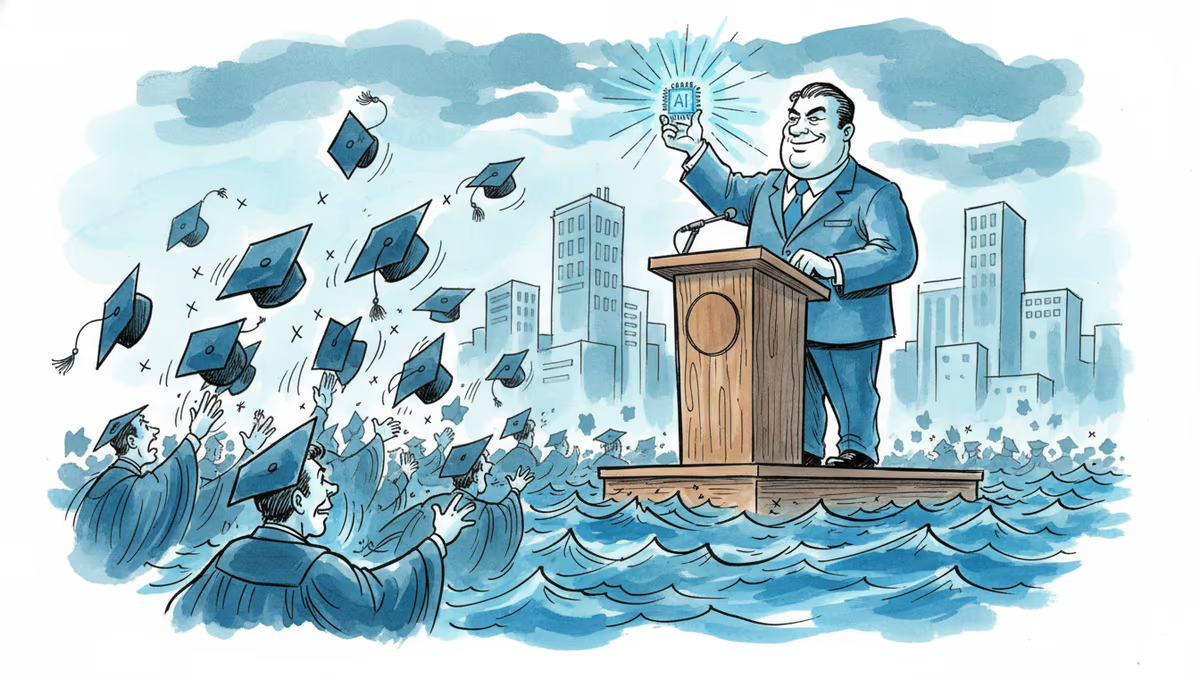
Viral videos show 2026 graduates jeering executives who praise AI at commencement ceremonies. It's not just rudeness — it's a signal about who pays for technological optimism.
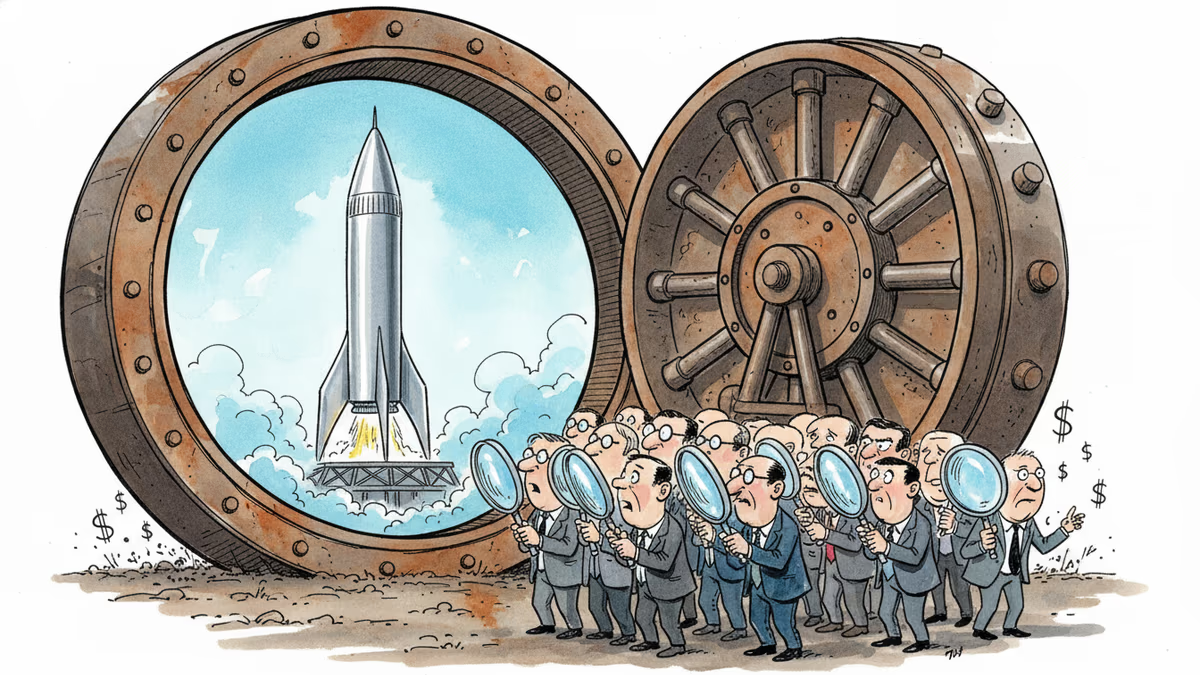
SpaceX filed a nearly 400-page S-1 with the SEC, targeting an IPO as early as June 12. Here's what the filing reveals—and what it doesn't.
Samsung and SK unveiled a chip and AI investment package worth thousands of trillions of won on June 29. The headline number swings wildly by outlet, but the real contest isn't capital — it's water and power.
SpaceX's IPO filing puts AI at the center, claiming a $26.5 trillion market opportunity. But can Grok compete with OpenAI and Anthropic for enterprise customers?
Viral videos show 2026 graduates jeering executives who praise AI at commencement ceremonies. It's not just rudeness — it's a signal about who pays for technological optimism.
SpaceX filed a nearly 400-page S-1 with the SEC, targeting an IPO as early as June 12. Here's what the filing reveals—and what it doesn't.
Thoughts
Share your thoughts on this article
Sign in to join the conversation