

When AI Meets Childhood Curiosity: The $5M Bet on Interactive Learning
Three ex-Google employees raised $5M to create Sparkli, an AI-powered learning app that turns kids' questions into interactive adventures. But can technology truly replace human teaching?
Your six-year-old asks how cars work. You pull up ChatGPT, get a wall of text, and watch their eyes glaze over within seconds. Three former Google employees felt this frustration so acutely that they've now raised $5 million to solve it.
Sparkli, founded by Lax Poojary, Lucie Marchand, and Myn Kang, represents a bold bet on generative AI's ability to transform how children learn. But their approach goes beyond simple chatbots—they're creating what they call "interactive expeditions" that can generate multimedia learning experiences in under two minutes.
From Travel Apps to Teaching Tools
The trio's journey to education wasn't linear. Poojary and Kang previously co-founded Touring Bird, a travel aggregator, and Shoploop, a video-focused social commerce app at Google's Area 120 incubator. Marchand, serving as CTO, was also a Shoploop co-founder before working at Google.
Their pivot to education came from a parental pain point. "When a kid asked what Mars looks like fifty years ago, we might have shown them a picture," Poojary explained. "Ten years ago, we might have shown them a video. With Sparkli, we want kids to interact and experience what Mars is like."
The app allows children aged 5-12 to explore predefined topics or ask their own questions to create personalized learning paths. Each "expedition" combines audio, video, images, quizzes, and games—all generated on-demand using AI. The platform also introduces choose-your-own-adventure elements that eliminate the pressure of right-or-wrong answers.
The Safety Challenge in AI for Kids
Creating AI experiences for children brings unique responsibilities. Companies like OpenAI and Character.ai face lawsuits from parents alleging their tools encouraged self-harm in children. Sparkli addresses this by completely banning certain content while redirecting sensitive topics toward emotional intelligence and parental communication.

The startup made an intentional decision to hire a PhD in educational science and AI, plus an experienced teacher, as their first two employees. This wasn't just about content creation—it was about ensuring their AI-generated experiences align with established pedagogical principles.
Currently piloting with an institute serving over 100,000 students across 20+ schools, Sparkli has developed a teacher module allowing educators to track progress and assign AI-generated homework. Teachers report using the platform to create discussion starters and measure student understanding after lessons.
The Bigger Picture: Education's AI Transformation
Sparkli's approach reflects broader questions about AI's role in education. Traditional education systems often lag behind in teaching modern concepts like financial literacy, entrepreneurship, or design thinking—areas where AI-powered platforms can potentially fill gaps.
Swiss venture firm Founderful, which led the $5 million pre-seed round, sees this as their first pure-play edtech investment. "As a father of two kids who are in school now, I see them learning interesting stuff, but they don't learn topics like financial literacy or innovation in technology," said founding partner Lukas Weder.
The startup plans to focus on schools globally before opening consumer access to parents by mid-2026. Their Duolingo-inspired approach includes streaks, rewards, and quest cards to maintain engagement—recognizing that educational effectiveness means little without consistent usage.
The Human Element Question
Yet questions remain about AI's role in childhood development. Can algorithmically-generated experiences truly replace the nuanced understanding that human teachers bring? While Sparkli can create content in two minutes, human educators spend years developing intuition about how different children learn, what motivates them, and when they're struggling beyond what metrics can capture.
The platform's success in pilot programs suggests there's demand for more interactive, personalized learning experiences. But its ultimate test will be whether AI-generated content can maintain children's curiosity over time—or if the novelty wears off once the technology becomes commonplace.
Authors
Related Articles

Google's Gmail Live lets you ask your inbox questions out loud. Announced at I/O 2026, it's AI's pitch to skeptics — and a reminder of how much Google already knows about you.
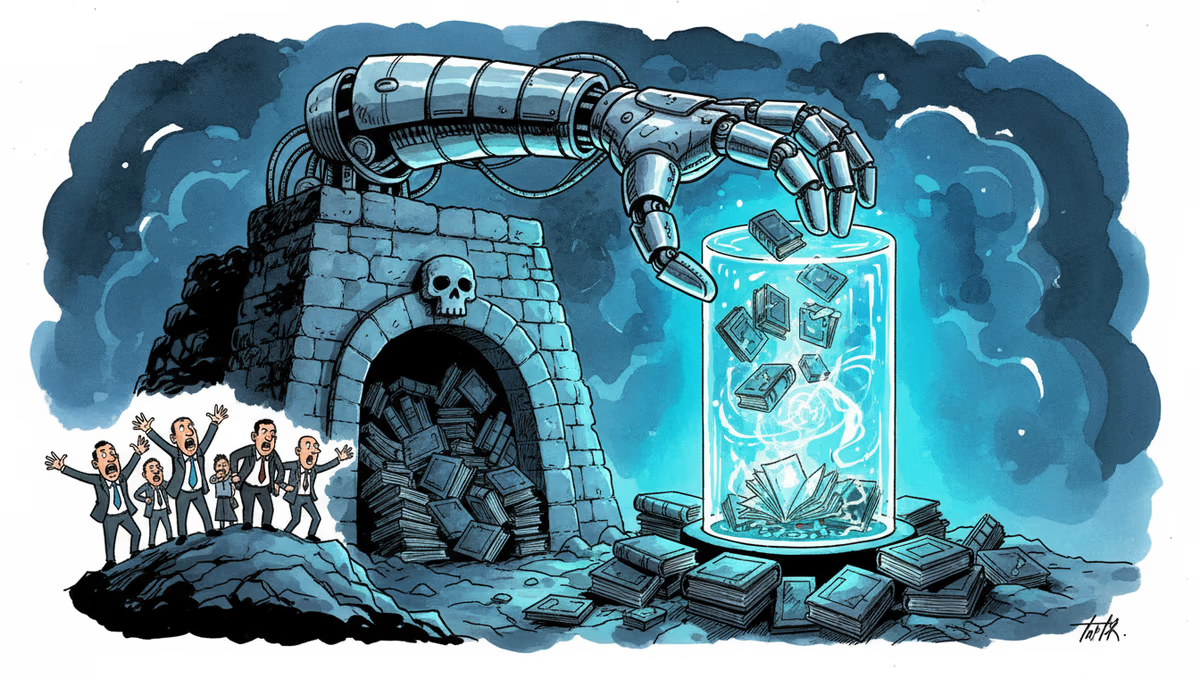
Five major publishers and author Scott Turow have filed a class action lawsuit against Meta, alleging the company used illegal pirate sites like LibGen to train its Llama AI models without permission.

Two ex-Apple engineers built an AI puck that only listens when you press it. At $179, Button is a deliberate bet that dedicated AI hardware beats the Swiss Army knife approach of smartphones.
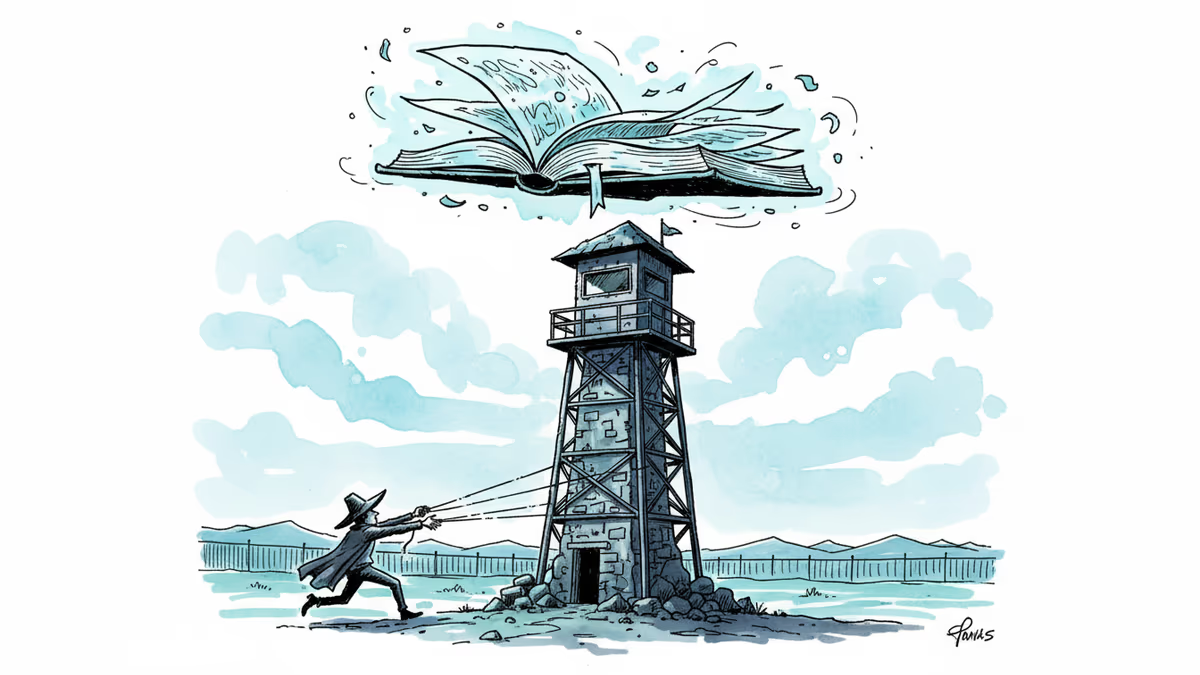
A public Quizlet set apparently leaked confidential CBP security procedures near Kingsville, Texas. It stayed live for weeks—until a journalist sent a text.
Google's Gmail Live lets you ask your inbox questions out loud. Announced at I/O 2026, it's AI's pitch to skeptics — and a reminder of how much Google already knows about you.
Five major publishers and author Scott Turow have filed a class action lawsuit against Meta, alleging the company used illegal pirate sites like LibGen to train its Llama AI models without permission.
Two ex-Apple engineers built an AI puck that only listens when you press it. At $179, Button is a deliberate bet that dedicated AI hardware beats the Swiss Army knife approach of smartphones.
A public Quizlet set apparently leaked confidential CBP security procedures near Kingsville, Texas. It stayed live for weeks—until a journalist sent a text.
Thoughts
Share your thoughts on this article
Sign in to join the conversation