
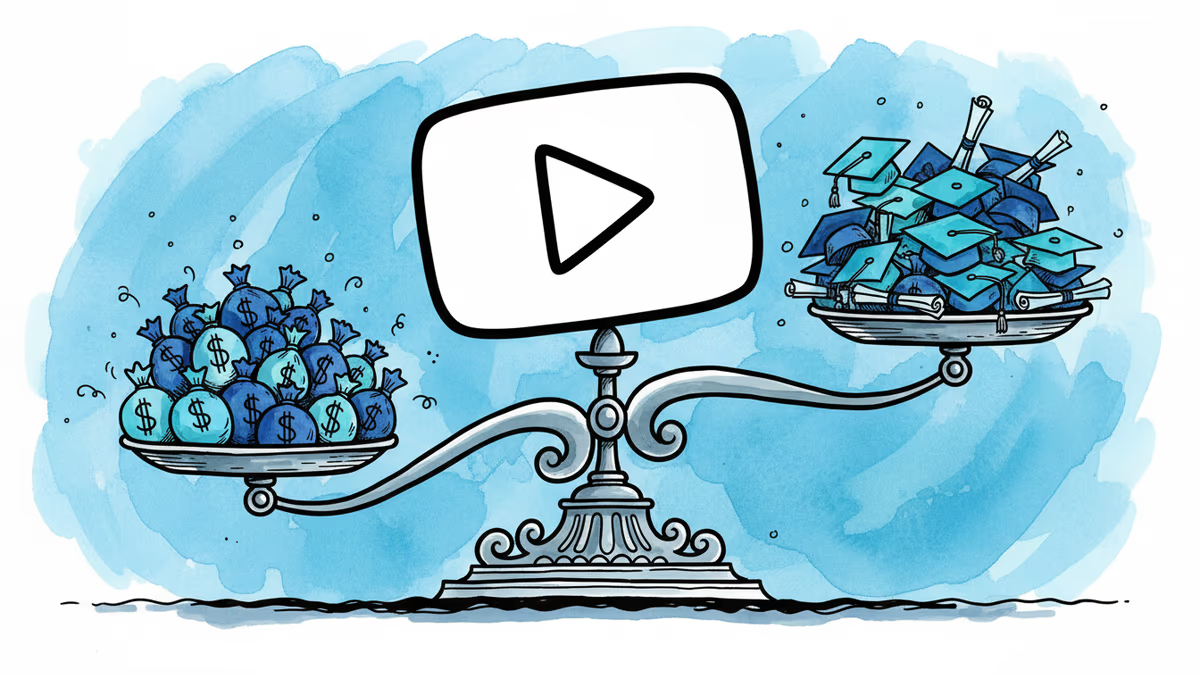
Why a YouTube Giant Gave Up Profit
Educational content company Complexly converts to nonprofit, raising questions about sustainable business models for quality content in the platform economy.
A 12 Million Subscriber Company Just Walked Away From Ownership
Hank and John Green, the brothers behind educational powerhouse Complexly, just did something almost unthinkable in today's creator economy. After 12 years of building channels like Crash Course and SciShow, they converted their 70+ employee company into a nonprofit and gave up their ownership entirely.
Their reason? They had too many ways to make money.
The Platform Trap: Growth vs. Values
"There's always been a bunch of doors open to us that feel very business-y," Hank Green explained on Decoder. "We've got to turn this into a freemium product. We've got to create a subscription service. We should go over the top."
Complexly owns educational video brands used in virtually every school district in America. Teachers love them. Students love them. Monetizing this reach would be trivial — exactly what investors would demand.
But the Greens kept saying no. Their company tenet: "The videos should be free for everyone forever." Every paywall would reduce their impact by limiting who could access the content.
YouTube's Impossible Economics
Here's the brutal math of educational content: "I can make enough money to fund my life" with a personal YouTube channel, Green admits. "But if I wanted to make educational content that was right all the time, classroom quality? It's just impossible."
Quality educational videos require scripting, fact-checking, professional production. You can't insert brand deals mid-lesson. You can't cut corners. The infrastructure costs are enormous, but the revenue model remains the same 55% split that works for individual creators, not educational institutions.
"Everything in business is incentive," Green notes. The platform's incentives push creators toward content that grabs attention, not content that educates responsibly.
The Guilt Money Economy
By going nonprofit, Complexly unlocked a new revenue stream: tax-deductible donations from wealthy tech workers with guilty consciences.

"There's so much money. It kind of infuriates me," Green says bluntly. "There are people who were early at OpenAI or at Meta. There's a lot of them, and they have too much. Sometimes they'll say, 'I just don't know how to deploy it maximally.' And I'm like, 'Sir, it's in your bank account right now doing zilch.'"
This "Gilded Age-level wealth inequality" creates opportunities for mission-driven organizations to tap into philanthropic guilt. It's a business model based on moral arbitrage.
The AI Slop Problem
As AI floods platforms with low-effort content, how does quality educational material compete? Green remains surprisingly optimistic.
"When I look at slop, it's because it's easy to make," he explains. "You typed a prompt and posted it." But quality content requires human decisions, cultural understanding, and genuine effort to communicate ideas effectively.
His 7-year-old daughter arguing with Google about space facts gives him hope: "She wants to prove she knows more about space than it does. This is the best use of AI that has ever existed."
The Attention Economy's True Cost
Green identifies the real crisis: "We ceded a lot more power than we thought when we outsourced all our decision-making to content recommendation algorithms."
On TikTok, Instagram, and YouTube Shorts, "we've given up all decision-making, and we like it." The result? An economy where creators compete against "an army of teenagers who will work for free" for six months before burning out.
"What these platforms have realized is that you could just have them last for six months and then burn through them," Green observes. No one has leverage when supply is infinite and free.
Beyond the Creator Economy
The Complexly model suggests a different path: Accept that some content should be subsidized as a public good. Green wants other educational creators to follow suit: "If your content is a social good, you're not going to be a billionaire, so you might as well have a good job."
This isn't just about education. As AI makes content creation cheaper and easier, the economics of quality journalism, documentary filmmaking, and investigative reporting face similar pressures.
The Liberal Arts Revenge
In an ironic twist, Green notes that AI developers are realizing the future belongs to liberal arts skills: "Understanding people, communicating with each other, knowing what's culturally resonant, knowing where we are in the history of art."
After 20 years of "everyone saying we should go STEM," the pendulum swings back. Technical skills become commoditized; human insight becomes premium.
Authors
Related Articles
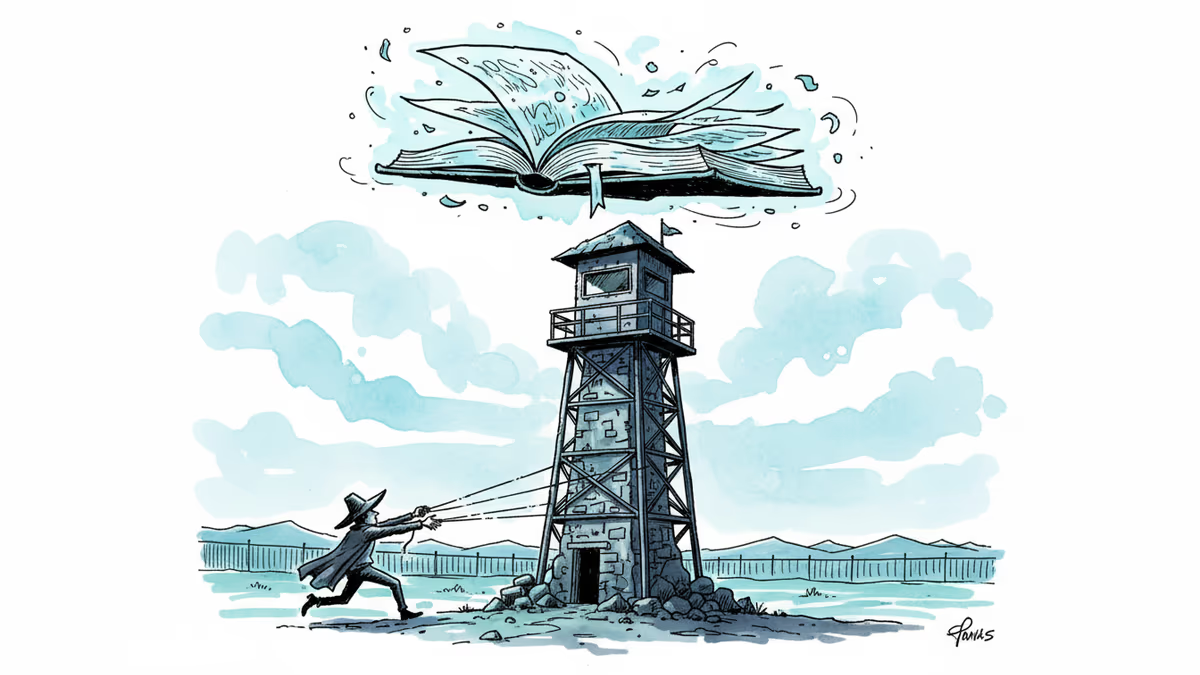
A public Quizlet set apparently leaked confidential CBP security procedures near Kingsville, Texas. It stayed live for weeks—until a journalist sent a text.
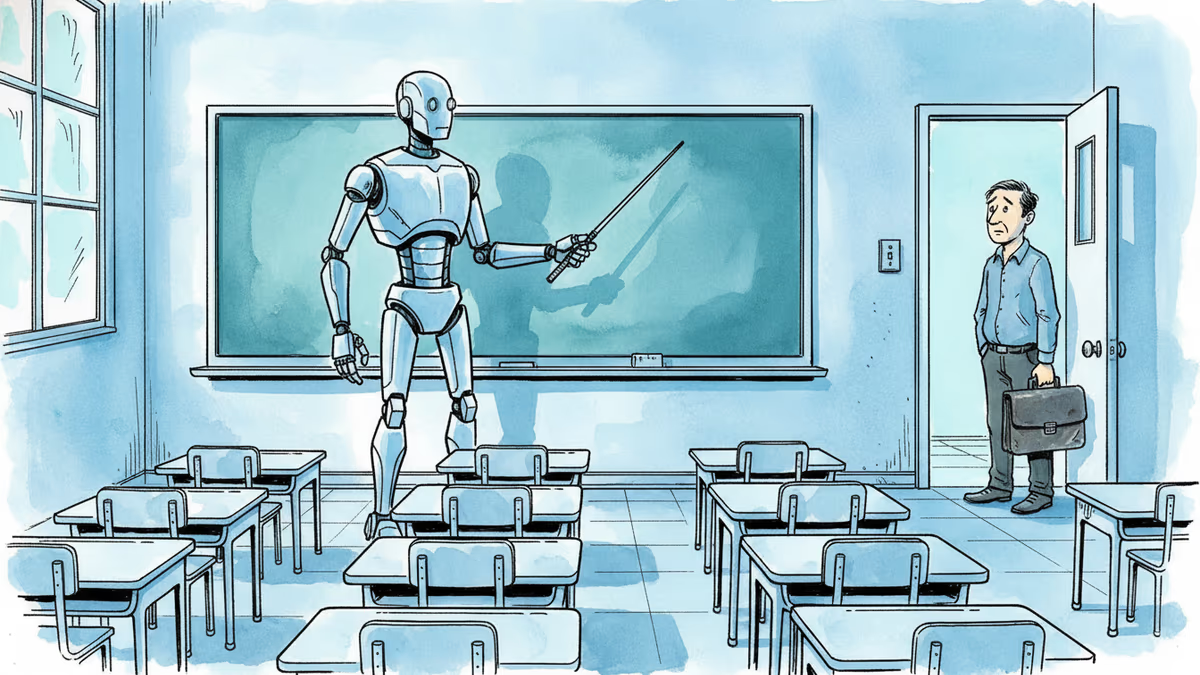
A humanoid robot walked the White House red carpet with Melania Trump. It's a preview of an ed-tech vision that could reshape — or fracture — how children learn.
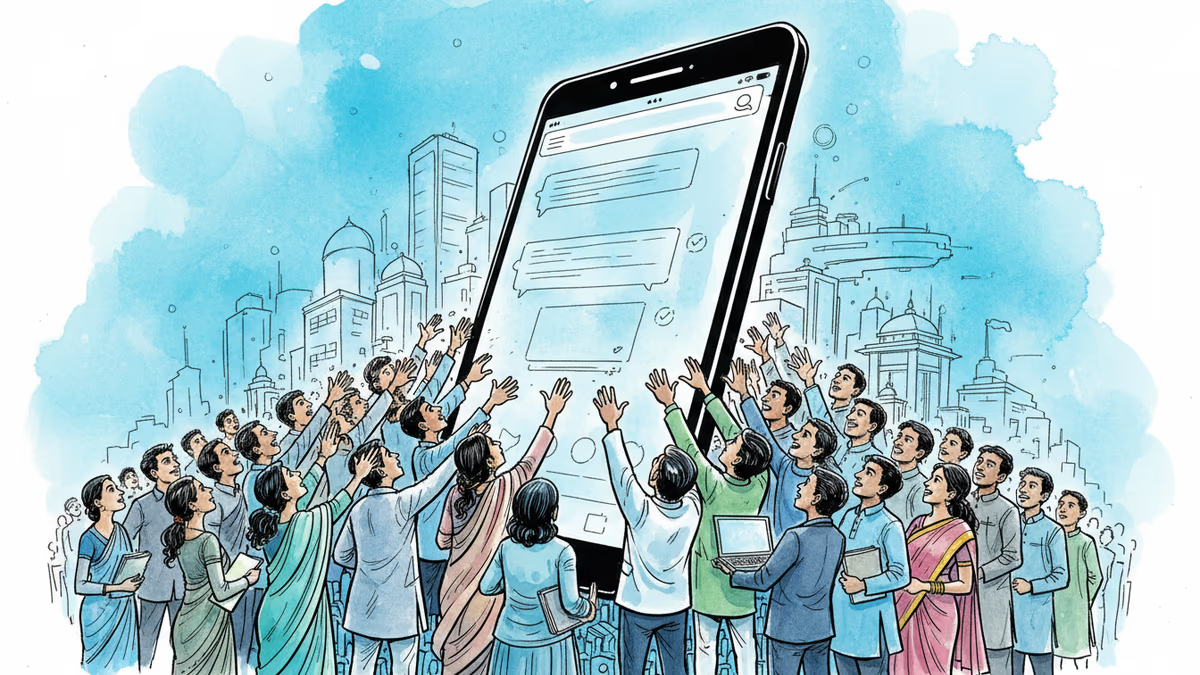
India's 100 million weekly ChatGPT users reveal how AI companies are reshaping global expansion strategies through localized pricing and educational focus.
Google discovers that scaling education AI requires local adaptation, not Silicon Valley solutions. India's 247 million students are teaching tech giants hard lessons about global deployment.
A public Quizlet set apparently leaked confidential CBP security procedures near Kingsville, Texas. It stayed live for weeks—until a journalist sent a text.
A humanoid robot walked the White House red carpet with Melania Trump. It's a preview of an ed-tech vision that could reshape — or fracture — how children learn.
India's 100 million weekly ChatGPT users reveal how AI companies are reshaping global expansion strategies through localized pricing and educational focus.
Google discovers that scaling education AI requires local adaptation, not Silicon Valley solutions. India's 247 million students are teaching tech giants hard lessons about global deployment.
Thoughts
Share your thoughts on this article
Sign in to join the conversation