
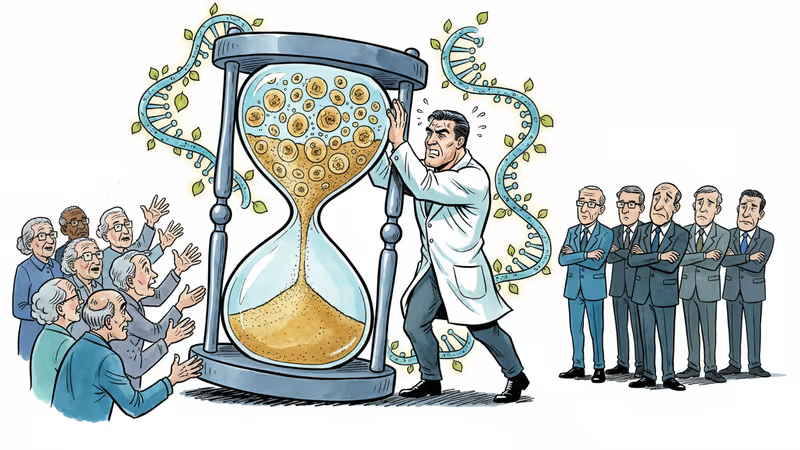
The First Human Trial to Reverse Aging Begins
Harvard professor's biotech startup wins FDA approval for humanity's first age reversal clinical trial using cellular reprogramming technology. Can we actually turn back time?
When Elon Musk casually mentioned at Davos that aging seemed "very solvable," Harvard professor David Sinclair quickly jumped on X to agree: "Clinical trials begin shortly." That wasn't just academic bravado—it was a promise that's now becoming reality.
Sinclair's Boston startup Life Biosciences has confirmed it won FDA approval for humanity's first targeted age reversal trial. The treatment, codenamed ER-100, will attempt something unprecedented: using "reprogramming" technology to restore sight in glaucoma patients by making their cells younger.
The Factory Reset for Cells
Reprogramming works by broadly resetting the epigenetic controls in cells—switches that determine which genes are turned on or off. Think of it as hitting a "factory reset" button that restores cells to a healthier, younger state.
"Reprogramming is like the AI of the bio world. It's the thing everyone is funding," explains investor Karl Pfleger. Silicon Valley giants like Altos Labs, New Limit, and Retro Biosciences have poured hundreds of millions into this approach, backed by tech's biggest names.
The technique builds on the Nobel Prize-winning discovery of Yamanaka factors—a handful of powerful genes that can turn any cell back into an embryonic stem cell. But there's a catch: when activated in living animals, these genes can trigger explosive tumor growth.
A Cautious First Step
Life Biosciences' trial attempts to thread this needle carefully. About 12 patients with glaucoma will receive three reprogramming genes injected via virus into one eye. The crucial safety measure? The genes only activate when patients take a low dose of the antibiotic doxycycline. Initially, they'll take it for just two months while effects are monitored.

This "partial reprogramming" approach aims to make cells act younger without giving them complete amnesia about their role in the body. In 2020, Sinclair claimed this technique restored vision in mice with damaged optic nerves, publishing the results on Nature's cover with the headline "Turning Back Time."
But not everyone's convinced this truly counts as age reversal. Sinclair himself has become a lightning rod for criticism. A 2024 Wall Street Journal investigation dubbed him a "reverse-aging guru" whose companies "have not panned out."
Promise Meets Reality
Life Biosciences has indeed struggled. Founded in 2017 with a strategy of launching multiple subsidiaries to tackle different aspects of aging, the company made limited progress until hiring new CEO Jerry McLaughlin in 2021, who refocused efforts on the mouse vision results.
The company discusses reprogramming other organs, including the brain, and executives like COO Michael Ringel entertain the possibility of whole-body rejuvenation. "It'll be the first time in human history, in the millennia of human history, of looking for something that rejuvenates," Ringel said last fall.
But this trial is more proof-of-concept than fountain of youth. "The optimistic case is this solves some blindness for certain people and catalyzes work in other indications," says investor Pfleger. "It's not like your doctor will be writing a prescription for a pill that will rejuvenate you."
The Competition Takes a Different Approach
Other companies studying reprogramming are taking more cautious paths. New Limit is conducting extensive research to identify the optimal genes for time reversal without unwanted side effects—they won't be ready for human studies for two years. UK startup Shift Bioscience is just beginning animal experiments.
"Are their factors the best version of rejuvenation? We don't think they are," says Shift CEO Daniel Ives of Life Biosciences' approach. "But they're way ahead of anybody else in terms of getting into humans. They've found a route forward in the eye, which is a nice self-contained system. If it goes wrong, you've still got one left."
The treatment also relies on an antibiotic switching mechanism that, while common in lab animals, has never been tried in humans. Since the switch uses gene components from E. coli and herpes virus, it could potentially trigger immune reactions.
Authors
Related Articles
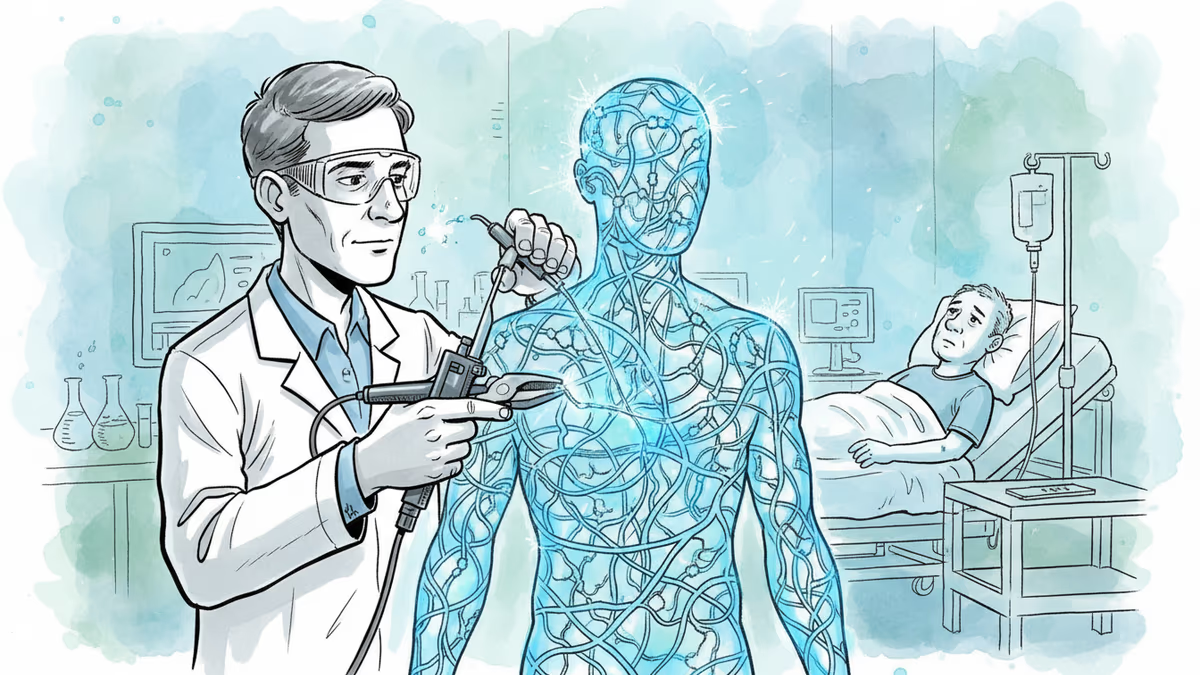
CAR T cell therapy, proven in blood cancers, is now in hundreds of clinical trials for MS, lupus, and other autoimmune conditions. What the science shows—and what it doesn't yet.
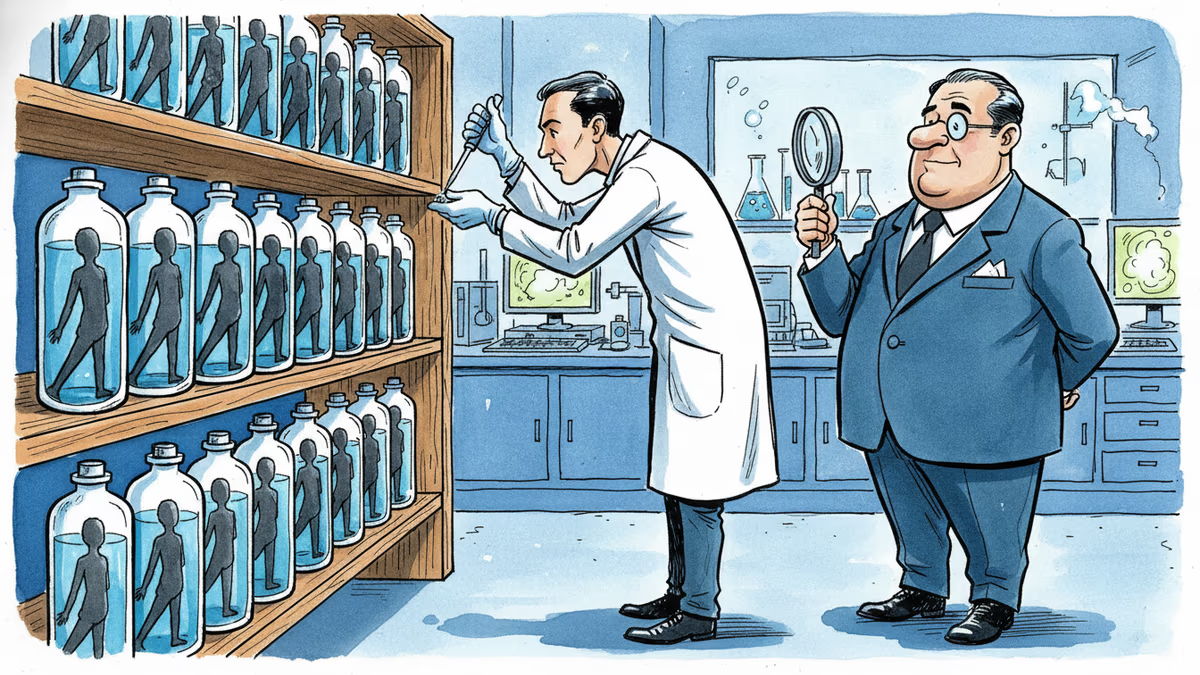
R3 Bio wants to grow human bodies without brains as biological backups. The science is speculative. The ethics are explosive. And the legal framework doesn't exist yet.
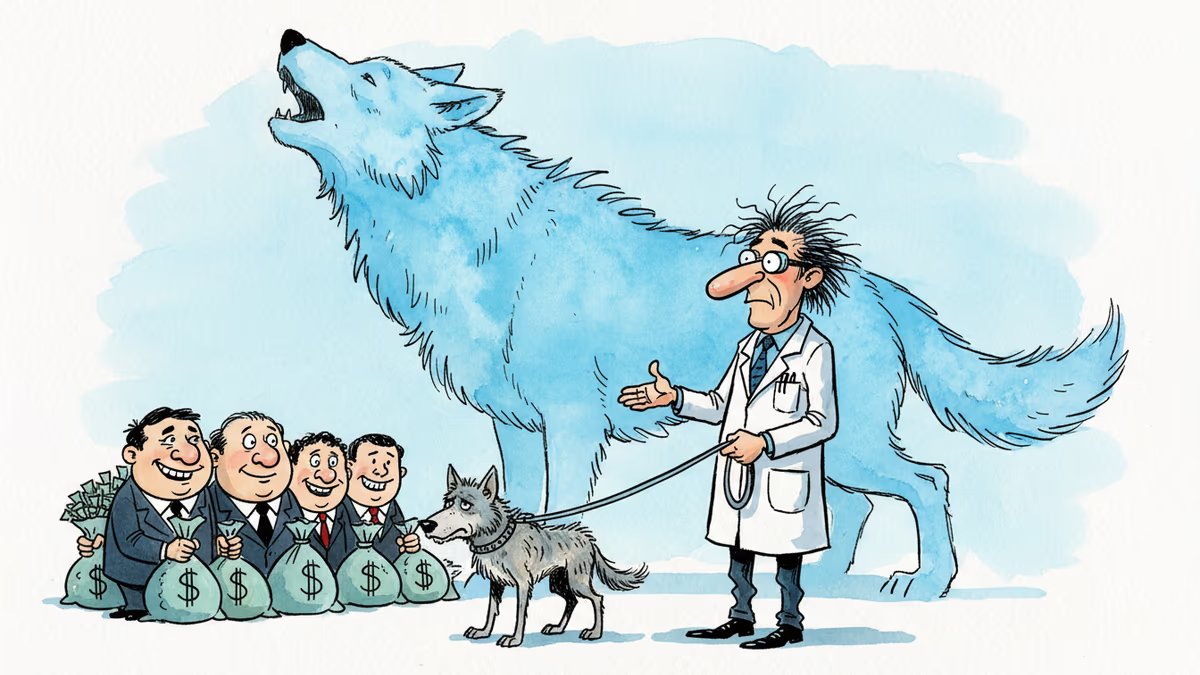
Colossal Biosciences raised hundreds of millions to resurrect woolly mammoths and dire wolves. What they're actually doing is more complicated—and more interesting.
California startup R3 Bio quietly pitched investors on 'brainless human clones' as backup bodies—beyond its public story of nonsentient organ sacks for drug testing. A deep dive into biotech's most ethically charged frontier.
CAR T cell therapy, proven in blood cancers, is now in hundreds of clinical trials for MS, lupus, and other autoimmune conditions. What the science shows—and what it doesn't yet.
R3 Bio wants to grow human bodies without brains as biological backups. The science is speculative. The ethics are explosive. And the legal framework doesn't exist yet.
Colossal Biosciences raised hundreds of millions to resurrect woolly mammoths and dire wolves. What they're actually doing is more complicated—and more interesting.
California startup R3 Bio quietly pitched investors on 'brainless human clones' as backup bodies—beyond its public story of nonsentient organ sacks for drug testing. A deep dive into biotech's most ethically charged frontier.
Thoughts
Share your thoughts on this article
Sign in to join the conversation