
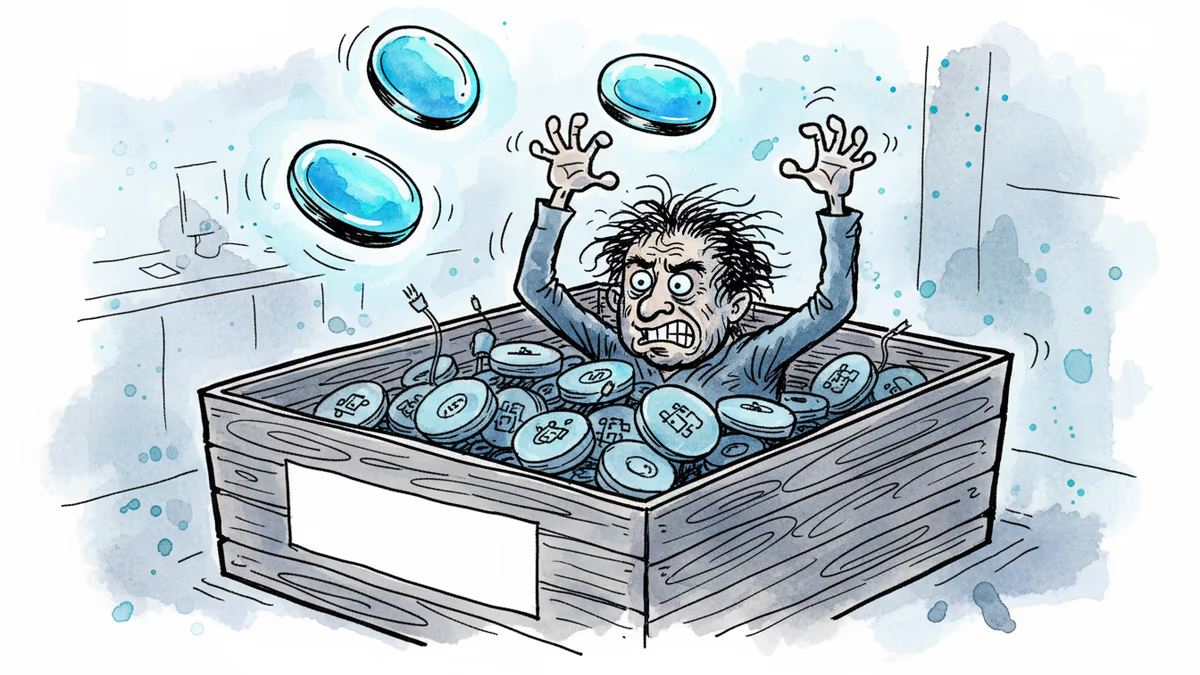
First-Gen AirTags Are Vanishing - Last Call for $64
Amazon stops selling single AirTags as Apple pushes second-gen. Four-pack still available at $64. Is the original good enough, or should you upgrade?
Amazon Just Pulled the Plug on Single AirTags
Amazon's inventory page tells the story: zero single first-gen AirTags available, with no restock timeline in sight. But here's the twist - you can still grab a four-pack for $64 ($35 off) at Amazon, Walmart, and Best Buy. Single units? Walmart's got them for $17 ($12 off), but probably not for long.
This isn't just routine inventory management. Apple's second-gen launch has triggered a systematic phase-out of the original. The question isn't whether first-gen AirTags will disappear - it's whether you should care.
Why the Original Still Punches Above Its Weight
The first-gen AirTag leverages the same fundamental advantages that made it a hit. Apple's Find My network spans over 1 billion devices worldwide, creating an unmatched tracking infrastructure. The UWB (Ultra Wideband) technology delivers pinpoint accuracy - we're talking about finding your keys wedged between car seats, guided by arrows, sounds, and haptic feedback.
Software updates keep adding value too. You can share an AirTag's location with up to five people - perfect for family trips. Airlines like American and Virgin Atlantic now support temporary location sharing for lost luggage tracking. That's functionality Tile and other competitors simply can't match.
The hardware basics remain solid: one-year battery life with user-replaceable CR2032 cells, IP67 water resistance, and that distinctive Apple build quality.

What You're Missing vs. Second-Gen
The newer model does offer tangible improvements. The upgraded UWB chip provides more precise tracking, extended range capabilities, and a speaker that's 50% louder. These aren't just spec sheet numbers - they translate to real-world usability gains.
But here's the math: those improvements cost an extra $35 per four-pack, or $140 total if you're buying multiple sets. For many users, the original's capabilities already exceed their actual needs.
The Broader Market Context
This phase-out reflects Apple's broader strategy of controlling product lifecycles to drive upgrades. Unlike competitors who keep older models available indefinitely, Apple creates artificial scarcity to push consumers toward newer, higher-margin products.
For budget-conscious buyers, this creates a narrow window of opportunity. The first-gen AirTag remains one of the most capable trackers available, even compared to 2026 alternatives from Samsung, Tile, and others.
Deal Hunters vs. Early Adopters
Two types of buyers emerge in this scenario. Deal hunters see $64 for four capable trackers as excellent value - especially since you'd pay $99 for four second-gen units. Early adopters prioritize having the latest features and don't mind paying the premium.
Neither approach is wrong, but the window for the budget option is closing fast. Once current inventory sells through, your only choice becomes the pricier second-gen model.
Authors
Related Articles
After 15 years of fragmented mobile messaging, Apple and Google are rolling out end-to-end encrypted RCS messaging between iPhones and Android devices. Here's what changed, why it took so long, and what it means for your privacy.
Apple agreed to pay $250 million to settle claims it misled iPhone 16 buyers about Apple Intelligence features. What this means for consumers, Big Tech marketing, and the AI industry.
Apple quietly removed the entry-level $599 Mac Mini, raising the starting price to $799 — just one day after Tim Cook warned of chip supply constraints on the earnings call.

Apple names John Ternus, its hardware engineering chief, as the next CEO. The shift from operator to product person signals where Apple thinks its next decade of growth will come from — and raises real questions about what comes next.
After 15 years of fragmented mobile messaging, Apple and Google are rolling out end-to-end encrypted RCS messaging between iPhones and Android devices. Here's what changed, why it took so long, and what it means for your privacy.
Apple agreed to pay $250 million to settle claims it misled iPhone 16 buyers about Apple Intelligence features. What this means for consumers, Big Tech marketing, and the AI industry.
Apple quietly removed the entry-level $599 Mac Mini, raising the starting price to $799 — just one day after Tim Cook warned of chip supply constraints on the earnings call.
Apple names John Ternus, its hardware engineering chief, as the next CEO. The shift from operator to product person signals where Apple thinks its next decade of growth will come from — and raises real questions about what comes next.
Thoughts
Share your thoughts on this article
Sign in to join the conversation