
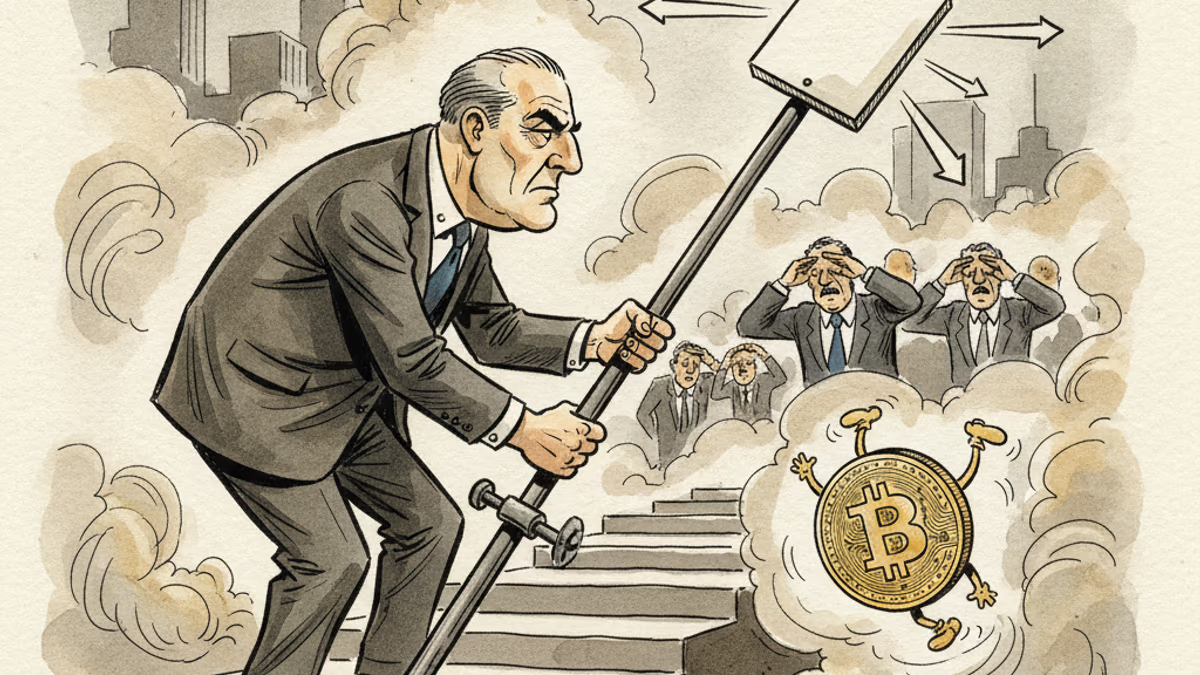
The Fed Held Rates Steady. So Why Did Bitcoin Break?
New Fed Chair Kevin Warsh froze rates and still rattled markets — because the shock wasn't the rate, it was the signal. Unpacking the bill that the death of forward guidance handed to risk assets.
The Fed left rates untouched. Bitcoin slid anyway.
On June 17, 2026, new Fed Chair Kevin Warsh presided over his first FOMC meeting and held the policy rate at 3.50–3.75%. The vote was 12–0 — a unanimous hold, not a single dissent. Normally that's the kind of outcome markets exhale over. Instead, Bitcoin started sliding, and by June 30 it had drifted down to $59,270 (per fxstreet-linked data). Nobody raised rates, yet risk assets traded as if someone had just tightened the screws.
The Hawkish Turn Hiding Inside a Hold
Read the Fed's statement closely and the real event comes into focus. Warsh's first statement was markedly shorter than what came before, and the language hinting at future easing — along with forward guidance, the central bank's practice of telegraphing its likely policy path — was gone. In the dot plot, the 2026 outlook flipped from cuts to hikes. Nine of the 18 officials backed a hike this year, and six of those penciled in two (per CNBC and Yahoo tallies). Seventeen of the 18 saw inflation risks tilted to the upside.
The reason is prices. The Fed's new 2026 inflation projection came in at 3.6% headline and 3.3% core, both revised up from 2.7% in March (as compiled by CNBC) — the highest reading in three years. Warsh framed price stability as the top priority and said he's committed to bringing inflation back to 2%.
There's a striking contrast worth flagging. When Warsh was nominated, some outlets projected he might actually be more dovish than Jerome Powell, with a low likelihood of pushing quantitative tightening. Markets leaned toward that read. His first meeting flipped that expectation on its head. For readers used to the ECB or the Bank of England, the parallel is a new chair arriving with a reputation for caution and immediately staking out a firmer line than the market priced in.
Why the “Signal” Mattered More Than the “Rate”
The hold itself was inside the range of expectations. What rattled markets was the Fed's decision to stop telegraphing its next move.
When forward guidance is alive, markets can look at the path the Fed has laid out and price risk in advance. Take the guidance away, and markets have to react in real time to each incoming inflation and jobs print. A game with no preview is a volatile one. And the more sensitive an asset is to liquidity, the sooner it pays the cost of that missing signal.
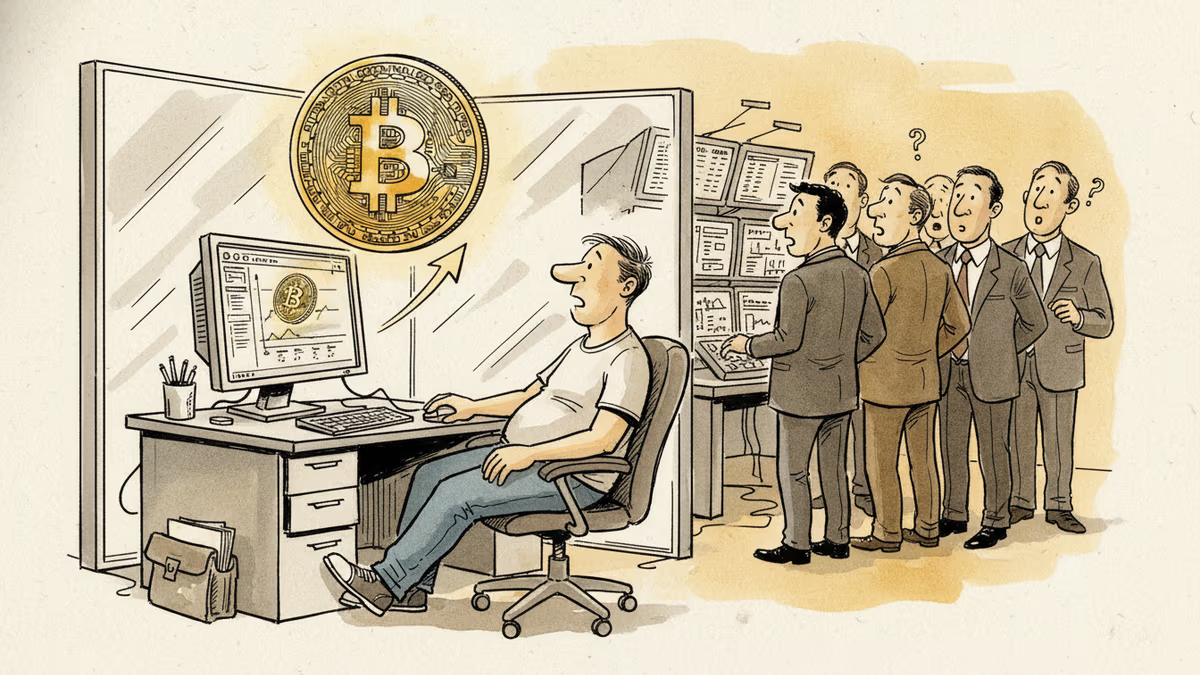
Bitcoin is the textbook case. An asset that pays no yield gets more expensive to hold — in opportunity-cost terms — when real rates climb. As the expectation of cuts morphed into the possibility of hikes, the dollar and real-rate outlook firmed up, squeezing non-yielding assets like gold and Bitcoin. Taiwan's Economic Daily (udn) read the moment as “Warsh is not Trump's rate-cut puppet,” framing it as a renewed dollar preference and the unwinding of the “debasement trade.”

So What Does This Mean for My Wallet?
Here's where the investor lens comes in. That money left spot Bitcoin ETFs shows up consistently across the data. On multiple aggregators, June's net outflow (calendar month) ran to roughly $4.06 billion — reported as the largest monthly figure on record, surpassing the prior mark of about $3.56 billion set in February 2025 (per Cryptobriefing, DailyCoin, and others).
The numbers deserve a careful read, though. Estimates vary from $3.4 billion to $5.4 billion across outlets, and the gap comes down to where you draw the start and end of the count. The $4.06 billion figure is for the June calendar month; bundle in the outflow stretch that ran from mid-May into early June and the total climbs to around $4.4 billion. A large share of the outflows reportedly came through institutional channels like BlackRock's IBIT (around 75%, per icobench and DailyCoin). In other words, institutions headed for the exit before retail did.
So if you're holding coins, this drop is more accurately read as a combined result of a stronger dollar, a shifting real-rate outlook, and institutional money walking out the door — not a reaction to “one man's remarks.”
On-Chain Actually Bought the Dip — Two Signals at Odds
Here's a common trap: the tidy story that “Bitcoin crashed because Warsh turned hawkish.”
The timing makes that causal chain loose. Part of the ETF outflow started before the June 17 FOMC — as far back as mid-May. The meeting looks less like the trigger and more like an accelerant on a move already underway.
And a countervailing signal sits right alongside it. Flows (ETFs) drained out, but on-chain metrics actually held firm. Some outlets (CoinDesk) reported that long-term holders absorbed a heavy volume of coins in June, with activity reaching peak levels. So the exits (ETFs) saw selling while the wallets (on-chain) saw buying — two opposite moves happening at once. This is exactly the kind of stretch where reading one signal in isolation can point you the wrong way.
Is the Hawkish Line Right, or Overdone?
The policy itself splits opinion.
The inflation-defense case runs like this. Inflation has climbed back to a three-year high, and 17 of 18 officials see upside risk. Ease off tightening now and prices could re-anchor higher, so you press pre-emptively to keep inflation expectations contained. Bank of America floated an aggressive scenario: three 0.25-point hikes this year, taking rates to 4.25–4.50%. But that's a BofA forecast, not a path the Fed has set. The nine officials in the dot plot only *expect* a hike — nothing has been decided.
The over-tightening, growth-slowdown case looks the other way. When high prices arrive alongside signs of a cooling labor market, you risk a dilemma: growth stalls while inflation stays hot. Warsh himself acknowledged the tension, suggesting that given what's happening in financial markets, it'd be hard to call current policy merely “somewhat restrictive” (as summarized by Schwab). If the price of tightening is growth, how far to press remains an open question.
PRISM Insight — The Death of Forward Guidance
>
The core of this “Warsh shock” isn't the level of rates — it's a change in how the central bank communicates. For more than a decade, the Fed cushioned market shocks by signaling its next move in advance. Warsh took the signpost down. Markets now enter a high-volatility phase where they react directly to every data print. Bitcoin, so sensitive to liquidity, wobbled first because it's the asset that pays the sharpest price for that missing signal. That most of the ETF outflows came through institutional channels fits the same logic.
The Fallout Lands Differently Country to Country
The bill for the vanished signal arrives in different line items depending on where you are. A hawkish Fed supports a stronger dollar in the near term. In Japan, views diverge: some (Nomura) warn that if the U.S. tilts toward hikes instead of cuts, a narrowing U.S.–Japan rate gap could revive pressure to unwind the yen carry trade, while others (Nikkei) argue the dollar strength shows up first. In Greater China, Hong Kong — which listed spot Bitcoin ETFs directly — feels the outflows head-on, while Taiwan is exposed indirectly through U.S.-listed ETFs. Europe faces its own version: the ECB and Bank of England are running their own cycles, and a firmer dollar tightens financial conditions for euro- and sterling-based investors even without a move from their own central banks.
For now, the market's attention narrows to one thing: under a Fed that no longer previews its moves, whether a single upcoming inflation print will actually pull the hike card out. Warsh took down the signpost. Markets now have to bet the direction for themselves, every time the data lands.
This content is AI-generated based on source articles. While we strive for accuracy, errors may occur. We recommend verifying with the original source.
Related Articles
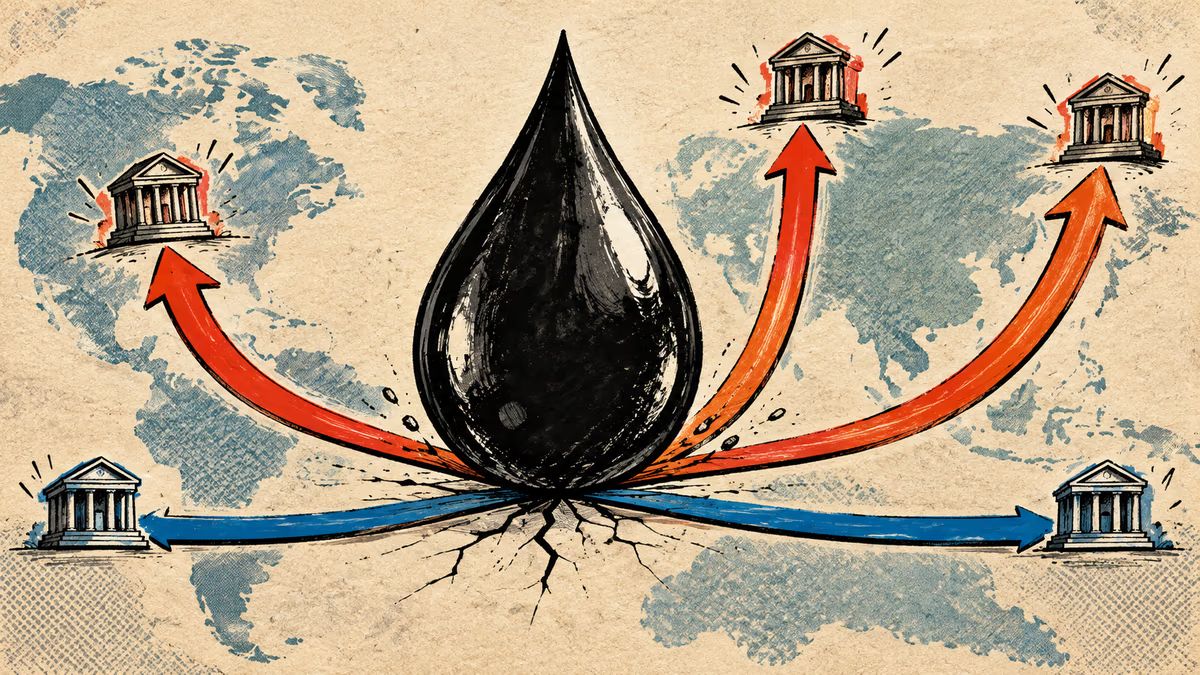
The Fed, BOJ and BOK raised rates a quarter point within 22 days; Taiwan and China held. What each said, plus the impact on Korean borrowers and the won.
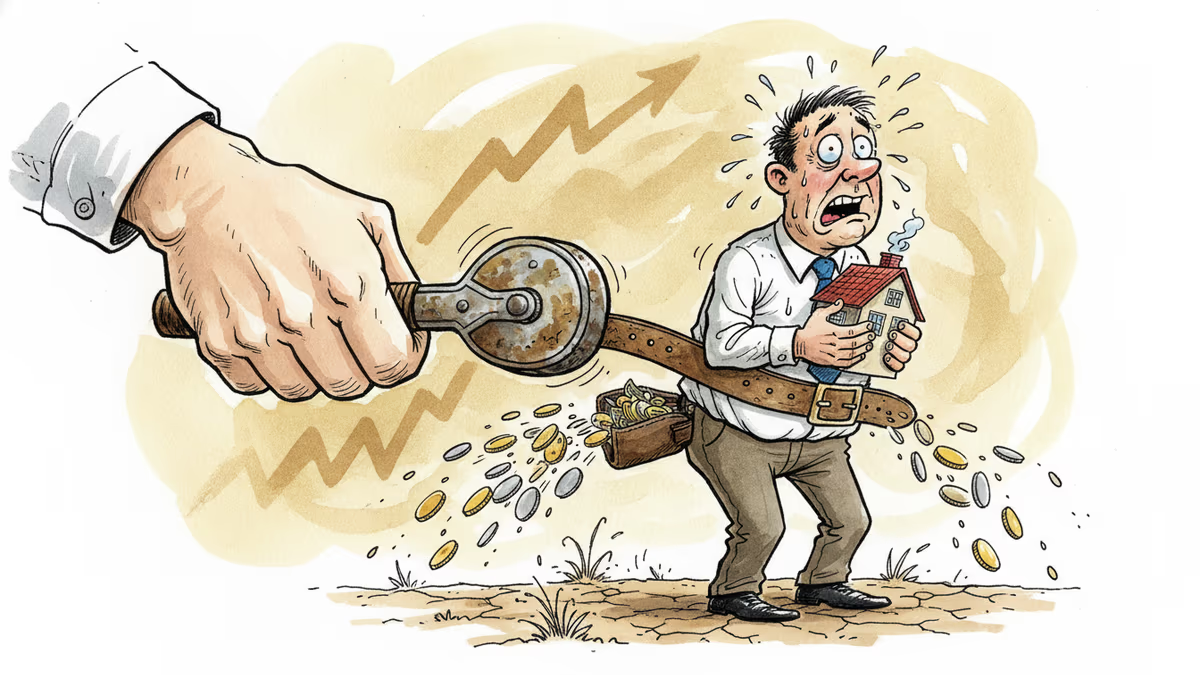
The Bank of Korea lifted its benchmark rate a quarter-point to 2.75%, its first increase in three and a half years. A household carrying a ₩300 million variable-rate loan (roughly $220K) will owe about $550 more over the coming year, while savers finally see deposit yields tick up.
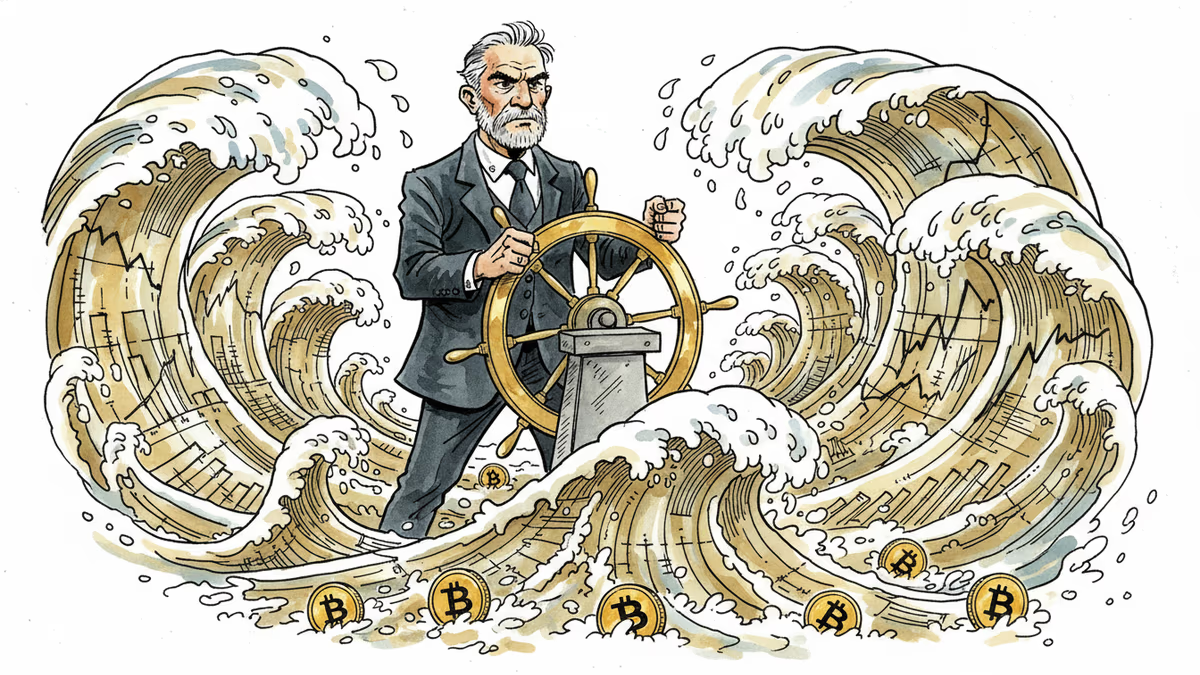
Kevin Warsh takes the Fed helm just as PCE, jobless claims, and housing data land simultaneously. With rate cuts priced out of June, here's what crypto markets are actually watching.
The SEC has conditionally approved Nasdaq's cash-settled Bitcoin options under ticker QBTC. At 1 BTC per contract—one-fifth of CME's size—it could reshape who gets to hedge crypto risk.
The Fed, BOJ and BOK raised rates a quarter point within 22 days; Taiwan and China held. What each said, plus the impact on Korean borrowers and the won.
The Bank of Korea lifted its benchmark rate a quarter-point to 2.75%, its first increase in three and a half years. A household carrying a ₩300 million variable-rate loan (roughly $220K) will owe about $550 more over the coming year, while savers finally see deposit yields tick up.
Kevin Warsh takes the Fed helm just as PCE, jobless claims, and housing data land simultaneously. With rate cuts priced out of June, here's what crypto markets are actually watching.
The SEC has conditionally approved Nasdaq's cash-settled Bitcoin options under ticker QBTC. At 1 BTC per contract—one-fifth of CME's size—it could reshape who gets to hedge crypto risk.
Thoughts
Share your thoughts on this article
Sign in to join the conversation