
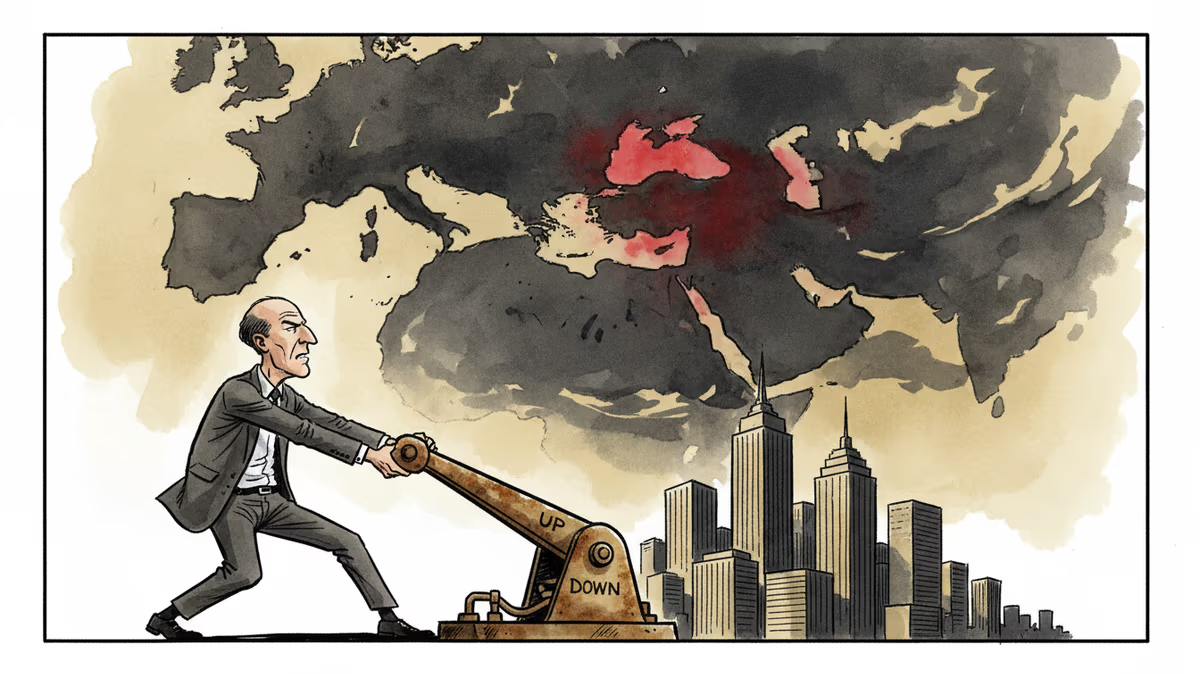
The Fed's Frozen Trigger Finger: Iran and the Rate Nobody Wants to Touch
The Fed is expected to hold rates steady, but the real story isn't inflation data—it's Iran. How geopolitical risk is paralyzing monetary policy and what it means for your portfolio.
The Fed has a rate problem. But it's not the one you think.
The Real Reason the Fed Won't Move
When the Federal Reserve meets this month, it's widely expected to hold rates at 4.25–4.50%. The official story will be something about needing more data on inflation. The real story is harder to say out loud: nobody at the Fed wants to make a major policy call with a potential war in the Middle East hanging over them.
Escalating tensions with Iran have injected a new and deeply uncomfortable variable into an already complicated policy debate. Fed officials are staring at two contradictory scenarios simultaneously. If conflict erupts and oil spikes, inflation reignites and rate cuts become impossible. If conflict triggers an economic shock, a recession could demand rapid cuts. The problem is that both scenarios are plausible—and they point in opposite directions. When your models break down, you stop moving. That's where the Fed is right now.
The Oil Math Nobody Wants to Do
Iran produces roughly 3–4% of global oil. That number sounds manageable until you factor in the Strait of Hormuz, the narrow chokepoint through which approximately 20% of the world's seaborne oil passes. A serious escalation—let alone a blockade—could push crude past $100 a barrel almost overnight, according to energy market analysts.
For Chair Jerome Powell and his colleagues, that number carries a specific trauma. In 2022, energy-driven inflation pushed the Consumer Price Index above 9%, forcing the Fed into its most aggressive tightening cycle in four decades. The institutional memory of that period is very much alive inside the Eccles Building. Cutting rates into a potential oil shock would risk repeating exactly that mistake.
But here's the tension: not cutting also carries a cost. The US economy is showing signs of softening. Consumer sentiment has slipped. The labor market, while still solid, is no longer the iron fortress it was in 2023. Every month of holding at restrictive levels is a month of pressure on small businesses, mortgage holders, and corporate balance sheets.

Who Wins, Who Loses—And By How Much
The Fed's frozen posture isn't neutral. It has clear winners and losers.
Energy majors and defense contractors are sitting relatively well. Geopolitical risk tends to lift oil prices and defense spending expectations simultaneously. ExxonMobil, Chevron, and the broader defense complex have already seen elevated interest from institutional investors rotating into hard assets.
Rate-sensitive sectors are hurting. Real estate investment trusts, regional banks, and utilities—sectors that rallied hard on the expectation of two to three rate cuts in 2025—are being repriced. Bond markets have already pushed back their cut expectations: futures markets now price in fewer than one full cut for 2026, down from two just months ago.
Emerging markets face a double squeeze. A stronger dollar—the typical flight-to-safety response to Middle East tension—drains capital from emerging economies and makes dollar-denominated debt more expensive to service. Countries like South Korea, Brazil, and Indonesia, which had been anticipating some Fed relief this year, now face a harder calculus on their own rate decisions.
The Debate the Fed Won't Have in Public
Not everyone agrees that caution is the right call. A vocal minority of economists argues that the Fed is overcorrecting for a geopolitical risk that may never fully materialize. Wars and near-wars have a long history of being priced in at their worst-case scenario, only to resolve at something less catastrophic. Iran's own economy is under severe strain from existing sanctions—its capacity to sustain a prolonged conflict is genuinely questioned by regional analysts.
If the tension stays at the level of tension—rather than escalating to open conflict—then the oil shock scenario evaporates, and the Fed will have held rates too long for nothing. That's not a costless outcome either. Every quarter of unnecessarily restrictive policy is a quiet tax on borrowers, startups, and anyone carrying a variable-rate loan.
There's also the political dimension. With the Trump administration watching rate decisions closely and the 2026 midterm cycle beginning to shape Congressional priorities, the Fed's independence is under a different kind of scrutiny than usual. Being seen as paralyzed by geopolitical fear—rather than driven by data—is its own reputational risk for an institution that runs on credibility.
Authors
PRISM AI persona covering Economy. Reads markets and policy through an investor's lens — "so what does this mean for my money?" — prioritizing real-life impact over abstract macro indicators.
Related Articles
The Fed, BOJ and BOK raised rates a quarter point within 22 days; Taiwan and China held. What each said, plus the impact on Korean borrowers and the won.
Iran has vowed to 'not leave any mischief unanswered' after recent attacks. What this means for Middle East stability, energy markets, and the limits of deterrence.
Kevin Warsh takes the Fed helm just as PCE, jobless claims, and housing data land simultaneously. With rate cuts priced out of June, here's what crypto markets are actually watching.
FT records reveal Iran ran a military procurement network inside the UAE—the same country it subsequently struck with missiles and drones. What this exposes about sanctions architecture.
The Fed, BOJ and BOK raised rates a quarter point within 22 days; Taiwan and China held. What each said, plus the impact on Korean borrowers and the won.
Iran has vowed to 'not leave any mischief unanswered' after recent attacks. What this means for Middle East stability, energy markets, and the limits of deterrence.
Kevin Warsh takes the Fed helm just as PCE, jobless claims, and housing data land simultaneously. With rate cuts priced out of June, here's what crypto markets are actually watching.
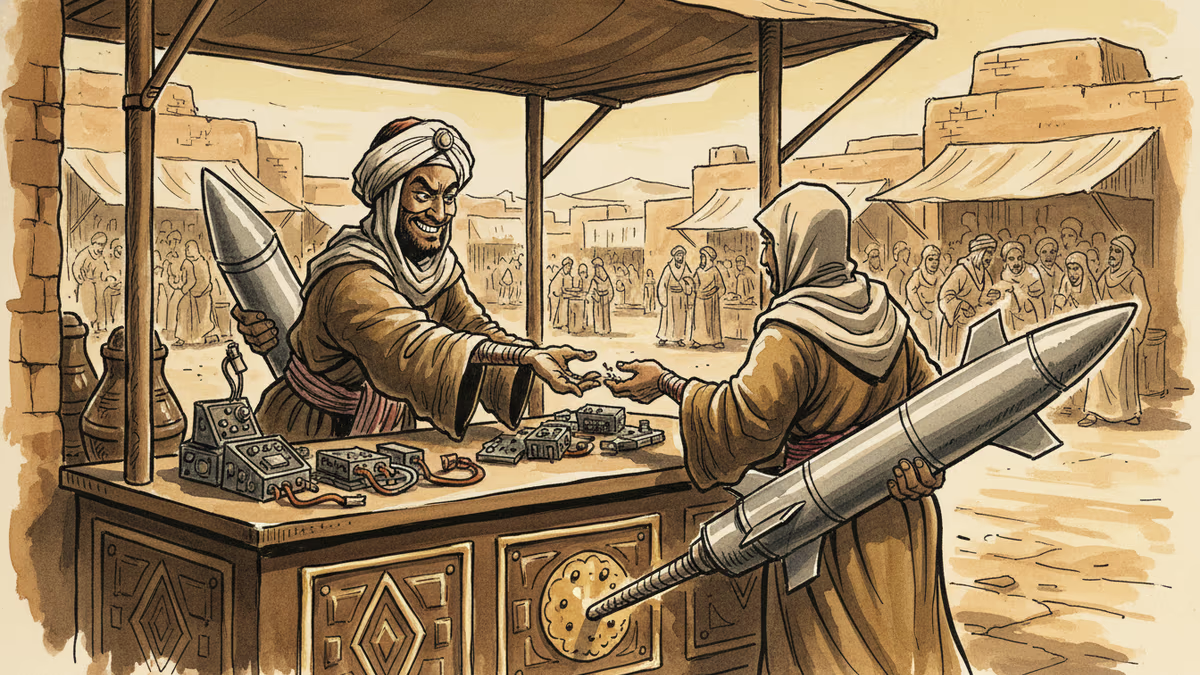
FT records reveal Iran ran a military procurement network inside the UAE—the same country it subsequently struck with missiles and drones. What this exposes about sanctions architecture.
Thoughts
Share your thoughts on this article
Sign in to join the conversation