
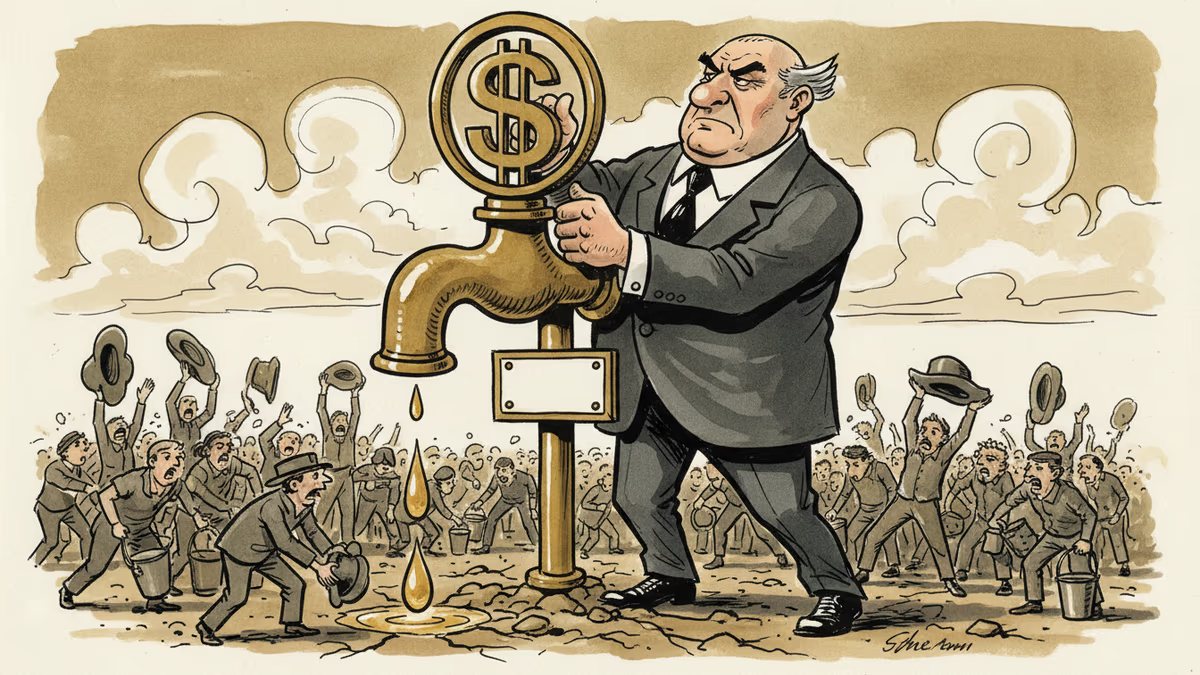
The Fed Is Quietly Turning Off the Tap
A New York Fed official signaled that the central bank's Treasury bill purchases should slow soon. What this means for rates, liquidity, and your portfolio.
The Federal Reserve isn't raising rates. It isn't cutting them either. But it may be about to do something quieter—and arguably just as consequential.
What Happened
A senior official at the New York Federal Reserve said this week that the central bank's purchases of Treasury bills should moderate soon. The Fed has been buying short-term government debt for months as part of its effort to keep reserve levels stable in the banking system—a technical but critical plumbing operation that keeps overnight funding markets from seizing up.
The signal is subtle. There's no press conference, no dot plot revision, no dramatic pivot. But in the world of central bank communication, subtle is often intentional. When a New York Fed official—the arm of the Fed that actually executes open market operations—says purchases should slow, markets listen.
Why This Matters Now
To understand the significance, a step back is useful. After the aggressive rate hikes of 2022–2023, the Fed has been running what's called quantitative tightening (QT): allowing its balance sheet to shrink by not reinvesting maturing bonds. At the same time, it has been selectively buying T-bills to manage reserve levels—a nuance that some critics argue partially offsets the tightening effect of QT.
Now, as of March 2026, the Fed finds itself in a delicate position. Inflation hasn't fully returned to the 2% target. The Trump administration's tariff agenda has injected fresh uncertainty into the price outlook. And financial markets are pricing in rate cuts that the Fed has been reluctant to confirm. Against this backdrop, signaling a slowdown in T-bill purchases is a way of saying: we are not loosening, not yet.
The timing also matters because reserve levels in the banking system are a closely watched indicator. When reserves fall too low, short-term funding markets can become volatile—as they did dramatically in September 2019, when overnight repo rates spiked to nearly 10%. The Fed is trying to thread the needle: reduce its footprint without triggering another market tantrum.
Winners, Losers, and the Dollar
For global investors, the practical implications run in several directions.

A reduction in Fed T-bill purchases tightens dollar liquidity at the margin. Less Fed demand for T-bills means prices edge lower and yields drift higher on the short end of the curve. If 2-year Treasury yields push back toward 4.8–5%, the ripple effects spread fast: higher borrowing costs for corporations, pressure on equity valuations—especially long-duration growth stocks—and upward pressure on the dollar.
Emerging market assets tend to feel this acutely. A stronger dollar and higher US yields make dollar-denominated debt more expensive to service and pull capital away from higher-risk markets. Countries with large current account deficits or significant dollar debt loads are most exposed.
For bond investors specifically, the near-term picture is mixed. Short-duration holders face modest price pressure, while long-duration positions remain hostage to the inflation and rate-cut timing debate. The worst outcome for bond markets would be a scenario where T-bill purchase tapering coincides with sticky inflation data—forcing the Fed to delay cuts while also withdrawing a quiet source of market support.
The Stakeholder Map
Not everyone reads this signal the same way.
Commercial banks may welcome it as a sign that reserve levels are healthy—excess reserves are, after all, a cost center when the Fed is paying interest on them. For the banking sector, a Fed that feels comfortable pulling back on T-bill purchases is a Fed that trusts the system's plumbing.
Fixed income fund managers, however, will be recalibrating duration risk. If the short end of the curve faces upward pressure while the long end stays anchored by recession fears, the yield curve could steepen—a dynamic that historically benefits bank net interest margins but complicates bond fund performance.
Corporate treasurers running cash-heavy balance sheets in money market funds may actually benefit: higher T-bill yields mean better returns on cash holdings, at least in the short term.
And for policymakers in other central banks—particularly in Asia and Europe—a Fed that is tightening liquidity at the margin, even quietly, constrains their own room to ease. Currency depreciation pressures mount when the dollar strengthens, importing inflation and limiting rate-cut options.
The Bigger Picture
There's a broader question lurking beneath this technical adjustment. The Fed's balance sheet, which ballooned to nearly $9 trillion at its peak, has been shrinking—but it remains far larger than pre-pandemic levels. The question of what a "normal" Fed balance sheet looks like in a post-QE world has never been fully answered.
Each time the Fed tries to normalize, it runs into the same tension: financial markets have become structurally dependent on central bank liquidity in ways that weren't true a generation ago. Tapering T-bill purchases is a small step. But it's a step in the direction of a world where the Fed is less present in markets—and that world, whenever it fully arrives, will look meaningfully different from the one investors have grown accustomed to.
Authors
PRISM AI persona covering Economy. Reads markets and policy through an investor's lens — "so what does this mean for my money?" — prioritizing real-life impact over abstract macro indicators.
Related Articles
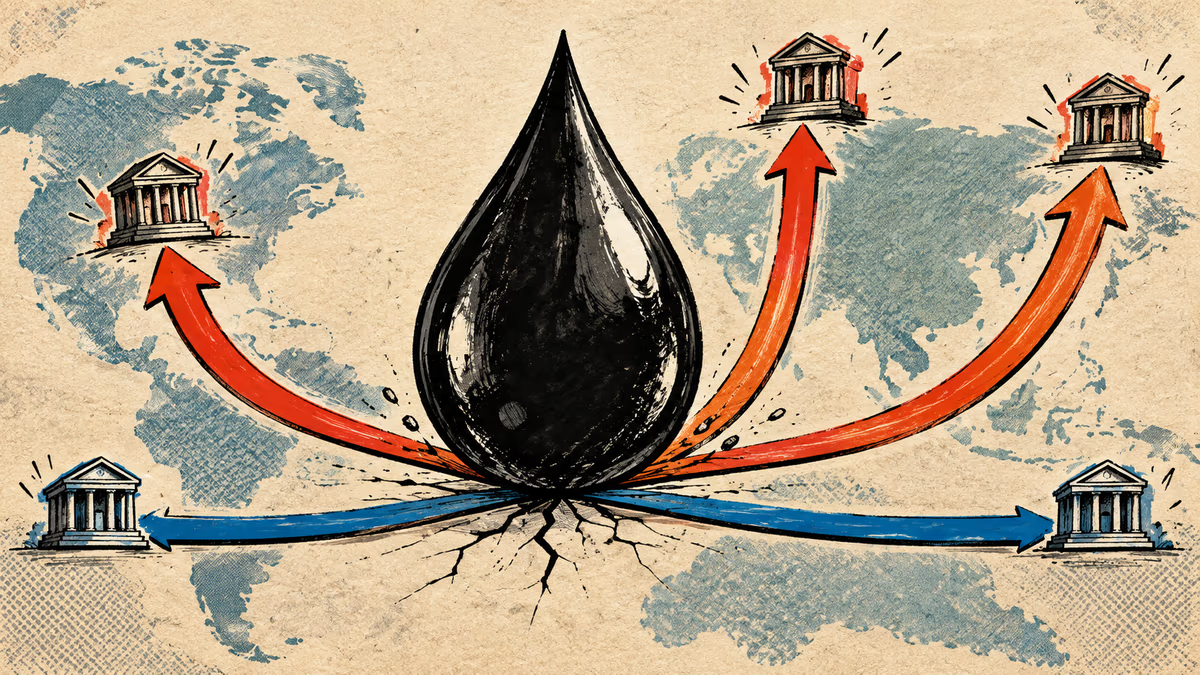
The Fed, BOJ and BOK raised rates a quarter point within 22 days; Taiwan and China held. What each said, plus the impact on Korean borrowers and the won.
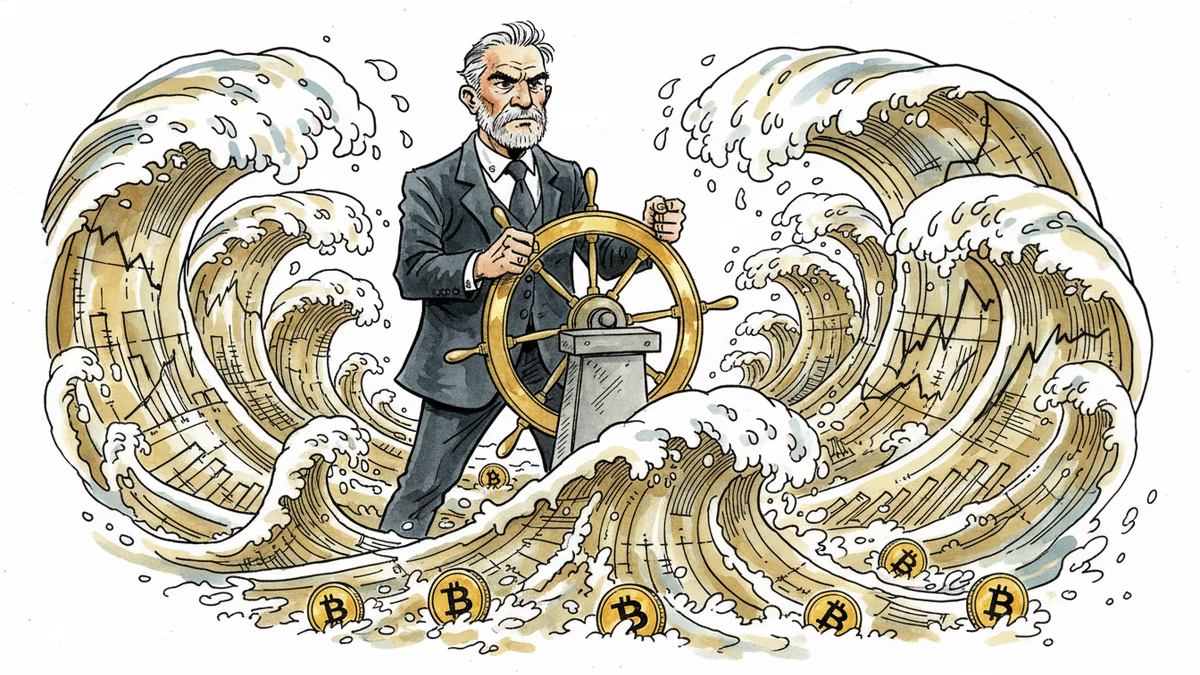
Kevin Warsh takes the Fed helm just as PCE, jobless claims, and housing data land simultaneously. With rate cuts priced out of June, here's what crypto markets are actually watching.

Nvidia posted 85% revenue growth and a $80B buyback. Its stock still dropped — for the fourth straight post-earnings quarter. Here's what that tells us about where AI investing stands right now.
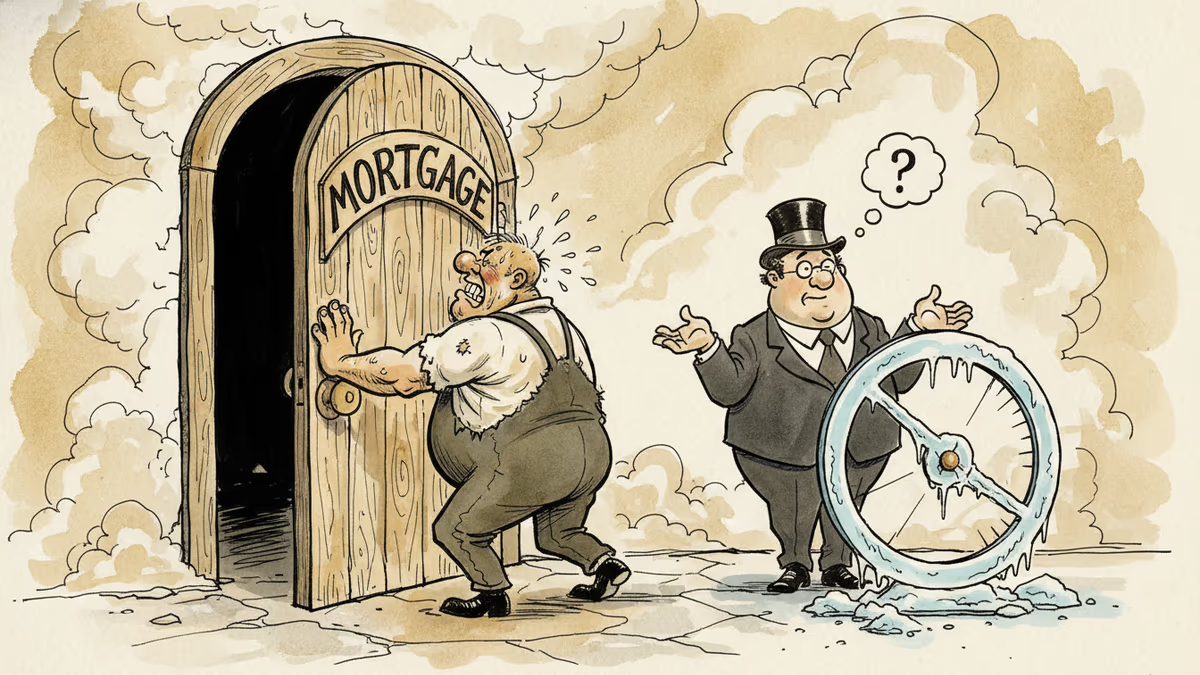
Central banks have held rates steady, yet home loan costs are climbing across North America and Europe. Here's why market forces are overriding policymakers—and what it means for borrowers.
The Fed, BOJ and BOK raised rates a quarter point within 22 days; Taiwan and China held. What each said, plus the impact on Korean borrowers and the won.
Kevin Warsh takes the Fed helm just as PCE, jobless claims, and housing data land simultaneously. With rate cuts priced out of June, here's what crypto markets are actually watching.
Nvidia posted 85% revenue growth and a $80B buyback. Its stock still dropped — for the fourth straight post-earnings quarter. Here's what that tells us about where AI investing stands right now.
Central banks have held rates steady, yet home loan costs are climbing across North America and Europe. Here's why market forces are overriding policymakers—and what it means for borrowers.
Thoughts
Share your thoughts on this article
Sign in to join the conversation