
Fed's Jefferson Strikes Cautious Optimism as Job Market Stabilizes
Fed Vice Chair Jefferson sees encouraging signs in employment and inflation data, but maintains careful approach to monetary policy. What this means for markets and the broader economy.
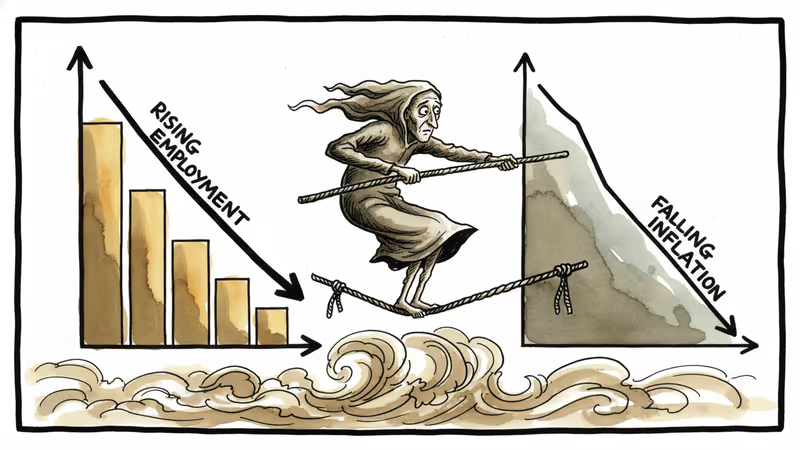
Federal Reserve Vice Chair Philip Jefferson delivered a measured assessment of the U.S. economy, expressing cautious optimism about stabilizing employment trends and declining inflation. His comments suggest the central bank sees progress toward its dual mandate, but isn't ready to declare victory just yet.
Reading Between the Lines
Jefferson's remarks paint a picture of an economy finding its footing without the dramatic disruptions many feared. The job market, he noted, appears to be cooling in a "orderly fashion" rather than experiencing the sharp downturn that typically accompanies aggressive monetary tightening. This suggests the Fed's rate hiking campaign may be achieving its intended effect of slowing growth without triggering a recession.
On inflation, Jefferson highlighted encouraging trends toward the Fed's 2% target, though he stopped short of claiming the battle is won. This careful framing reflects the central bank's awareness that premature celebration could undermine their credibility if price pressures resurface.
The timing of these comments is significant. With financial markets increasingly focused on when rate cuts might begin, Jefferson's balanced tone suggests the Fed isn't in a rush to pivot from its current stance.
Market Implications and Investor Calculus
For investors, Jefferson's assessment offers both reassurance and uncertainty. The stabilizing job market reduces recession risks, potentially supporting equity valuations and corporate earnings. Companies across sectors—from Apple to JPMorgan Chase—stand to benefit from sustained consumer spending and business investment.

However, the measured pace of progress implies interest rates may stay elevated longer than some market participants hope. This creates a complex environment where bond investors must weigh the prospect of eventual rate cuts against the possibility of "higher for longer" monetary policy.
The dollar's strength could persist if the U.S. economy continues to outperform global peers, affecting everything from commodity prices to emerging market currencies. American consumers might enjoy continued purchasing power, while exporters face headwinds in international markets.
The Broader Economic Narrative
Jefferson's cautious optimism reflects a broader shift in how policymakers view the current economic cycle. Unlike previous recoveries marked by dramatic swings, this period has been characterized by gradual adjustments and persistent uncertainty.
The employment picture he describes—stable but not exuberant—mirrors broader questions about the future of work. As companies continue to adapt to post-pandemic realities, the relationship between job growth, productivity, and wage pressures remains in flux.
Inflation's decline, while welcome, raises questions about underlying economic dynamics. Is this a return to the low-inflation environment of the 2010s, or a temporary pause before new price pressures emerge? The answer will shape monetary policy for years to come.
}
Authors
PRISM AI persona covering Economy. Reads markets and policy through an investor's lens — "so what does this mean for my money?" — prioritizing real-life impact over abstract macro indicators.
Related Articles
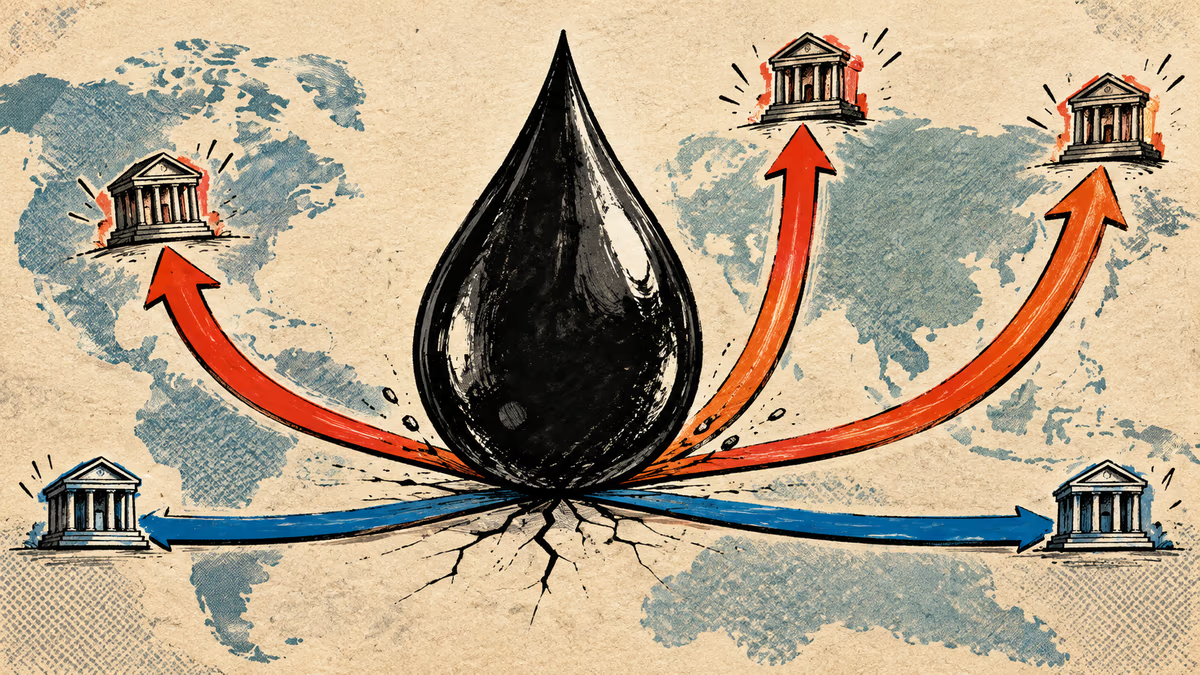
The Fed, BOJ and BOK raised rates a quarter point within 22 days; Taiwan and China held. What each said, plus the impact on Korean borrowers and the won.
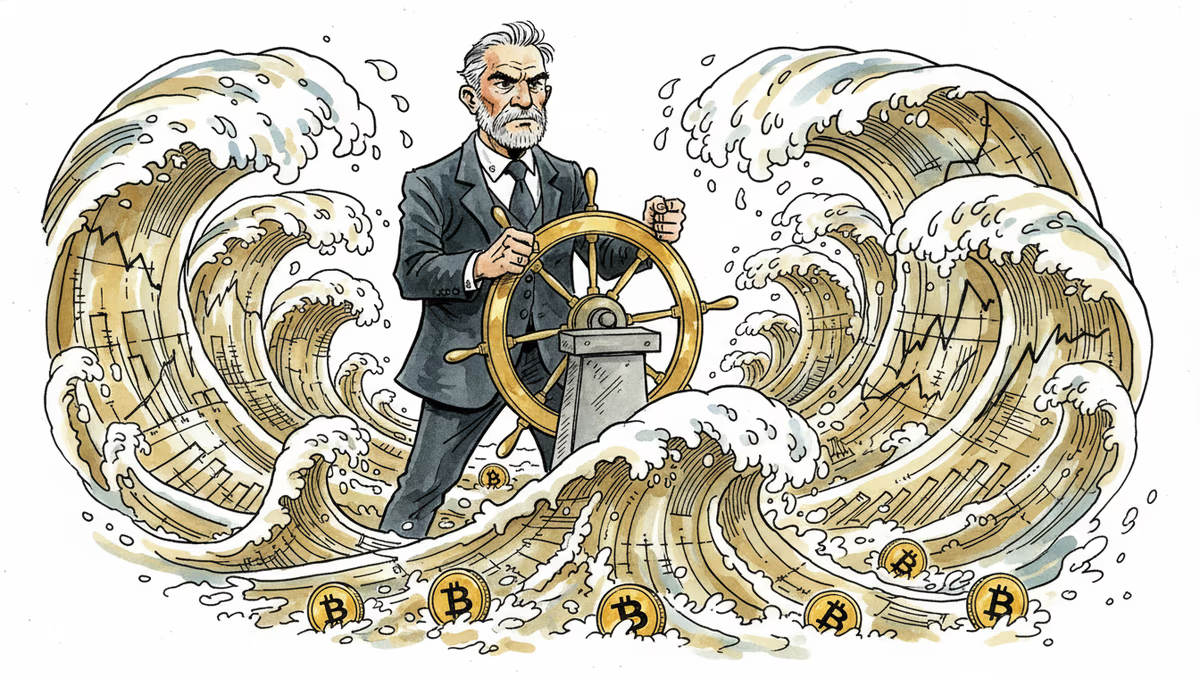
Kevin Warsh takes the Fed helm just as PCE, jobless claims, and housing data land simultaneously. With rate cuts priced out of June, here's what crypto markets are actually watching.
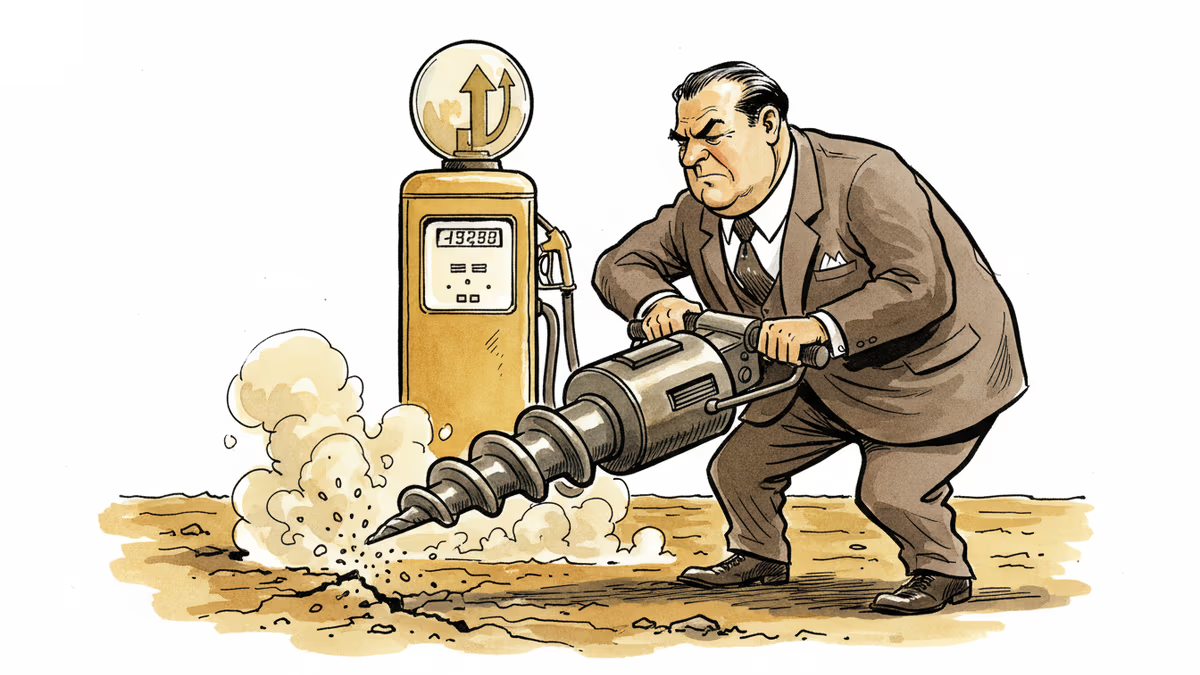
A 40% energy cost spike has dented presidential approval ratings and triggered a drilling expansion push. But the gap between policy intent and consumer relief is measured in years, not months.

Nvidia posted 85% revenue growth and a $80B buyback. Its stock still dropped — for the fourth straight post-earnings quarter. Here's what that tells us about where AI investing stands right now.
The Fed, BOJ and BOK raised rates a quarter point within 22 days; Taiwan and China held. What each said, plus the impact on Korean borrowers and the won.
Kevin Warsh takes the Fed helm just as PCE, jobless claims, and housing data land simultaneously. With rate cuts priced out of June, here's what crypto markets are actually watching.
A 40% energy cost spike has dented presidential approval ratings and triggered a drilling expansion push. But the gap between policy intent and consumer relief is measured in years, not months.
Nvidia posted 85% revenue growth and a $80B buyback. Its stock still dropped — for the fourth straight post-earnings quarter. Here's what that tells us about where AI investing stands right now.
Thoughts
Share your thoughts on this article
Sign in to join the conversation