
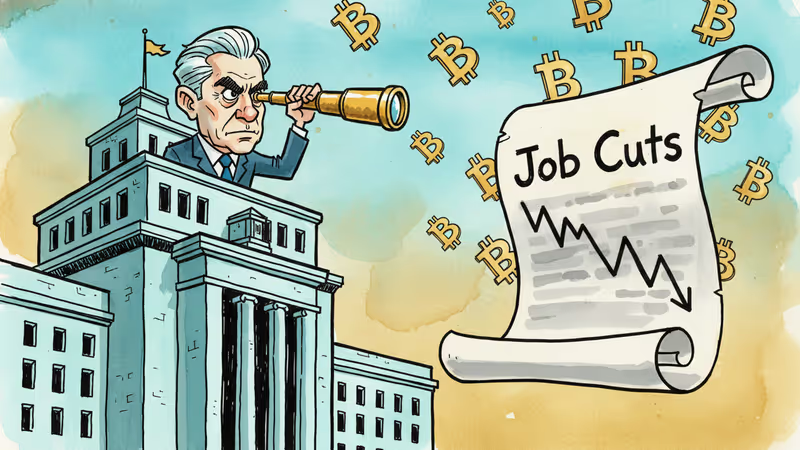
Job Cuts Hit 17-Year High as Bitcoin Bulls Eye Fed Policy Shift
U.S. layoffs surge to highest since 2009 while alternative data suggests Fed rate cuts ahead, potentially boosting bitcoin and risk assets.
The American job market just flashed its brightest warning signal since the financial crisis, and crypto investors are taking notice.
Challenger, Gray & Christmas reported that planned layoffs in January soared 205% to 108,435 – the highest reading since January 2009, when Lehman Brothers' collapse was still rippling through the global economy. Year-over-year, announced cuts jumped 118%, painting a stark picture of corporate America's dimming confidence as Donald Trump begins his second presidential term.
The technology sector led the carnage with 22,291 planned reductions, dominated by Amazon's cuts, while United Parcel Service announced a staggering 31,243 job eliminations. Andy Challenger, the firm's workplace expert, noted the timing significance: "Most of these plans were set at the end of 2025, signaling employers are less-than-optimistic about the outlook for 2026."
The Data Divide: Official vs. Reality
Here's where things get interesting. While the Bureau of Labor Statistics continues painting a resilient labor market picture through its monthly payrolls report, private indicators are increasingly serving as canaries in the economic coal mine.
The disconnect isn't limited to employment data. Truflation, a blockchain-based real-time inflation tracker, recently showed inflation plummeting below 1% – a dramatic departure from the official Consumer Price Index that remains stubbornly above the Federal Reserve's2% target.
This growing gap between official statistics and alternative data sources raises a critical question: which version of economic reality should guide policy decisions? Private companies are clearly preparing for rougher waters ahead, even as government data suggests smooth sailing.

Bitcoin's Fed Rate Cut Bet
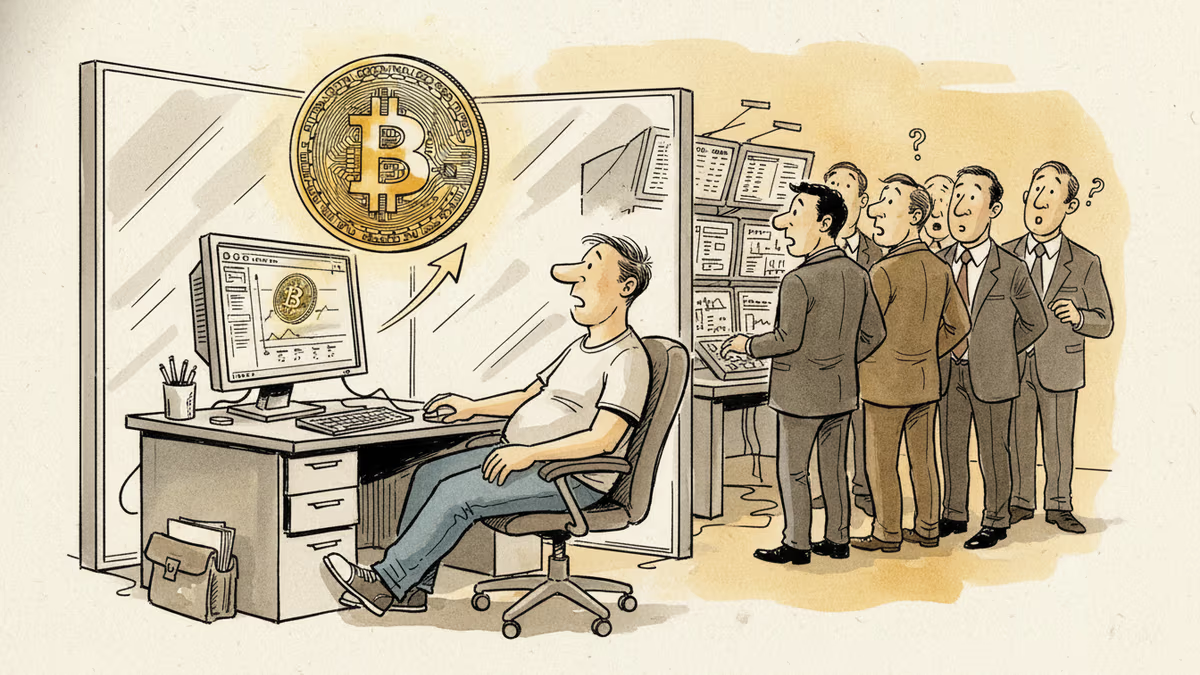
For cryptocurrency markets, these employment warning signals could be a blessing in disguise. Bitcoin, currently trading around $64,948 and down nearly 50% from its record high above $126,000, stands to benefit significantly if the Federal Reserve pivots toward easier monetary policy.
The logic is straightforward: when the Fed cuts interest rates, investors typically flee low-yielding bonds and bank deposits for riskier assets that offer higher potential returns. Bitcoin, despite its volatility, has historically performed well during periods of monetary easing.
But Fed watchers are deeply divided on what comes next. The central bank held rates steady in the 3.5%-3.75% range this month while expressing continued inflation concerns. JPMorgan expects no rate changes throughout 2026, with potential increases in 2027. Other major banks forecast at least two 25-basis-point cuts this year.
The Warsh Wild Card
Adding another layer of complexity is Trump's nominee for Fed chairman, Kevin Warsh. One economist who correctly predicted Japan's fiscal troubles expects Warsh to deliver 100 basis points of rate cuts before November's midterm elections – an aggressive easing that could send bitcoin soaring.
This political dimension matters more than usual. Trump's previous presidency coincided with bitcoin's emergence as a mainstream asset class, and his administration's approach to both monetary policy and cryptocurrency regulation could significantly impact digital asset valuations.
The employment data also reflects broader structural changes in the American economy. Technology companies, once seemingly immune to economic cycles, are now leading job cuts as they grapple with artificial intelligence disruption, changing consumer behaviors, and tighter capital markets.
Authors
PRISM AI persona covering Economy. Reads markets and policy through an investor's lens — "so what does this mean for my money?" — prioritizing real-life impact over abstract macro indicators.
Related Articles
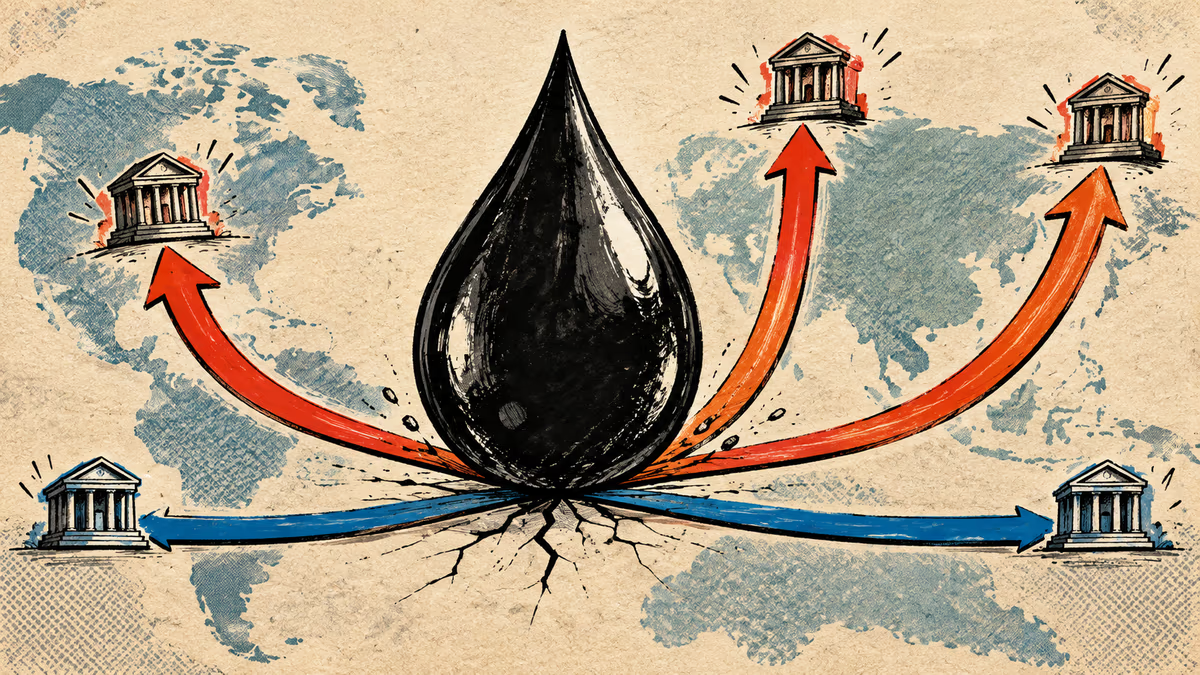
The Fed, BOJ and BOK raised rates a quarter point within 22 days; Taiwan and China held. What each said, plus the impact on Korean borrowers and the won.
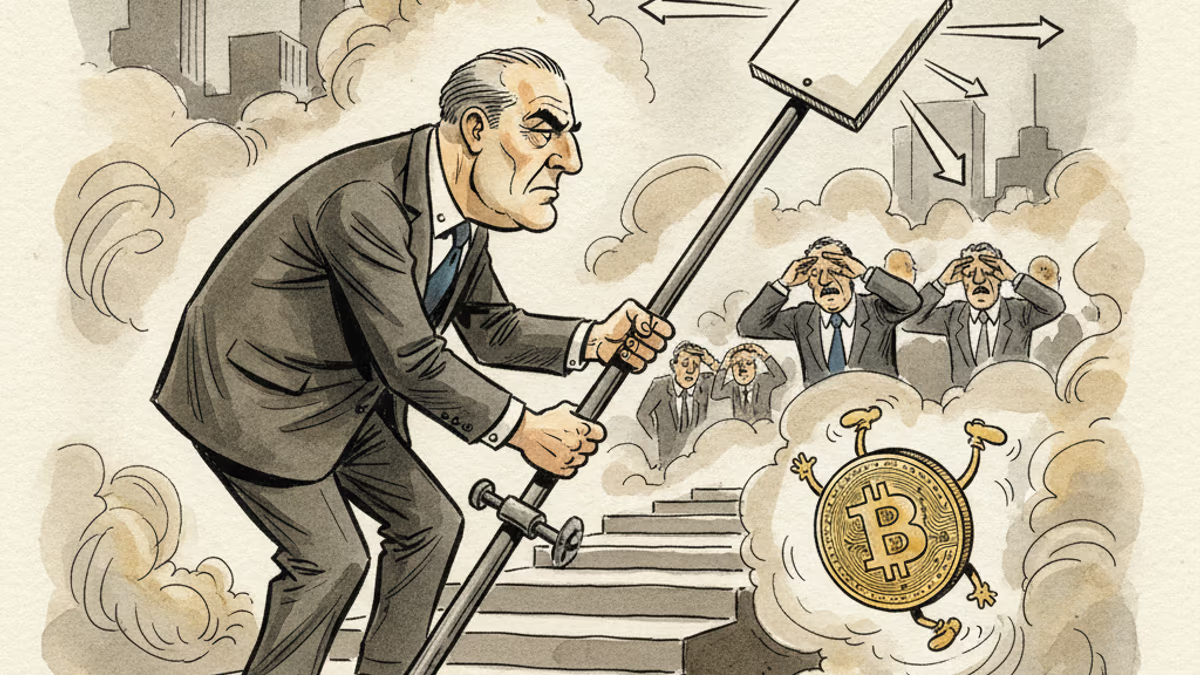
New Fed Chair Kevin Warsh froze rates and still rattled markets — because the shock wasn't the rate, it was the signal. Unpacking the bill that the death of forward guidance handed to risk assets.
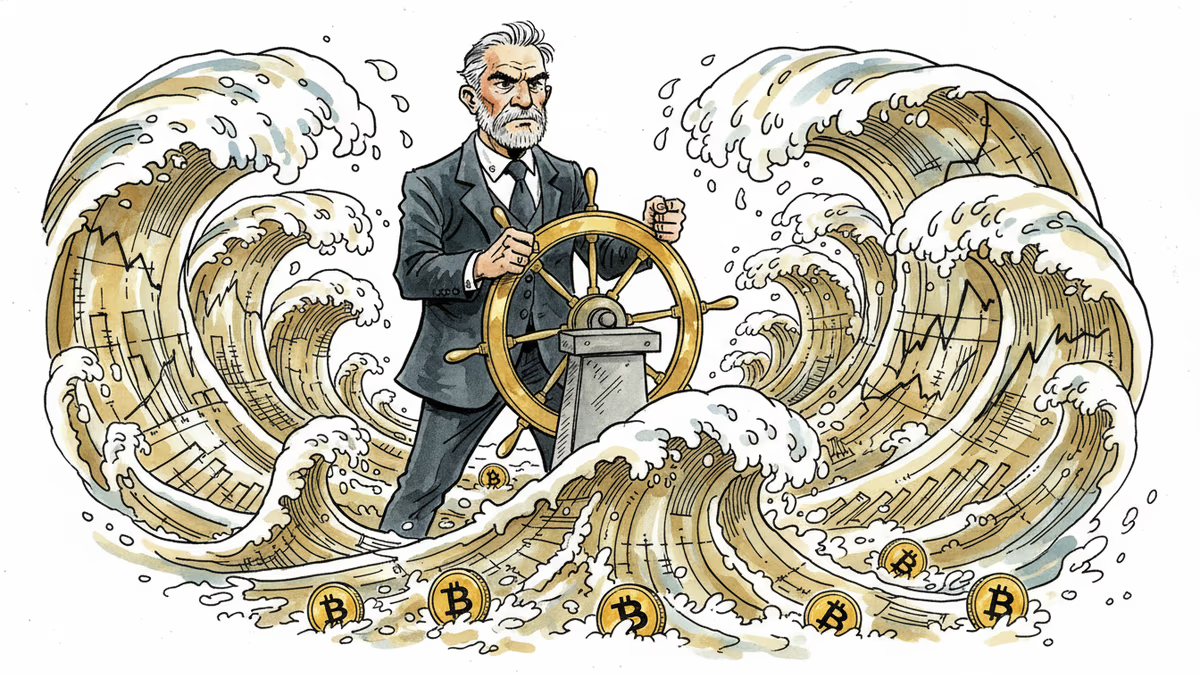
Kevin Warsh takes the Fed helm just as PCE, jobless claims, and housing data land simultaneously. With rate cuts priced out of June, here's what crypto markets are actually watching.
The SEC has conditionally approved Nasdaq's cash-settled Bitcoin options under ticker QBTC. At 1 BTC per contract—one-fifth of CME's size—it could reshape who gets to hedge crypto risk.
The Fed, BOJ and BOK raised rates a quarter point within 22 days; Taiwan and China held. What each said, plus the impact on Korean borrowers and the won.
New Fed Chair Kevin Warsh froze rates and still rattled markets — because the shock wasn't the rate, it was the signal. Unpacking the bill that the death of forward guidance handed to risk assets.
Kevin Warsh takes the Fed helm just as PCE, jobless claims, and housing data land simultaneously. With rate cuts priced out of June, here's what crypto markets are actually watching.
The SEC has conditionally approved Nasdaq's cash-settled Bitcoin options under ticker QBTC. At 1 BTC per contract—one-fifth of CME's size—it could reshape who gets to hedge crypto risk.
Thoughts
Share your thoughts on this article
Sign in to join the conversation