
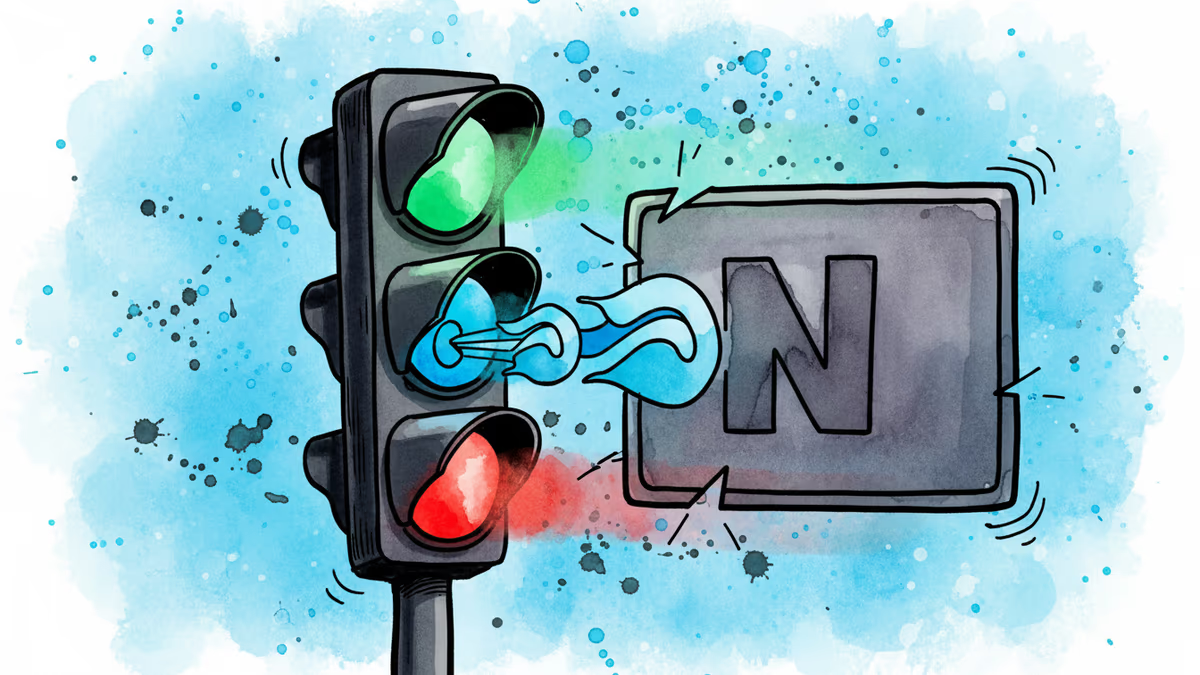
Why $111B Deal Gets Green Light While Netflix Didn't
FCC Chairman supports Paramount-WBD merger while Netflix deal faced regulatory hurdles. A new regulatory playbook for streaming consolidation emerges.
$111 Billion Deal Suddenly Gets the Regulatory Nod
Federal Communications Commission Chairman Brendan Carr publicly endorsed Paramount's acquisition of Warner Bros. Discovery, calling it "a lot cleaner" than Netflix's abandoned bid for the same target. Speaking to CNBC, Carr painted a starkly different regulatory picture for what appears to be a similar mega-deal.
The contrast is striking. Just months ago, Netflix pursued WBD before backing away from regulatory concerns. Same target, comparable deal size, yet completely different regulatory reception. What changed?
Why Netflix Hit a 'Regulatory Brick Wall'
Carr was blunt about Netflix's prospects: it "would have had a very difficult path forward from a regulatory perspective." The issue wasn't just size—it was scope and scale. A Netflix-HBO Max combination would have created a streaming behemoth with over 260 million global subscribers and unprecedented vertical integration.
"There were a lot of concerns in DC" about Netflix's market dominance, Carr revealed. The streaming giant already controls content creation, distribution, and platform access. Adding HBO's premium content library and production capabilities would have created what regulators saw as an unstoppable monopolistic force.
The concerns weren't theoretical. Netflix's $17 billion annual content spend already dwarfs most competitors. Absorbing HBO's prestige programming—from Game of Thrones to The Last of Us—would have left rivals scrambling for table scraps in the premium content market.
Paramount: The 'Goldilocks' Solution

Paramount+ tells a different story. With 60 million global subscribers—roughly one-fourth of Netflix's base—it represents consolidation without domination. Carr explicitly stated the Paramount-WBD merger "does not raise at all the same types of concerns" and could deliver "real consumer benefits."
This signals a regulatory philosophy focused on market concentration thresholds. The FCC appears willing to support mergers that challenge the leader while blocking deals that would cement dominance. It's David-and-Goliath thinking applied to streaming wars.
The math supports this approach. Even combined, Paramount+ and HBO Max would create the industry's third-largest platform, still trailing Netflix and Disney+ in subscriber count. That's competition enhancement, not elimination.
The New Consolidation Playbook
Carr's comments reveal emerging regulatory principles for streaming consolidation. Size alone doesn't trigger scrutiny—relative market position does. This creates a hierarchy where different rules apply to different players.
For smaller platforms like Peacock, Apple TV+, or regional services, the message is clear: strategic combinations won't face regulatory roadblocks if they challenge rather than entrench market leaders. It's an implicit invitation for defensive consolidation against Netflix's dominance.
This philosophy extends beyond streaming. Similar logic could apply to social media, cloud services, or any digital market where a few players control disproportionate market share.
Consumer Impact: Promise vs. Reality
Carr's promise of "consumer benefits" from the Paramount-WBD merger deserves scrutiny. Theoretically, combining content libraries and eliminating duplicate streaming services should reduce costs and improve offerings. HBO Max's premium content paired with Paramount's sports and news could create a more compelling alternative to Netflix.
But consolidation's track record on consumer benefits remains mixed. Cable TV consolidation promised similar advantages yet delivered higher prices and reduced innovation. The question isn't whether merged platforms can benefit consumers, but whether competitive pressure will force them to do so.
Authors
Related Articles
From a niche experiment in 2018 to a mainstream disruption in 2026, AI-generated music is forcing the industry to rethink creativity, copyright, and compensation.
Paramount-Warner merger creates streaming giant with 200M+ subscribers after Netflix abandoned WBD deal. What this mega-consolidation means for content and competition.
Sanctions and financial crises block streaming access across MENA, making piracy the default for young consumers. 23% rely on illegal IPTV services in a region where legal access often doesn't exist.

Warner Bros. Discovery and Paramount announce $83B merger after Netflix withdraws from bidding war. Analysis of streaming consolidation and industry implications.
From a niche experiment in 2018 to a mainstream disruption in 2026, AI-generated music is forcing the industry to rethink creativity, copyright, and compensation.
Paramount-Warner merger creates streaming giant with 200M+ subscribers after Netflix abandoned WBD deal. What this mega-consolidation means for content and competition.
Sanctions and financial crises block streaming access across MENA, making piracy the default for young consumers. 23% rely on illegal IPTV services in a region where legal access often doesn't exist.
Warner Bros. Discovery and Paramount announce $83B merger after Netflix withdraws from bidding war. Analysis of streaming consolidation and industry implications.
Thoughts
Share your thoughts on this article
Sign in to join the conversation