
When the FCC Asks Broadcasters to Be More Patriotic
FCC Chairman Brendan Carr urges broadcasters to join a 'Pledge America Campaign' with specific patriotic programming requirements. The request raises questions about government influence on media content.
48 Hours to Decide: Patriotism by Government Request
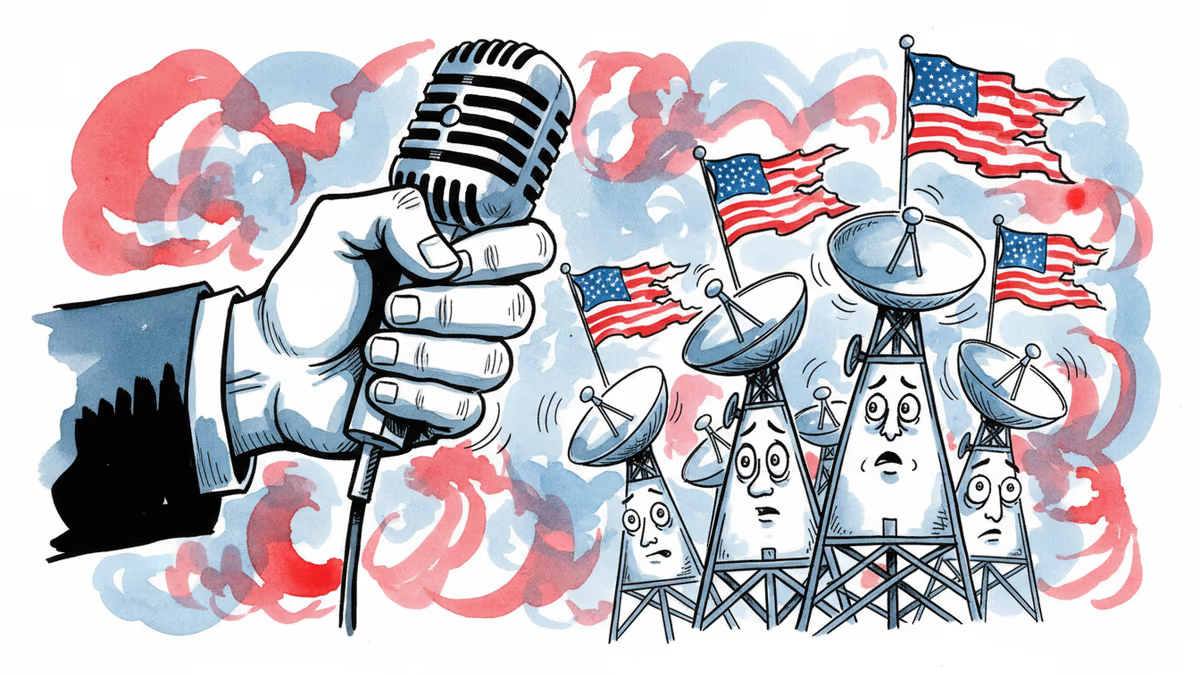
FCC Chairman Brendan Carr just asked America's broadcasters to do something unprecedented: pledge to air "patriotic, pro-America programming" as part of President Trump's "Salute to America 250" project. The request comes with a detailed playbook—start each day with the Star Spangled Banner, run segments on American history, play music by Duke Ellington and George Gershwin, and provide daily "Today in American History" announcements.
It sounds harmless enough. Who doesn't support celebrating America's 250th birthday? But dig deeper, and you'll find broadcasters facing an uncomfortable question: When a government agency that controls your license asks you to pledge specific content, how voluntary is that pledge really?
The Broadcaster's Dilemma: Between Patriotism and Independence
For many stations, this request creates a no-win situation. Participate, and you risk appearing to bow to government pressure on editorial content. Decline, and you might face questions about your patriotism—or worse, potential regulatory scrutiny from the very agency making the request.
Some broadcasters already air patriotic content regularly, making compliance relatively painless. Local news stations often feature historical segments, and many begin special broadcasts with the national anthem. For them, formalizing these practices through a "pledge" might seem like a small step.
But others see a dangerous precedent. CBS, NBC, and other major networks have historically resisted government suggestions about programming content, viewing such requests as potential threats to editorial independence. The fact that this comes from the FCC—the agency responsible for broadcast licensing—adds weight to what might otherwise be dismissed as political theater.

The Regulatory Reality Check
Here's what makes this particularly complex: broadcasters operate under government licenses that require periodic renewal. The FCC has broad discretion in evaluating whether stations serve "the public interest." While the agency rarely revokes licenses, the renewal process gives it significant leverage over broadcaster behavior.
This creates what media lawyers call a "chilling effect." Even if Carr's request is genuinely voluntary, broadcasters must consider whether non-participation could influence future regulatory decisions. It's the classic problem of power dynamics—when your regulator makes a request, saying no requires considerable courage.
The timing is also notable. This comes as the Trump administration has repeatedly criticized media coverage and suggested that broadcast licenses should face more scrutiny. In that context, a "voluntary" pledge program takes on additional significance.
First Amendment in the Balance
The First Amendment protects press freedom, but it doesn't eliminate all government influence over broadcasting. Unlike print media, broadcasters use public airwaves and face content regulations that newspapers don't. They must provide equal time to political candidates and avoid certain types of indecent content.
But there's a crucial difference between regulating technical standards or preventing harm and suggesting specific editorial content. When government officials start recommending what patriotic programming should look like, they cross into territory that makes constitutional scholars nervous.
The "non-partisan" framing doesn't resolve this tension. Any government request for specific content—even celebrating national history—involves editorial choices about what stories to tell and how to tell them. Those are decisions that, in a free society, should belong to journalists and editors, not government officials.
Authors
Related Articles
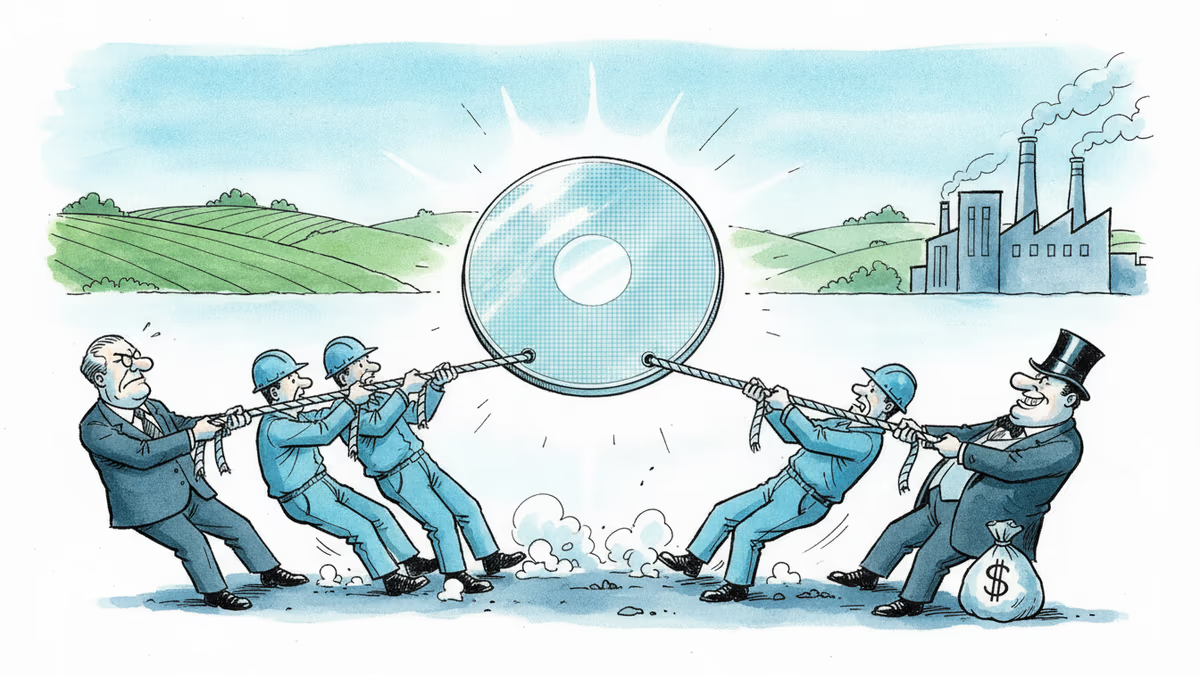
Samsung Electronics' union branch revealed that 84% of survey respondents oppose the government's roughly $290 billion (₩400 trillion) semiconductor megaproject in Gwangju. Government, management, the union and shareholders are all reading the same national project in sharply different ways.
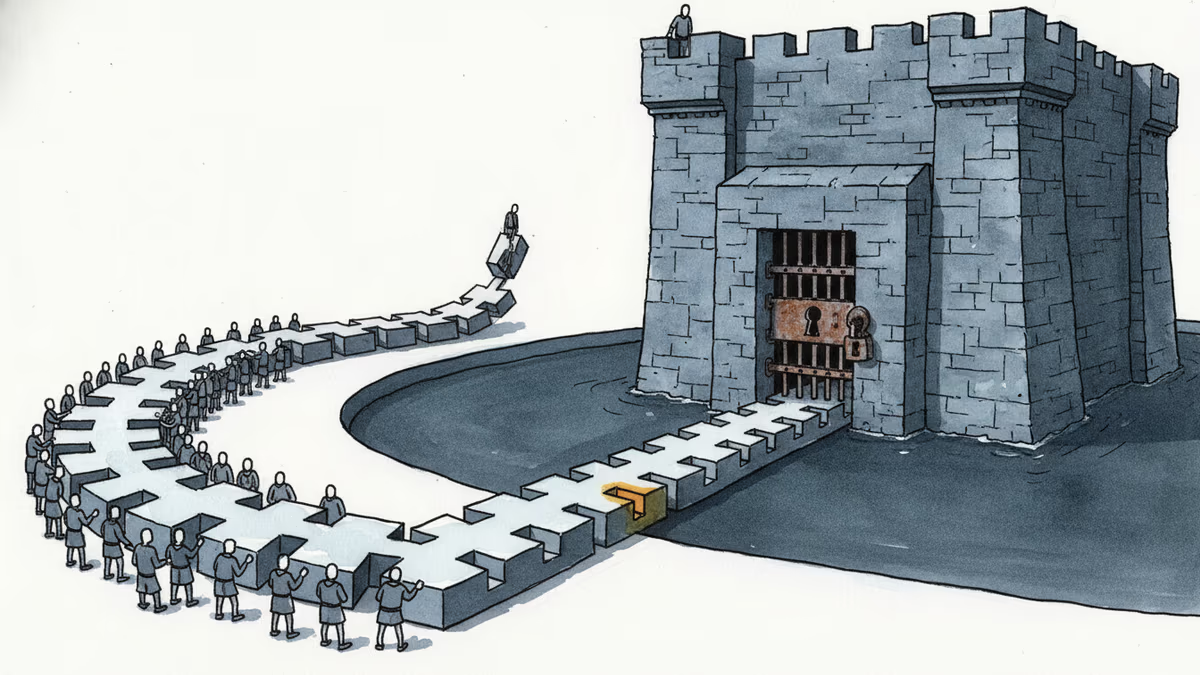
Nvidia shipped roughly a billion RISC-V cores in 2024, then announced it would run CUDA on the open standard. We break down how royalty-free instruction sets and open software stacks are trying to route around CUDA's lock-in. Part 2 of the Semiconductor Sovereignty series.
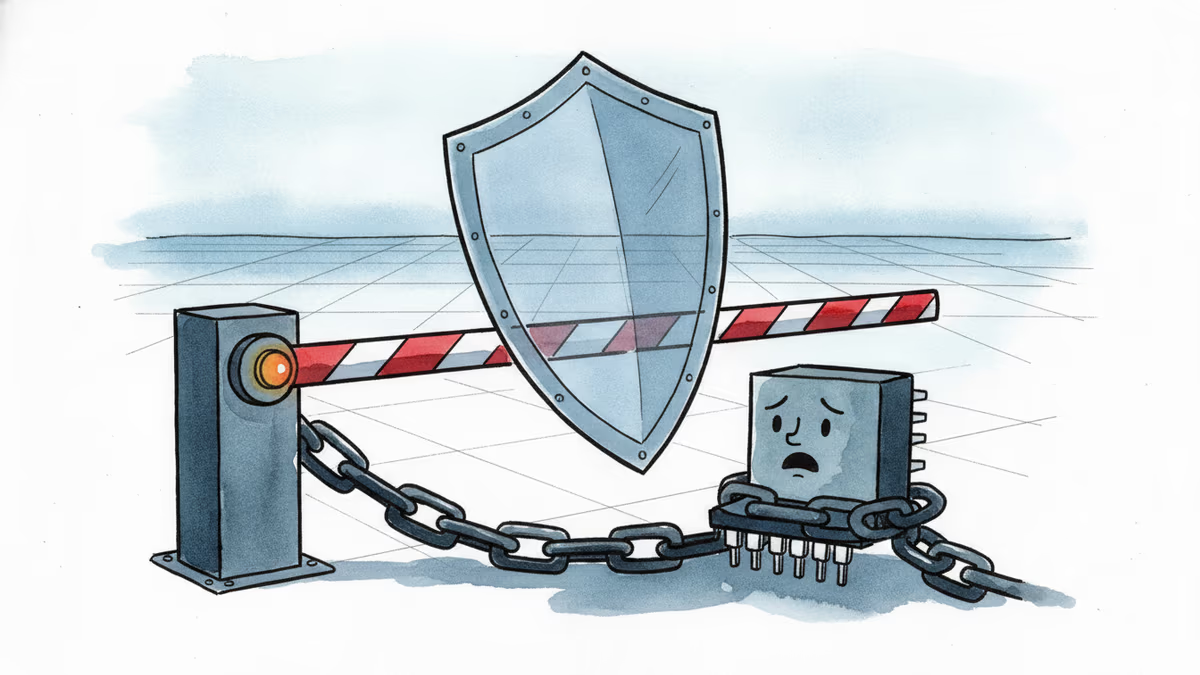
US AI-chip export controls split into three layers in the first half of 2026 — January easing, a May crackdown on circumvention, and a pending bill. Nvidia erased China from its guidance and still posted a record $81.6 billion quarter. A look at the export policy that both shields and cages it.
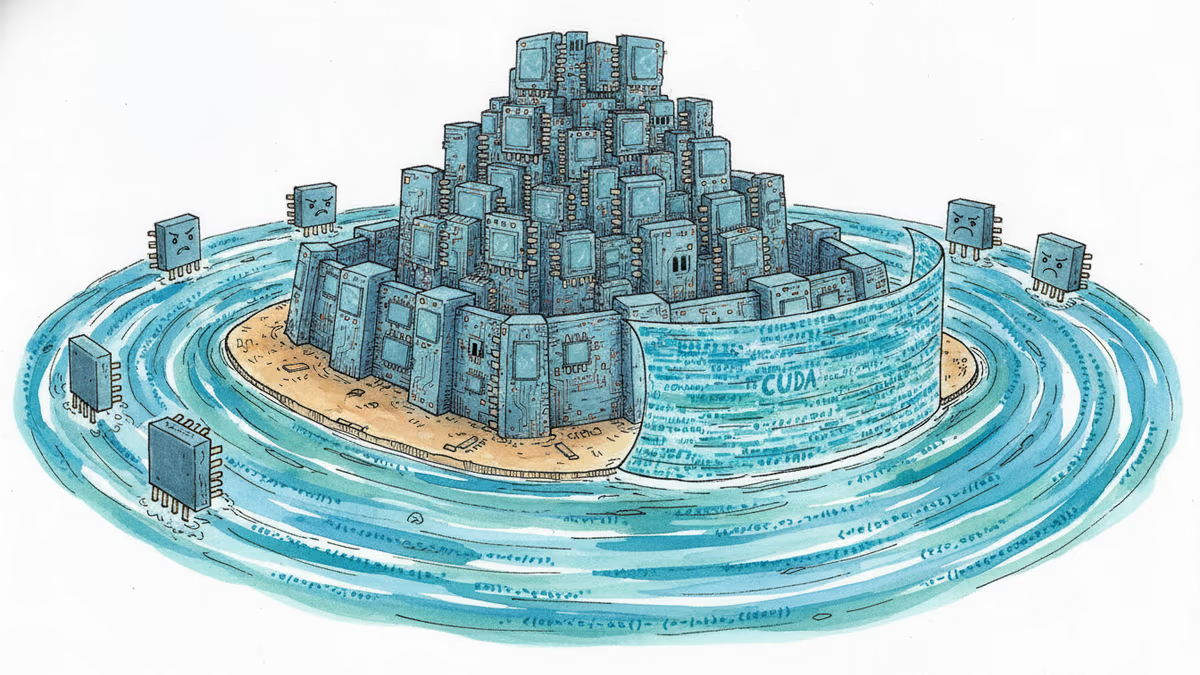
AMD's MI325X matches or beats Nvidia on memory and bandwidth — yet Nvidia's 86-92% share holds. The real moat is CUDA, 20 years in the making. Part 1 of 4.
Samsung Electronics' union branch revealed that 84% of survey respondents oppose the government's roughly $290 billion (₩400 trillion) semiconductor megaproject in Gwangju. Government, management, the union and shareholders are all reading the same national project in sharply different ways.
Nvidia shipped roughly a billion RISC-V cores in 2024, then announced it would run CUDA on the open standard. We break down how royalty-free instruction sets and open software stacks are trying to route around CUDA's lock-in. Part 2 of the Semiconductor Sovereignty series.
US AI-chip export controls split into three layers in the first half of 2026 — January easing, a May crackdown on circumvention, and a pending bill. Nvidia erased China from its guidance and still posted a record $81.6 billion quarter. A look at the export policy that both shields and cages it.
AMD's MI325X matches or beats Nvidia on memory and bandwidth — yet Nvidia's 86-92% share holds. The real moat is CUDA, 20 years in the making. Part 1 of 4.
Thoughts
Share your thoughts on this article
Sign in to join the conversation