
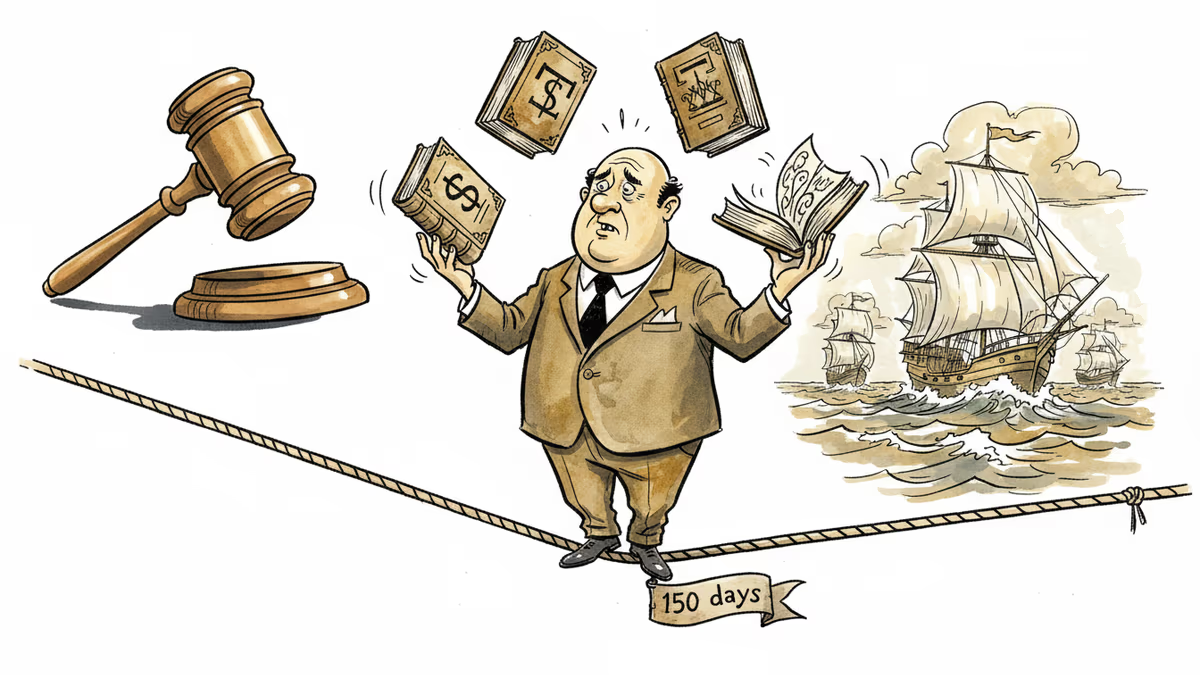
Trump's Tariff Workaround: When One Door Closes, Find Another Law
After Supreme Court blocked his tariffs, Trump finds new legal pathway to impose 10% duties. Analysis of the 150-day gambit and what it means for global trade.
The 150-Day Tariff Clock Starts Ticking
Just days after the Supreme Court struck down most of his trade levies, President Trump found a new weapon in America's legal arsenal. On February 21st, he signed an executive order imposing a 10% tariff on nearly all US imports, this time invoking Section 122 of the 1974 Trade Act—a 50-year-old statute that's never been used this way before.
The exceptions are telling: products from Canada and Mexico, critical minerals, beef, fruits, cars, and pharmaceuticals get a pass. But everything else—from smartphones to sneakers—just got more expensive. The tariffs take effect February 24th, but here's the catch: they only last 150 days unless Congress extends them.
Supreme Court vs. Trump: The Power Play
The Supreme Court ruling was clear: the International Emergency Economic Powers Act (IEEPA) gives presidents broad emergency powers, but taxation isn't one of them. Six justices, including two Trump appointees, voted to overturn his previous tariff regime.
Trump's response was swift and personal. At Friday's press conference, he called the justices "a disgrace to our nation" and labeled his own appointees, Neil Gorsuch and Amy Coney Barrett, "an embarrassment to their families." The constitutional scholar he is not.
But Trump's legal team was ready with Plan B. Section 122 allows presidents to unilaterally impose tariffs up to 15% when there are "large and serious" trade deficits. It's a narrow window—just 150 days—but it buys time.
The Refund Maze: A Two-Year Legal Nightmare
Here's where it gets messy. The Supreme Court didn't specify how companies should get refunds for tariffs they've already paid. When asked about refunds, Trump simply said he expects the issue to be "litigated in court."
Legal experts predict a multi-year slog. Companies will need to file individual complaints, calculate what they believe they're owed, and fight the government's inevitable pushback. Gregory Husisian, who's helped over 100 companies seek tariff refunds, estimates the process could take "anywhere from a few months to more than two years."

For businesses that paid millions in tariffs last year, this isn't just paperwork—it's a cash flow crisis that could stretch well into 2028.
The 150-Day Bridge Strategy
Trump's team isn't planning to stop at 150 days. The administration announced it's launching Section 301 and Section 232 investigations—the legal groundwork for permanent tariffs based on unfair trade practices and national security concerns.
But there's a timing problem. These investigations typically take 6-12 months to complete, longer than Section 122's 150-day limit. The solution? Keep re-issuing Section 122 tariffs every 150 days until the longer-term investigations are ready.
"[Section 122] is for a limited time period, so it's going to be a bridge authority," explains Husisian. It's tariff whack-a-mole, legally speaking.
Global Supply Chains on 150-Day Cycles
For multinational companies, this creates a new kind of uncertainty. Instead of stable, predictable trade rules, they're now operating on 150-day cycles of potential disruption. Every five months, Trump could theoretically reset the tariff clock.
The de minimis exemption—which allowed packages under $800 to enter duty-free—remains suspended despite the Supreme Court ruling. This affects millions of e-commerce shipments and has already created massive processing backlogs at US borders.
Companies are now facing a strategic dilemma: Do they restructure supply chains for 150-day tariff cycles, or do they assume this is temporary political theater?
When Presidents Become Tax Collectors
Trump's press conference revealed something deeper than trade policy—it was about presidential power itself. "The court has given me the unquestioned right to ban all sorts of things from coming into our country, to destroy foreign countries," he said, "but not the right to charge a fee. How crazy is that?"
The Constitution gives Congress, not presidents, the power to tax. But Trump has found creative ways around this limitation, turning emergency powers and trade authorities into de facto taxation tools.
At one point, defending his interpretation of the law, Trump declared: "I read the paragraphs. I read very well. Great comprehension." It was a surreal moment in what's becoming a surreal approach to trade policy.
Authors
Related Articles
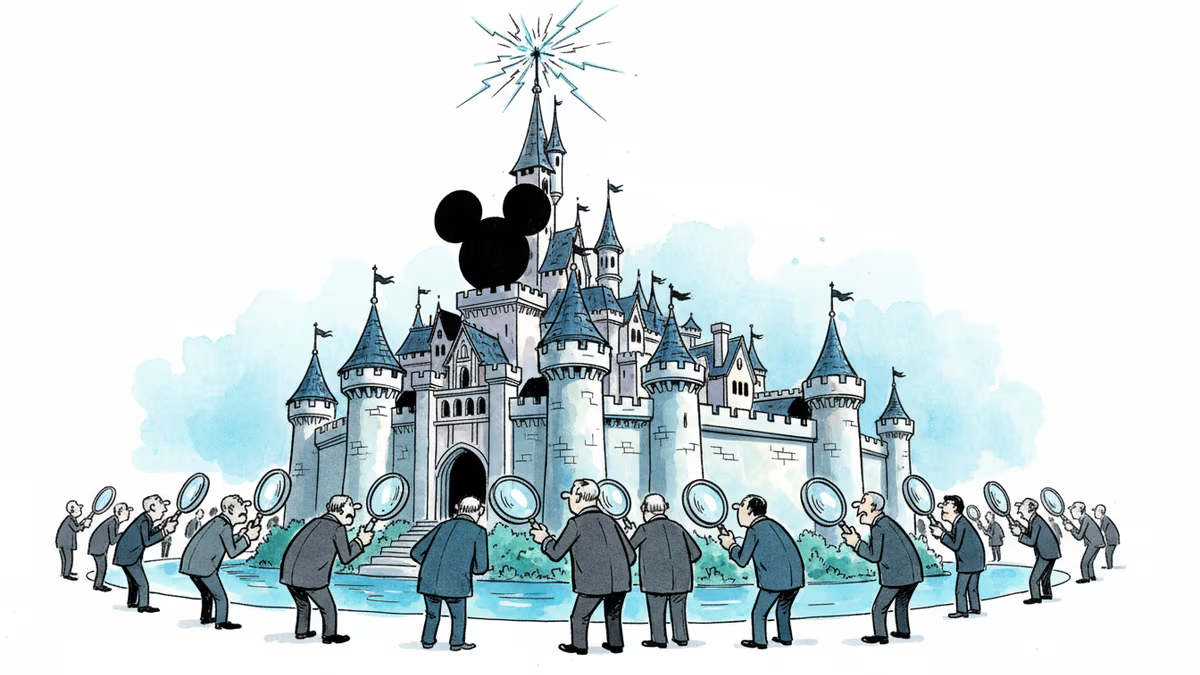
Josh D'Amaro took over Disney with a bold Disney Plus vision. Days later, he's in a First Amendment fight with the Trump administration over The View. What does this mean for media freedom?
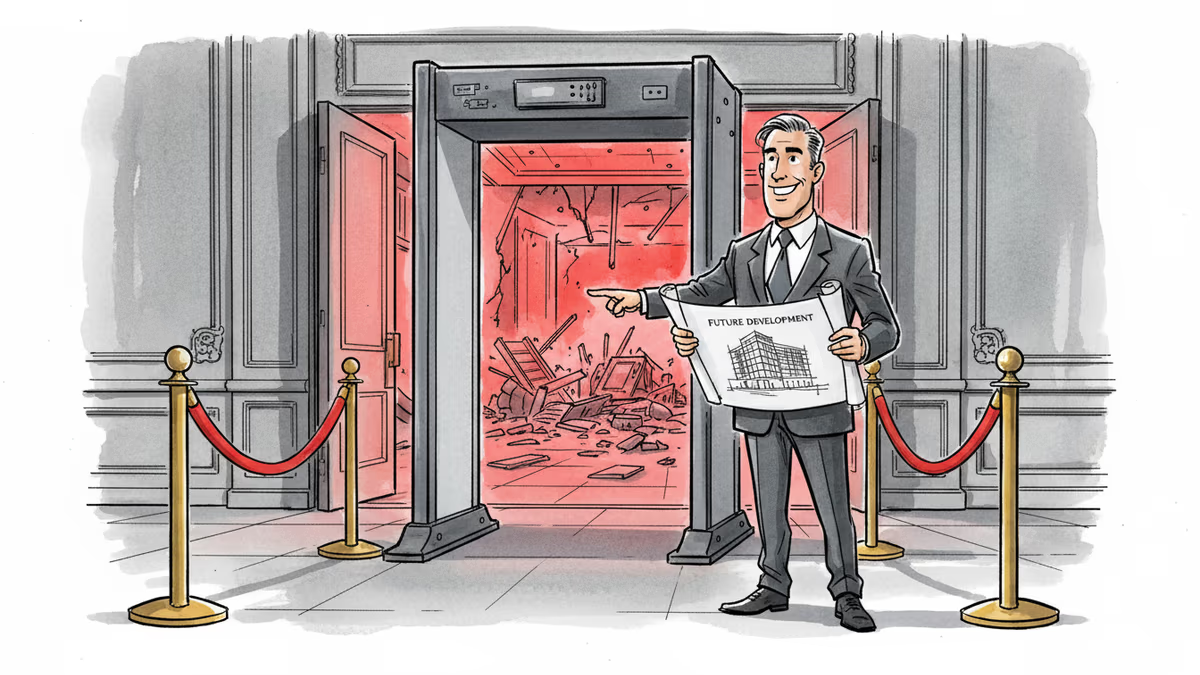
A gunman attacked a Secret Service checkpoint at the White House Correspondents' Dinner. Trump's first public reaction wasn't about security. It was about his $400M ballroom project.
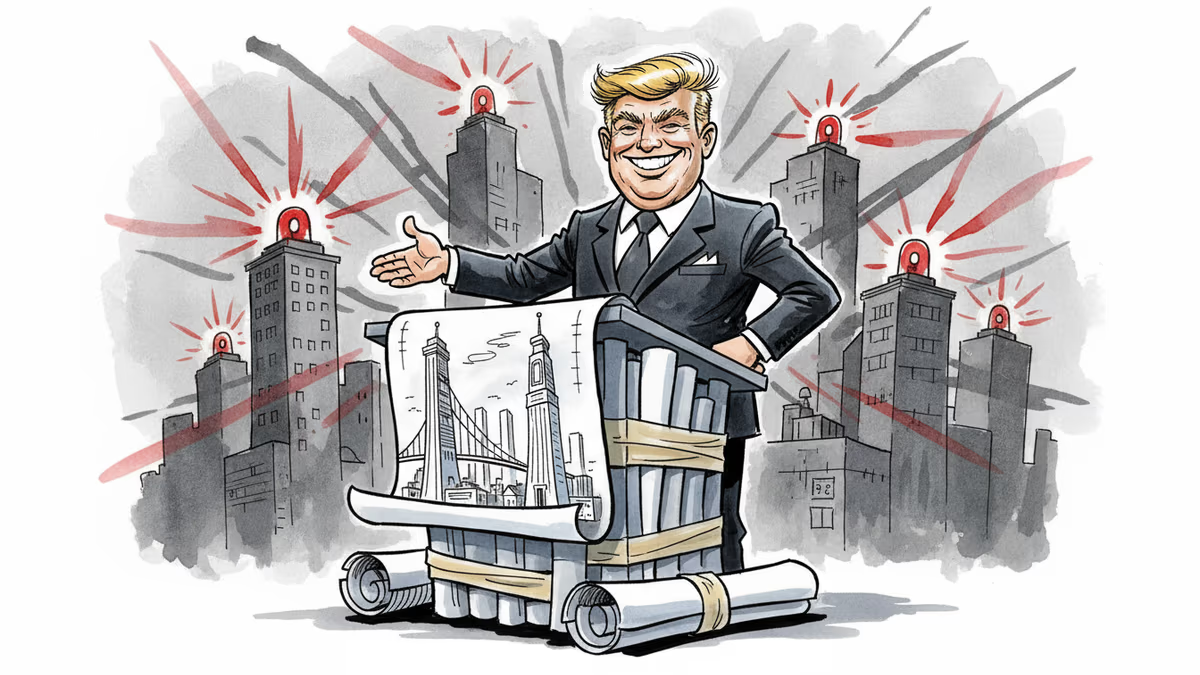
Hours after an armed suspect attempted to breach the White House Correspondents Dinner, Trump used the security scare to publicly defend his White House ballroom project. What does that tell us?
Consumer SSD prices have surged up to 400% since late 2025. WD, Samsung, SanDisk all affected. We unpack the NAND supply crunch, tariff effects, and what comes next.
Josh D'Amaro took over Disney with a bold Disney Plus vision. Days later, he's in a First Amendment fight with the Trump administration over The View. What does this mean for media freedom?
A gunman attacked a Secret Service checkpoint at the White House Correspondents' Dinner. Trump's first public reaction wasn't about security. It was about his $400M ballroom project.
Hours after an armed suspect attempted to breach the White House Correspondents Dinner, Trump used the security scare to publicly defend his White House ballroom project. What does that tell us?
Consumer SSD prices have surged up to 400% since late 2025. WD, Samsung, SanDisk all affected. We unpack the NAND supply crunch, tariff effects, and what comes next.
Thoughts
Share your thoughts on this article
Sign in to join the conversation