
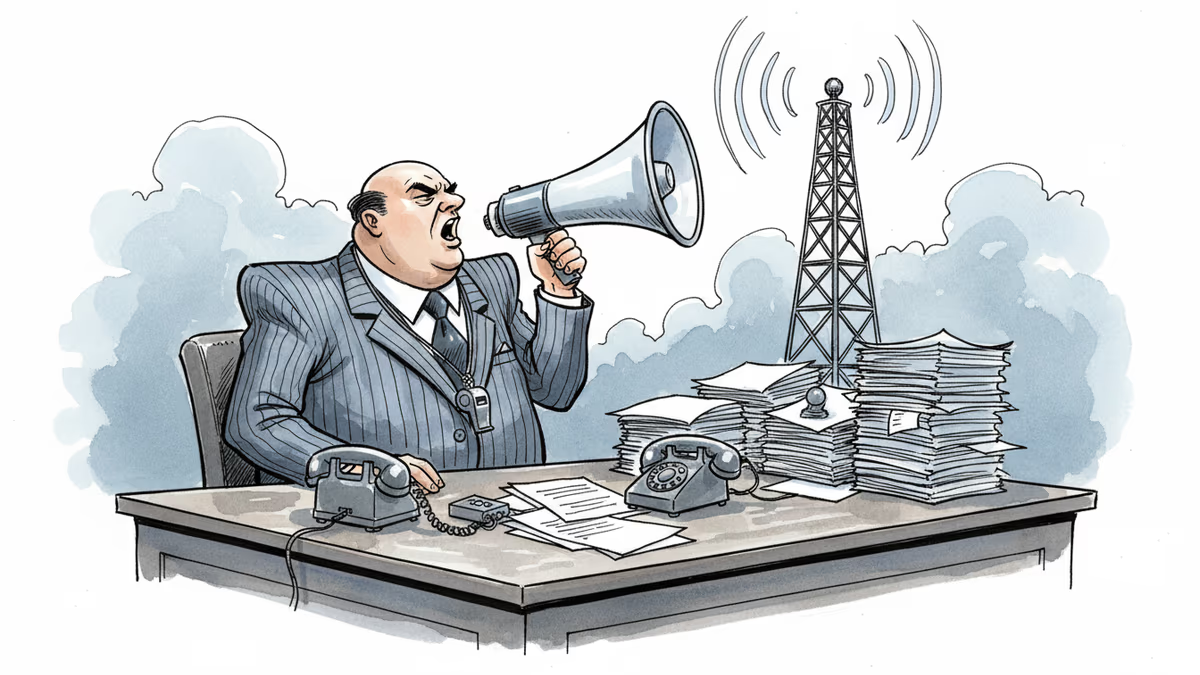
When the Regulator Cheers for the Crackdown
An FCC enforcement chief privately offered to help Chairman Brendan Carr's pressure campaign against ABC—while holding direct authority over the very stations being targeted. What this reveals about regulatory independence.
What do you call it when the referee privately texts the coach to say, "Let me know how I can help"—and that coach is trying to pull a player off the field?
The Email That Shouldn't Exist
On September 17, 2025, Lark Hadley, the FCC's West Coast enforcement director, sent an email to Chairman Brendan Carr and FCC chief of staff Scott Delacourt. Subject line: "personal note of support re Charlie Kirk ABC/Disney issue." The email, obtained by WIRED through a Freedom of Information Act request, quoted Carr's remarks from a conservative podcast—"This is a very, very serious issue right now for Disney. We can do this the easy way or the hard way"—and closed with: "Please, do not let up, and let me know if I can help in any way."
The context matters. Earlier that same day, Carr had threatened Disney with regulatory action over a Jimmy Kimmel Live! monologue that referenced the assassination of conservative commentator Charlie Kirk. The threat landed. Major affiliate networks Nexstar and Sinclair—both with multibillion-dollar mergers pending before the commission—refused to air the program. ABC temporarily pulled the show.
Hadley wasn't just a sympathetic bureaucrat somewhere in the building. His office holds direct enforcement authority over ABC-owned California stations, including KABC-TV in Glendale—the physical origin point of Jimmy Kimmel Live! The man who could actually act against the targeted broadcaster was volunteering to help the campaign targeting it.
Why "Just an Opinion" Doesn't Cover It
Federal ethics rules prohibit government employees from participating in matters where their impartiality could reasonably be questioned. For a career civil servant and regional enforcement chief to express personal support for a politically motivated pressure campaign—against a broadcaster in their own jurisdiction—is, as WIRED notes, "highly irregular."

Will Creeley, legal director at the Foundation for Individual Rights and Expression, put it plainly: "Just like Brendan Carr, they swore an oath to uphold the Constitution—and that includes the First Amendment, which bars the government from coercing private broadcasters into censoring dissent. This is a public servant paid by our taxpayer dollars. Is it too much to ask for him not to sound so excited about the chairman abusing the power of his office?"
The FCC chairman's office did not respond to WIRED's request for comment. ABC also declined.
The Leverage No One Is Supposed to Mention
Broadcast regulation rests on a foundational premise: the government licenses the spectrum, but doesn't control the content. That separation is what makes the FCC's enforcement power legitimate rather than coercive.
What makes this case structurally uncomfortable is the alignment of incentives. Nexstar and Sinclair, which refused to air Kimmel's show, both had significant regulatory business before the commission at the time. Whether their decisions reflected editorial judgment, legal caution, or something closer to institutional self-preservation is not publicly known. But the timing is difficult to ignore.
This isn't the first time Carr has used the FCC's platform to pressure broadcasters over political content—he has been openly critical of media organizations whose coverage he views as biased. What's new here is the paper trail showing internal alignment: a career enforcement official, not a political appointee, signaling personal enthusiasm for the effort.
The Bigger Pattern
The Jimmy Kimmel episode is a small data point in a larger question about what broadcast regulation is becoming. Historically, FCC pressure on content has come through formal processes—complaints, hearings, license renewal challenges. What's being documented here is something more informal: public threats calibrated to produce voluntary compliance, reinforced by private signals from within the regulatory apparatus.
For media executives and policy analysts, the implications extend beyond any single show or network. If the enforcement architecture can be informally mobilized against specific editorial content—without a formal proceeding, without a ruling, without due process—then the chilling effect doesn't require a single act of censorship. The possibility is enough.
Authors
Related Articles
Josh D'Amaro took over Disney with a bold Disney Plus vision. Days later, he's in a First Amendment fight with the Trump administration over The View. What does this mean for media freedom?
The Trump administration has gutted the DOJ's Voting Section, pushing out two dozen experienced lawyers and replacing them with loyalists. With 2026 midterms approaching, what does this mean for American democracy?
A gunman attacked a Secret Service checkpoint at the White House Correspondents' Dinner. Trump's first public reaction wasn't about security. It was about his $400M ballroom project.
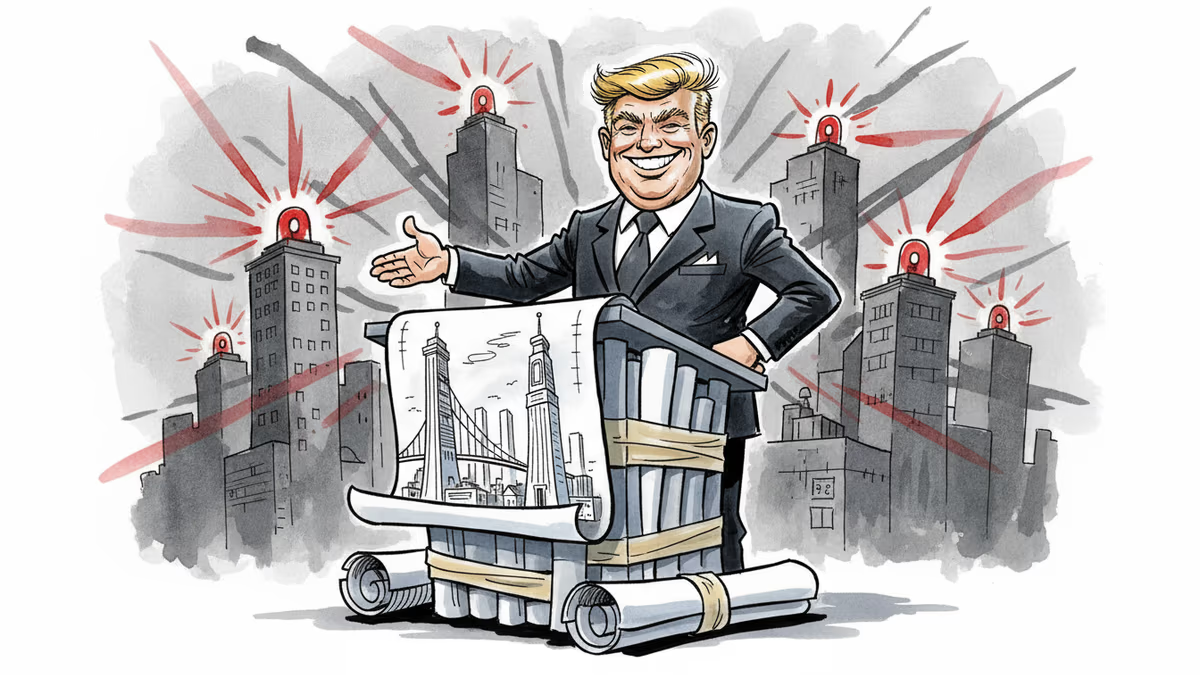
Hours after an armed suspect attempted to breach the White House Correspondents Dinner, Trump used the security scare to publicly defend his White House ballroom project. What does that tell us?
Josh D'Amaro took over Disney with a bold Disney Plus vision. Days later, he's in a First Amendment fight with the Trump administration over The View. What does this mean for media freedom?
The Trump administration has gutted the DOJ's Voting Section, pushing out two dozen experienced lawyers and replacing them with loyalists. With 2026 midterms approaching, what does this mean for American democracy?
A gunman attacked a Secret Service checkpoint at the White House Correspondents' Dinner. Trump's first public reaction wasn't about security. It was about his $400M ballroom project.
Hours after an armed suspect attempted to breach the White House Correspondents Dinner, Trump used the security scare to publicly defend his White House ballroom project. What does that tell us?
Thoughts
Share your thoughts on this article
Sign in to join the conversation