
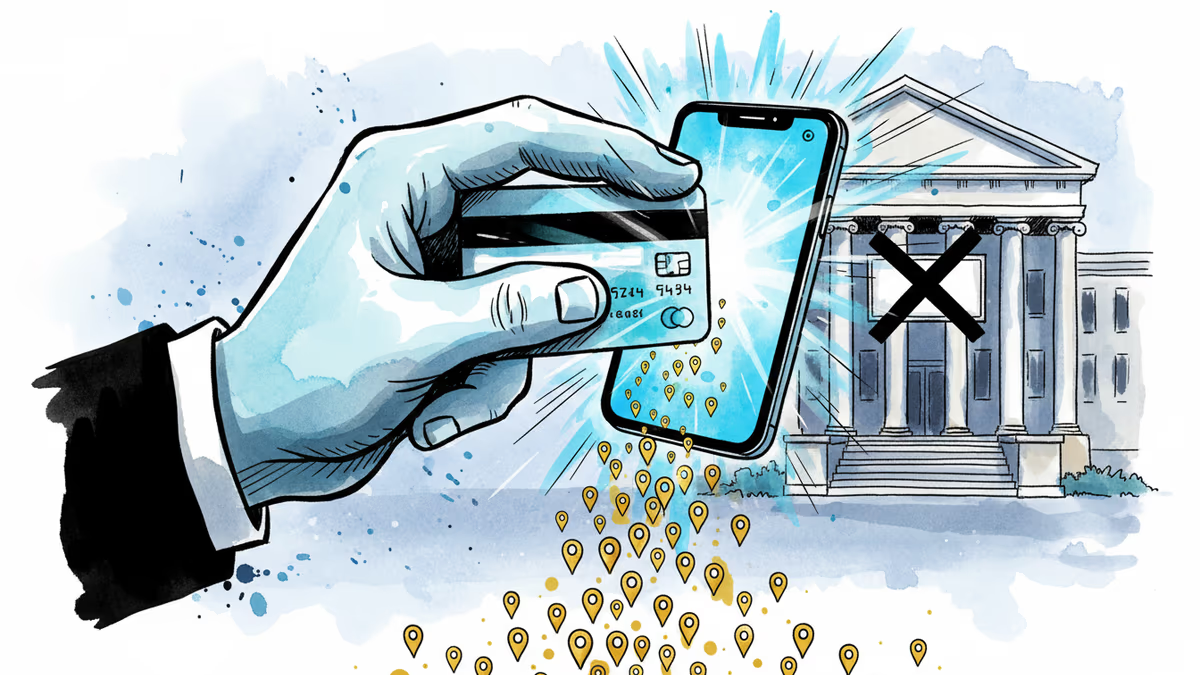
The FBI Doesn't Need a Warrant. It Has a Credit Card.
FBI Director Kash Patel confirmed the agency purchases Americans' location data from commercial brokers without a warrant. The admission raises urgent questions about the future of the Fourth Amendment.
The government doesn't need to knock on your phone carrier's door anymore. It can just shop online.
On March 18, 2026, FBI Director Kash Patel sat before the Senate Intelligence Committee and confirmed what privacy advocates have long suspected: the Bureau buys Americans' location data from commercial brokers — no warrant required.
What He Said, and What He Didn't
Patel's words were carefully chosen. "We do purchase commercially available information that's consistent with the Constitution and the laws under the Electronic Communications Privacy Act, and it has led to some valuable intelligence for us."
When senators pressed him to commit to stopping the practice, he declined. Ending it, he said, would "significantly hamper" the agency's capabilities.
That non-answer is itself an answer. The FBI has no intention of stopping.
The Legal Loophole in Plain Sight
Here's the architecture of the problem. Under the Supreme Court's 2018 ruling in Carpenter v. United States, law enforcement needs a warrant to obtain location data directly from cell carriers. The Court recognized that prolonged location tracking reveals the "privacies of life" — and that the Fourth Amendment protects against it.
But the ruling left a gap. If that same data flows through a third-party app, gets packaged by a data broker like Veraset or Babel Street, and is sold on the open market — it's just commerce. The government can buy it like anyone else.

The result: the warrant requirement exists on paper, but not in practice. The constitutional protection depends entirely on which door the government chooses to walk through.
This Isn't New — But the Admission Is
The FBI isn't the first agency caught doing this. In 2023, the Defense Intelligence Agency acknowledged purchasing Americans' location data without warrants. The IRS and DHS have faced similar scrutiny. What's different now is that a sitting FBI director said it out loud, under oath, on the record — and refused to say it would stop.
The timing matters. The Trump administration's second term has been marked by aggressive assertions of executive power and a reshaping of federal law enforcement. Patel's confirmation hearing was already contentious. His candor here may be less about transparency and more about confidence — confidence that this practice will face no meaningful political resistance.
Three Ways to Read This
From the FBI's perspective, this is a legitimate, court-tested tool. Location data has helped track terrorists, dismantle trafficking networks, and locate missing children. The data exists. The market exists. Using it is, by their reading, legal.
From civil liberties groups like the ACLU and EFF, the logic is precisely backward. The warrant requirement isn't a bureaucratic hurdle — it's a constitutional check on government power. If agencies can simply purchase their way around judicial oversight, the Fourth Amendment becomes a suggestion, not a safeguard. Today it's counterterrorism. The question is what comes next.
From the data broker industry, this is quietly validating. When the federal government is a paying customer, the entire commercial surveillance ecosystem gains a veneer of legitimacy. Every app that harvests your location — the weather app, the coupon app, the flashlight app — is a potential link in this chain.
What the Average Person Actually Agreed To
Somewhere in the terms of service of an app you installed, you agreed to share your location with "trusted partners." You probably didn't read it. Almost no one does. That click — that frictionless, mandatory tap — is the legal foundation on which this entire system rests.
The FTC has taken action against some data brokers in recent years, and Congress has debated the American Data Privacy and Protection Act for years without passing it. The gap between the pace of surveillance technology and the pace of legislation has never been wider.
Authors
Related Articles
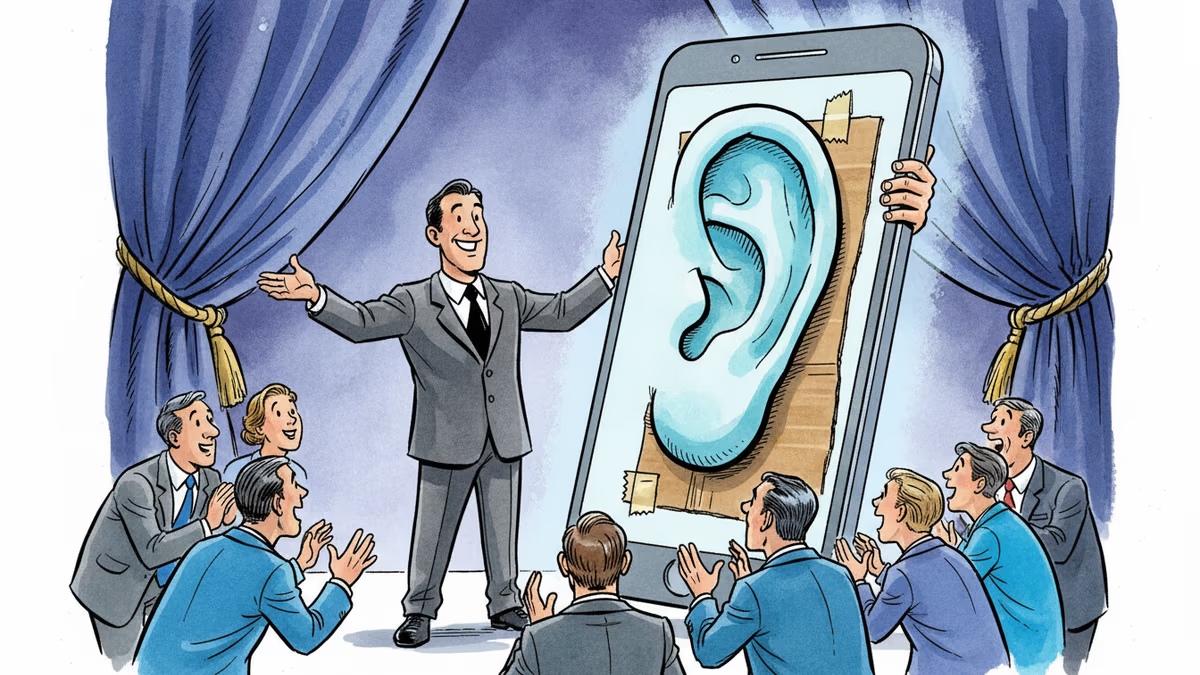
The FTC fined Cox Media and two ad firms $930,000 — not for actually eavesdropping on users, but for falsely claiming they could. The case raises uncomfortable questions about surveillance capitalism.
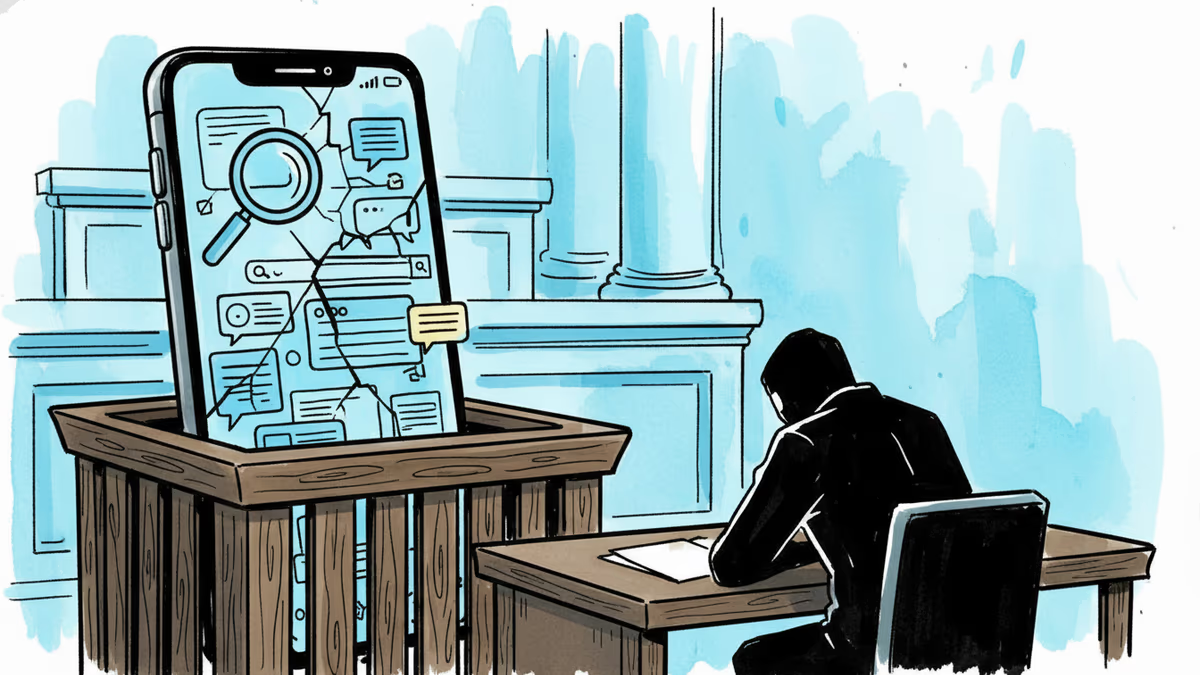
A Utah woman was sentenced to life in prison partly because of her Google searches and deleted texts. The Kouri Richins case reveals how digital footprints have become the courtroom's most reliable witness.
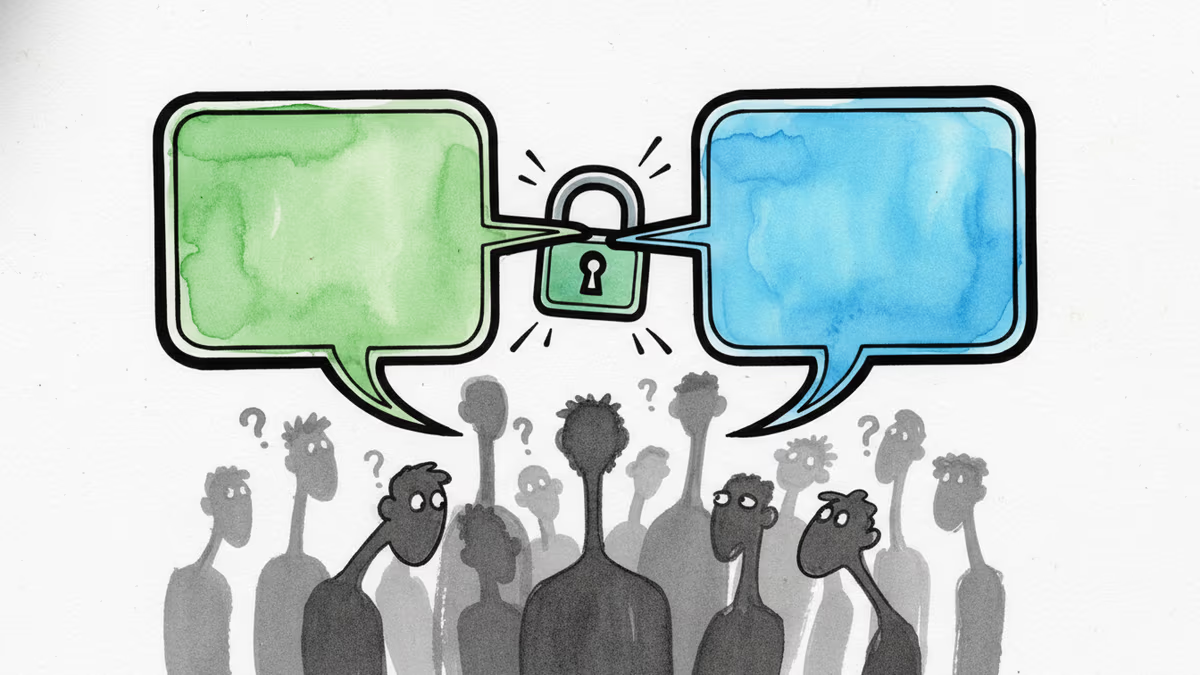
After 15 years of fragmented mobile messaging, Apple and Google are rolling out end-to-end encrypted RCS messaging between iPhones and Android devices. Here's what changed, why it took so long, and what it means for your privacy.
New Mexico already won $375 million from Meta. Now it wants something harder to give: a court order forcing Facebook, Instagram, and WhatsApp to redesign themselves. A three-week trial starts Monday.
The FTC fined Cox Media and two ad firms $930,000 — not for actually eavesdropping on users, but for falsely claiming they could. The case raises uncomfortable questions about surveillance capitalism.
A Utah woman was sentenced to life in prison partly because of her Google searches and deleted texts. The Kouri Richins case reveals how digital footprints have become the courtroom's most reliable witness.
After 15 years of fragmented mobile messaging, Apple and Google are rolling out end-to-end encrypted RCS messaging between iPhones and Android devices. Here's what changed, why it took so long, and what it means for your privacy.
New Mexico already won $375 million from Meta. Now it wants something harder to give: a court order forcing Facebook, Instagram, and WhatsApp to redesign themselves. A three-week trial starts Monday.
Thoughts
Share your thoughts on this article
Sign in to join the conversation