
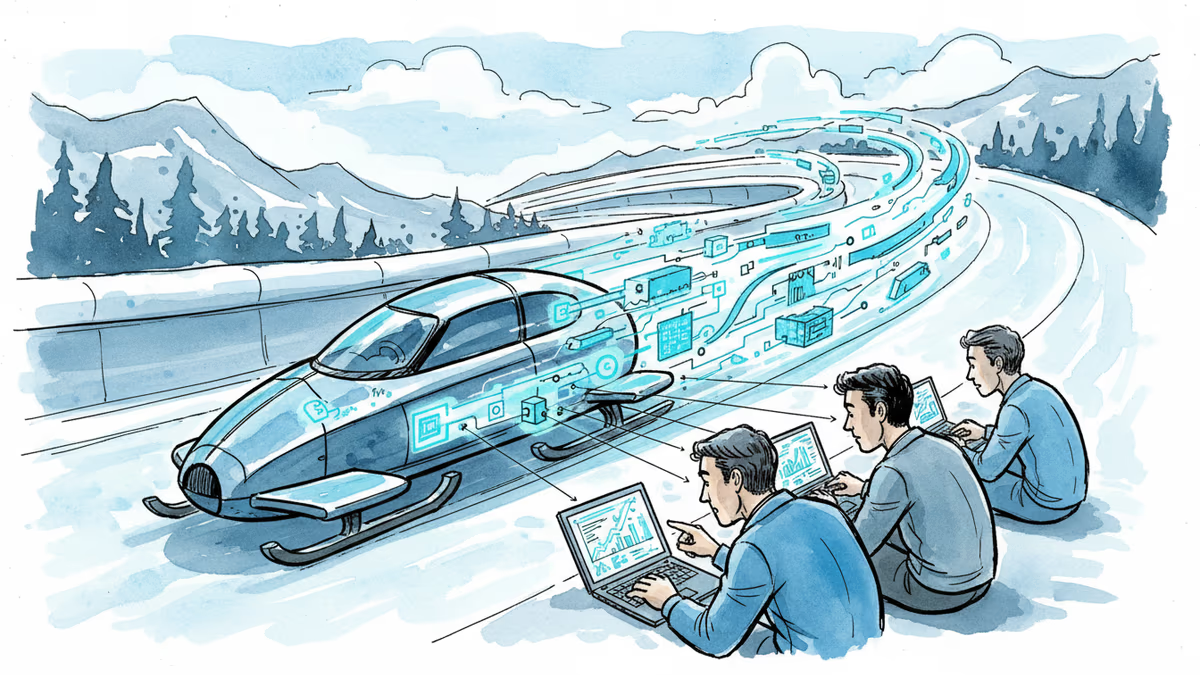
The Formula 1 of Ice Gets an AI Upgrade
At the 2026 Milano Cortina Olympics, bobsledding teams are using 3D-printed spikes, energy-return insoles, and AI analysis to shave hundredths of seconds off race times.
Hurtling down ice at 145 kilometers per hour, bobsledders endure gravitational forces exceeding 5G. At the 2026 Milano Cortina Winter Games, the difference between gold and fourth place might come down to a 3D-printed spike or an AI algorithm analyzing the perfect push sequence.
This isn't just athletic evolution—it's a tech arms race on ice.
Germany's Secret Weapon: Custom Footwear
The first 30 to 50 meters of a bobsled run often determine the winner. That's where BMW's partnership with German bobsledders pays off. The automaker has developed custom spike plates that integrate into any shoe, using 3D printing to adapt stiffness and shape for individual athletes.
The spikes undergo plasma nitriding—nitrogen ionized in high-temperature vacuum and diffused into steel—to prevent wear and breakage. It's the kind of precision engineering that helped Germany win 16 of their 27 medals in sliding sports at the 2022 Beijing Olympics.
"We realized innovations in footwear could improve performance during that crucial acceleration phase," explains a BMW representative. Each spike pattern is as unique as a fingerprint, tailored to how individual athletes distribute force during the push.
America's Energy Return Strategy
While Germany focused on traction, Team USA went after energy efficiency. VKTRY Gear's dynamic insoles don't just absorb shock—they give energy back. Shaped to touch only the heel and toe, these insoles create a spring-like effect that optimizes each push.
"Traditional insoles are passive devices," says company founder Matt Arciuolo. "Ours provide stiffness and useful energy return."

Kaillie Humphries, the Canadian-born bobber now competing for the US and 2022 monobob gold medalist, credits the insoles with optimizing her push performance. It's biomechanics meets materials science.
AI Coaches the Coaches
The tech revolution extends beyond hardware. The US Bobsleigh and Skeleton Federation partnered with Snowflake to use AI tools for performance analysis. The system identifies optimal push pairings for two- and four-person crews and analyzes inefficiencies during the "jump phase"—when team members board the sled.
The goal? Shave hundredths of seconds off race times through data-driven insights.
Germany's approach is even more sophisticated. Their "Data Coach" system, developed by former world luge champion Julian von Schleinitz (now head of BMW Group's tech and AI division), analyzes real-time sensor data from sleds. It maps optimal trajectories for approaching curves and even tests new components virtually before physical trials.
Safety Through Innovation
Speed brings danger. Moving at nearly 90 mph strains spines and necks, while runway exits, collisions, and rollovers pose serious risks. China's response: sleds built from T800 carbon fiber, the same composite used in aerospace. The result is 20 percent weight reduction with improved impact resistance.
Germany and Allianz went further with their Safety Sled prototype. The design includes a Head Impact Protector that integrates into existing sleds without hindering mobility, plus raised push bars that create additional space and protection.
"We're applying safety principles in three areas," says Carsten Reinkemeyer, head of safety research at the Allianz Center for Technology. "Keeping athletes inside the sled during accidents, improving braking ability, and enhancing protective gear."
The Human Element in a Digital Sport
Yet for all the technology, bobsledding remains intensely human. Weight limits exist partly to prevent teams from recruiting athletic specialists who aren't true bobsledders—a reminder that regulations struggle to keep pace with innovation.
The sport's governing bodies face a delicate balance: embrace technology that improves performance and safety while preserving competitive equity. When BMW engineers can design custom spike patterns and Snowflake algorithms optimize team formations, does victory belong to the athlete or the tech partner?
Authors
Related Articles

Samsung and SK unveiled a chip and AI investment package worth thousands of trillions of won on June 29. The headline number swings wildly by outlet, but the real contest isn't capital — it's water and power.

Viral videos show 2026 graduates jeering executives who praise AI at commencement ceremonies. It's not just rudeness — it's a signal about who pays for technological optimism.

Filipino virtual assistants using AI to ghost-manage LinkedIn profiles for executives is now a structured industry. 30 comments a day, fake engagement rings, and a platform struggling to tell real from fabricated.

Two commencement speakers learned the hard way that AI enthusiasm doesn't land well with today's graduates. The backlash reveals a widening gap between tech optimism and Gen Z's economic reality.
Samsung and SK unveiled a chip and AI investment package worth thousands of trillions of won on June 29. The headline number swings wildly by outlet, but the real contest isn't capital — it's water and power.
Viral videos show 2026 graduates jeering executives who praise AI at commencement ceremonies. It's not just rudeness — it's a signal about who pays for technological optimism.
Filipino virtual assistants using AI to ghost-manage LinkedIn profiles for executives is now a structured industry. 30 comments a day, fake engagement rings, and a platform struggling to tell real from fabricated.
Two commencement speakers learned the hard way that AI enthusiasm doesn't land well with today's graduates. The backlash reveals a widening gap between tech optimism and Gen Z's economic reality.
Thoughts
Share your thoughts on this article
Sign in to join the conversation