
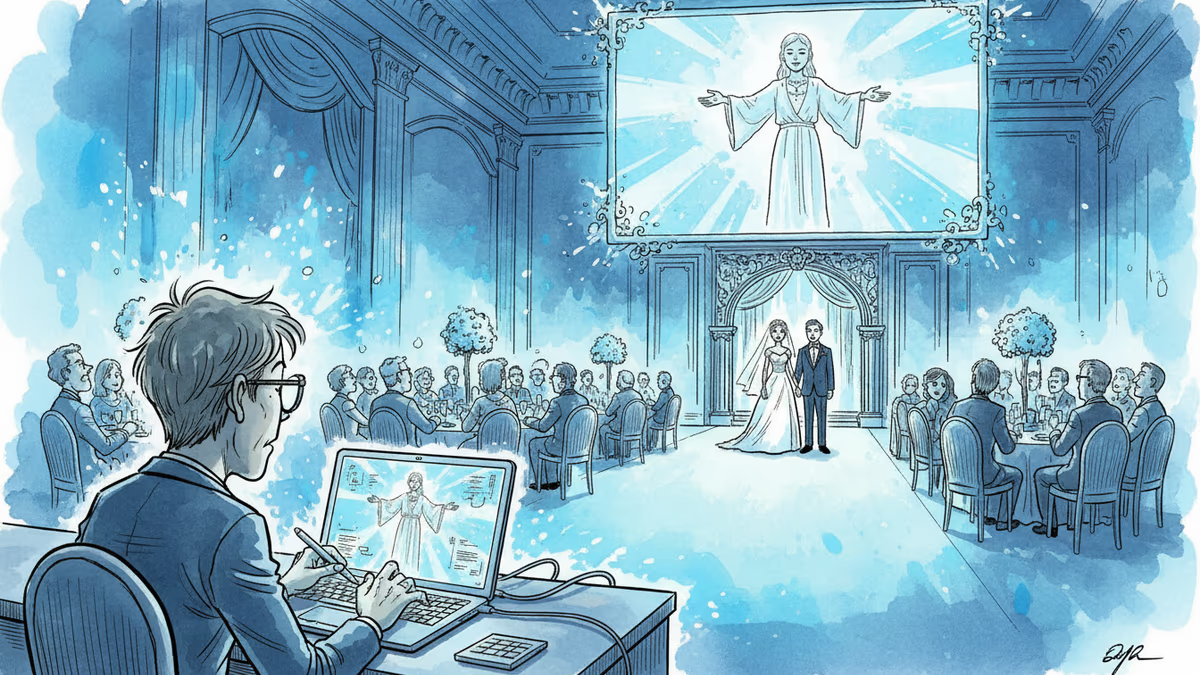
For $600, You Can Bring Your Dead Father to Your Wedding
In India, AI creators are building a booming business resurrecting deceased family members for weddings and celebrations. But grief tech raises profound questions about healing and reality.
$600 bought Jaideep Sharma something no amount of money should be able to purchase: his dead father's presence at his wedding. When the lights dimmed at his reception in Ajmer, India, guests expected a cheesy montage. Instead, they watched Sharma's father—dead for over a year—smile and bless the newlyweds from beyond the grave.
The one-minute video took a week to create and left everyone "emotionally bombarded," said the 33-year-old garment trader. An Instagram creator had used AI to resurrect his father from old photographs, filling a void that traditional grief counseling never could.
Heaven's New Technology
In southern India, Akhil Vinayak received an even more surreal request. A woman wanted her dead mother-in-law to bless a baby the grandmother had never met. Vinayak's solution? A deepfake video showing the deceased woman stepping down from heaven, meeting her son, then cradling the grandchild she'd never held.
The family's stunned reaction video has over 1 million likes on Instagram. For Vinayak, a 29-year-old film enthusiast, it's become a full-time business. Using Stable Diffusion and Adobe Premiere Pro, he charges around $200 per minute-long resurrection through his company "Kanavu Kadha" (Stories from Dreams).
The Lockdown Entrepreneurs
Divyendra Singh Jadoun learned his craft during COVID-19 lockdowns, teaching himself Photoshop and generative AI from YouTube tutorials. What started as "what if" parody videos evolved into something deeper: grief tech—AI avatars of dead people that can speak, text, and video chat in real time.
"Being able to talk to someone who is no longer alive, even in a limited way, is deeply meaningful," said Jadoun, who now runs The Indian Deepfaker. But he warns clients not to get "too attached, as they are not real."
When Culture Meets Code

India is among the world's largest markets for generative AI, but it's also grappling with deepfake abuse. New regulations taking effect February 20 require all AI-generated content to be clearly labeled—a response to rampant scams and political manipulation.
Yet in small towns, deepfakes serve a different purpose. "In cultures like ours, where social rituals demand physical, or at least symbolic presence, especially during weddings and funerals, AI-generated stand-ins are a response to real emotional pressures," explained Delhi-based behavioral scientist Bhaskar Malu.
The Silicon Valley Contrast
While Silicon Valley debates AI safety and OpenAI faces regulatory scrutiny, Indian entrepreneurs are quietly solving intimate human problems. For them, this isn't about disrupting industries—it's about preserving traditions when geography, death, or circumstances make physical presence impossible.
The technology fills cultural gaps that Western grief counseling models don't address. Where American psychology emphasizes "letting go" and "moving on," many Indian families see continued connection with ancestors as essential to family identity.
The Uncanny Valley of Grief
But experts worry about long-term psychological effects. Malu warns that deepfakes create "an artificial reality" where the dead exist in a liminal state—"alive and dead at the same time in your mind."
The creators themselves recognize the ethical complexity. Vinayak spends time learning about each deceased person's mannerisms and personality, creating what he calls their "closest online version." It's intimate work that requires both technical skill and emotional intelligence.
Beyond the Hype Cycle
While tech headlines focus on ChatGPT and Google's Gemini, these small-town Indian entrepreneurs are building something more profound: AI that doesn't replace human connection but extends it across the ultimate boundary.
For the woman who commissioned her father's resurrection, Jadoun's deepfake was the "best thing" anyone had ever given her. That's not a metric venture capitalists track, but it might be the most important one.
Authors
Related Articles

Samsung and SK unveiled a chip and AI investment package worth thousands of trillions of won on June 29. The headline number swings wildly by outlet, but the real contest isn't capital — it's water and power.
SolarSquare is raising $55-60M at a $450-500M valuation, more than doubling its worth in 18 months. Here's what's driving investor conviction in India's residential solar market.
Viral videos show 2026 graduates jeering executives who praise AI at commencement ceremonies. It's not just rudeness — it's a signal about who pays for technological optimism.
Filipino virtual assistants using AI to ghost-manage LinkedIn profiles for executives is now a structured industry. 30 comments a day, fake engagement rings, and a platform struggling to tell real from fabricated.
Samsung and SK unveiled a chip and AI investment package worth thousands of trillions of won on June 29. The headline number swings wildly by outlet, but the real contest isn't capital — it's water and power.
SolarSquare is raising $55-60M at a $450-500M valuation, more than doubling its worth in 18 months. Here's what's driving investor conviction in India's residential solar market.
Viral videos show 2026 graduates jeering executives who praise AI at commencement ceremonies. It's not just rudeness — it's a signal about who pays for technological optimism.
Filipino virtual assistants using AI to ghost-manage LinkedIn profiles for executives is now a structured industry. 30 comments a day, fake engagement rings, and a platform struggling to tell real from fabricated.
Thoughts
Share your thoughts on this article
Sign in to join the conversation