
Facebook's AI Makeover Won't Fix Its Gen Z Problem
Facebook launches AI-powered animated profiles and photo editing tools to attract younger users. But can flashy features solve the platform's deeper generational divide among its 2.1 billion daily users?
2.1 Billion Users Can't Buy You Cool
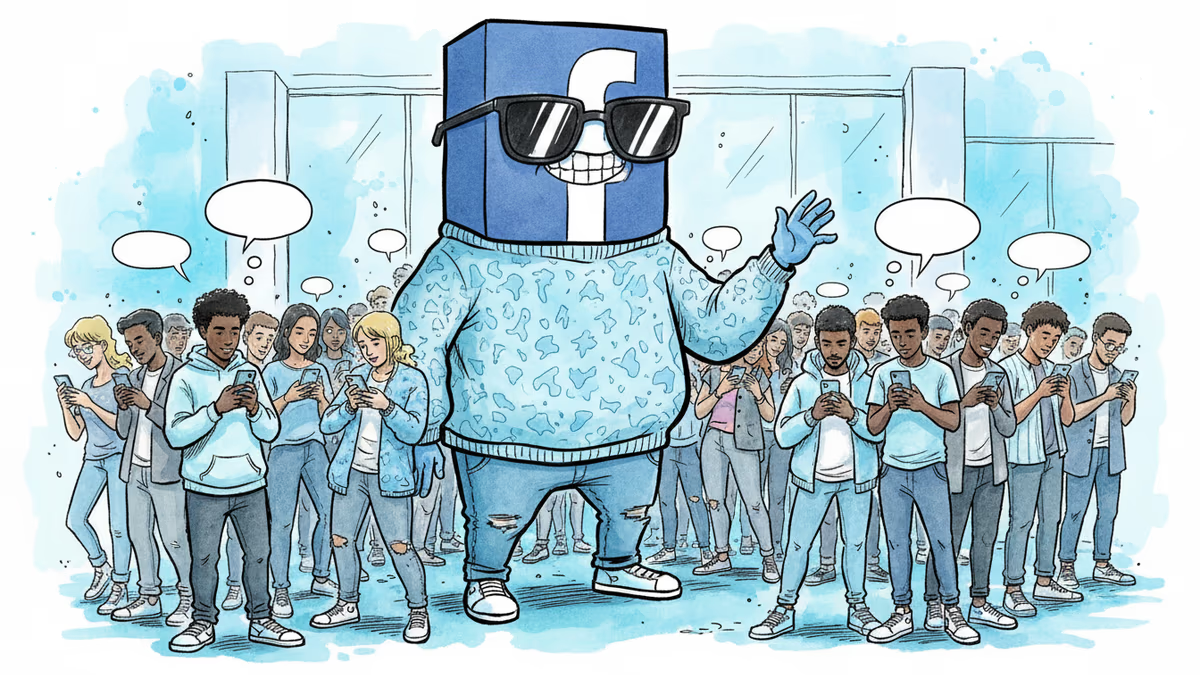
When Facebook announced its new AI features Tuesday—animated profile pictures, photo-restyling tools, and animated text backgrounds—the subtext was impossible to ignore. Even with 2.1 billion daily users, the world's largest social network is desperately trying to prove it's not just where your parents hang out.
The features themselves are polished enough. Upload a photo, and Facebook's AI will make you wave or form a heart shape with your hands. The "Restyle" tool can transform your vacation pics into anime-style art or ethereal dreamscapes. Text posts can now float over animated backgrounds of falling leaves or rolling waves.
But here's the thing about trying to be cool: the harder you try, the less cool you become.
The Platform Paradox
Meta finds itself in an impossible position. Facebook's massive user base is both its greatest asset and its biggest liability. Those 2.1 billion daily users represent incredible reach and advertising revenue. They also represent the reason why Gen Z sees Facebook as "that place where my aunt shares political memes."

The company has tried everything: a friends-only feed, Reddit-style usernames in groups, even bringing back the "poke" feature with a dedicated button. Each update feels like a middle-aged person asking, "How do you do, fellow kids?"
The irony is that Facebook's own subsidiary, Instagram, successfully captured younger audiences by doing the opposite—staying focused on visual storytelling rather than chasing every trend.
The Authenticity Problem
Younger users didn't abandon Facebook because it lacked animated backgrounds or AI-powered photo filters. They left because the platform became associated with family surveillance, political arguments, and performative adulting. No amount of AI wizardry can solve a brand perception problem.
TikTok didn't win over Gen Z with superior technology—it won by understanding that young people want spaces that feel genuinely theirs. Facebook's challenge isn't technical; it's cultural.
Investors should pay attention here. Meta's stock has soared on AI promises, but if the flagship platform continues hemorrhaging young users, even the most sophisticated algorithms won't matter. The company is essentially betting that flashy features can overcome fundamental shifts in social behavior.
Authors
Related Articles

Samsung and SK unveiled a chip and AI investment package worth thousands of trillions of won on June 29. The headline number swings wildly by outlet, but the real contest isn't capital — it's water and power.
Viral videos show 2026 graduates jeering executives who praise AI at commencement ceremonies. It's not just rudeness — it's a signal about who pays for technological optimism.
A law firm marketing itself on AI-powered legal success submitted fake citations in a federal appeal. Now its lawyers face sanctions — and the broader AI legal industry faces a credibility crisis.
Filipino virtual assistants using AI to ghost-manage LinkedIn profiles for executives is now a structured industry. 30 comments a day, fake engagement rings, and a platform struggling to tell real from fabricated.
Samsung and SK unveiled a chip and AI investment package worth thousands of trillions of won on June 29. The headline number swings wildly by outlet, but the real contest isn't capital — it's water and power.
Viral videos show 2026 graduates jeering executives who praise AI at commencement ceremonies. It's not just rudeness — it's a signal about who pays for technological optimism.
A law firm marketing itself on AI-powered legal success submitted fake citations in a federal appeal. Now its lawyers face sanctions — and the broader AI legal industry faces a credibility crisis.
Filipino virtual assistants using AI to ghost-manage LinkedIn profiles for executives is now a structured industry. 30 comments a day, fake engagement rings, and a platform struggling to tell real from fabricated.
Thoughts
Share your thoughts on this article
Sign in to join the conversation