
The 'De-Extinction' Company That Doesn't Quite Bring Animals Back
Colossal Biosciences raised hundreds of millions to resurrect woolly mammoths and dire wolves. What they're actually doing is more complicated—and more interesting.
What if the most-hyped biology startup of the decade isn't actually doing what it says on the tin?
What Colossal Is—and Isn't—Doing
Colossal Biosciences, headquartered in Dallas, Texas, has raised hundreds of millions of dollars from venture capitalists, a CIA-affiliated investment vehicle, and notable backers including Peter Thiel. Its flagship projects promise to "bring back" the woolly mammoth, the Tasmanian tiger, and the dire wolf—animals that have been gone for thousands to tens of thousands of years.
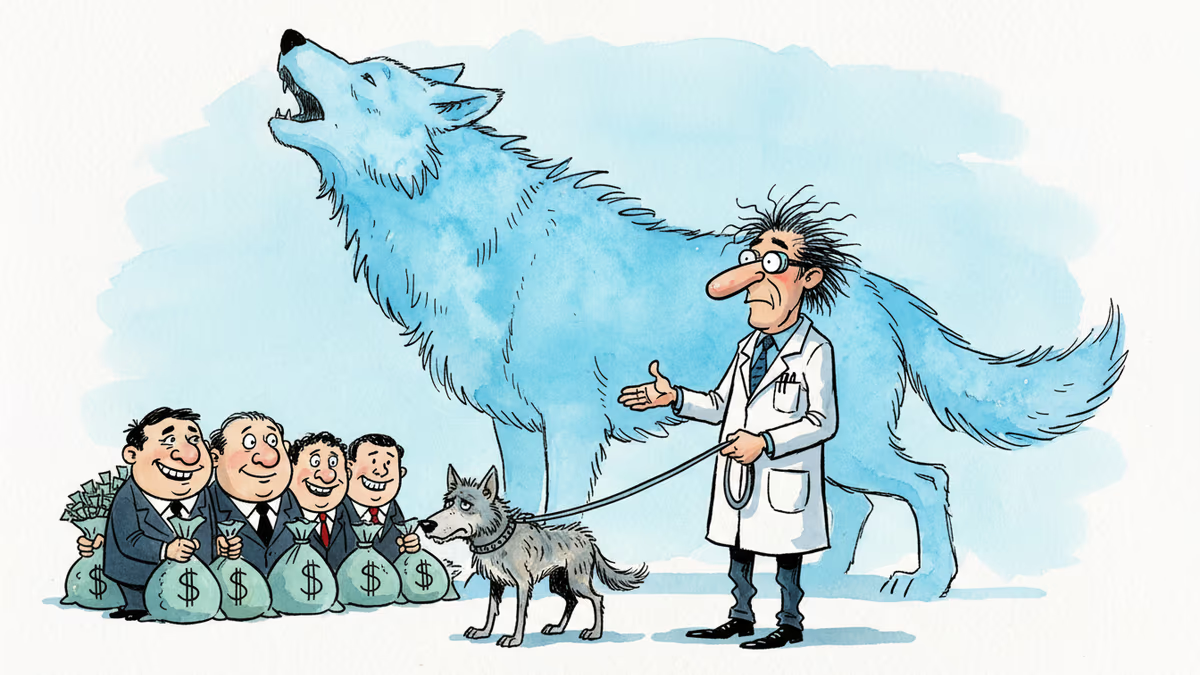
In April 2025, Colossal unveiled what it called dire wolf pups. The announcement generated enormous media coverage. But here's the critical detail buried beneath the headlines: these animals are not cloned dire wolves reconstructed from ancient DNA. They are gray wolves whose genomes were edited to express a handful of genetic traits associated with dire wolves—coat color, body proportions, certain physical features. The result is a living gray wolf that resembles a dire wolf in some respects. It is not, by any rigorous biological definition, a dire wolf.
The same logic applies to the mammoth project. Colossal is editing Asian elephant embryos to carry genes associated with cold-weather adaptation found in mammoth specimens—thick fur, subcutaneous fat distribution, cold-tolerant hemoglobin. The goal is a functional cold-adapted elephant, not a mammoth.
The Science Is Real. The Branding Is Contested.
This distinction matters, and scientists are not shy about saying so. The term "de-extinction" implies a reversal of extinction—a species gone, now returned. What Colossal is practicing is closer to what researchers call proxy species creation: engineering a living relative to perform some of the ecological functions of a lost animal. It is a legitimate and potentially valuable scientific endeavor. It is not resurrection.

The gap between the two is not just semantic. Ancient DNA degrades over millennia. A complete, functional genome for a dire wolf or woolly mammoth does not exist and cannot be reconstructed with current technology. Colossal's approach sidesteps this limitation by working with living genomes and inserting targeted edits—a pragmatic choice, but one that fundamentally changes what the end product is.
Conservation biologists have raised a sharper critique: the hundreds of millions flowing into Colossal's coffers could fund decades of habitat preservation and protection for species that are currently sliding toward extinction. The northern white rhinoceros. The vaquita porpoise. Animals whose loss is preventable right now. Colossal counters that its gene-editing platform has direct applications for endangered species conservation—it has announced research on the northern white rhino—and that the two goals need not compete.
Three Ways to Read This Company
How you evaluate Colossal depends almost entirely on which lens you use.
For biotech investors, the underlying platform technology is the real asset. CRISPR-based precision editing of large mammal genomes is extraordinarily difficult, and Colossal is building genuine technical capability. Whether or not a "mammoth" ever walks the Siberian tundra, the tools developed along the way have applications in agriculture, human medicine, and species conservation. The de-extinction narrative is, in this reading, an exceptionally effective fundraising vehicle for building a serious genomics company.
For conservation scientists and ethicists, the concern is more structural. When a company defines success as producing an animal that looks like an extinct species, the scientific goalposts have moved in ways the public may not fully grasp. There are also unresolved questions about ecological risk: reintroducing a mammoth-like megafauna into Arctic ecosystems—even if ecologically motivated—would be an experiment with no precedent and no clear regulatory framework governing it.
For the general public, the honest answer is that this technology is neither the miracle nor the fraud that competing headlines suggest. It is early-stage science wrapped in ambitious branding, backed by capital that is betting on platform value as much as on any specific animal.
This content is AI-generated based on source articles. While we strive for accuracy, errors may occur. We recommend verifying with the original source.
Related Articles

CAR T cell therapy, proven in blood cancers, is now in hundreds of clinical trials for MS, lupus, and other autoimmune conditions. What the science shows—and what it doesn't yet.
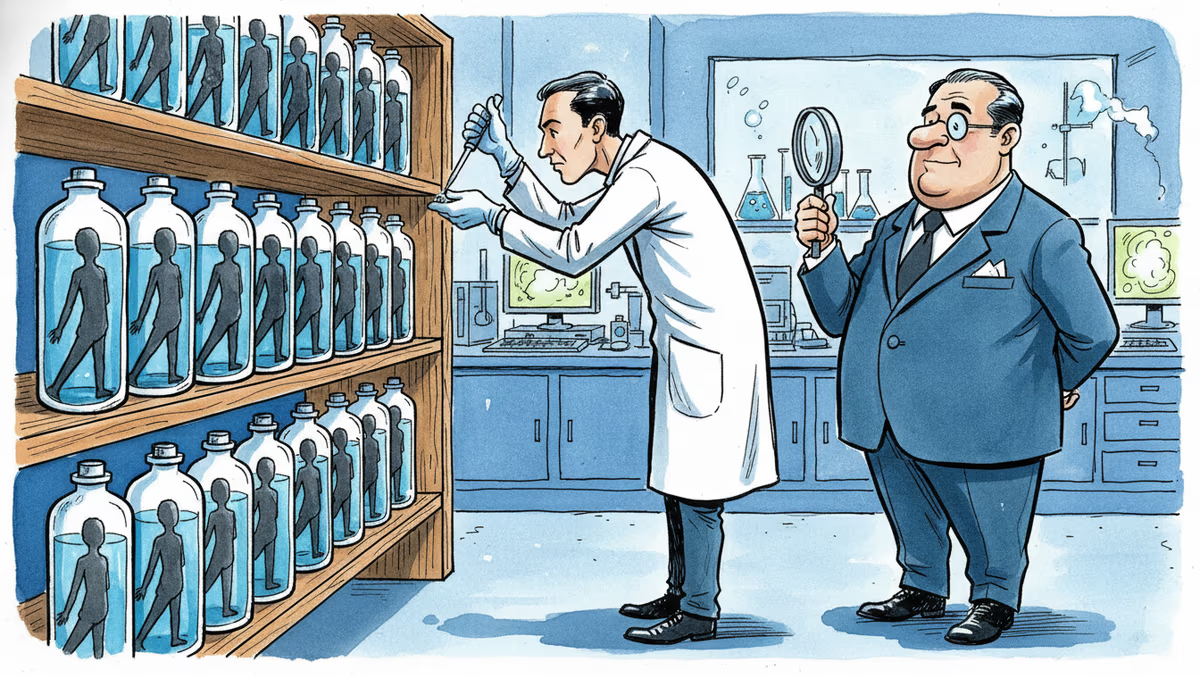
R3 Bio wants to grow human bodies without brains as biological backups. The science is speculative. The ethics are explosive. And the legal framework doesn't exist yet.
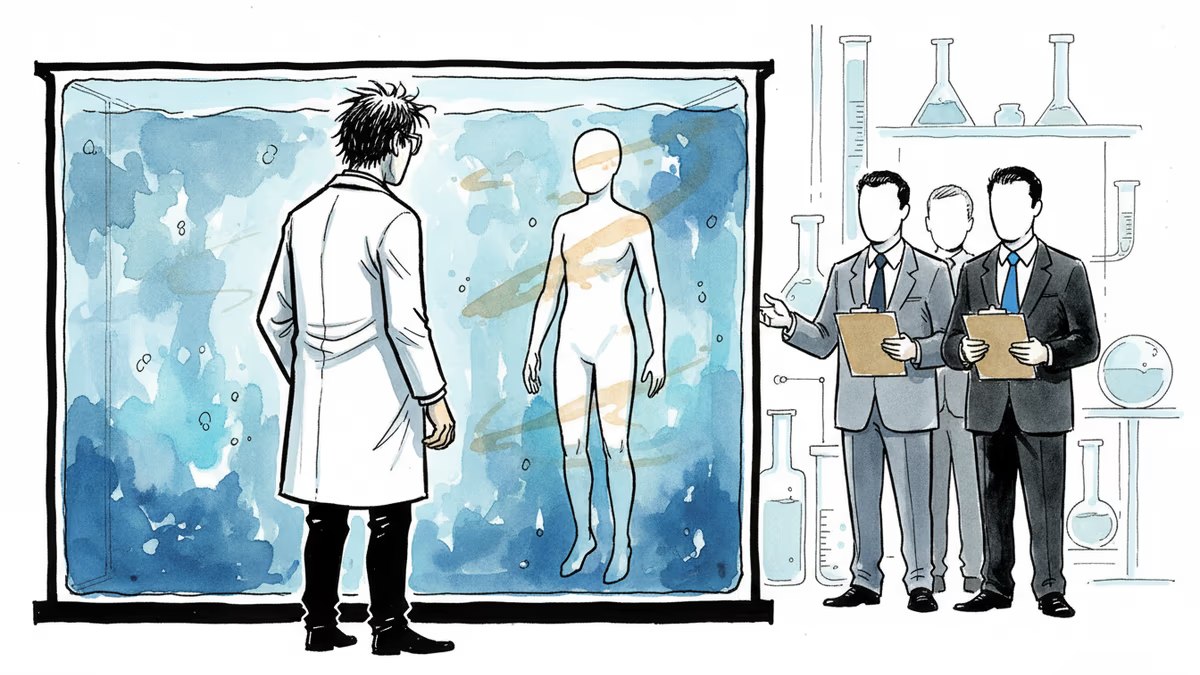
California startup R3 Bio quietly pitched investors on 'brainless human clones' as backup bodies—beyond its public story of nonsentient organ sacks for drug testing. A deep dive into biotech's most ethically charged frontier.
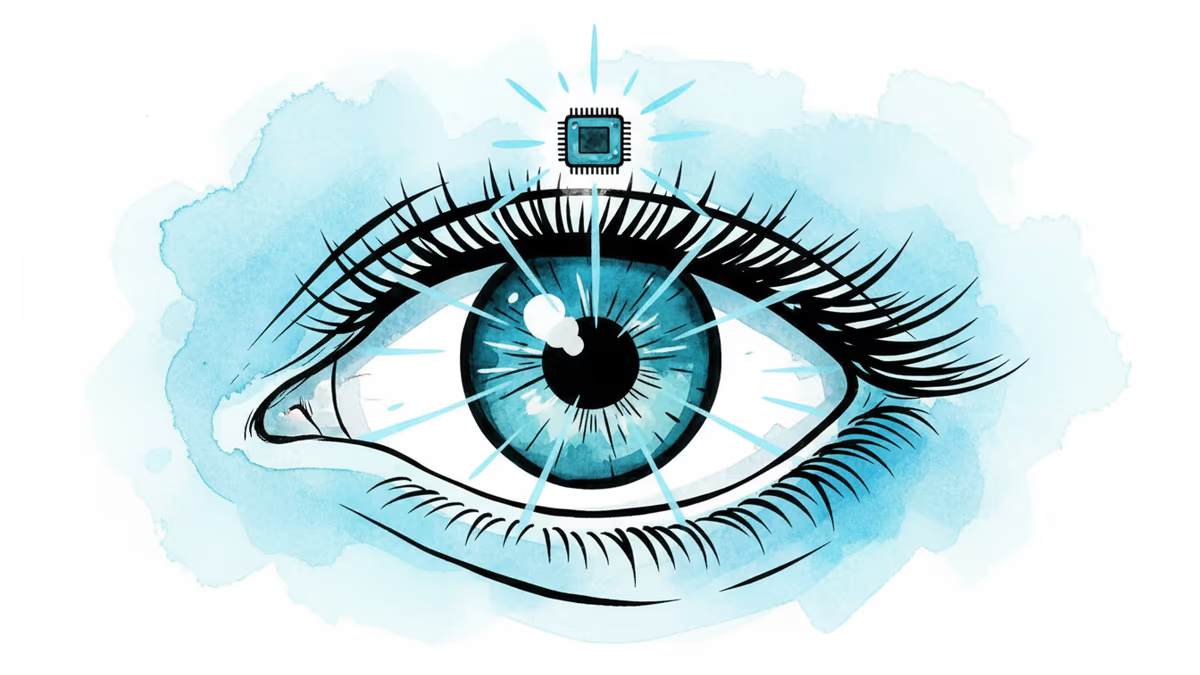
Max Hodak's Science Corp raises $230M for rice-grain sized chip that restores vision to blind patients. Could beat Neuralink as first BCI company to commercialize
CAR T cell therapy, proven in blood cancers, is now in hundreds of clinical trials for MS, lupus, and other autoimmune conditions. What the science shows—and what it doesn't yet.
R3 Bio wants to grow human bodies without brains as biological backups. The science is speculative. The ethics are explosive. And the legal framework doesn't exist yet.
California startup R3 Bio quietly pitched investors on 'brainless human clones' as backup bodies—beyond its public story of nonsentient organ sacks for drug testing. A deep dive into biotech's most ethically charged frontier.
Max Hodak's Science Corp raises $230M for rice-grain sized chip that restores vision to blind patients. Could beat Neuralink as first BCI company to commercialize
Thoughts
Share your thoughts on this article
Sign in to join the conversation