
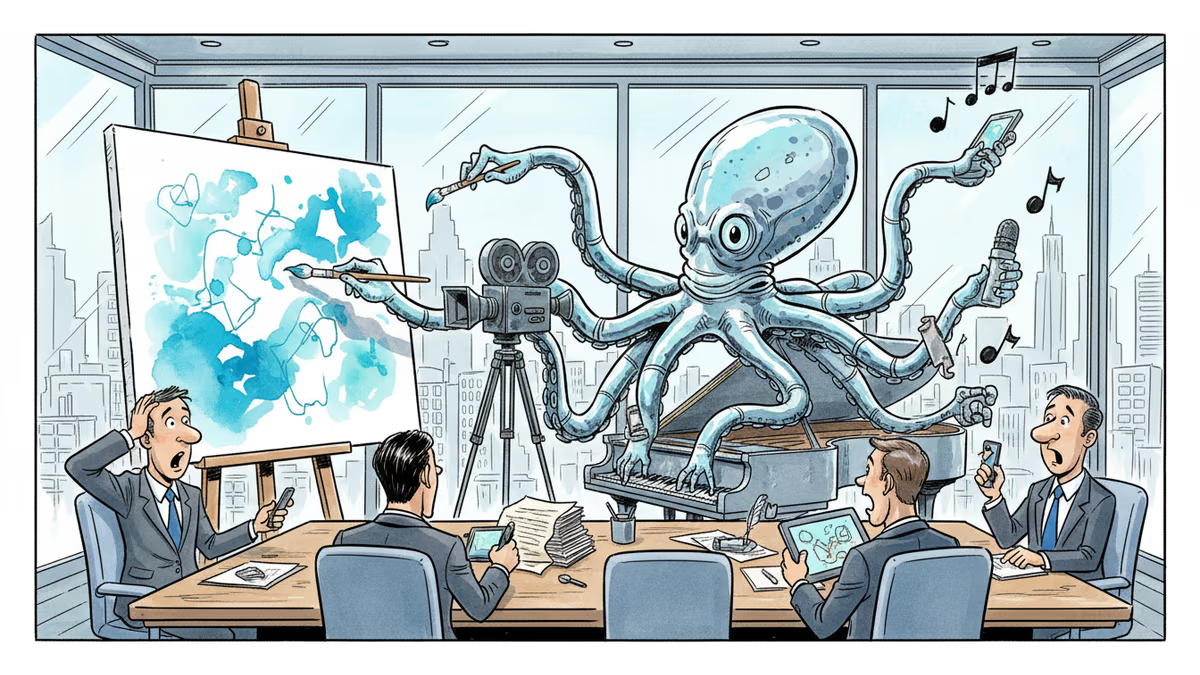
Luma AI Agents: When $15M Ad Campaigns Take 40 Hours
Luma AI launches agents that create end-to-end campaigns across text, image, video, and audio. A $15M year-long campaign now takes 40 hours and costs under $20K.
What Happens When AI Thinks in Pixels?
A $15 million ad campaign that typically takes a year? Luma AI's new agents just completed it in 40 hours for under $20,000. And it passed the brand's internal quality controls.
This isn't another AI tool launch. Luma Agents, unveiled Thursday, represents something different: AI that handles end-to-end creative work across text, image, video, and audio within a single reasoning system. Think of it as the difference between having 100 specialized contractors versus one architect who understands every aspect of the building.
The technology is powered by Luma's Uni-1 model, trained on what CEO Amit Jain calls "intelligence in pixels" — the ability to think in language while simultaneously imagining and rendering in visual form.
Madison Avenue: Disrupted or Enhanced?
Global ad giants Publicis Groupe and Serviceplan are already rolling out Luma Agents, alongside brands like Adidas, Mazda, and Saudi AI company Humain. The early results are staggering: campaigns that once required months of coordination between writers, designers, videographers, and sound engineers now happen in days.
But the industry response is split. C-suite executives see cost savings and speed. Creative directors worry about commoditization. Freelancers fear obsolescence.

"Our customers aren't buying the tool; they're redoing how business is done," Jain told TechCrunch. It's a telling distinction — this isn't about making existing workflows faster, but about fundamentally changing what creative work looks like.
The Self-Critique Revolution
What makes Luma Agents particularly powerful is their ability to evaluate and refine their own work — similar to how coding agents debug their own code. The system generates multiple variations and lets users steer direction through conversation, rather than the tedious prompt-iterate-prompt cycle of current AI tools.
In demonstrations, a 200-word brief and a single product image (a tube of lipstick) led the system to generate comprehensive campaign ideas including locations, models, and color schemes. The AI maintained persistent context across all assets and iterations — something that typically requires extensive project management in traditional workflows.
The Bigger Creative Question
This launch comes as the creative industry grapples with AI's role. Are these tools liberating human creativity from mundane tasks, or are they replacing human creativity altogether?
Jain frames it as liberation: "The current workflow is 'Here are 100 models. Learn how to prompt them.' That's not acceleration — that's complexity." Luma Agents promises to collapse that complexity into conversational direction.
But critics point to a deeper concern: if AI can generate campaign variations faster than humans can evaluate them, what happens to the creative judgment that has always been the industry's core value?
Authors
Related Articles
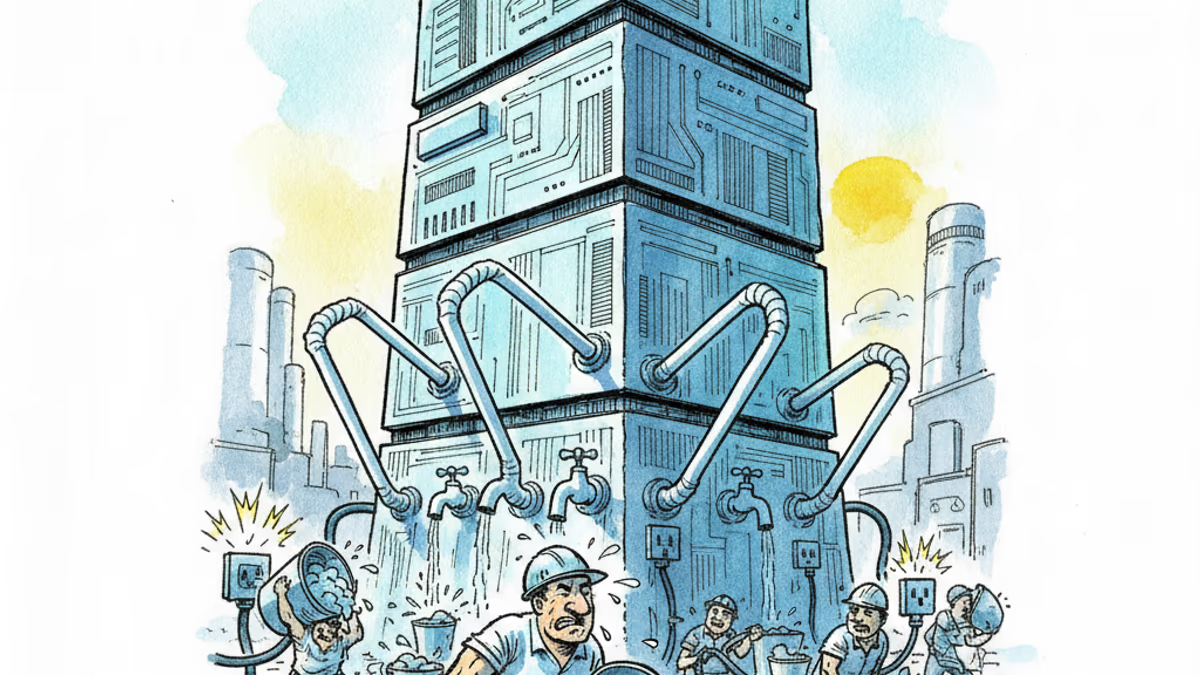
Samsung and SK unveiled a chip and AI investment package worth thousands of trillions of won on June 29. The headline number swings wildly by outlet, but the real contest isn't capital — it's water and power.

Viral videos show 2026 graduates jeering executives who praise AI at commencement ceremonies. It's not just rudeness — it's a signal about who pays for technological optimism.

Filipino virtual assistants using AI to ghost-manage LinkedIn profiles for executives is now a structured industry. 30 comments a day, fake engagement rings, and a platform struggling to tell real from fabricated.
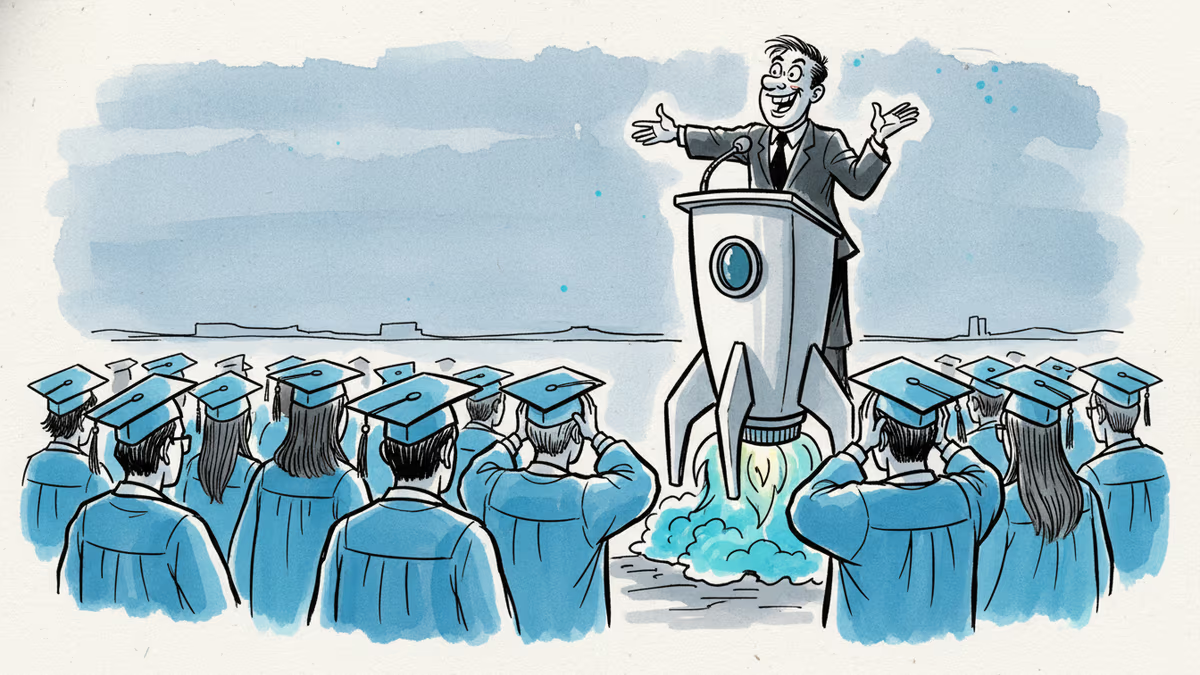
Two commencement speakers learned the hard way that AI enthusiasm doesn't land well with today's graduates. The backlash reveals a widening gap between tech optimism and Gen Z's economic reality.
Samsung and SK unveiled a chip and AI investment package worth thousands of trillions of won on June 29. The headline number swings wildly by outlet, but the real contest isn't capital — it's water and power.
Viral videos show 2026 graduates jeering executives who praise AI at commencement ceremonies. It's not just rudeness — it's a signal about who pays for technological optimism.
Filipino virtual assistants using AI to ghost-manage LinkedIn profiles for executives is now a structured industry. 30 comments a day, fake engagement rings, and a platform struggling to tell real from fabricated.
Two commencement speakers learned the hard way that AI enthusiasm doesn't land well with today's graduates. The backlash reveals a widening gap between tech optimism and Gen Z's economic reality.
Thoughts
Share your thoughts on this article
Sign in to join the conversation